Why Trust Best Flushing Toilets
- Installation and structural requirements
- Storage capacity and cabinet construction
- Aggregated owner reviews
- Weight ratings and mounting hardware
- Cleaning and long-term maintenance
Research updated July 2026.
Quick Answer
For most buyers, a freestanding vanity is the safer, easier choice, since it rests its full weight on the floor rather than on a wall, needs no special blocking or reinforcement, and typically offers more usable storage for the same footprint. A floating vanity is the better pick if you want a modern, visually lighter bathroom, easier floor cleaning underneath the cabinet, and you are willing to confirm wall blocking or install it before drywall goes up. Both are durable when installed correctly, so the decision usually comes down to your wall structure, your storage needs and how much floor-cleaning convenience matters to you.
Floating and freestanding are the two dominant vanity configurations sold today, and the difference is more than cosmetic. A freestanding vanity has legs or a full cabinet base that touches the floor, carrying its own weight and everything stored inside it down through the floor structure the same way a kitchen cabinet does. A floating vanity, sometimes called a wall-mounted or wall-hung vanity, has no floor contact at all. The entire cabinet, the countertop, the sink and everything you store inside hangs from brackets anchored into the wall, which means the wall framing, not the floor, has to be strong enough to carry that load safely for decades.
This distinction matters most during the planning stage of a remodel, before tile or drywall goes up, because a floating vanity generally needs horizontal blocking installed inside the wall cavity at the exact height the bracket will sit. Retrofitting that blocking into a finished wall is possible but adds real labor and cost. A freestanding vanity has no such requirement and can typically be swapped in on moving day with no wall work at all. For the wider view of vanity styles and sizing, see the pillar guide to the bathroom vanity buying guide. This page stays focused on the floating versus freestanding decision specifically.
How we research and compare
We do not test vanities in a lab. We compare manufacturer installation specifications, weight and load ratings, cabinet construction and material quality, and aggregated owner reviews across major retailers. No industry-standard numeric performance score exists for bathroom vanities the way MaP testing exists for toilets, so we do not invent one. Where one configuration clearly suits a use case better, we say so plainly rather than calling a single universal winner.
At a glance
Floating vs freestanding vanities compared
A side-by-side look at the two configurations. Exact weight ratings and dimensions vary by model and by the mounting hardware used, so always confirm the manufacturer's installation sheet for the specific vanity you buy.
Recommended vanities in this guide
What is the actual structural difference between floating and freestanding vanities?
The structural difference is where the weight goes. A floating vanity transfers all its weight, plus the sink, countertop and anything stored inside, through mounting brackets into the wall framing, which means the wall needs horizontal blocking or a ledger board rated for that load. A freestanding vanity rests on the floor through legs or a full cabinet base, so the floor structure carries the weight the same way it carries any other piece of furniture, with no special wall reinforcement required.
Every floating vanity sold today relies on a bracket system, usually a French cleat or a heavy-duty rail, that bolts into the wall and then supports the cabinet from behind. For that bracket to hold safely over years of daily use, filled drawers and the occasional bump, it needs to bite into solid wood blocking or steel backing installed inside the wall cavity at the correct height, not just drywall and a stud here and there. This is why floating vanities are dramatically easier to install correctly during new construction or a full gut remodel, when the wall is open and blocking can be added exactly where the bracket needs it.
A freestanding vanity skips this problem entirely. Its legs or cabinet base sit directly on the finished floor, and the load travels straight down through the subfloor the way any cabinet, table or bookshelf does. There is no wall rating to check and no blocking to plan for, which is a big part of why freestanding remains the default configuration in most production home bathrooms. If you are unsure whether your existing wall has adequate blocking for a floating vanity, our bathroom vanity styles guide covers how to identify the wall types that support wall-hung fixtures safely.
Which is better for an older home or a bathroom that is not being fully gutted?
Freestanding is clearly better for an older home or a partial remodel where the walls are staying closed, since it requires no access to the wall cavity at all. A floating vanity in that same situation usually means opening drywall to add blocking, which turns a simple swap into a multi-day job with a drywall repair and repaint at the end.
If your remodel plan does not already involve stripping the bathroom down to the studs, a freestanding vanity is almost always the more practical choice. Swapping an old vanity for a new freestanding model is typically a same-day job: disconnect the plumbing, remove the old cabinet, set the new one in place, reconnect the supply lines and drain, and you are done. No wall cavity needs to be touched.
A floating vanity in a wall without existing blocking presents a real problem. Some installers can retrofit blocking through a small access hole and a bit of careful framing work, and some floating vanities on the market are rated for direct stud mounting on 16 inch centers without dedicated blocking, but that limits your model choices and generally caps the weight rating lower than a properly blocked installation. If a floating look matters enough to you that you are willing to open the wall specifically to add blocking, that is a reasonable trade-off, but it should be a deliberate decision made before you buy the vanity, not discovered after it arrives.
Tip: confirm blocking before you buy, not after
Before ordering a floating vanity, have a contractor or a stud finder confirm there is solid blocking or a ledger board at the exact height the bracket needs, ideally by checking the original construction drawings or opening a small inspection hole. Buying the vanity first and discovering the wall cannot support it is one of the most common and expensive mistakes in this category.
Which configuration offers more storage?
Freestanding vanities generally offer more storage for a given width, since the cabinet can run full depth from the countertop all the way to the floor, including deep base drawers and sometimes a toe-kick drawer at the very bottom. Floating vanities are usually shallower and stop short of the floor by design, which caps how much cabinet volume is available even on wider models.
Cabinet depth is the real driver here. A freestanding vanity's legs or base extend to the floor, so manufacturers can build in a full-height cabinet, sometimes with a hidden drawer at the very bottom that would otherwise be wasted space under a floating unit. That extra few inches of vertical cabinet space adds up across drawers and shelves, particularly in a primary bathroom where towel and toiletry storage matters.
Floating vanities intentionally stop well short of the floor, typically leaving 6 to 10 inches of clearance for the visual effect and for easier cleaning, and that clearance comes directly out of usable cabinet volume. Some floating models compensate with clever internal organization or a slightly deeper cabinet body, but as a category, floating vanities trade some storage capacity for the visual and cleaning benefits of the floating design. If storage is the top priority in your bathroom, a freestanding cabinet vanity or a double-sink layout is usually the better starting point, and our best vanity and sink combo sets guide covers several deep-storage options.
Expert TakeI tell clients who are torn between the two to picture their actual morning routine, not just the showroom photo. If you are already tight on bathroom storage and use every drawer you have, a freestanding cabinet with full floor-to-counter depth will serve you better day to day than a floating vanity that looks striking but holds noticeably less. If your bathroom is small and storage was never going to be generous either way, the floating configuration's visual and cleaning benefits usually outweigh the modest storage loss.
Which is easier to keep clean over time?
A floating vanity is significantly easier to keep clean, since the open space underneath lets a mop, vacuum or broom pass straight through without obstruction, and there are no legs or a base to work around. A freestanding vanity's legs or enclosed base create dead space that collects dust, hair and grime, and cleaning around or under it requires more effort, especially with a closed cabinet base that touches the floor along its full width.
This is one of the clearest, least debatable advantages of the floating configuration. Bathroom floors accumulate hair, dust and splashed water faster than almost any other room in the house, and a floating vanity removes the single biggest obstruction to easy cleaning. This is also why floating vanities are common in accessible bathroom design, since the open space underneath can accommodate a wheelchair or a seated user in addition to making mopping easier.
Freestanding vanities with slim tapered legs, sometimes called console-style bases, recover some of this advantage since there is still open floor space between the legs, just interrupted more often than a fully open floating design. A freestanding vanity with a solid, floor-touching cabinet base offers the least airflow and the hardest cleaning of the group, since dust and moisture can collect in the tight gap where the cabinet meets the floor along its entire footprint.
Tip: seal the wall-to-cabinet joint on a floating vanity
Water splashed against the wall behind a floating vanity can seep behind the cabinet if the top edge is not sealed properly during installation. A thin bead of paintable caulk along the wall-to-cabinet seam prevents moisture intrusion and keeps the wall finish protected over years of daily use.
Which configuration costs more?
Floating vanities typically cost more once you account for the mounting hardware, and often the cost of adding wall blocking if it is not already present, even when the cabinet itself is similarly priced to a comparable freestanding model. Freestanding vanities span a wider price range overall, from budget-friendly single-sink cabinets to premium furniture-style pieces, with installation costs that are usually lower since no wall reinforcement is required.
Comparing two cabinets of similar size and material quality, the sticker price difference between floating and freestanding is often smaller than people expect. The bigger cost gap shows up in installation. A floating vanity's bracket system adds hardware cost, and if the wall needs blocking added, that labor and any drywall repair afterward can meaningfully increase the total project cost beyond the vanity itself.
Freestanding vanities avoid nearly all of that added labor. A homeowner comfortable with basic plumbing can often install a freestanding vanity in an afternoon, while a floating vanity installed correctly, with proper blocking verification and precise bracket leveling, is a job most people hire out. We never quote prices here because they shift constantly, so check the current price on Amazon for the exact model and finish you are considering, and get an installation quote before assuming a floating vanity's higher visual appeal comes at only a small cost premium.
How do these configurations compare across brands and wider vanity styles?
James Martin and Native Trails both build well-regarded floating vanity lines aimed at the modern remodel market, while Kohler, Kingston Brass and American Standard offer freestanding vanities across a much wider range of sizes and price points, including farmhouse, transitional and furniture-style cabinets. Vanity-with-legs, or console-style, sits between the two as a freestanding configuration that borrows some of the floating look's open, airy feel without the wall-mounting requirement.
Floating vanities have grown from a niche modern-design item into a mainstream category, and James Martin's floating collections in particular are popular for their clean lines and range of finishes. Native Trails, known for sustainably sourced and reclaimed materials, also offers floating configurations that pair well with a natural stone or concrete-look vanity top. Both brands publish clear weight ratings and bracket specifications, which is worth checking closely against your wall's blocking before ordering.
On the freestanding side, Kohler, Kingston Brass and American Standard each offer deep catalogs spanning single-sink cabinets as small as 24 inches up to large double-sink furniture pieces well over 60 inches. If the floating look appeals to you but you are not confident about your wall's blocking, a console-style freestanding vanity with open, leg-supported construction is worth a look, since it delivers a similar airy feel while keeping the load on the floor. Our guide to vanity with legs versus vanity with cabinet covers that middle-ground option in detail.
Expert TakeThe mistake I see most often is a buyer falling in love with a floating vanity photo online without ever checking whether their wall can actually support one. It is not that floating vanities are unreliable, it is that they demand a level of structural planning that a freestanding vanity simply does not. If you are mid-remodel with the walls already open, adding blocking for a floating vanity is a small, cheap step. If your walls are already closed and finished, I would think twice before committing to the floating look unless you are prepared for the extra labor.
Choose a floating vanity if
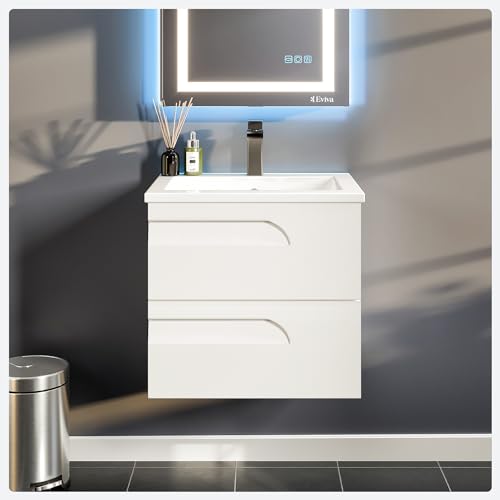
A floating vanity is the right pick when you want a modern, visually lighter bathroom, easier floor cleaning, and better accessibility for a wheelchair or seated user, and you can confirm proper wall blocking is present or can be added during your remodel. Choose floating if the visual and cleaning benefits matter more to you than maximizing storage. Accept in return a somewhat smaller storage capacity, more exposed plumbing unless finished with a panel, and a real dependency on wall structure that a freestanding vanity does not have.
Shop it here: check the current price on Amazon for the James Martin Milan floating vanity.
Choose a freestanding vanity if
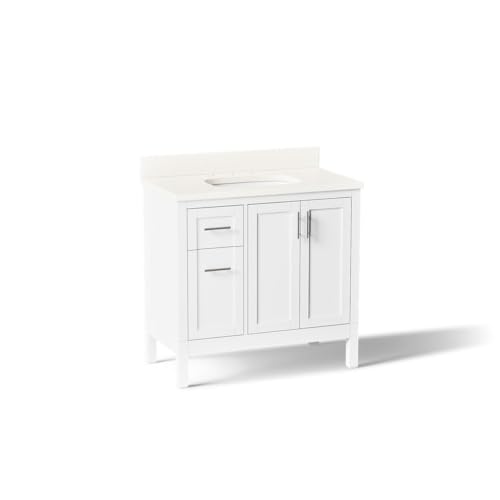
A freestanding vanity is the right pick when you want the simplest installation, the most storage for your footprint, and no dependency on wall blocking or structural verification. Choose freestanding if you are working within an existing wall you do not want to open, or if maximizing drawer and cabinet space matters more than the open, floating look. The trade-off is a bit more visible floor space taken up by the cabinet and a somewhat harder cleaning job underneath, especially with a solid base that touches the floor along its full width.
Shop it here: check the current price on Amazon for the Kohler Poplin freestanding vanity.
Freestanding for simplicity, floating for style and cleaning
Both configurations are durable and widely available when installed correctly, but they serve different priorities. Freestanding vanities are the simplicity choice: floor-supported, no wall blocking required, easier to install and generally more storage for the same footprint. Floating vanities are the style-and-cleaning choice: a visually lighter bathroom, easier floor cleaning and better accessibility, at the cost of needing proper wall blocking and typically a bit less storage. If simplicity, storage and a straightforward installation matter most, choose freestanding. If a modern look and easy floor cleaning matter most and your wall can support it, choose floating. Confirm your wall structure before you commit, then check the current price on Amazon for the exact model before you buy.
Ready to shop? Check the current price on Amazon for the style-forward James Martin Milan floating vanity or the storage-focused Kohler Poplin freestanding vanity.