
Best Victorian Bathroom Sinks (2026)
Bathroom Remodeling4.6
A curated ranking of pedestal, console and vitreous china sinks with ornate, high-relief period-correct shapes for a true 19th-century bathroom.
Read the guideA material-by-material comparison of solid wood and MDF bathroom vanity cabinets, covering moisture tolerance, weight, cost, finish options and long-term durability in a humid bathroom, so you can pick the cabinet construction that fits your budget and your climate.
Research updated July 2026.
Solid wood is the better long-term buy for a primary bathroom with normal ventilation, since real hardwood, properly sealed and finished, handles humidity better over a decade of use and can be sanded and refinished instead of replaced. MDF is the better buy for a budget remodel, a rental, or a powder room with light use, since a quality painted MDF cabinet looks nearly identical to solid wood at a much lower cost, as long as you accept it cannot be repaired the same way if the core ever gets soaked. Neither material is a bad choice when it is finished correctly and kept away from standing water.
Solid wood and MDF sit at opposite ends of the bathroom vanity cabinet market, and the confusion between them usually comes down to one myth: that solid wood always warps in a bathroom and MDF is somehow the safer, more moisture-resistant choice. The reality is closer to the opposite. Solid wood is a natural material that expands and contracts with humidity, but a properly sealed hardwood vanity, finished on all sides including the back and interior, resists water intrusion for decades and can be sanded down and refinished if the surface ever gets damaged. MDF, or medium-density fiberboard, is wood fiber and resin pressed into a smooth, uniform board that takes paint beautifully, but standard MDF swells and loses structural integrity if it sits in standing water for any length of time, and once that happens the board cannot be repaired the way solid wood can.
This guide compares the two materials on what actually matters in a bathroom: moisture tolerance, weight, cost, finish flexibility and long-term durability. For a broader look at vanity shapes once you have settled on a material, see our bathroom vanity buying guide.
We do not run our own lab moisture tests. We compare manufacturer construction specifications, published material data for hardwood and MDF, cabinet industry standards for moisture-resistant grades, and aggregated owner reviews reporting how each material actually performs in a bathroom over time. Where one material clearly suits a use case better, we say so plainly rather than declaring one universally correct.
A side-by-side look at the two cabinet materials. Exact figures vary by manufacturer, finish grade and hardwood species, so confirm the specific construction details for any model you are considering.
| Property | Solid Wood | MDF |
|---|---|---|
| Base material | Real hardwood (oak, maple, birch, poplar) | Wood fiber and resin, hot pressed |
| Moisture tolerance, sealed and finished | Very good, resists swelling for years | Fair, standard grade swells if soaked |
| Surface uniformity | Natural grain, some variation piece to piece | Perfectly smooth, ideal for paint |
| Repairable if damaged | Yes, can be sanded and refinished | Limited, swollen core cannot be restored |
| Weight | Heavier | Moderate |
| Warping risk if unsealed | Higher without a full finish coat | Lower dimensional movement, but swells if soaked |
| Typical cost | Higher | Lower |
| Best finish options | Stain, paint, natural wood tones | Paint only, no real wood grain |
| Expected lifespan, properly maintained | Decades | Many years, shorter if exposed to moisture |
| Typical owner rating | 4.6 | 4.3 |
Solid hardwood is exactly what it sounds like: boards milled from a single species of tree, most commonly oak, maple, birch or poplar for vanity cabinets, then joined, sanded and finished as one continuous piece of wood. Because it is a natural material, every panel has slightly different grain patterns, and the wood itself expands and contracts slightly with changes in humidity, which is why a proper finish on every surface, including the back panel and cabinet interior, matters more for solid wood than for almost any other cabinet material.
MDF starts as a byproduct of the lumber industry, wood fibers left over from other milling processes, which are combined with resin binders and compressed under heat into a dense, flat board with a perfectly smooth surface and no grain at all. That uniformity is MDF's biggest strength for cabinetry, since it takes paint evenly with no grain show-through, machines cleanly for detailed door profiles, and does not have the natural stress points that can cause solid wood to crack along a grain line. The tradeoff is that MDF's wood fibers absorb water readily if the resin binding is compromised, which is why the finish and edge sealing on an MDF vanity matter just as much as they do on solid wood, arguably more.
Ambient bathroom humidity from showers is not actually the biggest threat to either material when the vanity is properly finished and the room has working ventilation. The real risk is direct, sustained water contact, most commonly a slow leak from a supply line or drain trap that goes unnoticed under the sink for weeks. Solid wood in that scenario will eventually swell and can crack along the grain, but it usually survives long enough to be caught and can often be sanded and refinished once dried out. MDF absorbs water into the fiber structure itself, and once the core has swollen, the damage is generally permanent.
This is why moisture-resistant MDF grades exist, sometimes labeled MR-MDF or green board, using a different resin formulation to slow water absorption compared to standard interior-grade MDF. If you are set on an MDF vanity, confirm the manufacturer uses a moisture-resistant grade for the cabinet box, not just the door fronts. For a wider look at which materials tolerate a humid bathroom best, see our guide to the best bathroom vanity materials for humid bathrooms.
Most vanity cabinet failures blamed on the material are actually caused by an undetected plumbing leak that soaked the cabinet floor over weeks or months. Whichever material you choose, check the supply lines and drain trap connections periodically and dry up any standing water immediately, since prolonged direct contact will eventually damage both solid wood and MDF.
Density is one of the clearer differences between the two materials. Hardwood is naturally dense, and a solid wood vanity cabinet of a given size will generally weigh more than the same cabinet built from MDF. For a freestanding, floor-mounted vanity this rarely matters, since the cabinet simply rests on the floor. It becomes more relevant for a floating bathroom vanity that mounts entirely to the wall, where the anchoring hardware has to support the full cabinet weight plus the countertop and everything stored inside. Both materials work in a floating install, but the wall blocking needs to be rated for the actual weight of the specific cabinet, not just its material.
The value of solid wood shows up over a longer timeline than most buyers initially consider. A hardwood vanity with a worn or dated finish can be sanded down to bare wood and refinished in a new stain or paint color, resetting the cabinet's appearance without replacing it. That flexibility does not exist with MDF, since sanding through a painted finish can expose the fiber core, so repainting is usually the only realistic refresh option.
Real estate agents and appraisers also tend to note solid wood cabinetry favorably during a sale, since it reads as a higher-quality, more permanent fixture. That said, a well-built, properly finished MDF vanity from a reputable brand still looks great for a long time, and most buyers touring a home cannot tell the two materials apart under a painted finish. The real gap shows up in years eight through fifteen, when a solid wood cabinet can be refreshed and an MDF cabinet generally gets replaced.
I tell most buyers to match the material to how long they actually plan to own the house or keep the bathroom as is. If this is a forever bathroom, or you simply like the idea of a cabinet you can refinish instead of replace, solid wood earns its higher price over fifteen or twenty years. If you are remodeling a rental, a flip, or a bathroom you expect to update again within five to seven years, a well-finished MDF vanity from a brand like Kingston Brass does the job at a fraction of the cost, and nobody touring the house is going to tap the cabinet to check.
Solid wood is the right pick when you want a vanity that can be refinished rather than replaced, plan to own the home for a long time, and are willing to pay more upfront for a cabinet with better resale appeal and the flexibility to change its finish later. Choose solid wood if you want visible wood grain rather than a flat painted look. Accept in return a heavier cabinet, a higher price, and the need for a complete finish on every surface including the back panel to manage humidity properly.
Shop it here: check the current price on Amazon for a James Martin solid wood vanity.
MDF is the right pick when budget is the priority, you want a flawless painted finish with zero grain show-through, and you are comfortable replacing rather than refinishing the cabinet many years down the road. Choose MDF for a rental, a flip, a powder room with light use, or any remodel where the vanity is not expected to last multiple decades. The trade-off is a cabinet that cannot be repaired the same way if it ever takes on standing water.
Shop it here: check the current price on Amazon for a Kingston Brass MDF vanity.
Both materials work well in a bathroom when properly sealed and kept away from standing water, but they serve different priorities. Solid wood is the specialist choice for a primary bathroom you plan to keep long term, offering a cabinet that can be refinished instead of replaced. MDF is the value choice, delivering a flawless painted finish at a lower cost with a shorter realistic lifespan. If refinishing flexibility and resale appeal matter most, choose solid wood. If upfront cost matters most and you are comfortable with eventual replacement, choose MDF. Whichever you pick, confirm the finish covers every surface of the cabinet before it goes into a bathroom.
Solid wood is generally better for a primary bathroom you plan to keep long term, since a properly sealed hardwood cabinet can be sanded and refinished rather than replaced. MDF is a practical, lower-cost choice for a rental, a flip, or a bathroom with light use, as long as the finish is complete and moisture is controlled.
No. Standard MDF is vulnerable mainly to direct, sustained water contact, such as a slow leak under the sink, not to normal ambient bathroom humidity when the cabinet has a complete finish and the room has adequate ventilation. Moisture-resistant MDF grades exist specifically to improve tolerance further.
Yes, in most cases. Solid wood can be sanded down to bare wood and restained or repainted, which is one of its biggest long-term advantages over MDF. Severe water damage that causes cracking along the grain may require more extensive repair, but light surface damage is usually refinishable.
Generally no. Once MDF's fiber core absorbs enough water to swell, the board does not return to its original density or shape when dried, and the damaged section typically needs to be replaced rather than repaired.
Solid wood is typically heavier than MDF for a cabinet of the same size. This matters most for floating, wall-mounted vanity installations, which need wall blocking rated for the specific cabinet's weight regardless of material.
Not inherently. MDF is a different tool for a different job, offering a perfectly smooth, paintable surface with no grain show-through and a lower price. It is not weaker as a cabinet structure under normal conditions, but it lacks solid wood's ability to be sanded and refinished after years of wear.
Yes. A complete finish on every surface, including the cabinet interior, back panel and shelf undersides, matters more for solid wood than almost any other cabinet decision, since an unfinished surface is where moisture enters and warping begins.
Moisture-resistant MDF, sometimes labeled MR-MDF or green board, uses a different resin formulation and wax additives to slow water absorption compared to standard interior-grade MDF. Confirm this grade is used for the cabinet box, not just the door fronts, if you are choosing MDF for a bathroom.
Solid wood costs more than MDF for a comparable vanity size and style, reflecting the raw material cost and the labor involved in milling and finishing hardwood. Check the current price on Amazon for both to compare the exact price gap for a specific size and finish.
Solid wood generally holds up better for resale, since it reads as a higher-quality, more permanent fixture to buyers and appraisers. A well-built, properly finished MDF vanity still looks great and rarely hurts a sale, but solid wood carries a modest edge here.
Yes, this is common in mid-range vanities, where the visible door and drawer fronts use solid wood or a wood veneer while the interior cabinet box uses MDF or plywood for cost efficiency. Check the manufacturer's construction specifications if the material of each component matters to your decision.
If you plan to keep the bathroom for many years and want the option to refinish the cabinet later, buy solid wood. If budget is the priority and you are comfortable eventually replacing the cabinet, buy MDF. Either choice works well when properly finished and kept away from standing water.
How we rank & our data sources
We do not run physical lab tests. Rankings are built from published, verifiable data and real owner feedback, never paid placement.
Researched by admin · Last updated July 10, 2026 · Our review method
A curated ranking of pedestal, console and vitreous china sinks with ornate, high-relief period-correct shapes for a true 19th-century bathroom.
Read the guide
Simple rectangular alcove and freestanding tubs in honest materials that suit an Arts and Crafts bathroom without ornamental clawfoot or scrollwork detailing.
Read the guide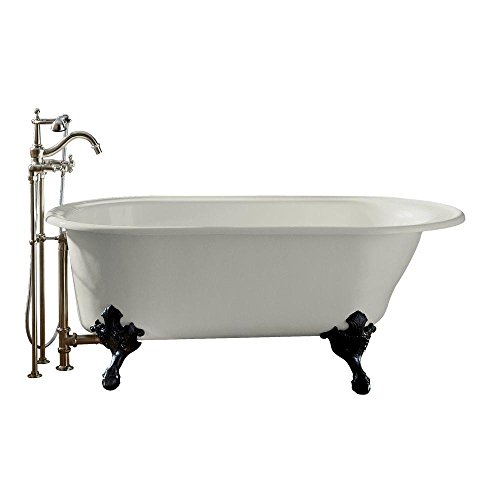
High-relief clawfoot and roll-top silhouettes, aged brass and bronze feet, and cast iron construction that carry an authentic 19th-century look without giving…
Read the guide