Why Toilet Trapways Are Curved Like an S
Toilets4.6
Learn why toilet trapways curve like an S, how each bend blocks sewer gas, and what the shape means for clogs and…
Read the guideWhether you are managing mobility challenges, recovering from surgery, or selecting fixtures for aging-in-place, the right ADA-compliant toilet makes a real difference in safety, independence, and daily comfort. We evaluated seat height, MaP flush scores, bowl shape, and accessibility compliance across dozens of models to bring you the top picks for 2026.
The TOTO Drake II is the top ADA-compliant toilet for most users with disabilities: its 16.5-inch comfort height seat, 1,000-gram MaP score, and proven double cyclone flush eliminate the two biggest accessibility pain points, difficult transfers and chronic clogs. Kohler Cimarron and American Standard Champion 4 are strong budget-friendly alternatives.
Under the Americans with Disabilities Act (ADA) Standards for Accessible Design, a toilet must have a seat height between 17 and 19 inches from the floor, measured without the seat. The bowl must allow a wheelchair transfer zone of at least 60 inches wide, and flush controls must be operable with a closed fist and mounted no higher than 44 inches from the floor.
ADA seat height requirements were established because standard toilets (14 to 15 inches) force users with limited leg strength, joint pain, or mobility aids to perform a deep squat during transfer, which elevates fall risk significantly. The 17-to-19-inch comfort height range aligns with typical chair and wheelchair seat heights, enabling near-level lateral transfers.
Beyond height, ADA accessibility in a toilet context also considers:
It is worth noting that "comfort height" and "chair height" are marketing terms used interchangeably by manufacturers. They refer to the same 17-to-19-inch seat height range that satisfies ADA requirements. Always verify the rough-in specification (typically 12 inches for most US homes) before purchasing.
Occupational therapists consistently recommend pairing a comfort-height toilet with wall-mounted grab bars placed 33 to 36 inches from the floor on the side and rear walls. The toilet itself handles the height part of the equation, but grab bars are what actually prevent falls during the sit-to-stand transition. Neither component is sufficient alone.
| Model | Type | Seat Height | GPF | MaP Score | WaterSense | Best For | Check Price |
|---|---|---|---|---|---|---|---|
| TOTO Drake II | Two-piece | 16.5 in | 1.28 | 1,000 g | Yes | Overall best pick | Check price |
| Kohler Cimarron | Two-piece | 16.5 in | 1.28 | 800 g | Yes | Budget / value | Check price |
| American Standard Champion 4 | Two-piece | 16.5 in | 1.6 | 1,000 g | No | Heavy waste / anti-clog | Check price |
| TOTO Aquia IV | Two-piece dual-flush | 17.25 in | 0.8/1.28 | 800 g | Yes | Water savings | Check price |
| Kohler Highline Arc | Two-piece | 16.5 in | 1.28 | 600 g | Yes | Slim footprint | Check price |
| TOTO UltraMax II | One-piece | 17.25 in | 1.28 | 1,000 g | Yes | Easy cleaning | Check price |
| American Standard Cadet 3 | Two-piece | 16.5 in | 1.28 | 800 g | Yes | Tight budgets | Check price |
| Gerber Viper | Two-piece | 16.5 in | 1.28 | 800 g | Yes | Reliability / longevity | Check price |
| Woodbridge T-0001 | One-piece | 17.75 in | 1.0/1.6 | 800 g | No | Modern aesthetics | Check price |
MaP (Maximum Performance) scores reflect grams of solid waste cleared in a single flush. Scores above 800 g are considered excellent for high-use households.
The TOTO Drake II earns the top spot for disability accessibility by combining a certified 1,000-gram MaP flush score with ADA-compliant 16.5-inch rim height and TOTO's proven double cyclone flushing technology, delivering power and accessibility in a well-priced two-piece package.
TOTO's double cyclone system uses two nozzles at the rim to generate a centrifugal water flow that covers the entire bowl surface without an exposed rim port, a detail that matters for users who rely on caregivers for bathroom cleaning. The 3-inch flush valve and 2-1/8-inch fully glazed trapway are engineering choices that directly reduce clogging frequency, an important consideration when plunging is difficult for users with grip or mobility limitations.
Published owner reviews across multiple retail platforms consistently note the flush power as the standout feature, with many accessibility-focused users specifically mentioning the seat height as a reason they chose this model over competitors. The Drake II is also compatible with TOTO's Washlet bidet seat range, which can further reduce physical effort for hygiene tasks. See our complete best flushing toilets guide for broader context on flush performance metrics.
The Drake II's combination of top-tier MaP flush performance and ADA height is unusually rare at its price point. Most toilets in this price band either hit the MaP maximum or the ADA height -- the Drake II does both. For users with spinal cord injuries or post-stroke conditions where independent toileting is a primary rehab goal, this model gives caregivers and patients the most reliable baseline.
The Kohler Cimarron delivers ADA-compliant 16.5-inch comfort height and an 800-gram MaP score in a widely available, easy-to-service package that consistently lands below competing ADA models in retail pricing.
Kohler's Class Five flush technology uses a canister-style flush valve that opens 90 percent wider than standard flapper valves. This produces a fast, powerful water column that clears the 2-1/8-inch trapway with consistent force. Published MaP test data places the Cimarron at 800 grams, a rating Kohler's documentation confirms across its comfort-height lineup.
For accessibility projects in multi-unit housing or facility renovations where per-unit cost matters, the Cimarron is a frequently specified choice. Its parts availability at plumbing supply houses and big-box retailers makes maintenance simple without specialized service calls. Users considering a comfort height toilet specifically for sit-to-stand ease will find the Cimarron a practical starting point.
The Cimarron is a strong choice for assisted living upgrades where a large volume of units need accessible toilets within a fixed renovation budget. The 800-gram MaP score is above average, and Kohler's national parts supply chain means facility maintenance staff can source components without special orders.
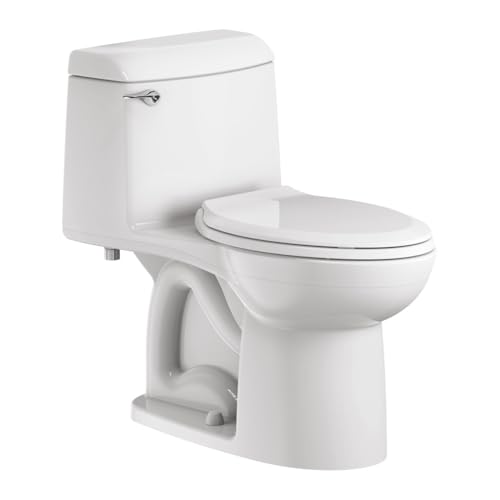
American Standard's Champion 4 brings a 4-inch flush valve and 2-3/8-inch trapway -- the largest in its class -- producing a 1,000-gram MaP score that makes it essentially impossible to clog, which is critical for users who cannot easily manipulate a plunger.
The Champion 4's engineering philosophy prioritizes bulk-clearing capacity above water efficiency. American Standard's proprietary 4-inch flush valve creates a rush of water volume that is noticeably faster to clear the bowl than the industry-standard 2- or 3-inch valves. MaP testing data confirms the toilet clears a maximum 1,000-gram test specimen on first flush, which is particularly relevant for users whose medical conditions may produce large or heavy waste.
The EverClean surface inhibits odor and stain-causing bacteria at the bowl level, reducing how often caregivers need to clean the bowl. This is a meaningful quality-of-life consideration in home care settings. For users comparing toilets for heavy users alongside disability-focused criteria, the Champion 4's robust internal geometry is also well-suited for high-weight-capacity applications.
For users with spinal muscular atrophy, ALS, or advanced arthritis where plunging is genuinely not an option, the Champion 4 is the most practical choice. The 2-3/8-inch trapway simply does not clog under normal residential use. The tradeoff is 1.6 GPF usage, which is not ideal for green-building projects but is acceptable where clog prevention is the overriding concern.
The TOTO Aquia IV offers the highest seat height among TOTO's two-piece lineup at 17.25 inches, making it easier to use than even the Drake II for taller users or those with severe mobility restrictions, while its dual-flush system uses just 0.8 GPF for liquid waste.
The Aquia IV's dual-flush push-button actuator sits on top of the tank, which means flush control requires reaching slightly farther back than a side-mounted lever. For users with limited arm reach, this is worth factoring into the installation plan. However, the 17.25-inch rim height is a meaningful upgrade over the 16.5-inch baseline and is particularly beneficial for users over 5 feet 10 inches or those using a raised toilet seat in combination.
TOTO's TORNADO FLUSH technology on the Aquia IV uses a 360-degree rim-free rinsing action that keeps the bowl cleaner between uses, a practical benefit when access to cleaning tools is limited. Users interested in pairing this toilet with a bidet seat should verify Washlet compatibility with the Aquia IV specifically, as tank dimensions vary. For comparison with other water-efficient options, see our guide to the best dual flush toilets.
The Aquia IV's 17.25-inch seat height is the feature most occupational therapists do not expect from a standard-sized toilet. At that height, even users with severe quadriceps weakness have measurably better transfer outcomes compared to a standard 15-inch toilet. The water savings are a bonus, not the primary accessibility reason to choose it.
The TOTO UltraMax II's seamless one-piece design eliminates the tank-to-bowl joint that traps bacteria in two-piece models, making caregiver-assisted cleaning faster and more thorough, while its 17.25-inch seat height exceeds the standard ADA minimum.
The UltraMax II commands a premium over the Drake II, but that gap is directly attributable to the one-piece construction and skirted trapway design. For caregivers who clean accessible bathrooms daily, the absence of a tank-to-bowl seam reduces cleaning time and eliminates a common source of mold and mineral buildup. The fully skirted base also removes exposed bolt caps and rough porcelain edges that are fall hazards.
TOTO's TORNADO FLUSH on the UltraMax II uses three nozzles (versus two on the Drake II) for even more complete bowl surface coverage. Published MaP testing confirms the 1,000-gram maximum score. For users who want an elegant-looking toilet that does not look institutional, the UltraMax II's smooth curves are an aesthetic advantage over utilitarian-appearing accessible models. Our best one-piece toilets guide covers more options in this category.
In home care situations where a professional caregiver visits multiple times weekly, reducing their cleaning burden on each visit has measurable economic value. The UltraMax II's single-body design, combined with TOTO's CeFiONtect ion-barrier glaze, means fewer minutes spent on the toilet per visit, which accumulates to meaningful time savings over months of care.
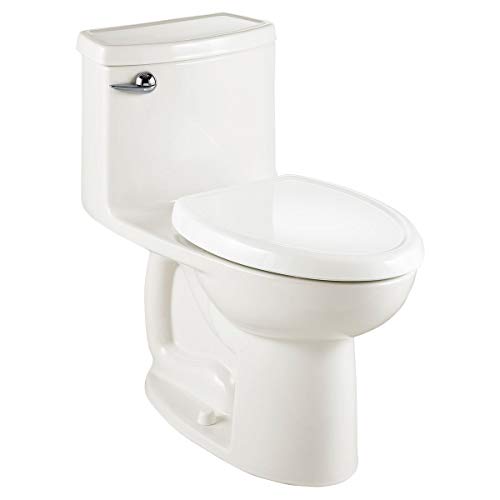
The American Standard Cadet 3 FloWise combines Right Height 16.5-inch seating with EPA WaterSense certification at 1.28 GPF and a 800-gram MaP score -- all at the lowest price point among accessibility-focused toilets from a major US brand.
American Standard markets the Cadet 3 as a workhorse toilet, and MaP testing data supports that reputation within its price tier. The fully glazed trapway at 2-1/8 inches is standard for the 1.28 GPF category, and aggregated owner reviews note a low rate of clogging under normal residential use. For seniors managing a fixed income or families fitting out a home for an aging parent, the Cadet 3 makes ADA compliance financially accessible.
The lifetime warranty on the porcelain is a notable long-term benefit. Since accessibility-related bathroom modifications tend to be permanent, having manufacturer warranty coverage on the bowl and tank indefinitely reduces the financial risk of the installation. For more senior-specific toilet criteria, see our guide to the best toilets for seniors.
The Cadet 3 is the toilet we most often see recommended by certified aging-in-place specialists when budget is the binding constraint. It checks every functional requirement, the height, the flush score, the WaterSense certification, and its parts are so common that any plumber in any city can service it.
The Woodbridge T-0001 offers the tallest seat height in this roundup at 17.75 inches in a sleek one-piece skirted design, making it the preferred choice when the accessible bathroom also needs to look like a contemporary renovation rather than a medical-grade installation.
Woodbridge is a smaller brand than TOTO or Kohler, but the T-0001 has built a strong aggregated review profile for its proportions and build quality. The 17.75-inch seat height is the most accommodating in this roundup for very tall users or those whose mobility limitations make the standard 16.5-inch height still too low for comfortable transfer. The fully skirted one-piece design removes exposed trapway and bolt hardware that can cause foot and ankle injuries in users with reduced sensation.
The soft-close seat included with the T-0001 is a detail worth noting: slamming toilet seats are a common source of bruising and injury for users with reduced coordination or involuntary movements. The dual-flush top-button actuator requires tank-top reach, which may be less intuitive than a side lever for users with certain neurological conditions. For more skirted toilet options, see our guide to the best skirted toilets.
Accessible bathroom design does not have to mean institutional-looking fixtures. The Woodbridge T-0001 is one of the few toilets that delivers above-ADA seat height in an aesthetic that is indistinguishable from a high-end hotel bathroom, which matters enormously for users' psychological comfort in their own homes.
Gerber's Viper uses a heavy-duty vitreous china construction paired with a MaxPower flush system rated at 800 grams MaP, and it is a preferred specification in commercial accessible facilities where durability and low lifetime maintenance costs outweigh brand recognition.
Gerber has been manufacturing toilets since 1932 and continues to supply commercial plumbing projects across the US. The Viper's heavy vitreous china construction is thicker than typical residential-grade porcelain, which translates to greater impact resistance and a longer useful life in high-traffic accessible bathrooms. MaP testing data confirms the 800-gram score at 1.28 GPF, aligning with EPA WaterSense requirements.
For group homes, adult day care facilities, or multi-bedroom accessible homes, the Viper's commercial-grade durability is a specification consideration that goes beyond what residential reviews typically capture. Plumbers who regularly work on accessible facility renovations tend to recommend Gerber for its consistent performance and predictable service intervals.
Gerber is underrated in consumer conversations but well-respected among commercial plumbing contractors. For accessible homes where the toilet will see heavy use from multiple users or caregivers over many years, the Viper's commercial-specification china is a durability argument that TOTO and Kohler's standard residential lines cannot match at the same price point.
The Kohler Highline Arc's slim, arc-shaped tank profile is designed with Kohler bidet seat compatibility in mind, making it the most practical ADA-compliant base toilet for users who want to add a washlet-style seat to maximize hygiene independence.
At 600 grams MaP, the Highline Arc has the lowest flush performance score in this roundup. That score is still above average for the industry broadly, but it means this toilet is better suited to households where clog risk is low and the primary accessibility goal is hygiene independence through a bidet seat rather than maximum flush power. Kohler's bidet seat lineup mounts seamlessly on the Highline Arc's elongated bowl profile.
For users with spinal cord injuries, MS, or other conditions affecting lower-body sensation and function, a bidet seat that provides automated posterior and anterior washing dramatically reduces dependence on caregiver assistance for hygiene tasks. The Highline Arc's slim tank also requires less depth from wall to bowl front, which can be significant in accessible bathrooms where wheelchair turning radius is constrained. For more information on bidet seat integration, see our best bidet toilet seats guide.
Bidet seats are arguably the most impactful single upgrade for disability-related hygiene independence, and they require a compatible base toilet. The Highline Arc is designed to accept Kohler's bidet seat range without adapter plates or fitment issues. If the end goal includes a bidet seat, starting with the Highline Arc is the most direct path to a clean installation.
The ADA specifies a toilet seat height of 17 to 19 inches from the finished floor, measured without the seat installed. Most comfort-height toilets (sometimes called chair-height or right-height) meet this standard with a rim height of 16 to 17.5 inches, which places the seat surface in the 17-to-19-inch zone once a standard seat is added. Taller users or those with more severe mobility restrictions may benefit from models at the upper end of this range or from a raised toilet seat accessory that adds 2 to 4 inches.
It is important to understand the measurement distinction. ADA specifies seat height with the seat in place, meaning the toilet bowl rim itself should measure approximately 16 to 17.5 inches from the floor to land in the compliant zone once a seat (typically 1 to 1.5 inches thick) is added. Manufacturers vary in how they report this measurement, sometimes citing rim height and sometimes citing seat height. Always verify which measurement is stated before purchase.
Beyond the ADA range, some occupational therapists recommend individualized height assessment. A user who is 6 feet 2 inches tall may find a standard 17-inch seat height still requires a deep hip bend, while a shorter user may find anything above 18 inches leaves their feet dangling uncomfortably. Raised toilet seats (non-permanent accessories) and wall-hung toilets (height adjustable at installation) are solutions for users whose needs fall outside the standard comfort-height range.
A practical rule of thumb from occupational therapy practice is that the ideal toilet seat height places the user's hips at or slightly above knee height when seated, with feet flat on the floor. This position minimizes the muscular effort needed to stand up and reduces strain on the hip and knee joints during transfer. Measure the user's seated height from floor to back of knee (popliteal height) and target a toilet seat within one inch of that measurement.
ADA Standards for Accessible Design do not explicitly require an elongated bowl shape. However, the ADA does require an 18-inch clearance from the toilet centerline to the nearest side wall or obstruction on the open transfer side, which practically favors elongated bowls because they provide a larger front-to-back seating surface that is safer for lateral transfers from wheelchairs. Round bowls are technically permissible under ADA but are rarely specified in accessibility-focused design.
Elongated bowls are 2 inches longer front-to-back than round bowls (typically 18.5 inches versus 16.5 inches). This extra length provides a larger surface area that is more forgiving for users who cannot position themselves with precision during transfers. For users with spasticity, tremors, or limited trunk control, the elongated bowl's extra depth reduces the risk of sitting too far forward or backward.
There is one practical exception: very small accessible bathrooms sometimes cannot accommodate the additional length of an elongated bowl without violating ADA turning radius requirements (60-inch minimum diameter clear floor space). In those cases, a compact elongated bowl (approximately 17.5 inches front-to-back, compared to the 18.5-inch standard) is a commonly specified compromise that preserves most of the accessibility benefits while fitting tighter floor plans.
A standard toilet cannot be permanently converted to ADA compliance, but a raised toilet seat accessory can bring the seat height into the ADA-required 17-to-19-inch range without replacing the toilet. Raised toilet seats attach to the existing bowl rim, adding 2 to 6 inches of height. They are a practical interim solution, but they are less stable than a correctly specified comfort-height toilet and may not satisfy ADA requirements for commercial or institutional settings.
Raised toilet seats come in two main configurations: bolt-on models that clamp under the existing seat, and seat-replacement models that substitute for the original seat entirely. Bolt-on models are faster to install but can shift under lateral transfer pressure. Seat-replacement raised seats are more stable and are a better choice for users who perform independent transfers.
For permanent residential accessibility modifications, replacing the toilet with an ADA-height model is nearly always the better long-term investment. A raised toilet seat adds a joint at the bowl rim that must be cleaned, can harbor bacteria, and reduces the weight capacity of the seating system. A comfort-height toilet eliminates all these compromises. The cost difference between a standard toilet and an ADA comfort-height toilet from the same manufacturer is typically small enough that replacement is the more practical choice when accessibility is a long-term need.
Commercial and public facilities must meet ADA requirements through permanent fixture specifications, not accessories. A raised seat in a public accessible restroom does not satisfy ADA compliance and exposes building owners to legal liability.
Beyond seat height, the most impactful toilet features for users with disabilities are: a fully glazed trapway for clog resistance (avoiding the need to plunge), elongated bowl shape for safer transfers, soft-close seat to prevent impact injuries, bidet seat compatibility for hygiene independence, and a side-mounted lever flush control that can be operated with a closed fist or forearm. Touchless or automatic flush options further reduce the manual dexterity required.
Let's examine each of these features in practical terms for disabled users:
When evaluating toilets for disability-related needs, think of the fixture as one component in a system. The toilet height, grab bar placement, floor surface friction, door clearance, and seat type all interact. A 17-inch toilet flanked by improperly placed grab bars is still a fall risk. The toilet selection matters, but it is the beginning of an accessible bathroom design conversation, not the end of it.
MaP (Maximum Performance) testing, conducted by an independent laboratory through map-testing.com, measures how many grams of simulated solid waste a toilet clears in a single flush. Scores range from 250 grams to a maximum of 1,000 grams. For disabled users who cannot easily plunge a clogged toilet, a MaP score of 800 grams or higher is a practical minimum recommendation, and 1,000 grams is the target for users whose conditions make plunging completely impractical.
MaP testing is funded by water utilities and conducted independently, which makes it one of the most credible performance metrics available for toilet selection. The test protocol uses a soybean paste-filled polyethylene bag that simulates real-world waste in terms of density and consistency. Each toilet is tested multiple times at its rated GPF, and the score reflects the mass cleared on a passing flush.
A 1,000-gram score does not mean the toilet is immune to all possible clogs. Foreign objects, excessive toilet paper, and non-flushable wipes can clog any toilet regardless of MaP score. But for waste-related clogging -- the type that occurs with normal toilet use -- a 1,000-gram MaP toilet is essentially problem-free under residential use patterns. The TOTO Drake II, TOTO UltraMax II, and American Standard Champion 4 all achieve this maximum score, which is why they lead accessibility-focused recommendations.
The ADA specifies a seat height of 17 to 19 inches for accessible toilets. For wheelchair users, the ideal is a seat height that closely matches the wheelchair seat height (typically 17 to 18.5 inches for most power and manual chairs), enabling a near-level lateral transfer without having to lift or lower the body significantly during the move.
The terms "comfort height," "chair height," and "right height" all describe the same 17-to-19-inch seat height range that satisfies ADA requirements. They are marketing labels used by different manufacturers (TOTO uses "comfort height," American Standard uses "right height," Kohler uses "comfort height") but refer to the same dimensional specification.
A raised toilet seat can bring a standard toilet into the ADA seat height range as a temporary or lower-cost solution. However, raised seats add instability, introduce an additional joint to clean, and may reduce total weight capacity. For permanent accessibility needs, replacing the toilet with a true comfort-height model is the more reliable and hygienic long-term solution.
ADA Standards require a 60-inch minimum clear floor space centered on the toilet (or 56 inches with a wall-mounted toilet) and a minimum 18-inch clearance from the toilet centerline to any side wall or obstruction on the transfer side. The accessible side must have no obstructions within 42 inches from the side wall to allow wheelchair approach and positioning.
ADA Standards for public and commercial spaces require grab bars on the side and rear walls when an accessible toilet is installed. In residential settings, grab bars are not legally required but are strongly recommended by occupational therapists and certified aging-in-place specialists. Rear bars typically mount 33 to 36 inches from the floor; side bars at 33 to 35.5 inches.
Side-mounted lever handles are generally the easiest to operate for users with limited grip strength, as they can be pushed with a forearm, palm, or wrist rather than requiring a full pinch or grip. Top-mounted push-button actuators (common on dual-flush models) require less force but more vertical reach. Touchless or automatic flush sensors eliminate the flush step entirely for users with severe hand function limitations.
One-piece toilets are generally better for accessible bathrooms because they eliminate the tank-to-bowl seam that traps bacteria, simplify caregiver cleaning, and often have skirted trapways that remove protruding hardware hazards. However, two-piece ADA models like the TOTO Drake II offer equivalent seat heights and flush performance at lower cost, making them the more common choice when budget matters.
Most bidet seats are designed for elongated bowls and will fit any standard elongated ADA toilet. Verify that the tank clearance behind the toilet allows for the bidet seat's rear extension (typically 2 to 4 inches), and that an electrical outlet is within reach for electronic bidet seats. TOTO Washlets, Kohler Novita, and Bio Bidet models all publish compatibility charts for specific toilet models.
For users who cannot easily plunge, a MaP score of 800 grams minimum is recommended, with 1,000 grams ideal. The TOTO Drake II, TOTO UltraMax II, and American Standard Champion 4 all achieve the maximum 1,000-gram score. MaP data is publicly available at map-testing.com and reflects independent laboratory testing rather than manufacturer claims.
Elongated bowls are approximately 2 inches longer front-to-back than round bowls. For users with mobility impairments, the elongated bowl's larger surface area is safer for transfer positioning and provides more room for users who cannot position themselves with precision. Round bowls are not recommended for primary accessible bathrooms, though they may be used in very small secondary bathrooms where floor space is constrained.
EPA WaterSense certification confirms a toilet flushes at 1.28 GPF or less while meeting minimum performance standards. For most accessibility applications, the performance criteria are more important than the water efficiency certification. However, WaterSense-certified ADA toilets (like the TOTO Drake II and Kohler Cimarron) demonstrate that high flush performance and water efficiency are not mutually exclusive.
Rough-in distance is measured from the finished wall behind the toilet to the center of the floor drain. Most US homes have a 12-inch rough-in. Measure this before purchasing. ADA toilets are available in 10-inch, 12-inch, and 14-inch rough-in configurations. TOTO, Kohler, and American Standard all publish rough-in specifications for each model on their product pages.
Yes. Wall-hung toilets are ADA-compliant when installed at the correct height and are actually the most customizable accessibility solution because installation height can be set to the specific user's needs rather than a standard range. They also create a wall-to-wall clear floor space beneath the toilet that is easier to clean and provides more positioning flexibility for wheelchair users. The structural carrier must be rated for the user's weight.
ADA comfort-height toilets typically cost the same as their standard-height counterparts from the same manufacturer. Many manufacturers offer their toilet lines in both standard and comfort-height configurations with identical pricing. The accessibility features -- primarily the increased height -- do not add significant manufacturing cost. The American Standard Cadet 3 Right Height is one of the most affordable examples, available at mainstream retail.
TOTO, Kohler, and American Standard offer the broadest ADA-compliant toilet ranges in the US market. TOTO leads in flush technology and CeFiONtect glaze performance. Kohler offers the widest style variety. American Standard provides the most clog-resistant options (Champion 4) and the most affordable WaterSense-certified comfort-height models. Gerber is the preferred choice for commercial-specification durability.
High-contrast toilet seats (dark seat on a white toilet or vice versa) are used in dementia care and low-vision settings to help users with visual processing issues locate the seat more easily. Thermoplastic seats are lighter and easier to lift than enameled wood seats, which can be relevant for users with limited grip. Soft-close hinges are recommended for users with reduced motor control to prevent injury from seat impact.
Flush valve diameter directly affects flush speed and clearing capacity. The American Standard Champion 4's 4-inch valve produces the most powerful water rush in the residential segment, compared to the standard 2-inch valves found in basic gravity toilets. For users with disability-related concerns about clog frequency, a 3-inch or 4-inch flush valve is a meaningful specification, not just a marketing claim.
Skirted toilets are generally preferable for accessible bathrooms because they eliminate exposed trapway hardware that can snag wheelchair footrests, walker legs, and mobility aid wheels. The smooth exterior surface is also faster and easier for caregivers to clean. One-piece skirted models like the TOTO UltraMax II and Woodbridge T-0001 offer the cleanest exterior profile for accessible bathrooms.
For most users with disability-related toilet needs, the TOTO Drake II is the single best choice: it achieves the rare combination of a maximum 1,000-gram MaP flush score and ADA-compliant 16.5-inch comfort height at a price that is accessible to most households. Users who need maximum seat height should consider the Woodbridge T-0001 at 17.75 inches, while those prioritizing caregiver cleaning ease will find the TOTO UltraMax II worth the premium. Budget-focused buyers should start with the American Standard Cadet 3, which covers every functional accessibility requirement at the lowest price point from a major US brand. Pair whichever toilet you choose with properly installed grab bars and verify the bathroom's 60-inch clear floor space requirement before finalizing your selection.
Learn why toilet trapways curve like an S, how each bend blocks sewer gas, and what the shape means for clogs and…
Read the guideAlmost every US toilet has a left-side handle. Learn the plumbing and mechanical reasons behind the layout and when it actually changes.
Read the guideHome toilets rely on tanks because household water lines lack the pressure that public flushometer systems use to flush straight from the…
Read the guide