

Common Bidets Problems and How to Fix Them (2026)
Bidets4.6
Step-by-step fixes for the bidet problems reported most often, from a unit that won't spray and weak water pressure to a seat…
Read the guideSeven beginner-friendly bidets ranked by ease of installation, wash quality, and owner satisfaction -- with setup tips so you can go from unboxing to rinsing in under 30 minutes.
For most beginners the TOTO SW2034#01 C100 WASHLET is the clearest entry point: it installs in under 20 minutes on any elongated seat, delivers a self-cleaning wand, warm-water wash, and a heated seat, all controlled by a wired remote -- no plumber or electrical work required beyond a standard GFCI outlet.
Switching to a bidet feels like a major lifestyle change, but the hardware itself is simpler than most bathroom upgrades. A non-electric bidet attachment bolts onto the toilet in minutes using basic tools; an electric seat swaps your existing seat and plugs into an outlet. Neither requires wall work, special plumbing skills, or permits. What matters for beginners is choosing the right type first -- attachment, non-electric seat, or entry-level electric seat -- then matching it to the toilet shape (round or elongated) and the features you actually need.
This guide covers seven models across all three types. Each entry includes wash quality, installation difficulty, water temperature options, and honest notes on where each model falls short. If you are researching toilets at the same time, see our full guide to the best flushing toilets to understand trapway size and GPF ratings before adding a bidet seat that fits the bowl correctly.
There are three practical types for home use: bidet attachments (thin plates that slide under an existing seat, no electricity, cold-water only), non-electric bidet seats (replace the seat, may add warm water via T-valve from the hot supply line), and electric bidet seats (replace the seat, plug into a GFCI outlet, heat water internally, often add warm air dry and a heated seat). Beginners who want zero wiring should start with an attachment or non-electric seat; those willing to use an outlet gain significantly more comfort features.
| Model | Type | Warm Water | Heated Seat | Install Time | Bowl Fit | Best For | Check Price |
|---|---|---|---|---|---|---|---|
| TOTO SW2034 C100 WASHLET | Electric seat | Yes (tank) | Yes | 15-20 min | Elongated | Best overall | Check price |
| Bio Bidet Slim One | Non-electric seat | T-valve | No | 15 min | Round & elongated | No-outlet bathrooms | Check price |
| Tushy Classic 3.0 | Attachment | No (cold only) | No | 10 min | Round & elongated | Simplest start | Check price |
| Kohler C3-230 Bidet Seat | Electric seat | Yes (on-demand) | Yes | 20-25 min | Elongated | Kohler ecosystem | Check price |
| Alpha JX Bidet Seat | Electric seat | Yes (tank) | Yes | 15-20 min | Round & elongated | Value electric | Check price |
| Brondell Swash 300 | Electric seat | Yes (tank) | Yes | 15-20 min | Round & elongated | Budget first-timer | Check price |
| GenieBidet Seat | Non-electric seat | T-valve | No | 10-15 min | Round & elongated | Cheapest full seat swap | Check price |
TOTO built its entry-level WASHLET around the same ewater+ self-cleaning wand technology found in its premium lineup, making this one of the most hygienic beginner seats on the market at a price point that does not require a lengthy justification.
The C100 installs by removing the existing seat, attaching the TOTO mounting bracket to the bowl's seat bolt holes, connecting a T-valve to the cold water supply line, and plugging in. The included T-valve and supply line cover most toilet setups. TOTO ships a clear instruction sheet that the majority of owners describe as easy to follow -- average install time in owner reviews is 15 to 20 minutes.
For beginners who have never used a bidet seat before, the C100's side-arm wired remote is ideal: the buttons are labeled in plain English, and there is no need to fumble with a wireless remote or a smartphone app. Wash pressure adjusts across five settings; the default level two is gentle enough for first-time users while still providing effective cleansing.
TOTO's ewater+ system mists the wand before and after each use with electrolyzed water, which is a meaningful hygiene feature that budget seats skip. For a beginner, that automatic self-cleaning routine removes one maintenance task entirely -- the wand stays cleaner without any manual effort.
The Bio Bidet Slim One replaces the toilet seat entirely and introduces warm-water wash by routing the hot supply line via a dual-inlet T-valve -- a smart workaround that costs nothing extra on installation but requires access to the bathroom hot water supply line under the sink or at the toilet supply.
Installation involves removing the old seat, mounting the Slim One's bracket, connecting two T-valves (hot and cold to the dual inlet), and setting the blending knob to your preferred temperature. Most owners report about 15 minutes to install if the hot supply line is accessible. The slow-close lid is a tangible upgrade from cheap seats and adds to the perceived quality.
Wash pressure on the Slim One comes from home water pressure, so the experience varies by household. At normal city pressure (40-60 PSI), the wash is firm and effective. At lower well-water pressure the stream can feel mild, so owners with pressure below 35 PSI should consider a pressurized seat instead.
The warm-water-without-electricity design is genuinely clever and makes the Slim One the top choice for powder rooms, basement bathrooms, and older homes where adding an outlet near the toilet is not practical. The trade-off is a slightly more involved install than a cold-water attachment.
The Tushy Classic 3.0 is a cold-water-only attachment that slides under the existing toilet seat with no tools beyond the included wrench -- no electricity, no new seat, no plumbing beyond attaching a T-valve to the cold supply line.
The Tushy 3.0 improved its attachment plate thickness versus the previous generation, which reduces the seat tilt that some owners found annoying on older Tushy models. The self-cleaning nozzle guard retracts when not in use, shielding the nozzle from splash and debris. At maximum pressure the wash is strong enough to be effective; the angle adjustment helps position the stream without repositioning your body.
The cold-water limitation is real, especially in northern climates during winter when supply line water can be near 50 degrees Fahrenheit. If you live in a warm climate or the bathroom is heated, this is far less of a concern. For pure beginners who want to experience bidet washing before committing to a full seat, this attachment is a low-stakes entry point.
Bidet attachments like the Tushy Classic 3.0 make most sense as a trial step or for renters. If you use it for a month and find you want warm water, the upgrade path to an electric seat is straightforward -- and the attachment cost offsets part of the seat purchase.
Kohler's C3-230 pairs naturally with the Kohler Highline and Kohler Cimarron elongated toilets, delivering on-demand tankless warm water, a stainless-steel self-cleaning wand, and a deodorizer -- features not found on every beginner seat.
The on-demand heating approach in the C3-230 eliminates the cold-water tail you get at the end of a tank seat's reservoir. For households with multiple users, this matters: the fifth person to use the seat gets the same warm water as the first. The stainless steel wand is also a meaningful durability difference versus plastic nozzles found on budget seats.
Kohler's wireless remote requires two AA batteries and pairs to the seat out of the box -- no Bluetooth or app setup needed. The memory presets let each household member save their preferred pressure and temperature, which simplifies daily use once dialed in. Installation follows the same T-valve and bracket pattern as TOTO, and Kohler provides thorough paper instructions plus a QR code linking to a video walkthrough.
If your toilet is already a Kohler Highline or Kohler Cimarron and you want a seat that looks like it belongs, the C3-230 is the natural match. The stainless steel wand and on-demand heating justify the step up in price for households with three or more daily users.
The Alpha JX includes an air dryer, warm seat, posterior and feminine wash, and a wireless remote at a lower price than the TOTO C100, making it the top value pick for beginners who want a full feature set without spending on a premium brand name.
Alpha has built a strong reputation in the bidet-seat market specifically by offering feature parity with TOTO's mid-range seats at lower prices. Owner reviews consistently highlight the wireless remote as a usability improvement over wired side-arm remotes, and the inclusion of an air dryer separates this seat from the TOTO C100 for users who want to eliminate toilet paper entirely.
The JX's wash quality is solid for the segment. The oscillating wash mode sweeps the nozzle back and forth during wash, covering a wider area than a fixed-nozzle model. Nozzle self-cleaning is automated (pre and post wash rinse cycle) rather than relying on electrolyzed water like TOTO's ewater+, but it is functional and keeps the nozzle clean with normal use.
If the deciding factor is budget and the bathroom already has a GFCI outlet, the Alpha JX delivers more features per dollar than the TOTO C100. The trade-off is a smaller service network and a brand with less history, but owner satisfaction data is consistently positive.
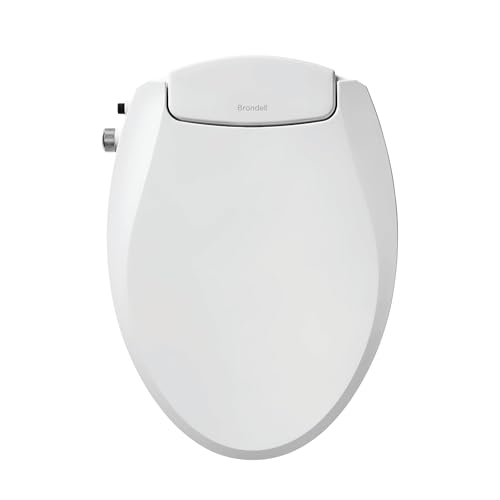
Brondell's Swash 300 is one of the entry-level electric seats from a brand with a decade-long track record in the US bidet market, offering a heated seat, warm wash, and a wired remote at an accessible price that competes directly with budget alternatives from lesser-known brands.
The Swash 300 is explicitly positioned as a starter model within Brondell's lineup, and it delivers on the core promise: a warm seat and warm wash with a simple panel. The absent feminine wash and air dryer are real limitations, but for a single-person household or someone just exploring bidet use, those omissions may not matter on day one.
Brondell's customer service has a strong reputation in the bidet category, with most warranty claims resolved quickly. That after-purchase support is worth considering when choosing between a known brand at this price and an unverified budget option from an unknown manufacturer.
The Swash 300 is the responsible choice at the low end of the electric seat market -- it is not feature-rich, but it is well-supported, fits round bowls, and comes from a brand that will still exist when you need a replacement part or warranty service.
The GenieBidet Seat replaces a standard toilet seat entirely and delivers cold-water wash via a dual-nozzle (posterior and feminine) system controlled by simple side knobs -- no electricity, no T-valve for warm water, minimal install complexity.
For households where budget is the primary driver and electricity is not available near the toilet, the GenieBidet Seat outperforms plain attachments by including a feminine wash nozzle and providing a full seat replacement. The plastic construction is functional rather than premium, and the absence of a soft-close mechanism is noticeable when compared to seats costing slightly more.
Installation connects the seat's water inlet directly to the cold supply T-valve -- one connection, no hot water line required. Most owners complete the install in under 15 minutes. This is the most basic entry into bidet seats, and it performs the core task adequately for beginners willing to tolerate cold water.
The GenieBidet Seat sits at the bottom of our list because the cold-water limitation and basic build quality limit the long-term satisfaction rate. That said, for a bathroom with no outlet and a budget that excludes the Bio Bidet Slim One, it is the most complete non-electric seat swap available.
Installing an electric bidet seat involves four steps: turn off the toilet's cold water supply valve, flush the toilet to empty the tank, remove the existing seat by unscrewing the plastic bolts at the rear of the bowl, attach the bidet mounting bracket to the same bolt holes, connect the included T-valve to the cold supply line, plug the power cord into a GFCI outlet, and slide the seat onto the bracket until it clicks. Most installs require a flathead screwdriver, an adjustable wrench, and about 20 minutes. Non-electric attachments follow the same process minus the outlet step.
The T-valve connection is where most beginner install errors happen. Use thread seal tape (PTFE tape) on all threaded connections to prevent slow drips. Wrap the tape clockwise around the male threads two to three times before threading the valve. This takes 30 seconds and prevents most post-install leaks.
First-time bidet users typically experience the cold-water sensation as the most jarring aspect, which is why an electric seat with warm water is recommended for beginners. The wash nozzle position is fixed, so the user needs to adjust seating position slightly -- most seats provide a posterior wash that is positioned 1-2 inches behind the standard seated position. Start with the lowest pressure setting, allow 30-60 seconds of wash time, then pat dry or use the air dryer if available. The experience normalizes within two to three uses.
Most bidet seats and attachments fit standard toilet bowl shapes (round = 16.5 inches, elongated = 18.5 inches) regardless of brand. TOTO Drake, TOTO UltraMax II, Kohler Highline, Kohler Cimarron, American Standard Champion 4, and American Standard Cadet 3 all accept standard elongated bidet seats. Skirted or concealed trapway toilets like the Woodbridge T-0001 or Swiss Madison models may have seat hinge holes positioned slightly differently, so verify the seat's mounting bracket spacing against the toilet's bolt hole measurement before purchasing. French-curve bowls and non-standard bolt hole spacings are the main compatibility exceptions.
A bidet wash cycle uses approximately 0.03 to 0.05 gallons (1/8 cup) of water per use. By comparison, manufacturing one roll of conventional toilet paper requires roughly 37 gallons of water according to published lifecycle analyses. Over a year of daily bidet use, the water consumed is a small fraction of what is embedded in the toilet paper displaced. EPA WaterSense standards focus on toilet flushing efficiency (1.28 GPF certified threshold), not bidet wash water, but the bidet's water footprint is negligible by comparison.
Yes. Non-electric bidet attachments and non-electric seats like the Bio Bidet Slim One require no electricity. If an outlet is present but not GFCI-rated (required within 6 feet of water sources by the National Electrical Code for new installations), a licensed electrician can convert an existing outlet to GFCI for a minor fee. Running a new outlet from a nearby circuit is also a common project for electricians. Alternatively, battery-powered remote accessories for some seats eliminate the need for an outlet for the remote itself, though the seat heating and water warming still require mains power.
No. Bidet seats use a simple T-valve that connects to the existing toilet supply line. No soldering, pipe cutting, or licensed plumbing work is required. The only exception is adding a new GFCI electrical outlet if one does not exist near the toilet, which requires an electrician.
A bidet attachment is a thin plate that slides under your existing toilet seat. A bidet seat replaces the toilet seat entirely and typically offers a cleaner look, a slow-close lid, and additional features like a heated seat (on electric models). Seats are the more permanent, feature-rich option.
For most people, cold water from a bidet attachment in a heated bathroom is tolerable, similar to cold tap water on your hands. In winter months or in cooler climates, the sensation is noticeably more jarring. If cold water discomfort is a concern, choose a warm-water non-electric seat or an electric bidet seat with a water heater.
Electric bidet seats use roughly 20-40 watts in standby mode (for seat heating) and 1,000-1,400 watts during active water heating. Most seats are only in active heating mode for 30-90 seconds per use. Annual energy consumption for a family of four is typically 50-100 kWh, comparable to a small kitchen appliance.
Most skirted toilets use standard bolt hole spacing and accept bidet seats without modification. The Woodbridge T-0001 and similar concealed-trapway models have been confirmed compatible with TOTO WASHLET and Brondell Swash seats by owner reports. Always verify the bowl shape (round or elongated) and measure bolt hole spacing before ordering.
Bidet wands self-clean before and after each use on virtually all models. The nozzle retracts and is shielded when not in use. Premium seats like the TOTO C100 use ewater+ (electrolyzed water) for additional wand sanitation. Studies published in medical literature -- including research on post-operative care patients -- support bidet use as equal or superior in cleanliness to toilet paper for most users.
Measure from the seat bolt holes at the rear of the bowl to the front of the bowl rim. Round bowls measure approximately 16-17 inches; elongated bowls measure approximately 18-19 inches. Most residential toilets sold in the US after 2000 are elongated. Check the toilet's model number against the manufacturer spec sheet for confirmation.
Quality electric bidet seats from brands like TOTO, Kohler, and Brondell typically last 8-12 years with normal use. The heating elements and wand are the most common wear items. Non-electric seats and attachments have fewer failure points and can last 10+ years. Avoid no-name brands, as internal component quality is difficult to assess from product listings alone.
Yes, bidet seats are safe for children with adult supervision for initial uses. Reduce pressure to the minimum setting. Some seats have a child wash mode with gentler, shorter wash cycles. Ensure the seat's weight capacity accommodates the child (most seat capacity ratings are 330 lbs, far above any child's weight).
With an air dryer (available on many electric seats), toilet paper use can be reduced to near-zero. Without an air dryer, most users pat dry with a small amount of toilet paper -- roughly 80% less than without a bidet, based on self-reported surveys by bidet brands and plumbing associations. Some households keep a small cloth towel for drying instead.
TOTO WASHLET seats carry a 1-year warranty on the full unit; Kohler offers 1 year on the C3-230; Brondell provides 3 years on electronic components and 1 year on the seat structure. Alpha Bidet offers 3 years. Bidet attachments like the Tushy Classic 3.0 carry a 1-year warranty. Always register the product with the manufacturer at purchase to activate warranty coverage.
Yes. Pressure-assist toilets like the Flushmate-equipped models and American Standard's Cadet series have standard supply line connections and bowl shapes. The bidet seat installs identically to a gravity-flush toilet. Pressure inside the flushing vessel does not affect the bidet seat's water supply, which is drawn directly from the supply line before the tank.
Most bidet seats have a quick-release button that slides the seat off the mounting bracket in one motion, allowing easy access to clean under and behind the seat. The self-cleaning nozzle reduces the need for manual wand cleaning, but a weekly wipe-down of the seat surface with a mild cleaner keeps it hygienic. Avoid abrasive cleaners that scratch the plastic wand housing.
During a power outage, the heated seat, warm water, and air dryer functions stop working. The toilet itself continues to flush normally (toilets do not require electricity for gravity-flush systems). The bidet wand can still be used manually with cold water on most models by pressing the wash button -- some seats allow cold-water wash without power; others lock the nozzle entirely until power returns.
French curve or D-shaped bowls are less common in North American markets. Standard bidet seats designed for elongated bowls (18.5-inch) will not align correctly on a French curve bowl, and the nozzle position may be incorrect. Verify the toilet's bowl shape with the manufacturer before purchasing. TOTO makes specific WASHLET models to fit its own Neorest and other non-standard bowl shapes.
No. The bidet seat replaces only the toilet seat and lid assembly. It does not alter the tank, trapway, flush valve, or flushing mechanism in any way. The toilet's flushing power -- whether it is a TOTO Drake's double-cyclone, a Kohler Highline's Class Five, or an American Standard Champion 4's fully-glazed trapway -- is completely unaffected by the bidet seat installation.
Tank-style seats (TOTO C100, Alpha JX, Brondell Swash 300) store a small volume of warm water (typically 0.4-0.5 L) that runs out after 45-90 seconds of continuous wash, at which point the water turns cold. Tankless (on-demand) seats (Kohler C3-230) heat water instantly as it flows through, providing unlimited warm water. Tankless seats draw more amperage during heating but eliminate the cold-water tail that tank seats experience.
Yes. Bidet seats are particularly beneficial for users with limited mobility, arthritis, or post-surgery recovery. Features to prioritize for this use case: a remote control (avoids reaching to a side panel), a heated seat (reduces discomfort on cold days), an air dryer (eliminates wiping), and ADA-compliant seat height when combined with a comfort-height toilet. See our ADA-compliant toilet guide for toilet height specifications that pair well with bidet seats for seniors.
Yes. Dual-flush toilets such as the TOTO Aquia IV and American Standard H2Option have standard supply line connections and seat bolt holes. The bidet seat installs identically. The dual-flush function on the toilet is not affected by the seat change. Be aware that some dual-flush toilets have tank lids that overhang further forward, which can interfere with bidet seat remote storage brackets on side-arm models.
For the majority of beginners, the TOTO C100 WASHLET is the right first bidet seat: it installs in under 20 minutes, uses ewater+ to keep the wand self-cleaning, and is backed by TOTO's exceptional reliability record. Renters or those without a bathroom outlet should start with the Tushy Classic 3.0 attachment, while no-outlet homeowners who want warm water should invest in the Bio Bidet Slim One. All three options deliver a genuine bidet experience without plumbing modifications or specialist tools.
Step-by-step fixes for the bidet problems reported most often, from a unit that won't spray and weak water pressure to a seat…
Read the guideA step-by-step framework for picking the right bidet type, features, and fit based on your toilet, your bathroom's electrical access, and how…
Read the guide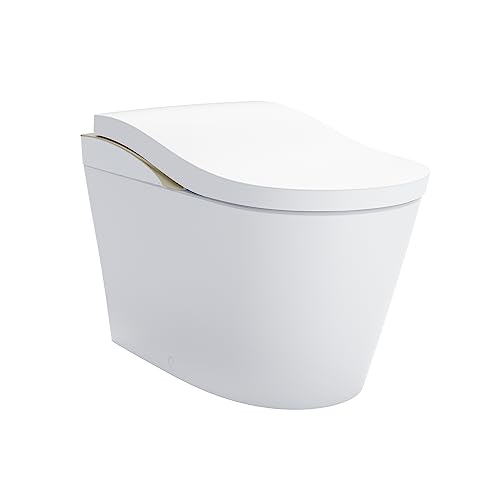
A luxury bidet is judged on a different set of criteria than a standard seat: automatic lid function, a full remote-controlled preset…
Read the guide