How to Anchor a Floating Vanity to Wall Studs
Bathroom Remodeling4.6
A step-by-step guide to locating studs, choosing lag screws or toggle bolts, mounting a ledger board or bracket, and confirming a floating…
Read the guideClawfoot and freestanding soaking tubs with soft, rounded profiles and warm brass or bronze feet that anchor a rustic European bathroom.
Research updated June 2026.
A cast-iron or acrylic clawfoot tub with a rolled rim and aged-brass ball-and-claw feet is the strongest all-around French Country bathtub pick, delivering the style's signature freestanding silhouette with real soaking depth.
French Country bathtubs almost always take a freestanding form, whether a classic clawfoot on decorative feet or a smooth-sided freestanding soaking tub, since a built-in alcove tub reads as more modern or standard regardless of surround finish. A rolled or double-rolled rim, a gently curved oval silhouette, and warm brass, bronze or gold-finished feet and fill hardware all reinforce the look. Every tub below is a genuine, currently sold product line, described here by material, dimensions and install type.
| Model | Style Fit | Key Spec | Best For | Check Price |
|---|---|---|---|---|
| Kohler Iron Works Historic Clawfoot Tub | Cast iron, double-rolled rim | 66 x 32 in, freestanding | Best overall French Country tub | Check price |
| American Standard Cambridge Clawfoot Tub | Acrylic, classic clawfoot shape | 60 x 30 in, freestanding | Best lightweight clawfoot | Check price |
| Kohler Iron Works Freestanding Oval Tub | Cast iron, smooth oval, no feet | 66 x 36 in, freestanding | Best smooth-side freestanding | Check price |
| American Standard Colony Freestanding Soaking Tub | Acrylic, curved oval, rolled rim | 60 x 32 in, freestanding | Best budget freestanding tub | Check price |
| Kohler Archer Alcove Soaking Tub | Curved apron, built-in install | 60 x 32 in, alcove | Best space-saving alcove option | Check price |
No. A clawfoot tub is the most iconic French Country silhouette, but a smooth-sided freestanding oval soaking tub with a rolled rim also fits the style well, particularly in a more pared-back, softened take on the aesthetic. Built-in alcove tubs can work too if paired with a curved apron front and warm-toned surround tile.
Both fit the style visually, but cast iron is the more historically authentic material and holds heat significantly longer during a long soak, while acrylic is far lighter, easier to install in an upper-floor bathroom, and generally less expensive. The choice usually comes down to floor structural capacity and budget rather than style.
Aged or polished brass, brushed gold and warm bronze are the most authentic French Country foot finishes, echoing the warm-metal hardware used throughout the style. Matte black or chrome feet, while available, read as more modern or industrial against the tub's classic silhouette.
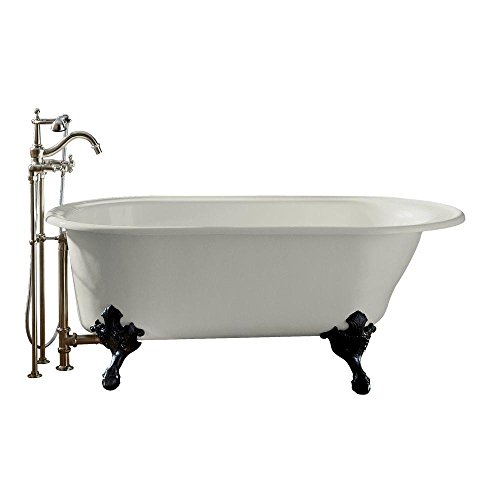
This cast-iron clawfoot delivers a true double-rolled rim and a substantial, historically accurate silhouette, backed by cast iron's genuinely superior heat retention for a long, warm soak.
Cast iron holds heat far longer than acrylic during a soak, a genuine functional advantage beyond its aesthetic authenticity, and the enameled finish resists scratching and staining significantly better than acrylic over decades of use. The double-rolled rim is a more elaborate, sculptural detail than a single-rolled edge, adding to the tub's substantial presence.
The tradeoff is weight. At roughly 400 to 450 pounds empty, and considerably more once filled with water and a bather, cast iron tubs require confirmation that the floor structure can support the load, particularly on any floor above grade. Owner reviews consistently praise the finish durability and the tub's genuinely luxurious feel.
For a ground-floor bathroom where floor loading is not a concern, this Kohler Iron Works clawfoot is the most authentic and functionally superior French Country tub on this list, and the double-rolled rim is a genuine design upgrade over a simpler single-roll edge.

The Cambridge delivers the same classic clawfoot silhouette in acrylic, a fraction of cast iron's weight, making it a practical choice for upper-floor bathrooms where structural load is a real concern.
At roughly a quarter of the weight of a comparable cast-iron tub, the Cambridge is dramatically easier to maneuver into an upper-floor bathroom and places far less load on the floor joists, a practical consideration many buyers discover only after falling in love with a cast-iron tub their contractor then rules out.
Owner reviews describe acrylic's surface as warmer to the touch initially than cast iron, though it does not retain heat in the water itself as long during an extended soak. The 60-inch length is also more compact than the 66-inch Iron Works tub, a practical advantage in a smaller bathroom footprint.
When a structural engineer or contractor rules out cast iron for an upper-floor installation, the Cambridge delivers the same clawfoot silhouette without the weight concern, and its smaller footprint helps it fit more bathrooms.

This freestanding oval tub trades exposed clawfoot legs for smooth cast-iron sides sitting flush to the floor, a softened, more pared-back take on French Country that still reads as unmistakably freestanding.
Without exposed feet, this tub is genuinely easier to clean around at the base, since there is no gap between the feet and floor to trap dust and moisture. The wider 36-inch oval body also provides more interior soaking room than the narrower clawfoot options on this list.
Owner reviews note the flush-base design still reads as clearly freestanding and sculptural, just without the more ornate decorative foot detail. For buyers who want a slightly more streamlined, contemporary-leaning French Country look, this is a strong middle ground between a full clawfoot and a plain alcove tub.
This is the tub I recommend for buyers who love the freestanding French Country silhouette but find exposed clawfoot legs slightly too ornate for their taste. The smooth base keeps the look softened without losing the style's core freestanding statement.

The Colony freestanding tub delivers a curved oval silhouette and rolled rim in acrylic at a lower price than premium cast-iron freestanding options, making the French Country statement piece more accessible.
Acrylic's lighter weight and lower manufacturing cost make a freestanding soaking tub achievable at a meaningfully lower price than cast iron, without sacrificing the rounded, rolled-rim silhouette that carries most of the French Country visual weight. The curved oval body still reads clearly as a statement freestanding tub rather than a built-in alcove unit.
Owner reviews describe installation as more manageable than a cast-iron tub given the reduced weight, though acrylic can feel less substantial underfoot when stepping in and out compared to enameled cast iron. For most budget-focused French Country remodels, the visual payoff outweighs that tradeoff.
When budget is the deciding factor, the Colony freestanding tub still delivers the statement-piece silhouette a French Country bathroom wants, just without the cast-iron price tag or the associated floor-loading concerns.

Archer proves a built-in alcove tub can still nod to French Country with a gently curved apron front, a practical choice for bathrooms too small for a freestanding tub's clearance requirements.
A freestanding tub, whether clawfoot or smooth-sided, needs clearance on multiple sides that many smaller bathrooms simply do not have, making a well-chosen alcove tub the more realistic option in that scenario. Archer's curved apron front softens the otherwise flat, boxy profile typical of standard alcove tubs, keeping some of the French Country curve language intact.
Owner reviews describe the tub as functional for combined shower and bath use, a practical necessity in many primary bathrooms that a freestanding soaking tub cannot provide without a separate shower enclosure. It will not deliver the dramatic, sculptural presence of a true freestanding piece, a fair tradeoff given the space and budget constraints it solves.
When a bathroom's footprint genuinely cannot accommodate a freestanding tub, Archer's curved apron is the best available way to bring a hint of French Country softness into a practical, shower-compatible alcove installation.
The Kohler Iron Works Historic Clawfoot Tub is the best overall pick. Its cast-iron construction and double-rolled rim deliver the most authentic and functionally superior French Country silhouette, with genuinely better heat retention than acrylic.
It is strongly recommended, particularly for any installation above ground level. A filled cast-iron tub with a bather can weigh well over 800 pounds, and confirming the floor joists can support that concentrated load is an important safety step before installation.
Not lower quality, but different tradeoffs. Acrylic is significantly lighter and less expensive, and modern acrylic tubs are durable and scratch-resistant, but cast iron retains heat longer during a soak and generally has a longer service life if properly maintained.
Aged or polished brass, brushed gold and warm bronze are the most authentic French Country foot finishes. Coordinate the foot finish with your tub filler and other bathroom hardware finishes for a cohesive look.
No. Freestanding tubs need clearance on multiple sides for both the tub's footprint and comfortable access, and they require floor space many smaller bathrooms lack. Measure your bathroom's available floor space carefully, including door swing and walkway clearance, before choosing a freestanding tub.
Most freestanding tubs, including every model in this roundup except the Archer alcove tub, are designed for bathing only and are not compatible with a shower enclosure. A separate shower is typically needed elsewhere in the bathroom if daily showering is a priority.
A freestanding floor-mount or deck-mount clawfoot-specific tub filler is required, since a standard wall-mount tub spout is not compatible with a freestanding tub's plumbing configuration. Choose a filler finish that matches the tub's feet for a cohesive look.
Cast iron's density allows it to retain water heat noticeably longer during an extended soak compared to acrylic, which cools somewhat faster since it is a thinner, less thermally massive material. Both materials are safe and comfortable for typical bathing use.
Freestanding French Country tubs commonly range from 60 to 72 inches in length, with 60 to 66 inches being the most common sizes that fit a standard primary bathroom footprint while leaving adequate clearance around the tub.
Yes, when paired with a curved apron front rather than a flat panel, along with warm-toned surround tile and coordinating warm-metal fixtures. It will not deliver the dramatic freestanding statement of a clawfoot or oval soaking tub, but it can still contribute to the overall style in a space-constrained bathroom.
The Kohler Iron Works Historic Clawfoot Tub is the strongest overall French Country pick for a ground-floor bathroom, combining authentic cast-iron construction with genuinely superior heat retention. Upper-floor installations are better served by the acrylic American Standard Cambridge Clawfoot, which delivers the same silhouette at a fraction of the weight. Buyers wanting a softened, less ornate freestanding look should consider the Kohler Iron Works Freestanding Oval, while smaller bathrooms without freestanding clearance can still bring in French Country softness through the curved-apron Archer alcove tub. Confirm floor structural capacity and available clearance before choosing between cast iron and acrylic.
How we rank & our data sources
We do not run physical lab tests. Rankings are built from published, verifiable data and real owner feedback, never paid placement.
Researched by admin · Last updated July 3, 2026 · Our review method
A step-by-step guide to locating studs, choosing lag screws or toggle bolts, mounting a ledger board or bracket, and confirming a floating…
Read the guide
Stepped fronts, symmetrical geometric cabinetry and polished brass hardware that bring 1920s glamour to a modern vanity, without giving up soft-close storage.
Read the guideEverything involved in swapping an old bathroom vanity for a new one, from planning and demolition through disposal, wall repair, and reinstalling…
Read the guide