
Best Art Deco Bathtubs (2026)
Bathroom Remodeling4.6
Symmetrical stepped-apron silhouettes and polished brass fittings that turn a soaking tub into the centerpiece of a 1920s-inspired bathroom.
Read the guideContemporary bathtubs favor freestanding sculptural forms, clean rectangular alcove profiles and acrylic or stone-resin construction over the clawfoot and ornate skirted shapes of traditional design.
Research updated June 2026.
The Kohler Archer Freestanding Bathtub is the top contemporary pick. Its clean, symmetrical oval silhouette, durable acrylic construction and freestanding install create a sculptural focal point that defines the contemporary bathroom without the ornamentation of a traditional clawfoot design.
A contemporary bathtub is judged first on its silhouette. Where a traditional tub relies on curved skirting, decorative feet or a rolled rim, a contemporary tub is defined by clean geometric lines, whether that is a freestanding oval or rectangular soaking tub or a minimal alcove tub with a flat, unadorned apron. The material matters too: acrylic remains the standard for its light weight and heat retention, while stone-resin composites have become a popular premium option for their solid, substantial feel.
We do not run physical lab tests on these tubs. Instead we compare published material specifications, standard dimensions, install type and the patterns that show up across large volumes of verified owner reviews. Real construction differences, such as acrylic thickness, reinforcement structure and drain placement, matter more here than any marketing language, so that is our focus in each pick below.
Every pick had to present a genuinely contemporary silhouette (freestanding sculptural form or minimal-apron alcove design), use a durable, well-reviewed material, and offer realistic standard dimensions for a US bathroom. We weighted heat retention, weight and installation complexity alongside consistent owner feedback on surface durability over years of use.
| Model | Style Fit | Key Spec | Best For | Check Price |
|---|---|---|---|---|
| Kohler Archer Freestanding | Oval freestanding | Acrylic, 66 x 32 in | Most contemporary bathrooms | Check price |
| Woodbridge Freestanding Bathtub | Slipper freestanding | Acrylic, 67 x 31.5 in | Budget freestanding | Check price |
| Kohler Villager Alcove | Minimal alcove | Cast iron, 60 x 32 in | Durable alcove install | Check price |
| American Standard Cadet Alcove | Flat-apron alcove | Acrylic, 60 x 32 in | Budget alcove | Check price |
| Woodbridge Stone Resin Freestanding | Rectangular stone resin | Stone resin, 59 x 29.5 in | Premium solid feel | Check price |
| Kohler Underscore Freestanding | Rectangular freestanding | Acrylic, 60 x 32 in | Sharp rectangular look | Check price |
| American Standard Studio Alcove | Deep-soak alcove | Acrylic, 60 x 32 in | Deep soaking in alcove | Check price |
A contemporary bathtub relies on clean, unbroken lines, whether that is a symmetrical oval or rectangular freestanding form or a flat, unadorned apron on an alcove tub. It avoids decorative feet, rolled rims and ornate skirting in favor of a simple, sculptural shape, often finished in matte or glossy white, though matte black and stone-look finishes have become popular contemporary variations on freestanding models.
Both fit the contemporary aesthetic. A freestanding tub, positioned away from the wall with all sides finished, makes the strongest visual statement and works best in a larger primary bathroom built around it as a centerpiece. An alcove tub, installed against three walls, is more space-efficient and budget-friendly, and a flat-apron contemporary alcove tub still reads clean and modern despite the built-in install.
Acrylic is lighter, less expensive and retains heat well, making it the practical standard for most contemporary tubs. Stone resin composite is heavier and more expensive but delivers a noticeably more substantial, solid feel with excellent heat retention, and it is increasingly popular for premium freestanding contemporary tubs that prioritize a weighty, high-end presence.
The picks below combine a genuinely current sculptural or minimal silhouette, durable construction and a consistent pattern of positive owner feedback on surface quality and heat retention.

The Archer freestanding tub uses a simple, symmetrical oval form with a shallow-angled backrest, giving it a restrained sculptural presence that works in nearly any contemporary bathroom layout. Its acrylic construction keeps the weight manageable for most floor structures without professional reinforcement.
Archer's acrylic shell is reinforced for structural rigidity and finished with a smooth, glossy surface that resists staining and is straightforward to clean with routine care. Because it is freestanding, all sides are finished, giving installers flexibility to position it away from any wall as a genuine centerpiece, provided the floor framing supports the filled weight.
A freestanding tub of this size requires a bathroom with enough floor space to walk around it comfortably, typically at least 60 inches of clearance beyond the tub's own footprint, which is worth confirming during the planning stage of a remodel.
Archer is the freestanding tub we recommend most often because its symmetrical, unadorned oval shape reads as contemporary without leaning into a trend-driven silhouette that might feel dated in a decade. It is a safe, enduring choice for a primary bathroom centerpiece.

Woodbridge's freestanding slipper-style tub brings the visual impact of a standalone soaking tub to a price point meaningfully below the premium brands, making it one of the more accessible ways to add a genuine freestanding centerpiece to a contemporary remodel.
The slipper-style design raises one end of the tub higher than the other, creating a more angled backrest that many owners describe as more comfortable for extended soaking than a fully symmetrical oval. Woodbridge includes a standard drain and overflow kit with most models, simplifying the installation parts list for a DIY or contractor-led project.
Woodbridge has a smaller service and warranty network than the legacy plumbing brands, which is worth factoring in if long-term manufacturer support is a priority alongside the up-front savings.
For a remodel that wants a freestanding contemporary centerpiece without a premium-brand price tag, Woodbridge delivers real value. The slipper shape is also a genuine functional upgrade for anyone who soaks regularly and wants a more supportive backrest angle.

Villager uses cast iron construction with a flat, minimal apron, giving it exceptional durability and a subdued contemporary profile that fits the standard three-wall alcove layout found in most US bathrooms. Its enameled surface is one of the most stain- and scratch-resistant options in this comparison.
Cast iron's density gives it outstanding heat retention, keeping bath water warmer for longer than acrylic, and the enamel surface resists scratching and staining better than nearly any other material in this category over decades of use. The trade-off is substantial weight, often 300 to 400 pounds empty, which requires confirming floor joist capacity before installation, particularly above the ground floor.
Villager's flat apron and minimal detailing keep it from reading as a traditional clawfoot-adjacent tub despite the classic cast iron material, making it a genuinely contemporary choice within the alcove category.
Cast iron is the material to choose when durability is the top priority and the household plans to stay in the home for decades. Villager's minimal apron keeps the look current, and the enamel surface will likely outlast nearly every acrylic alternative in this comparison.

Cadet's flat-apron acrylic alcove tub is one of the most widely installed standard-size tubs in the US market, giving it broad compatibility with existing three-wall alcove openings and a price point well suited to a straightforward replacement project.
Acrylic's light weight, typically under 100 pounds empty, makes Cadet significantly easier to maneuver and install than a cast iron alternative, which is a real practical advantage for a solo DIY project or a quick rental turnover. The flat, unadorned apron keeps the visible profile clean and contemporary despite the tub's builder-grade positioning.
Acrylic surfaces are more prone to scratching from abrasive cleaners than enameled cast iron, so gentle, non-abrasive cleaning products are recommended to preserve the glossy finish over time.
Cadet is the practical, no-friction choice for anyone replacing a standard 60-inch alcove tub without wanting to reconfigure the bathroom layout. It gets the clean contemporary apron look at a price and weight that make installation genuinely straightforward.

This stone resin composite freestanding tub is noticeably heavier and more solid-feeling than an acrylic equivalent, giving it a premium, high-end presence that many buyers associate with a true luxury contemporary bathroom.
Stone resin composite combines crushed natural stone with resin binders, producing a dense, non-porous surface with excellent heat retention and a matte, stone-like texture that reads distinctly more premium than glossy acrylic. Owner reviews consistently highlight the noticeably substantial feel when stepping into or touching the tub compared to lighter acrylic models.
The added weight, often 150 to 250 pounds empty, is significant enough to require confirming floor support before installation, particularly for upper-floor bathrooms, and the material commands a real price premium over standard acrylic.
Stone resin is worth the premium for buyers who want their freestanding tub to feel as substantial as it looks. The heat retention alone is a meaningful daily-use upgrade over acrylic, in addition to the tactile, high-end material quality.
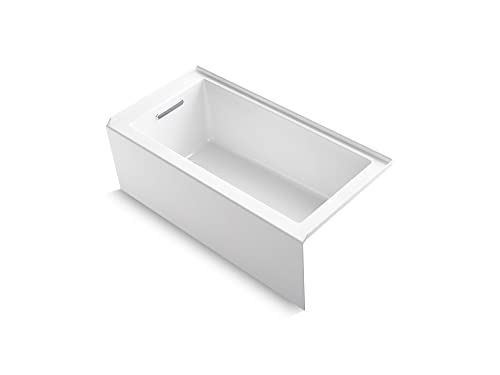
Underscore trades the rounded oval shape of Archer for a rectangular form with softened corners, giving it a sharper, more architectural presence that suits a bathroom leaning into a strongly geometric contemporary design language.
The rectangular shell is slightly more compact than an oval freestanding tub of comparable capacity, making it a practical option for a smaller primary bathroom that still wants a freestanding centerpiece. Kohler's acrylic construction and finishing carry over from its other freestanding lines, delivering the same reliable surface quality and structural rigidity.
Some owners note the interior soaking space feels slightly more confined than an oval tub of similar exterior dimensions, since the rectangular shape does not taper as generously at the ends.
Underscore is the pick when the bathroom design is built around hard, architectural lines rather than the softer oval that dominates the freestanding category. It delivers a distinctly sharper silhouette without sacrificing Kohler's construction quality.

Studio keeps the standard 60-inch alcove footprint but adds extra basin depth compared to a typical shower-tub combo, giving households who want a genuine soak without a full freestanding tub a practical middle-ground option.
The deeper basin profile increases water capacity noticeably over a standard shallow alcove tub of the same footprint, giving a meaningfully better soaking experience without requiring the extra floor space a freestanding tub demands. The flat, minimal apron keeps the visible profile clean and current.
A deeper basin does raise the practical consideration of a taller step-over height, which some households, particularly those with young children or mobility concerns, should weigh against the soaking benefit.
Studio is the right call for a combined shower-and-bath space where a freestanding tub is not realistic but a genuinely deeper soak still matters. It keeps the standard alcove footprint while meaningfully upgrading the bathing experience over a shallow builder-grade tub.
Cast iron and stone resin tubs can weigh 150 to 400 pounds empty, and considerably more once filled with water and a bather. Confirm with a contractor or structural professional that the floor framing, especially on an upper floor, can support the combined load before choosing a heavier material.
Standard US alcove tubs measure 60 inches long, but width and depth vary by model. Measure the existing opening carefully, and note that a taller tub wall or deeper basin can affect how tile or a shower surround needs to be adjusted during installation.
A freestanding tub needs finished flooring and clearance on all visible sides, typically at least 4 to 6 inches from any wall for cleaning access, plus enough open floor space to walk around it comfortably. Confirm the bathroom's overall footprint supports this before committing to a freestanding install.
Alcove tubs are typically available in left-hand or right-hand drain configurations to match existing plumbing. Freestanding tubs commonly use a center drain, which requires the drain line to run centrally beneath the tub rather than to one end.
A freestanding tub is finished on all sides and installed away from the wall as a standalone centerpiece. An alcove tub is installed against three walls, with only the front-facing side finished, and is the more space-efficient, typically more affordable option.
Acrylic is lighter, less expensive and easier to install, making it the practical choice for most renovations. Cast iron offers superior heat retention and long-term scratch and stain resistance but weighs significantly more and requires confirming floor support before installation.
Stone resin is a composite of crushed natural stone and resin binder, offering a dense, matte, substantial feel with excellent heat retention comparable to cast iron but often at a lighter weight. It is worth the premium for buyers prioritizing a high-end tactile material in a design-forward bathroom.
The most common US standard alcove tub size is 60 inches long by 30 to 32 inches wide, matching the vast majority of existing three-wall bathroom openings for straightforward replacement.
Beyond the tub's own footprint, plan for at least 4 to 6 inches of clearance on all finished sides for cleaning access, plus enough open floor space, generally 24 to 30 inches, to walk around the tub comfortably during use and cleaning.
It depends on the specific footprint. Compact freestanding models exist at 55 to 60 inches long, but the bathroom still needs enough surrounding clearance for practical use and cleaning. In many small bathrooms, a flat-apron alcove tub achieves a similar contemporary look with a smaller footprint requirement.
Use a non-abrasive sponge with mild soap and water, and avoid abrasive powders, steel wool or harsh solvents, which can dull or scratch the glossy acrylic surface over time. Address stains promptly with a gentle acrylic-safe cleaner.
Alcove tubs are typically offered in left-hand or right-hand drain configurations, referring to the drain's position when facing the tub. Confirm your existing plumbing rough-in location before ordering to match the correct configuration.
Not usually. Freestanding tubs generally require a separately purchased freestanding or wall-mounted tub filler faucet, since the plumbing connection is not integrated into the tub itself. Confirm compatible faucet mounting options before finalizing the tub choice.
Generally yes. A deeper basin allows more of the body to be submerged during a soak, which most buyers find more comfortable and relaxing than a shallow standard tub designed primarily for showering. Confirm the step-over height is still practical for your household before choosing a significantly deeper model.
The Kohler Archer Freestanding Bathtub is the strongest all-around contemporary pick thanks to its clean symmetrical shape, manageable acrylic weight and enduring, non-trend-driven silhouette. Choose the Kohler Villager Alcove if long-term durability in a standard footprint is the priority, or the Woodbridge Stone Resin Freestanding if the bathroom calls for the most premium, substantial material available.
How we rank & our data sources
We do not run physical lab tests. Rankings are built from published, verifiable data and real owner feedback, never paid placement.
Researched by admin · Last updated July 3, 2026 · Our review method
Symmetrical stepped-apron silhouettes and polished brass fittings that turn a soaking tub into the centerpiece of a 1920s-inspired bathroom.
Read the guideA step-by-step guide to locating studs, choosing lag screws or toggle bolts, mounting a ledger board or bracket, and confirming a floating…
Read the guide
Stepped fronts, symmetrical geometric cabinetry and polished brass hardware that bring 1920s glamour to a modern vanity, without giving up soft-close storage.
Read the guide