
Best 30-Inch Bathroom Vanities (2026)
Bathroom Remodeling4.6
Thirty inches is the sweet spot between a cramped 24-inch vanity and a full 36-inch cabinet, giving a single-sink bathroom real drawer…
Read the guideSeven bathtubs in the classic alcove and drop-in shapes that fit the widest range of U.S. bathroom footprints, drawn from published dimensions and aggregated owner reviews.
The best American bathtub is the Kohler Villager Cast Iron Alcove Tub, a standard 60 x 32-inch three-wall alcove tub that fits the most common American tub-shower footprint with exceptional long-term durability. For an acrylic budget option, the American Standard Cadet Alcove Tub leads.
American mainstream bathtub design favors broad compatibility over a narrow trend: standard 60 x 32-inch alcove dimensions sized for the most common U.S. tub-shower footprint, white finishes, and durable materials like cast iron and acrylic that hold up under decades of daily use. We researched published dimensions, material specs and weight-support requirements, along with patterns across thousands of aggregated owner reviews, to rank the bathtubs that fit the broadest range of American bathrooms rather than one design trend.
There is no fabricated certification attached to bathtubs, so every spec below is a published manufacturer dimension or material fact. We weighted material durability and heat retention first, since cast iron and acrylic perform very differently in daily use, then install-type compatibility with standard American rough-in and framing, then genuine mainstream fit. For fixtures that pair with these, see our guide to the best flushing toilets.
Every pick here had to combine a standard American dimension footprint, a durable material with a documented weight-support or heat-retention profile, and a finish or shape suited to the widest range of mainstream bathrooms. We favored cast iron and acrylic construction with proven track records over fiberglass, and weighted aggregated owner reports on installation experience and long-term durability over marketing photography. We do not accept payment for placement.
| Model | Style Fit | Key Spec | Best For | Check Price |
|---|---|---|---|---|
| Kohler Villager Cast Iron Alcove Tub | Standard alcove, white | 60 x 32 in, cast iron | Best overall | Check price |
| American Standard Cadet Alcove Tub | Standard alcove, white | 60 x 30 in, acrylic | Best budget acrylic | Check price |
| Kohler Archer Drop-In Tub | Drop-in, white | 60 x 32 in, acrylic | Best drop-in tub | Check price |
| American Standard Colony Alcove Tub | Standard alcove, white | 60 x 30 in, enameled steel | Best lightweight alcove | Check price |
| Kingston Brass Aqua Eden Freestanding Tub | Freestanding oval, white | Approx. 67 x 32 in, acrylic | Best freestanding pick | Check price |
| Kohler Elmbrook Alcove Tub | Standard alcove, white | 60 x 30 in, acrylic | Best mid-range acrylic | Check price |
| Woodbridge Acrylic Alcove Tub | Standard alcove, white | 60 x 30 in, acrylic | Best budget pick | Check price |

The Villager is the pick we recommend first for a mainstream American bathroom, because its standard 60 x 32-inch alcove dimensions fit the most common tub-shower framed opening while enameled cast iron delivers decades of proven durability and superior heat retention.
Enameled cast iron is widely regarded as the most durable bathtub material available, resisting scratches, chips and the gradual flexing that can crack acrylic and fiberglass tubs over years of use. Cast iron also retains heat significantly longer than acrylic or fiberglass, meaning bath water stays warm noticeably longer, a detail owners consistently mention as a real quality-of-life difference for longer baths.
Owners report that the Villager has held its enamel finish and structural integrity for decades in many cases, outlasting multiple bathroom remodels around it. The main tradeoff is significant weight, at 350 to 400 pounds empty before water and a bather are added, which requires confirming adequate floor joist support, especially on upper floors, and generally requires professional installation with multiple people. For most American bathrooms it is the standout, balancing proven durability, heat retention and standard-fit dimensions.
Cast iron is the material we recommend when a homeowner plans to stay in the house long enough to actually benefit from a tub that outlasts multiple remodels. The weight is a real installation consideration, but a properly supported cast iron tub is close to a lifetime purchase in a way that acrylic and fiberglass generally are not.

The Cadet brings American Standard's brand reliability to a standard-dimension acrylic alcove tub, offering a significantly lighter installation than cast iron at a more accessible price point.
Acrylic reinforced with fiberglass weighs a fraction of cast iron, at roughly 70 to 90 pounds empty compared to 350 to 400 pounds, which meaningfully simplifies installation and removes floor-joist load concerns that matter more on upper floors. The Cadet's standard 60 x 30-inch dimensions fit the same common alcove opening as the pricier cast iron picks here.
Owners choosing acrylic for a budget remodel value the easier installation and lower cost, and report that American Standard's gel coat finish resists scratching reasonably well under normal use. The tradeoff is that acrylic does not retain heat as long as cast iron and can flex slightly underfoot compared to the rock-solid feel of cast iron. For a budget-conscious standard alcove replacement, it is the sensible entry point.
For most remodels, especially on an upper floor or where a DIY-friendly install matters, acrylic is the more practical choice over cast iron despite giving up some heat retention. The Cadet delivers reliable performance at a fraction of the weight and cost.

The Kohler Archer is designed to drop into a custom-built platform or deck rather than an apron-front alcove opening, suiting bathrooms with an existing or planned tiled surround rather than a standard three-wall install.
A drop-in tub has no finished apron of its own and is not designed to stand alone in an alcove opening, instead requiring a carpenter-built platform or deck finished in tile, stone or another surface material around the tub's rim. This gives more design flexibility for a custom-finished look but adds a construction step that a standard apron-front alcove tub does not require.
Owners building a custom tiled surround value the finished, integrated look a drop-in tub provides once the deck is complete, and note that Kohler's Archer line offers straight or curved-side options for slightly different framing needs. The tradeoff is the added construction cost and time of building the deck itself, which apron-front alcove tubs skip entirely. For a bathroom already planning a custom tile surround, it is the standout.
A drop-in tub only makes sense if you are already planning or have a built platform, since the tub itself has no finished sides. Do not order a drop-in tub for a standard three-wall alcove opening expecting it to look complete without additional construction.
The Colony uses enameled steel rather than acrylic or cast iron, striking a middle ground with more scratch resistance than acrylic and significantly less weight than cast iron.
Enameled steel weighs noticeably less than cast iron while offering better scratch and chip resistance than acrylic's gel coat surface, positioning it as a genuine middle-ground material choice. The porcelain enamel finish is fused to the steel base at high heat, giving it a hard, glass-like surface that resists the scuffing that can dull an acrylic tub's shine over years of use.
Owners choosing enameled steel cite the finish durability as a meaningful step up from acrylic without the installation challenges of cast iron. The tradeoff is that steel conducts heat away from bath water faster than cast iron, so it does not match cast iron's heat-retention performance, and it also feels less substantial underfoot due to a thinner material profile. For a balanced middle-ground alcove tub, it is the standout.
Enameled steel is an underappreciated middle-ground option that a lot of buyers skip past while choosing between acrylic and cast iron. If a lighter install matters but you still want a hard, scratch-resistant enamel finish, the Colony is worth serious consideration.

The Aqua Eden freestanding tub brings a classic oval soaking shape to a standalone install, skipping the alcove entirely for bathrooms with the floor space to accommodate a freestanding statement piece.
A freestanding tub requires floor space on all sides for both the tub itself and comfortable clearance for cleaning and use, generally needing significantly more square footage than an alcove tub in the same length. The Aqua Eden's classic oval shape and acrylic construction keep it a moderate weight for a freestanding tub, and it pairs with a floor-mount or wall-mount tub filler rather than an alcove's deck-mount valve.
Owners choosing a freestanding tub for a remodel value the visual statement it makes as a bathroom focal point, distinct from the practical, space-efficient alcove format. The tradeoff is the floor space requirement and the need for a compatible floor-mount or wall-mount faucet rather than a standard alcove valve. For a spacious bathroom wanting a standalone soaking tub, it is the standout.
A freestanding tub is a genuine design commitment that works best in a bathroom with real floor space to spare, and it requires planning the faucet type alongside the tub itself. It is the right call for a primary bathroom remodel prioritizing a soaking-tub focal point over shower functionality in the same fixture.
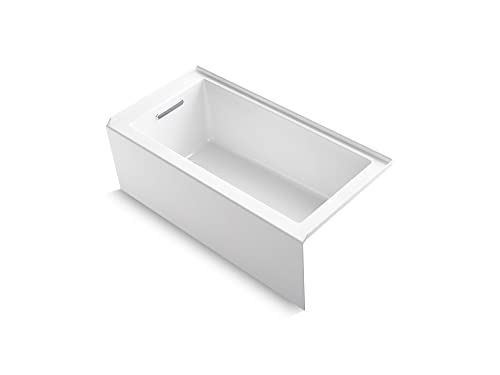
The Elmbrook brings Kohler's brand reputation to a standard-dimension acrylic alcove tub, positioned as a mid-range option between the budget Cadet and the premium cast iron Villager.
Kohler's acrylic formulation and integral apron construction give the Elmbrook a slightly more premium feel and finish consistency than entry-level acrylic tubs, while remaining considerably lighter and more DIY-friendly to install than the cast iron Villager. Its standard 60 x 30-inch dimensions match the common American alcove opening.
Owners choosing Kohler specifically for the brand's reputation and consistent quality control report satisfaction with the finish and fit, and note it installs comparably easily to other acrylic alcove tubs. The tradeoff is a higher price than house-brand acrylic alternatives without the heat-retention benefit of cast iron. For buyers wanting Kohler-brand reliability in an acrylic alcove tub, it is the standout.
Kohler's acrylic tubs carry a brand premium, but the manufacturing consistency and finish quality genuinely show in the details, particularly around the apron edge and drain fit. For buyers who want acrylic's lighter install with a trusted name behind it, the Elmbrook is a safe choice.

The Woodbridge alcove tub brings standard American dimensions and acrylic construction to the most accessible price point in this roundup, suiting rental properties and budget-conscious flip renovations.
Woodbridge is a value-tier manufacturer that keeps standard American alcove dimensions and acrylic construction while trimming cost on brand premium and finish detailing compared to Kohler or American Standard. It fits the same common 60 x 30-inch alcove opening as the pricier picks here, making it a straightforward swap for a standard tub-shower combo.
Owners on a budget report that it installs as a direct replacement for a standard alcove tub and performs adequately for the price, though the gel coat finish may show wear somewhat sooner than premium-brand acrylic under heavy daily use. For a budget-conscious standard alcove replacement, it is the sensible entry point.
For landlords and flip renovations working within a tight budget, the Woodbridge delivers the same standard-dimension fit as premium acrylic tubs at a meaningfully lower cost. It will not carry the same brand-name warranty terms, but for a straightforward replacement, it gets the job done.
The standard American alcove tub measures 60 inches long by 30 to 32 inches wide, matching the most common framed tub-shower opening built into homes across the United States. Confirm your existing alcove opening's dimensions before shopping, since a tub outside this standard range may require construction work to fit.
Cast iron offers superior durability and heat retention but weighs 350 to 400 pounds empty, requiring confirmed floor joist support and professional installation. Acrylic weighs a fraction of that, around 70 to 100 pounds empty, is easier and cheaper to install, but does not retain heat as long and can flex slightly underfoot compared to cast iron's rigid feel.
An alcove tub has a finished apron front and installs directly into a three-wall framed opening, the most common American configuration. A drop-in tub has no finished sides and requires a carpenter-built platform or deck. A freestanding tub stands alone with finished sides on all faces and requires open floor space plus a floor-mount or wall-mount faucet.
Cast iron and, to a lesser degree, enameled steel tubs add substantial weight to a bathroom floor once filled with water and a bather, and older homes or upper-floor bathrooms should have floor joist capacity confirmed by a contractor before installing a heavy tub like the Villager. Acrylic tubs like the Cadet or Elmbrook remove this concern almost entirely due to their much lower weight.
White remains the standard, safest finish choice for American bathtubs across all materials, resisting the dating effect that colored fixtures from past decades have shown in resale evaluations. Porcelain enamel on cast iron or steel offers the hardest, most scratch-resistant surface, while acrylic's gel coat finish is softer but still holds up well under normal use with proper cleaning care.
The mistake we see most in bathtub shopping is choosing material based on price or brand alone without accounting for the floor support and installation labor differences between cast iron and acrylic. Confirm your alcove dimensions and floor capacity first, and the material choice becomes a straightforward tradeoff between durability and installation ease.
The Kohler Villager Cast Iron Alcove Tub is the best overall pick, combining standard 60 x 32-inch alcove dimensions with cast iron's exceptional durability and superior heat retention.
The standard American alcove tub measures 60 inches long by 30 to 32 inches wide, matching the most common framed tub-shower opening in U.S. homes. Confirm your existing opening's exact dimensions before ordering a replacement.
A standard 60-inch cast iron alcove tub weighs approximately 350 to 400 pounds empty, which increases substantially once filled with water and a bather. Confirm adequate floor joist support before installing, especially on upper floors.
Yes, acrylic reinforced with fiberglass is a durable, widely used bathtub material that weighs a fraction of cast iron, making installation significantly easier. It does not retain heat as long as cast iron and can flex slightly underfoot, but performs reliably for most households.
A lightweight acrylic alcove tub replacement is a manageable project for an experienced DIYer, though it typically requires at least one helper due to the tub's size. A cast iron tub's weight generally requires professional installation with multiple people or equipment. Plumbing connections should be confirmed by or done with a licensed plumber.
An alcove tub has a finished apron front and installs directly into a three-wall framed opening. A drop-in tub has no finished sides and requires a carpenter-built platform or deck finished separately in tile or another material.
Yes, freestanding tubs typically use a floor-mount or wall-mount tub filler rather than the deck-mount valve used on alcove and drop-in tubs, since there is no deck or wall ledge at the tub's rim for a standard valve.
A cast iron tub can last 50 years or more with proper care, often outlasting several bathroom remodels around it. A quality acrylic tub typically lasts 10 to 15 years before the gel coat finish shows significant wear, though it can be refinished to extend its life further.
Enameled steel uses a porcelain enamel finish fused to a steel base rather than iron, offering better scratch resistance than acrylic at significantly less weight than cast iron, though with less heat retention than cast iron and a less substantial feel underfoot.
Yes, but a structural engineer or contractor should confirm the floor joists can support the additional weight of a cast iron or enameled steel tub plus water and a bather. Acrylic tubs, being much lighter, are generally a safer default choice for upper-floor installations without additional structural review.
Measure the width, depth and height of your existing three-wall framed tub opening at multiple points. If it measures close to 60 inches long and 30 to 32 inches wide, a standard alcove tub will fit; significant deviations may require either a custom-sized tub or minor construction adjustments to the opening.
For the best American bathtub overall, the Kohler Villager cast iron alcove tub wins on standard dimensions, exceptional durability and superior heat retention. Choose the American Standard Cadet for a lighter, more budget-friendly acrylic install, the Kohler Archer for a custom-built tiled platform, the American Standard Colony for an enameled steel middle ground, the Kingston Brass Aqua Eden for a freestanding soaking-tub statement piece, the Kohler Elmbrook for Kohler-brand acrylic reliability, and the Woodbridge for the most affordable standard-dimension replacement. Confirm your alcove opening's dimensions and floor support first, then choose the material that balances durability against installation ease.
Thirty inches is the sweet spot between a cramped 24-inch vanity and a full 36-inch cabinet, giving a single-sink bathroom real drawer…
Read the guideCast iron is the material homeowners choose when heat retention and permanence matter more than installation weight, and Kohler remains the brand…
Read the guideStep-by-step fixes for the bathroom vanity problems that show up most often, from misaligned drawers and doors to water damage at the…
Read the guide