
Best 30-Inch Bathroom Vanities (2026)
Bathroom Remodeling4.6
Thirty inches is the sweet spot between a cramped 24-inch vanity and a full 36-inch cabinet, giving a single-sink bathroom real drawer…
Read the guideFarmhouse bathtubs center on freestanding clawfoot and slipper-style tubs, along with simple apron-front alcove tubs, all finished to pair with bridge faucets and cross-handle hardware. This guide ranks the farmhouse-style bathtubs worth building a remodel around in 2026.
The Kohler Iron Works Historic Clawfoot Tub is the definitive farmhouse pick, a cast-iron freestanding clawfoot tub that pairs with bridge faucets and cross-handle hardware for the most authentic farmhouse bathing centerpiece. For alcove installations, the American Standard Cambridge cast-iron apron tub delivers the same weighty, classic-American proportions in a built-in configuration.
| Model | Style Fit | Key Spec | Best For | Check Price |
|---|---|---|---|---|
| Kohler Iron Works Historic Clawfoot Tub | Cast iron, ball-and-claw feet | 61 in, cast iron | Best overall farmhouse tub | Check price |
| American Standard Cambridge Apron Tub | Cast iron, alcove apron-front | 60 x 32 in, cast iron | Best built-in farmhouse tub | Check price |
| Woodbridge Acrylic Slipper Tub | Freestanding, slipper silhouette | 67 in, acrylic | Best lightweight freestanding tub | Check price |
| Kingston Brass Aqua Eden Clawfoot Tub | Cast iron, roll-top clawfoot | 54-72 in, cast iron | Best size range for clawfoot | Check price |
| American Standard Colony Alcove Tub | Simple apron-front, acrylic | 60 x 30 in, acrylic | Best budget farmhouse alcove tub | Check price |
| Kohler Archer Freestanding Tub | Freestanding, simple oval lines | 66 in, acrylic | Best modern-farmhouse crossover | Check price |
| Kingston Brass Aqua Eden Slipper Clawfoot | Cast iron, slipper clawfoot | 67 in, cast iron | Best slipper clawfoot silhouette | Check price |
Farmhouse bathtubs are most commonly freestanding clawfoot or slipper-style tubs with exposed ball-and-claw or bracket feet, paired with bridge faucets and cross handles. Simple apron-front alcove tubs in cast iron or acrylic, without decorative jets or contemporary sculpted edges, are the built-in farmhouse alternative.
The clawfoot tub is the single most recognized farmhouse bathing fixture, tracing back to late-1800s and early-1900s American plumbing before built-in alcove tubs became standard. Its exposed feet and freestanding placement in the center or against the wall of a room, rather than recessed into a three-wall alcove, is the defining structural cue of the style.
Where a freestanding tub does not fit the floor plan or budget, a simple apron-front alcove tub without whirlpool jets, colored acrylic, or sculpted armrests reads as farmhouse-appropriate when paired with farmhouse-styled tile, faucet hardware, and a shower curtain rather than a glass enclosure, since the plain, function-first tub shape avoids the more decorative silhouettes associated with contemporary soaking tubs.
Cast iron is the more historically authentic material for a farmhouse clawfoot tub and retains heat longer than acrylic, but it is significantly heavier, often requiring floor reinforcement, and costs more. Acrylic freestanding tubs replicate the same silhouettes at a fraction of the weight and price, making them the more practical choice for many remodels.
A cast-iron clawfoot tub can weigh 300 to 500 pounds empty, and building codes and floor joist capacity should be verified before installation, particularly on upper floors of older homes. Acrylic and cast polymer freestanding tubs in the same clawfoot or slipper shapes typically weigh 70 to 150 pounds, making them dramatically easier to install without structural reinforcement, though they do not retain water heat as long as cast iron during a soak.
A freestanding clawfoot tub delivers the strongest farmhouse visual statement and works best as a dedicated soaking tub in a bathroom with a separate shower. A built-in apron-front alcove tub is more practical for a combined tub-shower and fits the space and budget constraints of most standard bathroom footprints.
Freestanding tubs require floor space on all sides for installation and cleaning access and are typically not compatible with an overhead shower unless a ceiling-mount or freestanding shower arm is added separately. For households needing a daily-use shower in the same fixture, a built-in apron-front tub with a shower valve and curtain rod remains the more functional farmhouse-styled choice.
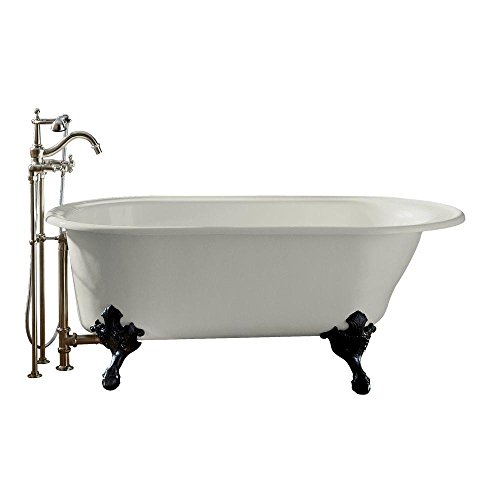
Kohler's Iron Works Historic collection is a cast-iron clawfoot tub with a porcelain enamel interior finish and traditional ball-and-claw feet, the most historically referenced farmhouse tub silhouette available from a major manufacturer.
Kohler's cast-iron construction with a fused porcelain enamel surface is the same durable, heat-retentive material used across the brand's kitchen and utility sink lines, providing decades of service life when properly maintained. The ball-and-claw feet are available in multiple finish options including polished chrome, oil rubbed bronze, and matte black, allowing coordination with the bridge faucet and cross-handle hardware typical of a farmhouse installation.
Given the substantial empty weight before water is added, buyers planning an upper-floor installation should confirm floor joist load capacity with a structural professional, a standard precaution for any cast-iron clawfoot tub regardless of manufacturer. Aggregated owner reviews consistently praise the heat retention during long soaks as a meaningful advantage over acrylic alternatives.
The Iron Works Historic tub is the reference-standard farmhouse bathtub for buyers who want the authentic material and weight of a true antique-style clawfoot, backed by Kohler's manufacturing quality control and finish options for the feet.

The Cambridge is a cast-iron apron-front alcove tub built for standard three-wall installation, giving farmhouse remodels the same durable, heat-retentive material as a clawfoot tub in a practical tub-shower configuration.
The Cambridge's apron-front panel gives it a plain, unadorned face that fits farmhouse aesthetics well when paired with subway or shiplap-style tile surround, avoiding the sculpted skirting details found on more contemporary alcove tub lines. As a three-wall alcove installation, it supports a standard overhead shower valve and curtain rod, making it the practical choice for a household's primary daily-use bathroom.
Cast iron's durability advantage extends to resistance against scratching and chipping compared to acrylic, and the porcelain enamel surface cleans easily with standard non-abrasive bathroom cleaners. Owner reviews confirm the same strong heat retention benefit found in Kohler's clawfoot line, a genuine functional advantage for households that use the tub regularly for soaking rather than only showering.
When a household needs a functional daily tub-shower rather than a dedicated soaking centerpiece, the Cambridge delivers the same cast-iron material quality as a clawfoot tub in the practical alcove format most bathrooms are built around.

Woodbridge's acrylic slipper tub replicates the raised-back, sloped-side silhouette of a classic slipper clawfoot at a fraction of the weight, making it viable for upper-floor bathrooms without structural reinforcement.
The slipper silhouette, with one raised end for reclined bathing, is a period-appropriate variation on the classic clawfoot tub and is well-represented in acrylic construction across several manufacturers. At roughly a quarter of the weight of a comparable cast-iron model, the Woodbridge tub can typically be installed without the floor joist reinforcement a cast-iron clawfoot may require.
Acrylic loses heat faster than cast iron during a long soak, a trade-off owner reviews consistently mention, though the difference is manageable for typical bath durations and can be offset by adding hot water partway through a soak. The metal bracket feet, rather than traditional ball-and-claw castings, are available in matte black and bronze finishes to coordinate with farmhouse faucet hardware.
For the large share of buyers who want the freestanding farmhouse silhouette but cannot or do not want to manage cast-iron's weight and installation demands, the Woodbridge slipper tub is the practical substitute that still delivers genuine visual impact.

Kingston Brass's Aqua Eden line offers cast-iron roll-top clawfoot tubs across a wide range of lengths, giving buyers more flexibility to match an existing bathroom footprint than the fixed-length options from larger manufacturers.
Where the Kohler Iron Works Historic is available primarily in a single 61-inch length, the Aqua Eden line's range from 54 to 72 inches gives buyers meaningfully more flexibility to fit a clawfoot tub into an existing bathroom footprint, whether that means a compact 54-inch tub for a smaller room or a generous 72-inch soaking tub for a larger primary bathroom.
The same cast-iron weight considerations apply across the size range, with the largest 72-inch model weighing close to 500 pounds empty. Owner reviews describe the porcelain enamel finish quality as comparable to major-brand competitors, with the primary trade-off being a smaller dealer and warranty support network than Kohler or American Standard.
When a specific bathroom footprint rules out the standard 60-to-61-inch clawfoot length, the Aqua Eden's broader size range is the most practical solution for still achieving an authentic cast-iron farmhouse tub.

The American Standard Colony is a simple acrylic apron-front alcove tub without decorative curves or jets, offering a plain, function-first shape at one of the most accessible price points for a farmhouse-appropriate built-in tub.
The Colony's plain apron front, without contemporary sculpted skirting, is a straightforward match for farmhouse-styled tile and cross-handle shower trim, since the simplicity of the tub itself lets the surrounding tile and hardware carry the design statement. At roughly a tenth of the weight of a comparable cast-iron tub, it is also one of the easier bathtubs on this list to install without professional help.
Acrylic construction is more prone to surface scratching over decades of use than cast iron with porcelain enamel, though routine care with non-abrasive cleaners minimizes this risk. Owner reviews consistently note the Colony as a reliable, no-frills option for a straightforward tub-shower replacement in a budget-conscious remodel.
Not every farmhouse remodel needs or can accommodate a cast-iron statement tub. When the budget or floor structure calls for a simpler solution, the Colony's plain, unadorned shape is the correct restrained choice that still fits the farmhouse aesthetic.

The Kohler Archer is a freestanding acrylic tub with simple oval lines and an integrated base rather than exposed clawfoot legs, fitting a modern-farmhouse scheme that leans clean and minimal rather than ornamental.
The Archer's freestanding, integrated-base design gives it the centerpiece presence of a clawfoot tub without the traditional ball-and-claw feet, a distinction that matters for buyers whose farmhouse vision leans toward the cleaner, more contemporary end of the style rather than the rustic, antique-referencing end.
The tub's simple oval interior and exterior lines avoid sculpted armrests or contoured backrests, keeping the profile understated in a way that pairs naturally with matte black or brushed-finish freestanding faucets. Owner reviews describe the Archer as a strong crossover choice for bathrooms blending farmhouse and contemporary design elements rather than committing fully to either.
For a modern-farmhouse bathroom that wants freestanding presence without a literal clawfoot reference, the Archer's clean lines are the better fit, letting the faucet, tile, and vanity carry the farmhouse cues instead of the tub silhouette itself.
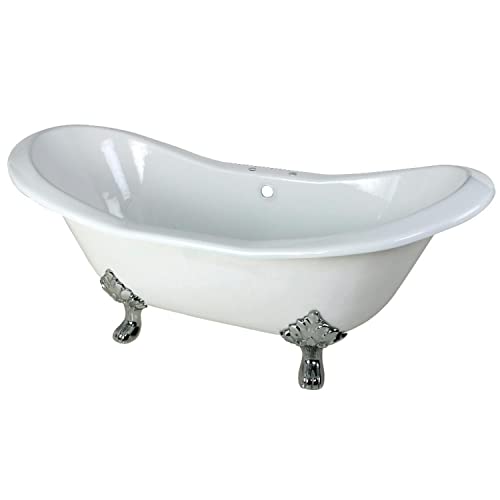
This cast-iron slipper clawfoot tub combines the traditional ball-and-claw feet with a raised, reclined backrest, giving it a more ergonomic soaking angle than a standard double-ended clawfoot tub.
The slipper shape's raised end supports a more reclined bathing angle than a standard flat-rim clawfoot tub, similar to the acrylic Woodbridge slipper tub above but with the added heat retention and weight of true cast-iron construction. This makes it a strong option for buyers who specifically want the ergonomic benefit of a slipper backrest without moving to acrylic construction.
As with all cast-iron clawfoot tubs on this list, floor loading should be verified before installation given the substantial empty weight. Owner reviews consistently rate the slipper backrest angle as noticeably more comfortable for extended soaking than a standard symmetrical clawfoot design.
For buyers who have decided on cast iron for its heat retention and durability but want a more comfortable, reclined bathing angle than the standard symmetrical clawfoot shape, this slipper variant is the correct choice.
Possibly, particularly on upper floors or in older homes. A cast-iron clawfoot tub can weigh 300 to 500 pounds empty and considerably more when filled with water and an occupant. Consult a structural professional to verify floor joist capacity before installing a cast-iron tub above the ground floor.
A standard clawfoot tub has a symmetrical rim height at both ends, while a slipper tub has one raised, sloped end that creates a more reclined bathing angle. Both styles are available in cast iron and acrylic, and both are considered authentic farmhouse silhouettes.
Yes, with a shower-ring conversion kit that mounts an oval curtain ring to the ceiling or a freestanding frame around the tub, paired with a hand-shower diverter on the faucet. This does not replicate a fully enclosed shower and works best for rinsing rather than a primary daily shower.
Cast-iron tubs are generally priced significantly higher than acrylic tubs of a comparable size and silhouette, reflecting the material cost and weight of manufacturing and shipping cast iron. Acrylic freestanding and alcove tubs deliver similar farmhouse silhouettes at a lower price point.
Freestanding clawfoot tubs typically use either a deck-mount faucet attached directly to the tub rim or a floor-mount riser faucet with exposed supply pipes running from the floor to the spout. The choice depends on whether the tub has pre-drilled faucet holes or is designed for floor-mount installation.
Yes, quality acrylic with fiberglass reinforcement is a durable, long-lasting bathtub material used across all price tiers, including premium freestanding tubs. Its main trade-offs relative to cast iron are faster heat loss during a soak and somewhat lower resistance to scratching from abrasive cleaners over decades of use.
Match the foot finish to the faucet and other bathroom hardware. Matte black and oil rubbed bronze are the most common farmhouse choices, while polished chrome or brushed nickel fit a more transitional or classic-American aesthetic. Many manufacturers offer several foot finish options on the same tub model.
Yes, the exterior (non-water-contact) surface of a cast-iron clawfoot tub can be painted with an appropriate metal or appliance-rated paint, a common farmhouse customization to add a colored exterior, such as navy or sage green, while keeping the interior white porcelain enamel.
Cast-iron tubs with a properly maintained porcelain enamel finish commonly last 50 years or more, and many antique clawfoot tubs still in service today are over a century old. This longevity is a key reason cast iron remains associated with authentic farmhouse styling.
Alcove apron-front tubs are available with left-hand or right-hand drain placement to match existing plumbing, and buyers should confirm the correct orientation before ordering. Freestanding clawfoot tubs are typically center-drain and do not have a handed orientation in the same way.
The Kohler Iron Works Historic Clawfoot Tub is the definitive farmhouse bathtub for a primary bathroom remodel, delivering authentic cast-iron weight, heat retention, and the classic ball-and-claw silhouette that defines the style. For a built-in tub-shower combo, the American Standard Cambridge apron-front tub brings the same cast-iron material quality to a standard alcove installation. Buyers on upper floors or tighter budgets should look to acrylic alternatives like the Woodbridge slipper tub or Kohler Archer, which replicate the farmhouse silhouette without the weight and installation demands of true cast iron.
Thirty inches is the sweet spot between a cramped 24-inch vanity and a full 36-inch cabinet, giving a single-sink bathroom real drawer…
Read the guide
Cast iron is the material homeowners choose when heat retention and permanence matter more than installation weight, and Kohler remains the brand…
Read the guideStep-by-step fixes for the bathroom vanity problems that show up most often, from misaligned drawers and doors to water damage at the…
Read the guide