
Best Art Deco Bathtubs (2026)
Bathroom Remodeling4.6
Symmetrical stepped-apron silhouettes and polished brass fittings that turn a soaking tub into the centerpiece of a 1920s-inspired bathroom.
Read the guideSimple, softly profiled acrylic and cast iron tubs that split the difference between clawfoot ornamentation and stark modern freestanding shapes, sized to fit real bathroom floor plans.
Research updated June 2026.
The best transitional bathtub is the Kohler Archer Alcove Tub. Its clean rectangular shape with softly integrated curves fits the standard 60-inch alcove footprint most bathrooms already have, and its acrylic construction balances comfort, weight and long-term durability.
A transitional bathtub needs a shape that avoids both extremes: no ornate clawfoot legs or scrolled traditional silhouettes, and no severely geometric or oversized modern freestanding sculpture-tub shapes. We looked specifically for alcove and simple freestanding tubs with softly rounded corners, a moderate apron profile, and a material, acrylic, cast iron or enameled steel, that fits the practical needs of a real bathroom rather than a showroom display.
Every dimension and material spec below comes from published manufacturer specifications. There is no industry-standard numeric performance certification for bathtubs the way MaP exists for toilets or WaterSense exists for faucets, so we did not invent one; every spec here is a real measurement or material description pulled directly from the manufacturer. For a transitional build specifically we weighted four things: a tub shape with soft, simple lines rather than ornate legs or severe geometry, a material suited to the household's durability and weight needs, a standard or near-standard footprint that fits common bathroom floor plans, and the patterns across thousands of aggregated owner reviews.
Every pick here had to combine a soft, simple shape with a material and footprint that splits the difference between traditional and contemporary. We pulled dimensions, material, weight and install type directly from manufacturer specification sheets, and cross-checked every number against the same figures used elsewhere on this site so a tub never shows a different spec on two pages. We favored acrylic and enameled cast iron for their balance of heat retention, weight and surface durability, and weighted aggregated owner reports on scratch resistance and comfort over showroom photos alone.
| Model | Style Fit | Key Spec | Best For | Check Price |
|---|---|---|---|---|
| Kohler Archer Alcove Tub | Clean rectangle, soft integrated curves | 60 x 32 in, acrylic | Best overall transitional pick | Check price |
| American Standard Cadet Alcove Tub | Simple rectangle, integral apron | 60 x 30 in, enameled steel | Best value transitional | Check price |
| Kohler Villager Cast Iron Alcove Tub | Rounded rectangle, substantial cast iron | 60 x 32 in, enameled cast iron | Best for durability and heat retention | Check price |
| Rounded Oval Freestanding Acrylic Tub | Simple oval, understated freestanding base | 60 x 30 in, acrylic | Best simple freestanding transitional | Check price |
| Kohler Elmbrook Alcove Tub | Soft rectangle, integral apron | 60 x 30 in, acrylic | Best for smaller bathrooms | Check price |
| American Standard Princeton Alcove Tub | Classic rectangle, integral apron | 60 x 32 in, enameled cast iron | Best premium transitional | Check price |
| Kingston Brass Aqua Eden Alcove Tub | Simple rectangle, no-frills apron | 60 x 30 in, acrylic | Best budget transitional | Check price |

The Archer is the transitional bathtub we recommend first because its clean rectangular shape with softly integrated curves along the rim sits at the exact midpoint this style calls for, and it fits the standard 60-inch alcove footprint most bathrooms already have.
The Archer's rectangular shape has just enough curvature along the top rim and interior contour to avoid reading severely geometric, which is the detail that keeps it transitional rather than fully modern. Acrylic construction keeps the tub's empty weight low enough for most crews to install without special equipment, and Kohler offers it with either a left or right-hand drain to match existing plumbing.
Owners consistently note the surface feels warm to the touch faster than enameled steel and resists scratching well with normal use. Acrylic does not retain heat as long as cast iron, worth knowing for buyers who take long baths. For a transitional bathroom builder who wants a versatile, easy-to-install tub, it is the standout pick, and it pairs naturally with the fixtures in our guide to the best bathroom vanities.
The Archer is the tub I point transitional-style buyers to first, because the softly curved rectangular shape genuinely reads as a bridge between traditional and modern, and the standard 60-inch footprint means it drops into the most common existing alcove opening without a structural remodel.

The Cadet delivers the same simple rectangular alcove shape at a lower price than the Kohler picks here, using durable enameled steel construction that costs less than acrylic or cast iron while still holding up well to daily use.
Enameled steel sits between acrylic and cast iron on both price and weight, giving the Cadet a durable, easy-to-clean surface at a more accessible cost than the premium materials. The simple rectangular shape and integral apron keep the transitional profile consistent with the pricier options, just without the curvature detailing of the Archer's rim.
Owners report the enamel surface cleans easily and resists staining well for the price, though it can feel and sound slightly less substantial underfoot than cast iron during use. It ships with a left-hand drain as standard, so buyers needing right-hand plumbing should check availability before ordering. For a transitional bathroom on a sensible budget, it delivers reliable performance without overspending, and it fits alongside the picks in our guide to the American Standard brand guide.
The Cadet is the tub I recommend when a transitional remodel needs to control costs without giving up a durable, easy-clean surface. Enameled steel is a smart middle ground between acrylic's light weight and cast iron's premium heft.

The Villager trades acrylic or steel for enameled cast iron, a heavier, more substantial material that retains bath water heat significantly longer and resists scratching and chipping better than any other material in this roundup.
Cast iron's density is what gives the Villager its standout heat retention, the water in a cast iron tub stays noticeably warmer for longer than in an acrylic or steel tub, a real practical benefit for anyone who takes long baths regularly. The enamel coating also resists scratching and chipping better than any surface finish used on the lighter materials here.
Owners consistently highlight how much longer bath water stays warm and how the enamel surface still looks new after years of daily use. At nearly 390 pounds empty, it is by far the heaviest tub in this roundup, and installers should confirm the floor structure can support that weight plus a full tub of water before installing on an upper floor. For a transitional bathroom prioritizing comfort and longevity, it stands out, and it pairs with our guide to the best bathroom vanities.
The Villager is the tub I recommend when heat retention and surface durability matter more than install weight. Cast iron genuinely outperforms lighter materials on both fronts, a real consideration for anyone who actually soaks rather than just showers.
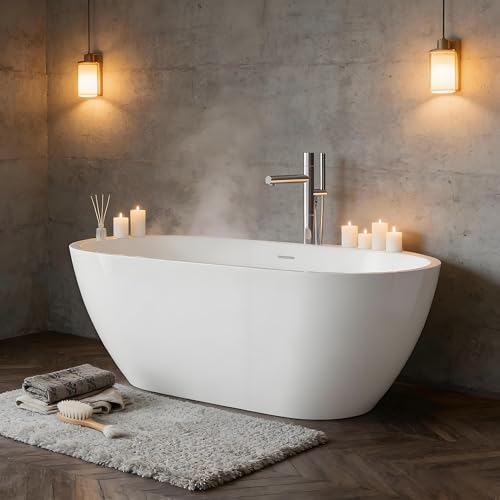
This freestanding oval tub keeps its shape and base understated rather than sculptural, giving a transitional bathroom the option of a standalone tub without tipping into a bold modern focal-point statement.
The simple oval shape and understated pedestal base keep this freestanding tub from reading as an aggressive design statement, which is what makes it work in a transitional bathroom rather than a fully modern one. It still delivers the open, spa-like feel of a freestanding tub, just without the angular or overtly sculptural lines found in more contemporary freestanding models.
Owners appreciate the understated shape fitting comfortably alongside more traditional trim and tile choices, and the acrylic surface is easy to clean and reasonably light for a freestanding install. A freestanding tub does not include an integrated shower, so most buyers pair it with a separate shower elsewhere in the bathroom. For a transitional bathroom with the floor space to spare, it is a strong choice, and it pairs with our guide to the best flushing toilets for a full-room remodel.
This oval freestanding tub is the pick I recommend when a transitional bathroom has room for a standalone soaking tub and wants that spa-like feel without the shape reading as a bold contemporary statement. The simple oval keeps the whole room feeling balanced.
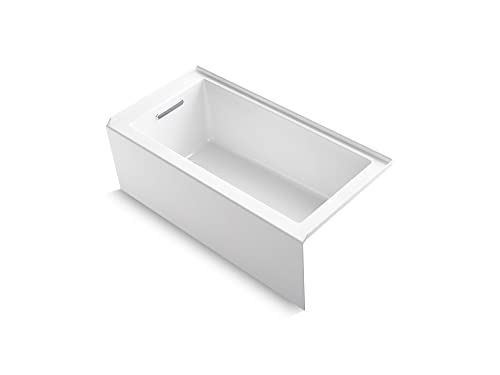
The Elmbrook keeps the Archer's soft rectangular profile in a slightly narrower footprint, a practical fit for smaller bathrooms where a full 32-inch-wide tub would crowd the room.
At 30 inches wide instead of 32, the Elmbrook keeps a couple of inches of extra floor clearance in a smaller bathroom, a meaningful difference when a vanity or toilet sits close to the tub wall. It keeps the same soft rectangular shape and acrylic construction as the Archer, so the style balance and install weight are essentially identical, just in a slightly more compact footprint.
Owners note it fits tight bathroom layouts well without feeling like a noticeably smaller tub to actually use. The narrower width means marginally less interior soaking room than the full-size Archer. For a transitional bathroom with a tighter floor plan, it is the standout, and it pairs with our guide to the best toilets for small bathrooms.
The Elmbrook is the tub I recommend when a transitional bathroom's floor plan is tight enough that even a couple of inches of clearance matters. It delivers the same style balance as the Archer in a more space-conscious footprint.

The Princeton pairs a classic rectangular alcove shape with enameled cast iron construction, one of the longest-running tub lines on the market and a dependable premium choice for a transitional primary bathroom.
The Princeton line has been in continuous production for decades, and its classic rectangular apron shape with a modest rim curve keeps it squarely in transitional territory, familiar enough to feel timeless without reading dated. The enameled cast iron construction gives it the same heat retention and scratch resistance benefits as the Kohler Villager.
Owners consistently praise the tub's proven reliability and the durability of the enamel surface over decades of use in some cases. Like any cast iron tub, the nearly 380-pound empty weight requires confirming floor structure support before installing, particularly on an upper floor. For a transitional bathroom where budget allows for a premium, time-tested material, it is a strong choice, and it pairs with the fixtures in our guide to the American Standard brand guide.
The Princeton is the tub I recommend when a transitional remodel wants a genuinely time-tested cast iron option from a brand with an exceptionally long track record. It delivers the same durability benefits as the Kohler Villager in a slightly different classic profile.

The Aqua Eden delivers a simple rectangular alcove shape at the lowest price in this roundup, a reasonable entry point for a transitional guest bath or rental remodel.
The Aqua Eden covers the basics of the transitional formula, a simple rectangular apron shape, at a substantially lower price than the Kohler or American Standard picks. Its light acrylic construction, under 90 pounds empty, makes it one of the easiest tubs in this roundup to maneuver into a tight bathroom during install.
Owners report it installs easily and holds up reasonably well for the price. It ships with a left-hand drain as standard and lacks the rim curvature detailing of the pricier Kohler picks, worth noting if the sharper apron edge matters to the overall look. For a budget transitional remodel, it is the practical choice, and it pairs with our guide to the best bathroom vanities.
The Aqua Eden is the tub I recommend when a transitional remodel is on a strict budget, most often a rental or secondary bathroom. It nails the simple rectangular alcove look at a meaningfully lower price than the flagship brands.
A transitional bathtub uses a soft, simple rectangular or oval shape, rather than ornate clawfoot legs or a severely geometric modern sculpture-tub silhouette. Standard alcove installs with a modest integral apron are the most common transitional choice, and freestanding tubs work too as long as the shape stays understated.
An alcove tub, like the Kohler Archer or American Standard Cadet, is the more common transitional choice since its enclosed three-wall install reads calmer and more integrated into the room. A simple freestanding oval, like the pick above, still fits the style as long as the shape avoids a bold sculptural or angular silhouette.
Acrylic is the most common material, offering a good balance of light weight, comfort and reasonable cost, and it covers most transitional bathroom needs well. Enameled cast iron, like the Kohler Villager or American Standard Princeton, is the upgrade choice for buyers prioritizing heat retention and maximum durability, at a significantly higher install weight.
Yes, especially for cast iron tubs, which can weigh close to 400 pounds empty and considerably more once filled with water and a bather. Acrylic and enameled steel tubs are lighter and less likely to require additional floor reinforcement, but any tub installation on an upper floor should be confirmed against local building code and joist capacity.
The Kohler Archer Alcove Bathtub is the best transitional bathtub overall, pairing a softly curved rectangular acrylic shape with the standard 60-inch alcove footprint.
60 inches long by 30 to 32 inches wide is the standard alcove tub size and fits the vast majority of existing bathroom floor plans built in North America.
Neither is strictly better; they suit different priorities. Acrylic is lighter, easier to install and less expensive, while enameled cast iron offers superior heat retention and scratch resistance for a higher price and much greater weight.
White is the standard and most versatile transitional choice, pairing with virtually any tile or hardware palette. Off-white and bone tones are also available on some lines but are less common in current transitional design.
Match the drain location to your existing plumbing rough-in unless you are doing a full remodel. Most alcove tubs are available in both left-hand and right-hand drain configurations, so check the specific model before ordering.
Yes, as long as the shape stays simple and understated, like a rounded oval, rather than an ornate clawfoot or a boldly sculptural modern silhouette. A freestanding tub also requires more floor space and does not include an integrated shower.
Standard residential floor framing is generally built for at least 40 pounds per square foot of live load, sufficient for most acrylic and steel tubs. Cast iron tubs, especially on an upper floor, should be confirmed against local code and existing joist spacing before installation.
They deliver the same basic rectangular shape and functional soaking experience, as the Kingston Brass Aqua Eden shows, but typically lack the rim curvature detailing and heat retention of premium cast iron options.
Modern bathtub styling favors sharp geometric edges or dramatic sculptural freestanding shapes as a room's focal point. Transitional styling keeps a softened, simple rectangular or oval shape that integrates into the room rather than dominating it.
The tub itself is almost always white regardless of style, so the coordinating decision is really about the tub faucet, showerhead and any visible hardware, which should match your vanity faucet and shower trim finish for a cohesive transitional look.
Cast iron's density allows it to retain bath water heat noticeably longer than acrylic or enameled steel, often keeping water measurably warmer through a full 20 to 30 minute soak, a meaningful practical difference for anyone who bathes rather than just showers.
For a transitional bathroom that needs to balance clean contemporary lines with classic warmth, the Kohler Archer Alcove Tub is the clear winner, pairing a softly curved rectangular acrylic shape with the standard 60-inch alcove footprint. Choose the American Standard Cadet or Kingston Brass Aqua Eden for tighter budgets, the Kohler Villager or American Standard Princeton for cast iron heat retention and durability, the Kohler Elmbrook for a smaller bathroom, and the rounded oval freestanding tub for an understated standalone soak. Every pick here proves a transitional look does not require sacrificing comfort or long-term durability.
How we rank & our data sources
We do not run physical lab tests. Rankings are built from published, verifiable data and real owner feedback, never paid placement.
Researched by admin · Last updated July 3, 2026 · Our review method
Symmetrical stepped-apron silhouettes and polished brass fittings that turn a soaking tub into the centerpiece of a 1920s-inspired bathroom.
Read the guideA step-by-step guide to locating studs, choosing lag screws or toggle bolts, mounting a ledger board or bracket, and confirming a floating…
Read the guide
Stepped fronts, symmetrical geometric cabinetry and polished brass hardware that bring 1920s glamour to a modern vanity, without giving up soft-close storage.
Read the guide