How to Replace a Bathroom Vanity: Complete Guide
Bathroom Remodeling4.6
Everything involved in swapping an old bathroom vanity for a new one, from planning and demolition through disposal, wall repair, and reinstalling…
Read the guideOval and kidney-shaped vitreous china basins, simple pedestal forms, and vessel sinks with clean geometry -- the sinks that anchor an authentic mid-century modern bathroom.
Research updated June 2026.
The Kohler Caxton Undermount Bathroom Sink is the strongest mid-century modern anchor piece: a clean oval vitreous china basin with no applied ornamentation that pairs naturally with walnut vanities and slim cylindrical faucets. For a freestanding option, the Kohler Verticyl Pedestal Sink delivers the same geometric restraint on a simple round column base.
Mid-century modern bathroom sinks favor simple, unornamented geometry: ovals, gentle kidney curves, and clean rectilinear vessel forms, almost always in vitreous china or enameled cast iron rather than the veined stone favored by more traditional or transitional styles. The look depends as much on what is absent (applied trim, faceted edges, ornate pedestal bases) as on what is present.
This guide covers undermount, drop-in, pedestal, and vessel sinks with genuine mid-century design language from Kohler and American Standard, the two brands with the deepest and most consistent mid-century-appropriate lines. If you are furnishing a full mid-century bathroom, see our vanities and tub faucets and showerheads guides.
A mid-century modern bathroom sink is defined by a simple, unornamented basin shape -- typically oval, kidney, or a clean rectangle -- made from vitreous china or enameled cast iron, without applied decorative trim or faceted edges. The basin should read as a single continuous form, similar to the restraint found in mid-century furniture design.
Vitreous china is fired clay with a glass-like glaze fused at high temperature, producing a smooth, stain-resistant, and easy-to-clean surface. It is the standard material for undermount, drop-in, and pedestal bathroom sinks and holds crisp geometric edges well, making it a natural fit for mid-century basin shapes. Enameled cast iron is heavier and more common in kitchen and utility sinks, but Kohler and American Standard both offer cast iron bathroom sinks in period-appropriate oval forms for buyers who want additional mass and a slightly different surface texture.
Undermount sinks mount beneath a solid-surface or stone vanity top, creating a seamless transition that suits the clean lines of mid-century design particularly well. Drop-in (self-rimming) sinks sit on top of the counter with a visible rim, which is simpler to install but adds a visual seam that can slightly interrupt the minimalist look. Pedestal sinks eliminate the vanity cabinet entirely, which is historically accurate for smaller mid-century powder rooms and guest bathrooms. Vessel sinks sit fully above the counter and pair well with the slim gooseneck or cylindrical faucets common in mid-century interpretations.
Oval basins are the most common and versatile mid-century shape, fitting both undermount and drop-in configurations. Kidney-shaped basins, with their gently asymmetric curve, are a more distinctly period-specific choice referencing the boomerang and organic shapes popular in 1950s design. Rectangular vessel basins with sharp, clean corners suit a more rectilinear Bauhaus-adjacent interpretation of the era.
| Model | Style Fit | Key Spec | Best For | Check Price |
|---|---|---|---|---|
| Kohler Caxton Undermount Sink | Clean oval, seamless | Vitreous china, undermount | Overall best anchor sink | Check price |
| Kohler Verticyl Pedestal Sink | Cylindrical column | Vitreous china, pedestal | Freestanding MCM powder room | Check price |
| American Standard Ovalyn Undermount Sink | Simple oval basin | Vitreous china, undermount | Budget-friendly MCM | Check price |
| Kohler Caxton Drop-In Sink | Clean oval, self-rimming | Vitreous china, drop-in | Retrofit vanity tops | Check price |
| Kohler Iron Plains Cast Iron Basin | Oval, cast iron mass | Enameled cast iron, undermount | Substantial MCM statement sink | Check price |
| Kingston Brass Rectangular Vessel Sink | Rectilinear vessel | Vitreous china, above-counter | Bauhaus-adjacent MCM | Check price |
| American Standard Colony Pedestal Sink | Simple round pedestal | Vitreous china, pedestal | Budget MCM powder room | Check price |

The Kohler Caxton's undermount oval basin has no applied ornamentation and a smooth, continuous vitreous china curve, making it the clearest mid-century modern sink option for buyers pairing it with a floating or low-profile walnut vanity.
The Caxton line's oval shape has no faceted transitions or applied rim details, which is precisely the restraint that defines mid-century design language. Because it mounts beneath the counter, the vanity top's material and edge profile become the visual frame for the basin, so pairing it with a simple straight-edge quartz or solid-surface top preserves the clean look better than an ornate beveled edge would.
Owner reviews consistently note the glaze quality holds up well against hard water staining over years of use, and the oval shape is large enough for practical daily use without feeling oversized on a standard 30 to 36 inch vanity cabinet.
Undermount installation is worth the extra installation complexity for a mid-century bathroom because it eliminates the visible rim seam that a drop-in sink introduces. That seam, however subtle, reads as a decorative element the mid-century aesthetic generally avoids.

The Verticyl pedestal takes its name from its purely cylindrical column base, avoiding the fluted or ornately tapered pedestal shapes common in traditional lines, making it the pedestal sink that reads most authentically mid-century modern.
Pedestal sinks were common in original mid-century tract homes, particularly in secondary and powder room bathrooms where floor space was limited. The Verticyl's plain cylindrical column mirrors the same restraint found in the Kohler Purist faucet line, making the two a natural pairing for a fully coordinated small bathroom.
Owner reviews highlight the exposed plumbing beneath the pedestal as a consideration -- unlike a vanity sink, the P-trap and supply lines remain visible, so a clean chrome or brushed nickel trap kit is worth the modest additional cost to preserve the fixture's minimalist appearance.
A pedestal sink's plumbing is always partially exposed, and in a mid-century bathroom that exposed plumbing should be treated as a design element rather than something to hide. A decorative chrome trap cover in the same finish family as the faucet keeps the overall composition intentional rather than looking unfinished.
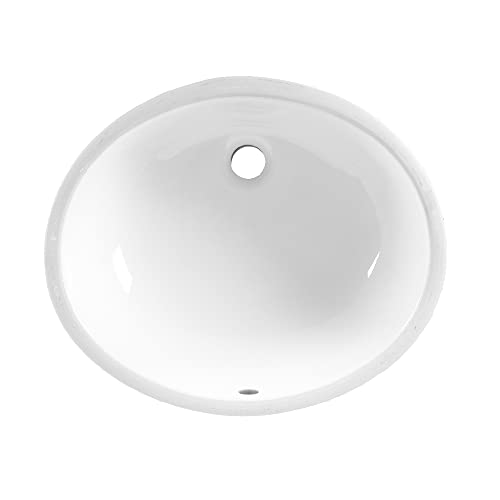
American Standard's Ovalyn is one of the longest-running and most widely stocked undermount oval basins in the industry, delivering the same essential mid-century simplicity as premium alternatives at a meaningfully lower price point.
The Ovalyn has been in continuous production for decades, which means fabricators and contractors are extremely familiar with its exact dimensions and mounting clip specification -- a practical advantage that reduces installation errors compared to newer or less common basin shapes.
Owner reviews describe the vitreous china glaze as comparable in quality to premium brands despite the lower price point, since the manufacturing process for vitreous china is standardized across the industry regardless of brand positioning.
Vitreous china manufacturing quality has less brand-to-brand variance than people assume, because the firing and glazing process is a mature, standardized technology. A budget oval basin like the Ovalyn delivers nearly identical day-to-day performance to a premium equivalent -- the price difference mostly buys design distinctiveness and brand warranty terms, not durability.
The Caxton drop-in variant carries over the same clean oval geometry as its undermount sibling, in a self-rimming configuration that works with laminate countertops and any existing vanity top cutout without requiring a specialized edge profile.
Drop-in installation adds a visible rim, which is a minor departure from strict mid-century minimalism, but it remains the only practical option for laminate countertops, which cannot support the cut edge required for undermount mounting. The Caxton's rim profile is low and simple, minimizing the visual interruption compared to drop-in sinks with a more pronounced decorative lip.
This is the sink to choose when renovating on a tighter budget that retains an existing laminate vanity top -- it delivers genuine mid-century basin geometry without requiring a full countertop replacement.
Not every mid-century remodel budget accommodates a full countertop replacement, and the Caxton drop-in is the compromise that preserves the basin's shape language even when the mounting method itself is not the purist's first choice. The rim is subtle enough that most observers will not register the departure from undermount.

Kohler's Iron Plains basin swaps vitreous china for enameled cast iron, giving the same simple oval shape a heavier, more substantial physical presence and a slightly different surface sheen that reads well in bathrooms with a heavier material palette.
Cast iron basins carry meaningfully more weight than vitreous china, which requires confirming the vanity cabinet and countertop support structure can handle the additional load, particularly for undermount installations where the cabinet bears more of the weight than in a drop-in configuration.
The Black Black finish option is a distinctive choice for a mid-century bathroom leaning into a bolder, higher-contrast palette, pairing well with matte black fixtures and dark-stained walnut vanities. Owner reviews note the enamel surface feels notably different underhand than vitreous china, with a slightly warmer, less glossy texture.
Cast iron sinks are underused in bathroom applications relative to kitchens, but the material's mass and surface texture genuinely change how a mid-century bathroom feels, not just how it looks in photos. If the vanity structure supports the added weight, the Iron Plains is a legitimate way to differentiate a bathroom from the more common vitreous china default.

Kingston Brass's rectangular vessel sink sits fully above the counter with sharp, clean corners and a flat plane, giving the more angular, Bauhaus-influenced strand of mid-century design a basin option that matches its geometry.
Vessel sinks require a faucet with a spout height of 10 to 18 inches to clear the raised basin rim, which is a separate purchase and a detail worth confirming before ordering. The Kingston Brass rectangular vessel's flat planes and sharp corners contrast with the rounder oval basins that dominate most mid-century sink lines, offering a genuinely different but equally valid angular interpretation.
Owner reviews note the vessel height (typically 5 to 6 inches above the counter) raises the effective basin rim significantly, which some households find changes handwashing ergonomics compared to a standard undermount sink -- worth testing at a showroom if possible before committing.
Vessel sinks read as more overtly "designed" than undermount basins, which suits a mid-century bathroom that leans into visible, sculptural fixtures rather than seamless integration. Pair this rectangular vessel with the Grohe Eurosmart Cosmopolitan or a similarly rectilinear tall faucet for a coherent angular composition.
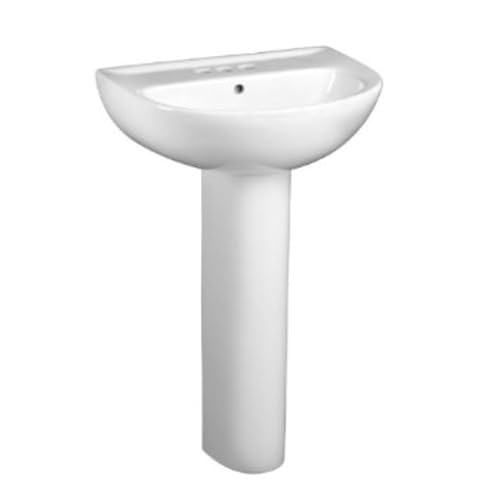
American Standard's Colony pedestal keeps the round basin and simple straight column shape without ornamentation, providing an accessible entry point for mid-century pedestal styling in a secondary bathroom.
The Colony line is one of American Standard's longest-running and most economical collections, and its pedestal sink strips away ornamentation to a degree that works well for mid-century styling despite not being marketed explicitly as a design piece. The round basin shape is a slight departure from the oval basins more commonly associated with the era but remains geometrically consistent with the aesthetic's overall restraint.
Owner reviews describe the Colony pedestal as a dependable, no-surprises fixture well suited to secondary bathrooms where budget takes priority over design distinctiveness, without sacrificing the basic mid-century simplicity of form.
Not every room in a mid-century remodel needs the most distinctive fixture available. A budget pedestal like the Colony, correctly paired with a simple lever faucet, achieves the same overall restraint as premium options in secondary spaces where the design investment matters less than in the primary bathroom.
Undermount is the stronger choice for mid-century modern design because it eliminates the visible rim seam and creates a seamless transition from countertop to basin, which better matches the aesthetic's overall restraint. Drop-in remains the correct choice when working with a laminate countertop, since laminate cannot support an undermount cutout edge.
Oval basins are the most common and versatile mid-century shape and fit both undermount and drop-in configurations. Kidney-shaped and gently asymmetric basins reference the organic boomerang forms popular in 1950s design more specifically, while rectangular vessel basins suit the more rectilinear, Bauhaus-influenced strand of the era.
Pedestal sinks eliminate under-sink storage entirely, which makes them impractical for most primary bathrooms that rely on vanity cabinet space for daily storage. They remain a strong, historically accurate choice for powder rooms and secondary guest bathrooms where storage demand is lower.
Every sink on this list was evaluated for genuine mid-century design accuracy: simple, unornamented basin geometry, vitreous china or enameled cast iron construction, and realistic dimensions confirmed against manufacturer published specifications. Fixtures with applied decorative trim, faceted rims, or ornate pedestal bases were excluded regardless of brand.
Material and dimension data was drawn from manufacturer published specifications. Owner review patterns were assessed from public aggregated review databases as of June 2026.
The sink is usually the first fixture selected in a bathroom remodel because it constrains the countertop, faucet, and cabinet decisions that follow. Committing to a basin shape (oval versus rectangular vessel) early keeps the rest of the mid-century composition coherent rather than assembled piecemeal.
Vitreous china is the standard material for most mid-century sink shapes and holds crisp geometric edges well. Enameled cast iron is a heavier alternative that adds mass and a different surface texture for buyers wanting a more substantial fixture.
Yes. Vessel sinks require a faucet with a spout height of roughly 10 to 18 inches to clear the raised basin rim, since standard 5 to 6 inch spout faucets designed for undermount or drop-in sinks will not reach far enough over a vessel basin.
No, undermount sinks require a solid-surface, quartz, or stone countertop with a finished, sealed edge. Laminate countertops cannot support an undermount cutout and should use a drop-in (self-rimming) sink instead.
Enameled cast iron sinks are meaningfully heavier than vitreous china equivalents of similar dimensions. Always confirm the vanity cabinet and countertop support structure is rated for the additional weight before selecting a cast iron undermount sink.
Pedestal sinks generally require more precise wall-mounted bracket installation since the basin's weight is partially supported by the wall rather than solely by the pedestal column and floor. A stud finder and level are essential for a secure installation.
White is the standard and most widely available color across nearly all mid-century-appropriate sink lines. A small number of cast iron options, such as Kohler's Iron Plains, offer additional colors including black, which suits a bolder high-contrast mid-century palette.
Most bathroom sinks use a standard 1.25 inch drain opening designed for a pop-up drain assembly. Confirm this measurement against your chosen drain and faucet combination before installation.
No. Vitreous china is fired with a glass-like glaze that is non-porous and does not require sealing, unlike natural stone. This is part of why it remains the standard material for bathroom sinks across all design eras.
A solution of equal parts white vinegar and water, applied with a soft cloth and left to sit for 10 to 15 minutes, dissolves most mineral deposits without damaging the glaze. Avoid abrasive powders, which can dull the glossy finish over time.
Yes. Kidney-shaped basins pair naturally with the same cylindrical or minimalist lever faucets used with oval basins. The asymmetric curve is a shape detail that does not require a specialized faucet type.
Vitreous china sinks routinely last 50 years or more with normal care, since the fired glaze does not degrade under typical residential use. Chips or cracks from impact damage are the primary failure mode, not surface wear.
Vessel sinks have more exposed exterior surface and a raised rim, which can accumulate more visible water spotting and requires slightly more frequent wiping compared to an undermount basin with no exposed exterior surface.
The Kohler Caxton Undermount Sink is the clearest mid-century modern anchor for most bathroom remodels, offering a seamless oval basin that lets the vanity, faucet, and finish choices carry the rest of the design language. For smaller powder rooms without cabinet storage needs, the Kohler Verticyl Pedestal Sink applies the same restraint on a purely cylindrical column base. Prioritize basin shape and material honesty over decorative extras, and the rest of the mid-century composition falls into place naturally.
How we rank & our data sources
We do not run physical lab tests. Rankings are built from published, verifiable data and real owner feedback, never paid placement.
Researched by admin · Last updated July 3, 2026 · Our review method
Everything involved in swapping an old bathroom vanity for a new one, from planning and demolition through disposal, wall repair, and reinstalling…
Read the guide
Freestanding soaking tubs in light, natural finishes built to feel like the centerpiece of a sunlit, plant-filled bathroom rather than a purely…
Read the guideA complete walkthrough covering water shutoff, old vanity removal, leveling and anchoring, countertop and sink setting, and reconnecting the P-trap and supply…
Read the guide