
Best Garden Bathtubs (2026)
Bathroom Remodeling4.6
Freestanding soaking tubs in light, natural finishes built to feel like the centerpiece of a sunlit, plant-filled bathroom rather than a purely…
Read the guideClassic bathroom vanities lean on furniture-style cabinetry, raised panel doors, turned or bracket feet and warm wood tones rather than flat modern slabs, and we ranked the strongest picks by cabinet construction, finish and how faithfully each one carries the traditional look.
Research updated June 2026.
The best classic bathroom vanity is the Kohler Damask 48-inch Vanity, a furniture-style cabinet with raised panel doors, a warm wood finish and traditional bracket feet paired with a vitreous china top. For a smaller footprint, the Kohler Tresham 30-inch Vanity is the best compact classic pick.
A classic bathroom vanity is meant to read like a piece of furniture rather than built-in storage, which is why the details that matter most are different from a modern vanity: raised or recessed panel doors instead of flat slabs, turned or bracket feet that lift the cabinet off the floor, warm wood tones or painted finishes rather than high-gloss white or gray, and hardware in oil-rubbed bronze, aged brass or brushed nickel rather than matte black bar pulls. Get those right and the vanity anchors a traditional bathroom the way a good dresser anchors a bedroom.
We do not run our own durability trials. Instead we compare published manufacturer specifications, the cabinet construction and moisture-resistant coatings each brand uses, the countertop and basin material, the door and drawer hardware, and the patterns across thousands of verified owner reviews. For classic vanities specifically we weighted four things above all else: authentic furniture styling, since raised panel doors and traditional feet or a furniture base are what separate a genuinely classic vanity from a flat modern box painted a warm color; cabinet construction, because a humid bathroom punishes particleboard and cheap veneer over years of use; countertop and basin durability, since a vitreous china or natural marble top holds up to daily water better than laminate; and the consistency of owner reviews on finish wear and assembly quality. If you want the broadest performance-first ranking of the fixtures that pair with a vanity, see our pillar guide to the best flushing toilets.
Every pick here had to combine authentic furniture-style detailing with solid cabinet construction and a durable top, then hold up in real bathrooms according to aggregated owner reports. We favored raised panel doors, turned or bracket feet and warm wood or painted finishes over flat modern slabs, solid wood face frames and plywood boxes over particleboard, and vitreous china or natural stone tops over laminate. We weighted owner reports about finish wear, water damage at the base and drawer glide quality over marketing photography, and we do not accept payment for placement.
| Model | Style Fit | Key Spec | Best For | Check Price |
|---|---|---|---|---|
| Kohler Damask 48-inch | Furniture-style raised panel | Solid wood face frame | Best overall classic vanity | Check price |
| Kohler Tresham 30-inch | Traditional bracket feet | Vitreous china top | Best compact classic | Check price |
| American Standard Colony | Warm wood, raised panel | Solid wood door frame | Best value classic | Check price |
| Kingston Brass Traditional Vanity | Turned feet, brass hardware | Marble-style engineered top | Best ornate detailing | Check price |
| Kohler Damask 60-inch Double | Furniture-style double sink | Two vitreous china basins | Best double-sink classic | Check price |
| American Standard Ravenna | Painted finish, recessed panel | Cultured marble top | Best painted classic | Check price |
| Kingston Brass Vessel Vanity | Turned legs, apron front | Vessel-ready top | Best for vessel sink pairing | Check price |

The Kohler Damask is the vanity we recommend first for a genuinely classic bathroom, because it carries the furniture-style details that cheaper cabinets fake with a photo finish: raised panel doors, a solid wood face frame, bracket feet and a warm cherry-toned finish, topped with a vitreous china integrated basin that resists stains and water spots for decades.
The Damask uses a genuine solid wood face frame rather than a printed laminate skin, so the raised panel doors show real grain and the finish ages the way wood furniture does rather than peeling like a veneer. The bracket feet lift the cabinet slightly off the floor, a detail lifted directly from antique washstands, and the vitreous china top is fused as one piece with the basin, eliminating the seam where water damage usually starts on a separate countertop and sink.
Owners consistently report that the wood grain and finish photograph and feel more like real furniture than the vanity market average, that the soft-close doors and drawers hold up well, and that the china top cleans easily and has not stained after years of daily use. The main limit is footprint: at 48 inches it needs a full-size bathroom rather than a tight powder room, and buyers who want a modern look should look elsewhere entirely. For a classic centerpiece vanity, it is the standout, and it pairs naturally with the traditional fixtures in our guide to the bathroom vanity styles roundup.
The Damask is the vanity I point most buyers to when they want a genuinely classic bathroom rather than a modern cabinet dressed in a warm color. The solid wood face frame and vitreous china top are the two details that separate real furniture styling from a laminate imitation, and both are done right here. Confirm you have the floor space for 48 inches, and it is hard to beat for a formal remodel.

The Kohler Tresham brings the same traditional bracket-foot styling into a 30-inch footprint, making it the pick for a smaller bathroom or powder room that still wants a furniture-style look rather than a flat modern box.
The Tresham scales the classic formula down to a single-basin 30-inch cabinet without dropping the bracket feet or panel door detailing, and its linen-white painted finish leans slightly lighter and more cottage-traditional than the Damask's wood tones. The vitreous china top integrates the basin as one piece, keeping the seam-free durability of the larger model in a smaller package.
Owners in smaller bathrooms value that it does not feel like a scaled-down afterthought, that the painted finish resists chipping better than expected, and that the china top holds up the same as pricier vanities. The tradeoff is storage: a 30-inch single-door cabinet has less drawer space than a 48-inch model, so households needing heavy storage should size up. For a powder room or guest bath that still wants classic detailing, it is the standout, and it fits well alongside the picks in our guide to bathroom vanity styles.
The Tresham is the vanity I recommend when the bathroom is small but the homeowner still wants real bracket feet and a panel door rather than a flat box. The lighter painted finish also opens up cottage and coastal-traditional pairings. Just budget for the tighter storage that comes with a 30-inch single-basin footprint.
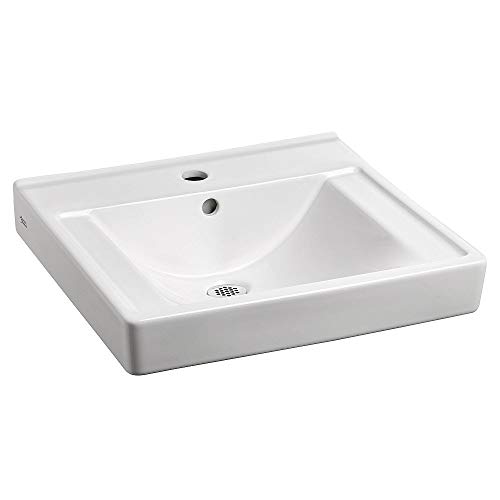
The American Standard Colony delivers warm wood raised panel styling and a solid door frame at a more accessible price than premium furniture-style vanities, making it the pick for buyers who want the classic look without the top-tier cost.
The Colony trims the ornate detailing of a pricier vanity but keeps the two things that actually define the classic category: a raised panel door on a solid wood frame and a furniture-style base rather than a flat toe-kick cabinet. The cultured marble top is engineered to resist stains and is easier to source in a matching backsplash than natural stone, which keeps installation costs down.
Owners value the honest value proposition, noting the wood grain and finish look more expensive than the price suggests and that the cultured marble top has held up well against daily water exposure. The tradeoffs are simpler hardware than premium lines and a need for good bathroom ventilation, since any wood-frame vanity benefits from humidity control. For a classic look on a real-world budget, it is the standout, and it pairs well with the fixtures covered in our best flushing toilets guide.
The Colony is the vanity I recommend when the budget is real but the homeowner still wants genuine wood-frame classic styling rather than a laminate box. The furniture base and raised panel doors do the visual work, and the cultured marble top is a sensible, easy-to-match choice. Run a bathroom fan during showers and the wood frame will hold up for years.

The Kingston Brass Traditional Vanity leans furthest into ornamentation, with turned legs, carved apron detailing and antique brass hardware, making it the pick for a formal or Victorian-leaning bathroom that wants maximum period character.
The turned legs on this vanity mimic an antique washstand more closely than any other pick here, standing the cabinet up on visibly shaped wood legs rather than a solid furniture base or toe-kick. The carved apron front adds detail along the bottom edge, and the antique brass hardware ties the whole piece to Victorian and formal traditional bathrooms rather than the softer, simpler classic look of the Damask or Colony.
Owners in period-style homes value that the turned legs and carved apron genuinely differentiate it from mass-market vanities, and that the antique brass hardware finish holds up without flaking. The tradeoff is that the ornate detailing can feel like too much in a simpler transitional bathroom, so it suits homeowners specifically chasing a formal or Victorian aesthetic. For maximum period character, it is the standout, and it pairs with fixtures covered in our guide to bathroom vanity styles.
The Kingston Brass Traditional Vanity is the one I recommend when a homeowner wants the bathroom to genuinely read as antique or Victorian rather than generically classic. The turned legs and carved apron are the details that do that work. If the rest of the bathroom is simpler or transitional, this may be more ornamentation than it needs.

The 60-inch Damask scales the same furniture-style cabinet up to two vitreous china basins, making it the pick for a primary bathroom shared by two people who both want the full classic treatment rather than compromising on a single sink.
At 60 inches wide, this vanity carries the same raised panel doors, bracket feet and warm cherry finish as the single-basin Damask but spreads them across a two-basin layout, giving two people separate vitreous china sinks and enough drawer and cabinet space between them for real storage. The scale makes it a genuine centerpiece in a primary bathroom rather than a stretched version of a smaller cabinet.
Owners value the generous storage split evenly between two users, the consistent furniture styling at the larger scale, and the same stain-resistant china basins as the smaller Damask. The obvious tradeoff is space, since 60 inches of wall is a hard requirement that rules it out for smaller bathrooms. For a primary bathroom that wants a matching classic double vanity, it is the standout, and it pairs with the fixtures in our best flushing toilets guide.
The 60-inch Damask is the double vanity I recommend when a couple wants the full classic look scaled up rather than compromised down. It keeps every detail that makes the single-basin version work and simply gives each person their own basin and storage. Confirm your wall space first, since 60 inches is non-negotiable.
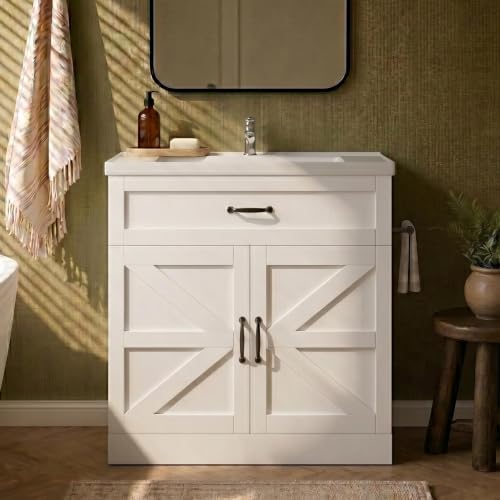
The American Standard Ravenna trades wood tones for a painted recessed panel finish, making it the pick for a lighter, cottage-leaning classic bathroom that still wants furniture-style detailing rather than a modern flat cabinet.
The Ravenna sits at the softer, lighter end of the classic category, using a painted recessed panel door rather than a stained wood grain, which suits cottage, coastal-traditional and softly farmhouse bathrooms better than a dark formal wood tone would. The cultured marble top and furniture-style toe-kick base keep it grounded in the classic category rather than drifting into a purely modern shaker look.
Owners appreciate how the lighter finish brightens a smaller bathroom while still reading as traditional rather than sterile-modern, and the cultured marble top has proven durable against daily splashes. The tradeoff is that buyers chasing warm wood tones or a more formal Victorian look should choose the Damask or Kingston Brass pick instead. For a light, versatile classic vanity, it is a strong choice, and it complements the picks in our guide to bathroom vanity styles.
The Ravenna is the vanity I recommend when a homeowner wants classic detailing but a brighter, lighter palette than a stained wood cabinet gives. It still uses a recessed panel door and a furniture-style base, so it does not drift into flat modern territory. Pair it with brass hardware for warmth or brushed nickel for a cooler cottage look.

The Kingston Brass Vessel Vanity uses turned legs and a flat apron-front top built to support an above-counter vessel basin, making it the pick for buyers who want a classic base with a more decorative bowl-style sink on top.
Unlike the other vanities on this list, this cabinet ships with a flat top rather than an integrated basin, because it is designed specifically to support a vessel-style bowl sink sitting on top of the counter. The turned legs and raised panel apron front give it the same classic base language as the rest of the category, while leaving the sink choice open for a decorative china, copper or stone vessel bowl.
Owners who pair it with a classic vessel basin value the flexibility to choose their own decorative bowl and the sturdy turned-leg base underneath. The key tradeoff to plan for is that a vessel setup also requires a taller vessel-height faucet, since a standard-height faucet will not clear the raised bowl. For a decorative statement sink on a classic base, it is the standout, and it should be paired with a vessel faucet like those covered in our best bathroom faucets guide.
This vanity is the one I recommend when the sink itself is meant to be the decorative centerpiece, a classic china or copper vessel bowl sitting on a turned-leg base. Remember to budget for both the vessel basin and a tall vessel-height faucet separately, since neither is included. Done right, it is one of the more striking classic vanity setups available.
If I had to cover most classic bathrooms with two vanities, I would keep the Kohler Damask for anyone with the wall space for a full furniture-style cabinet with raised panel doors and bracket feet, and the American Standard Colony for buyers who want the same wood-frame classic look at a more accessible price. Both keep the two things that actually define the category, a solid wood door frame and a furniture-style base, rather than faking the look with a flat cabinet and a warm paint color.
A classic vanity uses furniture-style detailing rather than a flat modern box. That means raised or recessed panel doors instead of flat slabs, turned or bracket feet or a furniture-style base instead of a plain toe-kick, warm wood tones or soft painted finishes, and hardware in oil-rubbed bronze, aged brass or brushed nickel rather than matte black bar pulls.
The door profile is the single fastest way to tell the two styles apart, since a flat slab door reads as modern no matter what finish or feet are added. For a broader comparison across styles, see our guide to bathroom vanity styles.
Vitreous china integrated basins and natural or cultured marble tops pair best with classic vanities, since both materials read as traditional and resist daily water exposure well. Vitreous china fuses the basin and top into one seamless piece, eliminating the seam where water damage typically starts, while marble and cultured marble bring warm veining that suits a furniture-style cabinet.
Laminate tops can work on a budget but tend to undercut the traditional look and are more prone to visible seams and edge wear over time.
Either works, and the choice comes down to the rest of the bathroom's palette. Warm stained wood, like cherry or oak, suits formal and Victorian-leaning bathrooms and pairs well with dark hardware. Painted finishes, especially soft white or sage, suit cottage and coastal-traditional bathrooms and brighten smaller spaces while keeping the same panel-door detailing that defines the classic category.
Both options keep the vanity in the classic category as long as the door uses a raised or recessed panel profile rather than a flat slab.
Generally comparable, since storage depends more on cabinet width than on door style. A 36-inch classic vanity with two doors and a drawer bank offers similar storage to a 36-inch modern vanity with the same layout. The main difference is that furniture-style bases and turned legs can slightly reduce usable interior height near the floor compared to a flush toe-kick modern cabinet.
Buyers who need maximum storage in a classic look should prioritize wider cabinets with a full drawer bank over narrower single-door models.
Buying a classic vanity comes down to three checks that generic vanity guides tend to skip: confirming the door profile is genuinely raised or recessed panel rather than a flat slab in a warm finish, choosing a top material that suits a traditional look and resists water, and matching the cabinet width to your available wall space and storage needs. Work through the sections below before you buy and you will land on a vanity that reads as authentically classic rather than a modern cabinet in disguise.
Look closely at product photos for a raised or recessed center panel, not just a warm wood-tone finish, since a flat slab door in oak-look laminate is still a modern door. Pair that with a furniture-style base, bracket feet or turned legs rather than a flush toe-kick, which is the detail that most reliably signals real classic styling rather than a modern cabinet with a traditional-sounding name.
Vitreous china integrated basins and marble or cultured marble tops are the two most common classic-vanity top materials, and both resist daily water exposure well. Vitreous china eliminates the seam between basin and counter entirely, which is the single most common place a laminate vanity top eventually fails.
A single-basin classic vanity typically runs 24 to 36 inches wide, while double-basin versions run 60 to 72 inches and need a genuinely large bathroom. Measure your available wall space first, and remember that furniture-style bases and turned legs can sit slightly proud of the wall compared to a flush modern cabinet, so leave a little extra clearance.
The mistake I see most often with classic vanities is buyers picking a vanity for its warm color alone and discovering later that the flat slab doors and toe-kick base read as modern in person, not traditional. Check the door profile and base style first, then the top material, then size to your space. Get the door profile and base right and the rest of the classic look follows naturally.
The Kohler Damask 48-inch Vanity is the best classic bathroom vanity overall. It pairs a solid wood face frame and raised panel doors with traditional bracket feet and a durable vitreous china integrated basin, giving it the authentic furniture styling that defines the classic category.
Raised or recessed panel doors, a furniture-style base or turned and bracket feet, warm wood tones or soft painted finishes, and hardware in oil-rubbed bronze, aged brass or brushed nickel. A flat slab door in a warm color still reads as modern, so the door profile matters more than the finish color.
Both work well. Vitreous china fuses the basin and top into one seamless piece, which eliminates the seam where water damage typically starts, while marble and cultured marble bring warm veining that suits a furniture-style cabinet. Choose based on the basin style you want and your budget.
Single-basin classic vanities typically run 24 to 36 inches, while double-basin versions run 60 to 72 inches. Measure your available wall space first, leaving a little extra clearance for furniture-style bases and turned legs that can sit slightly proud of the wall.
Oil-rubbed bronze and aged or antique brass suit formal and Victorian-leaning classic bathrooms, while brushed nickel and satin brass suit lighter cottage and coastal-traditional looks. Matte black tends to read as modern or industrial and can clash with raised panel doors and turned legs.
Usually, yes, for longevity. A solid wood face frame ages the way real furniture does and can be refinished, while a laminate or veneer skin can peel or delaminate in a humid bathroom over years of use. If budget is tight, look for a solid wood door frame at minimum, even if interior panels use engineered wood.
Yes, with a vanity designed for it. A vessel-ready classic vanity ships with a flat top rather than an integrated basin, so you choose a decorative above-counter bowl separately. You also need a taller vessel-height faucet, since a standard faucet will not clear the raised bowl.
Yes. Most classic lines that offer a 30 to 36-inch single-basin vanity also offer a 60 to 72-inch double-basin version with the same door style, feet and finish, scaled up for primary bathrooms shared by two people.
Run your bathroom exhaust fan during and after showers to control humidity, wipe up standing water around the basin promptly, and avoid placing wet towels directly against the cabinet doors. A solid wood frame with a quality finish resists moisture well but still benefits from good ventilation, the same as any wood furniture in a humid room.
A raised panel door has a center panel that sits proud of the surrounding frame, creating a more dimensional, formal look common on Victorian and traditional cabinets. A recessed panel sits flush or slightly inset, giving a slightly simpler, more transitional look that still reads as classic when paired with a furniture-style base.
It varies by construction rather than style alone. A classic vanity with a solid wood face frame and vitreous china top costs roughly the same as a modern vanity built to the same construction standard. Cheaper classic-styled vanities that use laminate panels and cultured marble tops can cost less than premium modern lines.
Turned legs are the most visually antique, mimicking a freestanding washstand, and suit formal or Victorian bathrooms. Bracket feet offer a slightly more understated furniture look that works across a wider range of traditional bathrooms. A furniture-style toe-kick base is the most subtle option while still avoiding a flat modern cabinet look.
For the best classic bathroom vanity overall, the Kohler Damask 48-inch wins, pairing a solid wood raised panel cabinet and traditional bracket feet with a seamless vitreous china top. Choose the Kohler Tresham for a compact powder room, the American Standard Colony for the best value wood-frame option, the Kingston Brass Traditional Vanity for maximum ornate detail, the 60-inch Damask for a shared double-sink primary bathroom, the American Standard Ravenna for a lighter painted classic look, and the Kingston Brass Vessel Vanity for pairing with a decorative above-counter basin. Confirm the door profile and base style first, then match the top material and hardware to your bathroom's palette.
How we rank & our data sources
We do not run physical lab tests. Rankings are built from published, verifiable data and real owner feedback, never paid placement.
Researched by admin · Last updated July 3, 2026 · Our review method
Freestanding soaking tubs in light, natural finishes built to feel like the centerpiece of a sunlit, plant-filled bathroom rather than a purely…
Read the guideA complete walkthrough covering water shutoff, old vanity removal, leveling and anchoring, countertop and sink setting, and reconnecting the P-trap and supply…
Read the guide
Warm wood tones, wrought-iron accents and hand-finished cabinetry for a vanity that fits a Santa Fe or desert-adobe bathroom.
Read the guide