
Where Does Toilet Water Go After You Flush
Buying Guides4.6
When you flush, where does it go? Follow toilet water from the bowl through the trap, drain, and stack to a septic…
Read the guideA clear, jurisdiction-aware guide covering every common scenario -- from swapping a toilet to moving plumbing walls -- so you know exactly when to pull a permit and when you can skip the trip to city hall.
You generally need a permit for bathroom remodels that involve moving or adding plumbing, electrical circuits, or structural walls. Cosmetic work -- replacing fixtures in the same location, retiling, or swapping a toilet -- usually does not require a permit, though rules vary by municipality and you should always verify with your local building department before starting any work.
Building codes distinguish between cosmetic changes (painting, new fixtures in the same location, flooring) and structural or systems work (moving walls, rerouting plumbing, adding electrical circuits). The International Residential Code (IRC) and local amendments define which category triggers a permit requirement. Any work that alters the building's structure, drainage system, ventilation, or electrical panel load almost always requires an inspected permit.
The term "bathroom remodel" covers an enormous range of projects. Replacing cracked tile on the shower floor and gut-renovating an entire master bath with a new wet room, relocated toilet, and radiant heat floor are both "bathroom remodels" -- but they sit at opposite ends of the permit spectrum. Understanding exactly where your project lands saves money, avoids stop-work orders, and protects you at resale.
Most jurisdictions in the United States follow the IRC as a base code with local amendments. Some cities, particularly in California and New York, layer additional requirements on top. The safest starting point is always your local building and safety department -- many now post permit checklists online, and a quick phone call can clarify ambiguity before any demolition begins.
IRC Section 105.2 lists the specific categories of work that are exempt from permit requirements. The plumbing-related exemptions include stopping leaks in pipes without replacing or rearranging them, and clearing stoppages or repairing leaks in valves or fixtures without replacing or rearranging those elements. In plain language: fixing what is already there does not need a permit. Installing something new or moving something existing usually does.
Projects that virtually always require permits include: moving or adding supply or drain lines, adding a new bathroom or half-bath, installing a new electrical circuit or GFCI outlet, removing or adding load-bearing walls, and changing the exhaust ventilation path through new ductwork. These categories affect health, safety, and structural integrity, which is why local codes mandate inspections before work is covered by drywall or flooring.
Here is a detailed breakdown of the most common bathroom remodel tasks and their typical permit status across U.S. jurisdictions. Because local rules vary, treat the "Permit Required" column as a starting point confirmed by your local building department, not an absolute rule.
| Work Category | Permit Required? | Key Code Reference | Notes |
|---|---|---|---|
| Moving drain or supply lines | Yes | IRC P2503, P2601 | Requires rough-in inspection before closing walls |
| Adding a new bathroom | Yes | IRC R105, P2601 | Full building + plumbing + electrical permits often needed |
| Adding a new electrical circuit | Yes | NEC 210.8(A)(1) | GFCI within 6 ft of water source mandatory; inspector verifies |
| Removing or adding load-bearing wall | Yes | IRC R301 | Structural engineer review typically required |
| New exhaust fan with new duct path | Often yes | IRC M1505 | Duct must terminate outside; inspector confirms route |
| Installing radiant floor heat | Often yes | NEC 424, IRC M2001 | Electric mat triggers electrical permit; hydronic triggers plumbing |
| Replacing toilet (same location) | No in most jurisdictions | IRC 105.2 | Like-for-like swap is classified as maintenance in most cities |
| Retiling shower or floor | No in most jurisdictions | IRC 105.2 | Waterproofing membrane replacement may require inspection in some codes |
| Replacing vanity or sink (same location) | No in most jurisdictions | IRC 105.2 | Some cities require a plumbing permit even for like-for-like |
| Replacing bathtub (same footprint) | Sometimes | Varies by jurisdiction | Depends on whether drain work is disturbed |
| Converting closet to half-bath | Yes | IRC R105, P2601, NEC 210.8 | New plumbing, electrical, and ventilation all required |
| Replacing exhaust fan (same box, same wiring) | No in most jurisdictions | IRC 105.2 | Like-for-like swap without new wiring is typically maintenance |
Most homeowners underestimate how often a "simple" bathroom swap triggers a permit. Replacing a tub with a walk-in shower moves the drain, changes the waterproofing area, and often requires a new vent path -- three separate permit triggers in many jurisdictions. Budget two to four weeks for permit approval before demo begins on any project that alters plumbing or electrical systems.
Replacing a toilet in the same location with a new model of similar rough-in distance (typically 10, 12, or 14 inches from the wall to the bolt caps) does not require a permit in the vast majority of U.S. cities. The swap is classified as maintenance, not new construction. However, if you are relocating the toilet, the rough-in distance changes, or the municipality explicitly requires a plumbing permit for any fixture work, you will need one.
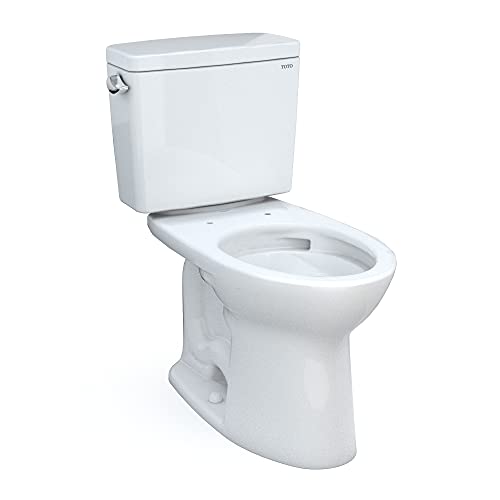
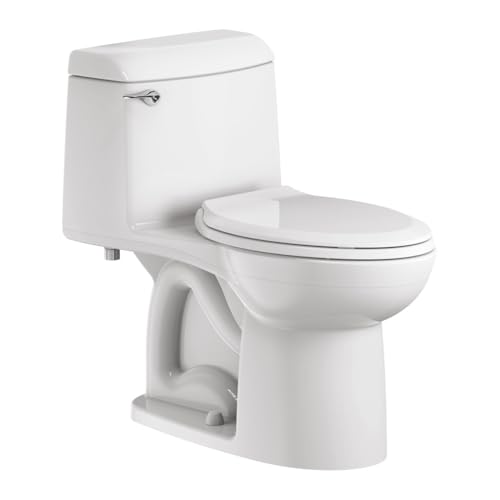
This is one of the most common permit questions for homeowners shopping for a new toilet. If you are upgrading from an older 3.5 GPF or 1.6 GPF model to a water-efficient 1.28 GPF toilet like the TOTO Drake II or the American Standard Champion 4, and the new toilet's rough-in matches the old one, the work is generally permit-free. The TOTO Drake and Drake II both offer a standard 12-inch rough-in as well as 10-inch and 14-inch variants to match existing rough-in dimensions without moving the drain.
The TOTO Drake II achieves a MaP score of 1,000 grams at 1.28 GPF, making it one of the most thoroughly tested toilets in North America. The American Standard Champion 4 holds a MaP score of 1,000 grams at 1.6 GPF (the Max Performance version uses 1.28 GPF). Neither requires a permit when installed in the same location as the existing toilet. The best flushing toilets guide covers these and other EPA WaterSense-certified models in full detail.
If the toilet is part of a broader remodel that also touches the drain stack, adds a bidet seat with a dedicated electrical outlet, or converts a half-bath to a full bath, the overall project may require permits even if the toilet swap itself would not.
Many state and local water utilities offer rebates of $50 to $200 for replacing a toilet with an EPA WaterSense-certified 1.28 GPF model. These rebate programs are designed for straightforward fixture swaps and do not require a permit. If you are planning a replacement anyway, check your utility's website for rebate eligibility before purchasing -- it often covers a significant portion of the toilet's cost.
Completing permitted work without a permit exposes homeowners to stop-work orders requiring demolition of completed work for inspection, fines ranging from double the permit fee to several thousand dollars depending on jurisdiction, complications during home sale where unpermitted work must typically be disclosed, and voided homeowner's insurance claims if unpermitted work contributed to damage.
The consequences of skipping a required permit are more significant than most homeowners anticipate at the time of the project. Here is what commonly happens:
Retroactive permit costs vary widely. In Los Angeles, the investigation fee for unpermitted work can equal four times the standard permit fee. In smaller municipalities, the fee may be modest, but the requirement to open finished walls for inspection remains. Pulling the permit upfront is almost always cheaper and faster than resolving unpermitted work discovered at resale or during a future remodel.
Permit thresholds vary significantly by jurisdiction. California requires permits for almost any plumbing or electrical work beyond simple fixture replacement. Texas and Florida tend to follow the IRC more closely but cities like Austin and Miami have added local amendments. Rural counties in many states may have minimal permit requirements or rely on state code alone. Always verify with your local building department -- online portals for many cities now allow same-day permit confirmation for simple projects.
There is no single national permit standard for bathroom remodels. The federal government does not regulate local building permits. Each state adopts a base building code (most use some version of the IRC), and then each city or county may amend it. A summary of common regional patterns:
| Region or State | Code Base | Permit Threshold Tendency | Notable Quirks |
|---|---|---|---|
| California (general) | California Building Code (based on IBC/IRC) | Strict | Permit required for almost any plumbing or electrical work; Title 24 energy compliance for fixtures |
| New York City | NYC Building Code | Very strict | Alteration Type 3 (minor) may still require filing; licensed plumber required for all drain work |
| Texas (general) | IRC with municipal amendments | Moderate | Home-rule cities (Austin, Houston, Dallas) each have unique amendments; rural counties often have minimal requirements |
| Florida (general) | Florida Building Code | Moderate to strict | Hurricane strapping and moisture barrier rules add permit triggers not seen in most states |
| Most Midwest and rural areas | IRC (2018 or 2021 edition) | More lenient | Some counties permit homeowner self-pulls with no licensed contractor requirement; verification still essential |
| Pacific Northwest (WA, OR) | State-adopted IRC with energy code | Moderate | Ventilation and insulation requirements are stronger than IRC base in some jurisdictions |
| Illinois (Chicago) | Chicago Building Code | Strict | Chicago requires a licensed plumber to pull all plumbing permits; homeowner self-pull not allowed |
For most homeowners, the permit process for a bathroom remodel is more straightforward than expected. Here is the typical sequence:
Homeowners in most states are legally allowed to pull their own permits without a licensed contractor -- this is called an owner-builder permit. Some jurisdictions require a signed affidavit stating you will occupy the home. Owner-builder status does not exempt you from having licensed subcontractors do work that legally requires a license (electrical in several states, gas lines in most). Check your state's contractor licensing board rules before assuming you can self-perform all the work.
Plumbing permits are the most common permit type for bathroom remodels. A plumbing permit is typically required whenever:
Rough-in inspection typically happens after drain lines are installed but before walls are closed. The inspector checks slope (typically 1/4 inch per foot minimum for horizontal drains per IRC Section P3005.3), vent sizing, pipe material compliance, and cleanout accessibility. A final plumbing inspection confirms fixture installation and checks for leaks.
Popular models like the Kohler Highline and American Standard Cadet 3 offer multiple rough-in sizes, which means a permit-free like-for-like swap is possible even when updating to a modern 1.28 GPF WaterSense-certified model. Always confirm the new toilet's rough-in dimension before purchasing -- a 10-inch rough-in toilet cannot be installed on a 12-inch rough-in drain without relocating the flange, which requires a permit.
For a deeper look at plumbing layout and what it means for your remodel, see our guide on bathroom plumbing basics and the companion bathroom plumbing diagram resource.
Electrical permits are required when any of the following apply:
The National Electrical Code (NEC) Section 210.8(A)(1) requires that all bathroom receptacles be GFCI-protected. In most jurisdictions, any electrical work in a bathroom triggers an electrical permit and inspection to verify GFCI compliance, circuit sizing, and proper box fill calculations. Replacing an existing outlet or switch without adding new wiring is typically exempt from permit requirements in most cities, but verify locally.
For a full guide to bathroom electrical work and what the code requires, see the bathroom electrical guide.
Permit fees vary significantly by jurisdiction, project complexity, and local fee schedules. Here is a general range based on publicly available fee schedules from major U.S. cities:
| Permit Type | Typical Fee Range (U.S.) | Calculated Based On |
|---|---|---|
| Building permit (cosmetic remodel) | $50 to $200 | Flat fee or low project valuation |
| Plumbing permit (minor fixture relocation) | $75 to $350 | Number of fixtures or flat trade fee |
| Electrical permit (new circuit) | $75 to $300 | Amperage or flat trade fee |
| Full bath remodel (all permits combined) | $250 to $1,500+ | Project valuation; high-cost cities at upper range |
| Adding a new bathroom (gut conversion) | $500 to $3,000+ | Project valuation plus plan check fee |
| After-the-fact permit (legalization) | 2x to 4x standard fee + penalty | Investigation fee plus standard permit cost |
High-cost-of-living cities like San Francisco, Los Angeles, and New York have permit fees well above the national average due to higher plan check fees and more required inspections. Many cities also charge a plan check fee separate from the permit fee for projects requiring review of drawings. Rural counties in the South and Midwest often have much lower fees and faster approvals.
This is a red flag. Some contractors suggest skipping permits to speed up the project or avoid inspection delays. While it is true that experienced local contractors know the local codes well, the permit decision belongs to the building department -- not the contractor. If work requires a permit by code, a contractor who advises you to skip it is shifting the legal and financial risk to you as the homeowner.
Questions to ask any contractor before signing a contract for bathroom work:
A reputable contractor who regularly works in your municipality will pull permits as a matter of standard practice. Many cities allow you to verify permit history for a specific contractor online through the building department's public records portal. If a contractor cannot provide their license number or has no permit history in your city, consider that a warning sign.
Permits cost money and add time, but they also create a paper trail that protects you. If plumbing work develops a leak three years after the remodel, a closed permit with passing inspections demonstrates the work was done to code. Without it, your homeowner's insurance has grounds to dispute the claim. The permit fee is effectively low-cost insurance on an expensive project.
While local codes vary, most jurisdictions exempt the following bathroom work from permit requirements. This list aligns with IRC Section 105.2 and its counterpart sections in most state-adopted codes:
Even in strict jurisdictions, these maintenance-level tasks are generally not regulated under the permit system. That said, California requires that any new toilet -- even a same-location replacement -- must meet the current state-mandated 1.28 GPF maximum. Replacing an older 3.5 GPF toilet with a modern 1.28 GPF model like the TOTO UltraMax II or the Woodbridge T-0001 is still permit-free in most states but simultaneously required by code in California, meaning no permit is needed but the GPF requirement is mandatory.
For detailed guidance on choosing a toilet that works for both performance and code compliance, see the ADA-compliant toilet guide and the broader bathroom remodel buying guide.
In most U.S. cities, replacing a toilet in the same location with a new model does not require a permit. It is classified as maintenance under IRC Section 105.2. However, if the toilet is being moved, the rough-in distance changes (requiring drain relocation), or your city explicitly requires a plumbing permit for all fixture work, you will need one. Confirm with your local building department before starting.
Retiling a bathroom floor or shower surround is generally permit-free in most jurisdictions. The exception is if the retile project also involves replacing the waterproofing membrane under the tile -- some codes require inspection of the membrane before it is covered. Check with your building department if your project involves the substrate or waterproofing layer.
Replacing a bathtub in the same location may or may not require a permit depending on whether the drain is disturbed. If the new tub uses the same drain location and you are not opening walls to alter plumbing, many jurisdictions treat it as a permit-free maintenance task. If the drain must be moved or the subfloor opened, a plumbing permit is typically required.
Yes. Adding a half-bath (toilet and sink) in a new location always requires a building permit, a plumbing permit, and possibly an electrical permit. This is new construction -- new drain lines, vent pipes, and supply lines must be installed and inspected before walls are closed.
In most states, homeowners can pull their own permits as owner-builders for work on their primary residence. Some jurisdictions require a signed affidavit confirming you will occupy the home. However, certain work (electrical in some states, gas lines in most) must be done by a licensed contractor regardless of who pulls the permit. Chicago and New York City require licensed plumbers to pull all plumbing permits.
Penalties vary by jurisdiction but commonly include stop-work orders requiring exposed inspection of covered work, investigation fees often 2x to 4x the standard permit fee, and requirements to bring work up to current code. At resale, unpermitted work must typically be disclosed and can affect financing and appraised value.
Simple projects with no structural changes are often approved over the counter on the same day or within one to three business days. Projects requiring plan review typically take one to four weeks in smaller municipalities and three to eight weeks in high-volume departments like Los Angeles or New York City. Many cities now offer online permit portals that speed up simple approvals significantly.
Yes. Most building permits expire if work does not commence within a specified period (commonly 180 days from issuance) or if work is not completed within a maximum timeframe (often one to two years). If your project is delayed, contact the building department to request an extension before the permit lapses -- reinstating an expired permit costs additional fees.
Yes. Moving a toilet -- even a few inches -- requires relocating the drain flange and possibly the drain stack connection and vent path. This is new plumbing work that requires a plumbing permit and rough-in inspection in virtually all U.S. jurisdictions. The drain slope of 1/4 inch per foot (IRC Section P3005.3) must be re-established and inspected before the floor is closed.
Converting a bathtub to a walk-in shower typically requires a permit in most jurisdictions. The project usually involves new waterproofing, altered drain location or type, and potentially new framing for shower walls. These changes trigger both a building permit and a plumbing permit in most cities.
Replacing an exhaust fan with a same-size unit in the existing ceiling box using existing wiring and ductwork is generally permit-free. Installing a new exhaust fan where none existed, running new ductwork, or adding new wiring typically requires an electrical or mechanical permit depending on jurisdiction.
Required inspections depend on the scope of work but commonly include: rough plumbing inspection (before walls are closed), rough electrical inspection (before walls are closed), framing inspection (if walls are altered), waterproofing inspection (for showers, in some jurisdictions), and a final inspection after all work is complete. Your permit card will list all required inspections at the time of issuance.
A bidet seat that connects to an existing toilet supply line and uses an existing GFCI outlet near the toilet does not require a permit in most jurisdictions. If a new dedicated electrical outlet must be installed to power the bidet seat, an electrical permit is required for the outlet work. Non-electric bidet seats that attach to the existing supply line are universally permit-free.
No. Hanging a mirror or installing a surface-mount medicine cabinet is decorative work requiring no permit. Recessed medicine cabinets installed between studs also do not require a permit in most jurisdictions, as long as no structural members are cut and no new wiring is added.
The most reliable source is your local building and safety department. Most cities and counties now have official websites with permit fee schedules, project type lookup tools, and online applications. Searching "[your city name] building permit bathroom remodel" typically surfaces the correct municipal resource. A five-minute phone call to the permit office is the fastest way to get a definitive answer for your specific project.
Yes. Unpermitted work can complicate or void homeowner's insurance claims related to that work. If a water damage claim is traced to improperly installed unpermitted plumbing, an insurer may deny coverage. Permitted and inspected work creates documented proof that the installation met code at the time of completion, which supports your claim.
Most states require disclosure of known unpermitted work in real estate transactions. Buyers' lenders may refuse to finance the purchase or require that the work be permitted and inspected before closing. Some sellers resolve this with an after-the-fact permit; others adjust the sale price to reflect the buyer's remediation cost. There is no statute of limitations on unpermitted work in most jurisdictions.
Replacing a bathroom vanity and sink in the same location using existing supply shutoffs and drain connections is generally permit-free in most jurisdictions. If supply lines must be extended, the drain connection changed, or a new electrical outlet added for the vanity area, the affected trade permit (plumbing or electrical) is required.
An after-the-fact permit (also called a retroactive or legalization permit) is issued when unpermitted work is discovered and needs to be brought into code compliance. The process typically requires an inspection of completed work, which may mean opening walls to verify rough-in conditions. Fees are usually 2x to 4x the standard permit fee, plus any penalties assessed by the jurisdiction.
Whether you need a permit for a bathroom remodel comes down to one core question: does the work alter the building's plumbing system, electrical system, or structure? Cosmetic upgrades -- retiling, repainting, swapping fixtures in the same spot -- are almost always permit-free. Anything that moves a drain, adds a circuit, or opens a wall to change the structure requires a permit and inspection. Pulling permits upfront protects your investment, your insurance coverage, and your ability to sell the home without complications. When in doubt, a five-minute call to your local building department gives you certainty that no contractor opinion can match.
When you flush, where does it go? Follow toilet water from the bowl through the trap, drain, and stack to a septic…
Read the guideDo toilets need electricity to flush? Most do not. Learn which toilets use power, how a standard flush works, and how to…
Read the guideFind out how many gallons per flush an old toilet really uses, how to check your own tank, and how much water…
Read the guide