How to Remove an Old Wax Ring Cleanly
Toilets4.6
Learn how to scrape old wax ring residue off a toilet flange without damaging it, using a plastic scraper, rags, and mineral…
Read the guideSeptic homeowners face a different set of priorities than those on municipal sewer. Every flush pushes water into a tank with limited biological capacity, so the right toilet needs to clear the bowl completely in one shot while using as little water as possible. Too much water overloads the leach field; not enough leaves waste in the trapway. We ranked the top septic-compatible toilets using published MaP flush-test scores, gallons-per-flush (GPF) ratings, EPA WaterSense certification, trapway design, and consistent patterns from aggregated owner reviews across thousands of installations.
The TOTO Drake is the best toilet for most septic systems: its G-Max siphon jet posts a perfect 1000 gram MaP score and clears heavy loads in one flush at just 1.28 GPF, which keeps water input low while eliminating the double-flushing that stresses septic tanks. For dual-flush flexibility, the TOTO Aquia IV at 0.8/1.28 GPF is the most septic-friendly dual-flush option available.
Choosing a toilet for a home on a septic system is a balancing act that does not apply to municipal sewer connections. The septic tank is a contained biological system with finite capacity: add too much water too frequently and the tank cannot process waste properly, leading to an overloaded leach field, expensive pump-outs, and potential drain-field failure. At the same time, a toilet that does not flush powerfully enough leaves solid waste incomplete in the trapway or bowl, creating the double-flushing habit that paradoxically sends more water down than a single strong flush would.
The sweet spot for septic homeowners is a toilet that clears the bowl fully and completely in one flush using 1.28 GPF or less. EPA WaterSense certification (mandatory at 1.28 GPF or below) is a strong signal because it requires both water-efficiency verification and a minimum flush performance standard. The independently run MaP (Maximum Performance) test, which measures how many grams of solid waste a toilet can move in a single flush, is the most reliable objective predictor of whether a toilet will clog or require a second pass. For septic homes, a MaP score of 800 grams or higher is the baseline worth considering; 1000 grams is the gold standard.
We do not physically test toilets. We compare published manufacturer specifications, independent MaP scores, GPF figures, EPA WaterSense certification, trapway width and glazing status, flush valve size, and the consistent patterns that surface across large volumes of verified owner reviews. The picks below cover a range of flush technologies, price points and bowl styles, all of them suited to the demands of a septic system.
Every toilet on this list met a strict set of criteria designed specifically for septic compatibility. First, a MaP score of 800 grams or higher was required, with preference given to 1000 gram models because they eliminate double-flushing. Second, GPF had to be 1.28 or below (EPA WaterSense level), with dual-flush and ultra-low-flush options given extra credit for septic friendliness. Third, we required a fully glazed trapway of at least 2 inches in diameter, because unglazed or narrow trapways accumulate buildup faster and clog more often. Fourth, we looked at the brand's track record for septic-compatible flapper and fill-valve materials, since some chemical flapper materials degrade faster in homes that use septic additives. Fifth, owner reviews from verified purchasers in rural and suburban septic-system homes were weighed for real-world clog frequency and long-term performance. For a broader reference on raw flush power across every toilet category, see our complete guide to the best flushing toilets.
| Toilet | Best For | MaP | GPF | WaterSense | Rating | Check Price |
|---|---|---|---|---|---|---|
| TOTO Drake | Overall septic pick | 1000 g | 1.28 | Yes | 4.8 | Check price |
| TOTO Aquia IV | Dual-flush septic | 1000 g | 0.8/1.28 | Yes | 4.7 | Check price |
| American Standard Champion 4 | Clog-resistant | 1000 g | 1.6 | No | 4.5 | Check price |
| TOTO UltraMax II | One-piece efficiency | 1000 g | 1.28 | Yes | 4.7 | Check price |
| Kohler Cimarron | Value + low water | 1000 g | 1.28 | Yes | 4.5 | Check price |
| Gerber Viper | Budget septic pick | 1000 g | 1.28 | Yes | 4.3 | Check price |
| TOTO Drake II | Quiet efficient flush | 800 g | 1.28 | Yes | 4.6 | Check price |
| American Standard Cadet 3 | Best value overall | 1000 g | 1.28 | Yes | 4.4 | Check price |
| Woodbridge T-0001 | Modern one-piece look | 800 g | 1.28 | Yes | 4.4 | Check price |
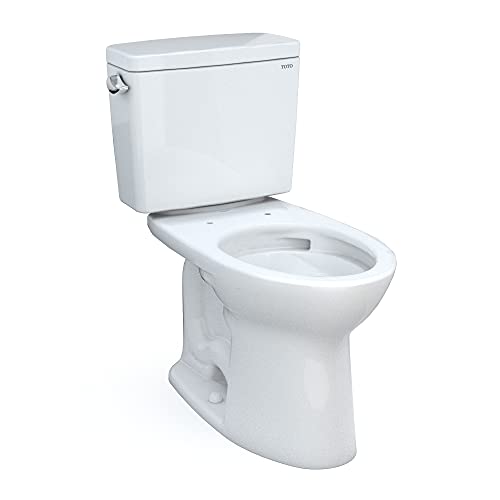
The TOTO Drake is the definitive septic-compatible toilet because it delivers a perfect 1000 gram MaP score at just 1.28 GPF, meaning you get the flush power to never double-flush combined with the water restraint a septic system demands.
TOTO's G-Max system uses a wide 3-inch flush valve and a large, fully glazed 2-1/8 inch trapway to send a high-volume surge through the bowl in a single motion. That is how it earns the top 1000 gram MaP score while stopping at 1.28 gallons. The Drake is EPA WaterSense certified, meaning it meets independent efficiency and minimum performance standards simultaneously.
Owner reviews from septic households specifically note that double-flushing stopped entirely after switching to the Drake. The fully glazed trapway prevents waste from sticking and building up, which is particularly important in septic homes where slow accumulation leads to clogs that are far more difficult to clear than municipal-sewer blockages. Replacement parts are available at virtually every hardware store, a practical advantage for rural homeowners far from plumbing supply specialists.
The Drake is the single best answer to the question "what toilet should we put in our septic home?" The 1000 gram MaP score at 1.28 GPF is a combination almost no other toilet matches: you get the power to eliminate second flushes (which wastes more water than one strong flush) while keeping hydraulic load on the tank as low as possible. If you only swap one toilet, make it the Drake.

The Aquia IV's 0.8/1.28 GPF dual-flush setup is the most septic-conscious option on this list: liquid waste goes out at just 0.8 GPF, dramatically reducing the daily water volume entering the tank without sacrificing solid-waste clearance.
The Aquia IV uses TOTO's DYNAMAX TORNADO FLUSH for its full-flush mode, running two powerful nozzles that create a centrifugal rinse rather than relying on rim holes. This design is highly effective at bowl cleaning while the 1.28 GPF full flush keeps water volume in check. The 0.8 GPF partial flush is genuinely the most water-conservative flush available in a gravity-feed design, and it is EPA WaterSense certified at both flush levels.
Septic professionals who advise on system longevity frequently cite dual-flush toilets as one of the most practical ways to extend pump-out intervals. For a household that flushes 20 to 30 times a day, switching from a 1.6 GPF toilet to a dual-flush 0.8/1.28 GPF model can reduce daily water input to the septic tank by 30 to 40 percent over time. The Aquia IV executes this trade-off better than any other dual-flush model in its class.
If reducing the total water volume hitting your septic tank is the primary goal, the Aquia IV is the answer. The 0.8 GPF partial flush is the lowest available in a gravity-feed toilet that still carries waste cleanly. For a family of four flushing the partial option even half the time, the cumulative savings in tank loading are significant.
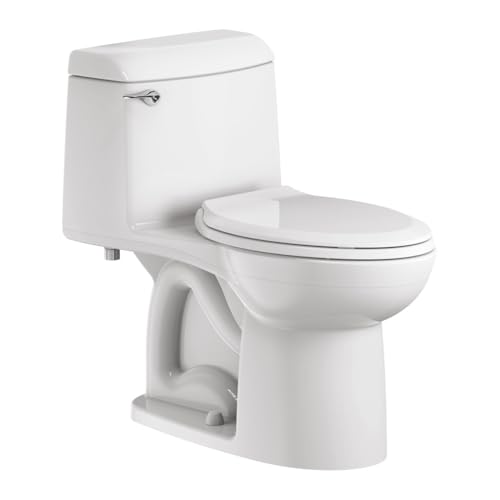
The Champion 4 is the toilet that almost never clogs, thanks to a class-leading 2-3/8 inch fully glazed trapway and a 4-inch flush valve that moves an enormous volume of water in a single flush stroke.
The Champion 4's 1000 gram MaP score is achieved with 1.6 gallons per flush rather than 1.28, making it the one model here that falls outside the EPA WaterSense threshold. For a septic home, that trade-off only makes sense if clogs are a recurring problem, because a single clogged, double-flushed, or plunged toilet quickly negates any GPF savings from a more efficient model. If your current toilet requires the plunger more than once a month, the Champion 4's wide trapway will likely end that cycle entirely.
The 10-year limited warranty is the longest on this list and reflects American Standard's confidence in the Championplatform. The 4-inch flush valve is significantly larger than the standard 3-inch valve found on most gravity-feed toilets, producing a fast, powerful rush of water that minimizes partial-flush events. For septic homeowners on this model, the practical recommendation is to offset the higher GPF by being conservative with water elsewhere.
The Champion 4 is the right choice only when clogging is the overriding problem. At 1.6 GPF it sends more water to the septic tank than the WaterSense picks. Buy it if you are tired of plunging; skip it if your current toilet flushes fine and you just want to reduce septic load.

The UltraMax II brings TOTO's top-tier Double Cyclone flush into a seamless one-piece form, posting a 1000 gram MaP score at 1.28 GPF while staying EPA WaterSense certified, making it a premium choice for septic homeowners who also want a clean-looking bathroom.
The UltraMax II's Double Cyclone system uses two powerful nozzles mounted at the bowl rim instead of traditional rim holes, generating a high-velocity water flow that scrubs the bowl surface while clearing waste. Combined with TOTO's optional CeFiONtect ion-barrier glaze, the bowl resists mineral and waste adhesion at a level that meaningfully reduces cleaning frequency, an important factor in any bathroom used heavily.
At 1000 grams on the MaP test and 1.28 GPF, the UltraMax II achieves the same efficiency-power combination as the Drake but in a one-piece configuration that is easier to clean and has no exposed hardware between tank and bowl. Owners on septic systems report no need for double-flushing, and the one-piece design eliminates the tank-to-bowl seal that can fail on two-piece models over years of vibration from heavy use.
If you are willing to invest more for a one-piece toilet that matches the Drake's flush performance at the same GPF, the UltraMax II is the cleanest choice in both design and actual bowl hygiene. The CeFiONtect glaze is a genuine functional advantage, not just a marketing feature, and it makes a real difference in a high-use septic home where cleaning time is limited.

The Kohler Cimarron delivers Kohler's proven Class Five flush at 1.28 GPF with a perfect 1000 gram MaP score, offering top-tier performance for septic systems at a mid-range price backed by Kohler's extensive parts network.
Kohler's Class Five flush is named for its ability to handle five plastic balls simultaneously in testing, and the perfect 1000 gram MaP score confirms it handles even heavy household waste loads without double-flushing. The Cimarron's fully glazed 2-1/8 inch trapway keeps solids moving and resists the buildup that causes septic-line blockages in older installations.
Kohler parts are among the most widely stocked in North America, which matters for rural septic homeowners who may not have a TOTO or American Standard service specialist nearby. The Cimarron is also one of the better-supported models in terms of online installation and repair documentation. For a household with any daily flush load and a functional septic system, it is a solid, dependable pick at a lower entry point than the premium TOTO options.
The Cimarron is the right choice if you want a reliable name-brand toilet, a comfort-height bowl and 1.28 GPF efficiency without paying the TOTO premium. The perfect 1000 gram MaP score matches the Drake and UltraMax II, so even a household with heavy waste volume is well covered.
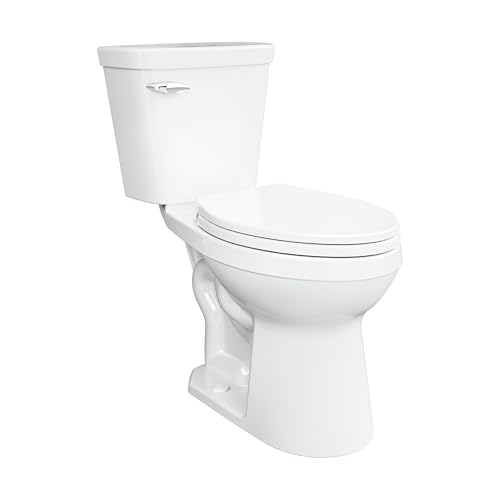
The Gerber Viper is the budget pick that earns its spot here on pure flush credentials: a 1000 gram MaP score at 1.28 GPF with EPA WaterSense certification, delivering top-tier septic-friendly performance at one of the lowest price points on the list.
Gerber is a professional-grade brand better known to plumbers than to homeowners, which is partly why it offers top-tier MaP performance without the brand-recognition premium that comes with TOTO or Kohler. The Viper's siphon-jet mechanism uses a large water surface area in the bowl to pull waste through cleanly, and the fully glazed trapway keeps the passage smooth over years of use.
The 5-year limited warranty is stronger than TOTO's 1-year coverage, giving budget-conscious buyers more protection over the medium term. One practical consideration for rural septic homeowners is that Gerber replacement flappers and fill valves, while available online, may not be on the shelf at a small-town hardware store. For homeowners comfortable ordering parts, or those with a trusted local plumber who stocks Gerber, that limitation disappears.
The Viper punches well above its price by achieving 1000 gram MaP at 1.28 GPF. If your only objection to the Drake is cost, the Viper is the honest alternative: the specs are comparable, the brand is professional-grade, and the 5-year warranty is actually longer. The trade-off is parts availability at the local hardware store.
The TOTO Drake II improves on the original Drake with a Double Cyclone flush that produces a quieter bowl rinse while keeping water use at 1.28 GPF and maintaining a solid 800 gram MaP score, making it the preferred upgrade for septic homeowners in quiet homes or near-bedroom bathrooms.
The Double Cyclone mechanism routes water through two nozzles at a controlled angle, producing a spinning wash action that covers the bowl more thoroughly at lower noise levels than the G-Max surge in the original Drake. The result is a quieter, more even bowl rinse that leaves less residue over time, which is particularly useful for septic homeowners who want to reduce cleaning chemical use.
While the 800 gram MaP score is lower than the 1000 gram leaders, it is sufficient for the solid-waste loads produced by a typical household. The real difference between the Drake and Drake II for septic purposes is this: if you flush heavier waste frequently and want maximum one-shot clearance, choose the Drake. If your average flush load is moderate and a cleaner, quieter bowl matters more, the Drake II is the better fit.
The Drake II is worth the modest premium over the standard Drake when noise and bowl cleanliness rank alongside septic efficiency. The Double Cyclone at 1.28 GPF is a mature, reliable system, and the CeFiONtect glaze is one of the only bowl coatings that demonstrably reduces mineral adhesion in hard-water areas common to rural properties.

The American Standard Cadet 3 posts a 1000 gram MaP score at 1.28 GPF with EPA WaterSense certification, giving septic homeowners top-tier flush performance at a price significantly below the TOTO premium tier.
The Cadet 3 uses American Standard's EverClean surface, an antimicrobial glaze built into the porcelain that inhibits mold, mildew and bacteria growth on the bowl surface. For a septic home where cleaning habits vary, a bowl that resists biological growth without harsh chemicals is a real advantage. The 1000 gram MaP score confirms it clears waste completely in a single flush at 1.28 GPF.
American Standard's parts network is nearly as broad as Kohler's, with flappers and fill valves available at most large hardware retailers. The Cadet 3 is also one of the easier toilets to self-install, which matters for rural septic homeowners who prefer to handle plumbing work themselves. For a home with multiple bathrooms to upgrade and a fixed budget, the Cadet 3's combination of specifications and price makes it the most practical multi-unit choice on this list.
The Cadet 3 is the smart pick when you need to replace more than one toilet and cannot justify the TOTO price per unit. A 1000 gram MaP score at 1.28 GPF with EverClean antimicrobial surfaces is a strong package. For septic homes specifically, the EverClean glaze also means less harsh chemical cleaning, which protects the beneficial bacteria in your tank.

The Woodbridge T-0001 is the option for septic homeowners who want a clean-lined, skirted one-piece toilet: it flushes at 1.28 GPF with an 800 gram MaP score and EPA WaterSense certification, combining modern aesthetics with adequate septic-conscious performance.
The T-0001 is a skirted one-piece design with a fully concealed trapway, which is as much a practical cleaning advantage as it is an aesthetic one. The flat outer surface of a skirted toilet eliminates the exposed trapway channels that collect dust, grime and toilet-cleaning product residue on traditional two-piece models. For a septic home, the dual-flush configuration also means the daily average water volume hitting the tank can be meaningfully reduced for liquid waste flushes.
Woodbridge is a newer brand compared to TOTO, Kohler and American Standard, and its parts supply chain is less developed at physical retail locations. Online availability is good, and the one-piece design reduces the number of potential failure points compared to a two-piece toilet with a tank-to-bowl connection. The 800 gram MaP score is adequate for standard household loads and ranks well within the range we consider septic-safe.
If your bathroom renovation calls for a modern look and you are on septic, the T-0001 is the most practical contemporary option. The 800 gram MaP at 1.28 GPF is solid enough for the task, and the skirted design will clean faster and stay cleaner than any exposed-trapway toilet. Just ensure you are comfortable ordering parts online rather than walking into a hardware store.
The single most impactful upgrade a septic homeowner can make is replacing any toilet that flushes at 1.6 GPF with one of the 1.28 GPF WaterSense models above. On a four-person household flushing an average of 8 times per person per day, that switch saves roughly 11 gallons of water entering the septic tank daily, or more than 4,000 gallons per year. That directly translates to longer intervals between tank pump-outs and reduced stress on the leach field. If the household can adopt a dual-flush toilet like the Aquia IV, the savings increase further. No additive, treatment, or enzyme product delivers returns comparable to simply reducing water volume input.
Beyond GPF and flush power, two structural features determine how a toilet performs on a septic system over time. First, a fully glazed trapway prevents waste buildup from accumulating inside the passage, which reduces the risk of partial clogs that force double-flushing. Second, the flush-valve size and bowl design determine whether water enters the bowl in a controlled surge or a trickle, with larger valves producing faster, more complete bowl evacuation per gallon used.
Septic homeowners should also consider the types of cleaning chemicals they use. Aggressive bleach or quaternary ammonium cleaners poured directly into the bowl or tank can flow into the septic tank and disrupt the bacterial culture responsible for waste breakdown. The EverClean antimicrobial surface on American Standard models and CeFiONtect on TOTO models both reduce the need for chemical cleaning by making the bowl inherently more resistant to staining and odor, which benefits septic bacteria health downstream.
The MaP test is the most reliable independent measure of real-world flush power because it tests actual solid waste analog material (a soybean paste surrogate) rather than rating toilet performance on theoretical flush velocity. A 1000 gram MaP score means the toilet cleared 1,000 grams of simulated solid waste in a single flush, which is more than any typical household flush will ever produce. For a septic home, hitting 1000 grams at 1.28 GPF is the gold standard: it eliminates double-flushing while keeping the water volume per flush at the WaterSense minimum.
The MaP testing program (Maximum Performance), run independently from manufacturers, measures toilet flush performance using a soybean paste analog across a three-flush average. Scores run from 100 grams to a maximum of 1,000 grams. EPA WaterSense does not require a specific MaP score, only that the toilet meets a minimum flush standard, which is why reviewing MaP scores separately from WaterSense certification gives a more complete picture of real-world performance.
For septic systems specifically, MaP score matters more than it does for municipal sewer connections because the cost of double-flushing is higher: extra water load reduces the bacterial processing time in the tank. A household that double-flushes twice daily on a toilet with a poor MaP score is sending 2.56 extra gallons per day into the septic tank compared to a single well-flushed 1.28 GPF model, adding up to nearly 1,000 extra gallons per year.
The caveat is flush power on the partial cycle. Some lower-priced dual-flush toilets use a 0.8 or 1.0 GPF partial flush that does not have enough water volume to carry liquid waste and paper fully through the trapway, which leads to staining and odor in the bowl. The TOTO Aquia IV avoids this with a DYNAMAX TORNADO flush that generates strong bowl coverage even at 0.8 GPF. Before choosing any dual-flush toilet for a septic home, confirming the MaP score on both flush settings (not just the full flush) is the right due diligence step.
For a more comprehensive look at dual-flush performance across the full market, see our guide to the Best Toilets of 2026: Top Picks for Every Bathroom and the related Best Toilets for Home: Reliable Picks for Daily Use.
Clogs on septic systems are more problematic than clogs on municipal sewer because plunging and snaking can push waste into the septic line, potentially affecting the inlet baffle if the blockage is severe. A toilet that prevents clogs at the bowl level through a strong flush and wide trapway is the more valuable defense than relying on chemical drain treatments that can also harm septic bacteria.
Homes with older drain lines running to the septic tank should also consider pipe slope and diameter as potential clog contributors independent of the toilet. If a new 1000 gram MaP toilet still clogs regularly, the problem is likely downstream of the toilet rather than with the fixture itself. For families dealing with frequent clogging, see our dedicated guide to the Best Toilets for Large Families (Heavy Use, Low Clog) which covers heavy-use clog prevention in detail.
Buying a toilet for a septic home involves a short but important checklist beyond what you would consider for a municipal sewer connection. The following factors are in priority order for septic compatibility.
Keep GPF at 1.28 or below. This is the EPA WaterSense threshold and the single most important specification for septic health. At 1.28 GPF compared to an older 3.5 GPF toilet, you are reducing water input per flush by 63 percent. Even against a 1.6 GPF model, you save 16 percent per flush. For dual-flush, the average effective GPF across both settings typically falls between 0.9 and 1.1 GPF, which is meaningfully better than any single-flush model.
A MaP score of 800 grams or higher at 1.28 GPF is required to avoid double-flushing. A score of 1000 grams is the target for busy households. Lower scores increase the probability of needing a second flush, which immediately doubles the water volume sent to the tank for that event. Check map-testing.com for the specific model and flush configuration before purchasing.
A fully glazed trapway of at least 2 inches is necessary for clog resistance. The glaze prevents waste and mineral buildup from accumulating inside the passage over years of use. A 2-1/8 inch glazed trapway (standard on TOTO Drake, Cadet 3) is strong; 2-3/8 inch (Champion 4) is exceptional. Unglazed trapways found on older or very cheap models develop buildup that narrows the passage over time, eventually causing clogs regardless of flush power.
For septic homes, a bowl surface that resists waste and mineral adhesion reduces the need for harsh chemical cleaners. TOTO's CeFiONtect and American Standard's EverClean surface are the two most documented coatings in this category. Less chemical use means less disruption to septic bacteria downstream.
Gravity-feed siphon jet flush (as in the Drake, Highline, Champion 4) is the standard and the most proven for septic use because it uses no pressurized components, has no air compressor to maintain, and operates quietly. Pressure-assisted toilets flush more powerfully but use pressurized air in the tank, which adds a maintenance component and makes more noise. For most septic homes, a high-MaP gravity-feed siphon jet is the right choice. See our breakdown of Best Toilets for Seniors: Comfort Height and Safety for comfort-height considerations alongside the efficiency criteria covered here.
No toilet brand directly controls toilet paper compatibility, but wider trapways tolerate thicker or multi-ply paper better. On a septic system, single-ply or septic-safe toilet paper is advisable regardless of which toilet you install, because multi-ply paper breaks down more slowly in the tank and can contribute to sludge buildup. The toilet's job is to deliver paper to the tank; the paper's job is to break down once there.
If you read only one point in this guide, read this: replace any toilet in a septic home that flushes at more than 1.28 GPF, starting with the highest-traffic bathroom. The hydraulic load reduction across a full year of use is measurable and directly extends the interval between septic pump-outs, which typically cost between $300 and $600 per service call. A 1.28 GPF toilet with a 1000 gram MaP score pays for itself in septic maintenance savings faster than most people expect.
1.28 GPF or lower is the recommended target for septic systems. EPA WaterSense certification requires 1.28 GPF maximum and confirms the toilet meets minimum flush performance standards. Dual-flush models that average 0.9 to 1.1 GPF across both settings provide even greater benefit. Avoid toilets rated above 1.28 GPF unless clog prevention is an overriding concern.
A low-flow toilet only causes problems if its flush is so weak that it double-flushes regularly, which increases total water use and sends incompletely flushed waste into the tank. A 1.28 GPF toilet with a 1000 gram MaP score does not create this problem. The risk of low-flow issues arises with toilets that have MaP scores below 500 grams and are regularly double-flushed.
Yes. Dual-flush toilets reduce the average daily water volume entering the septic tank compared to single-flush models, which extends the interval between pump-outs. The key is ensuring the full-flush setting has a MaP score high enough (800 grams or more) to clear solid waste in a single flush without double-flushing, which would negate the savings.
A MaP score of 800 grams or higher at 1.28 GPF is the minimum for reliable single-flush performance. A score of 1000 grams is ideal and means the toilet will clear even the heaviest typical household flush without a second push. MaP scores can be verified independently at map-testing.com for any specific model.
Yes, aggressive toilet cleaning chemicals including concentrated bleach and quaternary ammonium cleaners can pass through the toilet into the septic tank and disrupt the bacterial culture that breaks down waste. Using bowl coatings like TOTO's CeFiONtect or American Standard's EverClean reduces how often you need harsh chemicals by keeping the bowl cleaner between routine washes.
Yes. The TOTO Drake is one of the best choices for septic systems: it flushes at 1.28 GPF (EPA WaterSense certified), posts a 1000 gram MaP score, and has a fully glazed 2-1/8 inch trapway that resists buildup. The combination of high flush power and low GPF eliminates double-flushing, which is the primary cause of excess water entering the septic tank.
The most water-efficient full-performance toilet for septic is the TOTO Aquia IV, which flushes at 0.8 GPF for liquid waste and 1.28 GPF for solid waste. Both settings are EPA WaterSense certified. The 0.8 GPF partial flush is the lowest available in a gravity-feed design that still clears waste reliably, and it carries no MaP performance penalty for liquid-only flushes.
Yes, provided the toilet has an adequate MaP score. Many 1.28 GPF toilets score 1000 grams on the MaP test, the highest possible rating, which means they clear more solid waste in a single flush than virtually any household will produce. The GPF number describes water volume, not flush power; a well-designed siphon jet at 1.28 GPF outperforms a poorly designed system at 1.6 GPF.
Septic pump-out intervals depend on tank size, household size and water usage, but switching from a 1.6 GPF toilet to a 1.28 GPF WaterSense model can extend the interval by six months to a year for a typical four-person household, depending on the tank size. Pump-out frequency guidance from the EPA suggests every 3 to 5 years for most households; lower GPF toilets push that toward the longer end of the range.
It is safe but not ideal for water-efficiency-focused septic homes because it flushes at 1.6 GPF, which is above the EPA WaterSense threshold. It has a 1000 gram MaP score and the widest trapway in its class, so it is highly clog-resistant. For septic homes where clogging is a recurrent problem and the extra water input is acceptable, it is a viable choice. For water-conscious septic homeowners, the TOTO Drake or Cadet 3 at 1.28 GPF are more appropriate.
Single-ply toilet paper breaks down faster in septic tanks than multi-ply options. Paper labeled "septic safe" or "rapid dissolving" disintegrates more quickly and reduces sludge accumulation. The toilet brand and model do not change which paper is optimal; all of the toilets on this list work with standard single-ply or septic-safe paper. Avoid wipes, even those labeled flushable, in any septic home.
A wider fully glazed trapway matters for clog prevention, which is relevant for all toilets but especially for septic systems where a clog can affect the inlet baffle or septic line if not addressed quickly. However, trapway width alone does not determine septic compatibility. A 2-1/8 inch glazed trapway at 1.28 GPF with a 1000 gram MaP score (like the TOTO Drake) is more appropriate than a 2-3/8 inch trapway at 1.6 GPF (like the Champion 4) for a water-conscious septic home.
Pressure-assisted toilets flush with greater force and less water than many gravity-feed models, which can be beneficial for septic use. The trade-off is noise (significantly louder than gravity flush), a more complex mechanism that requires air pressure tank maintenance, and higher repair costs. For most residential septic homeowners, a high-MaP gravity-feed siphon jet like the TOTO Drake delivers equivalent septic benefits with less complexity and noise.
Most toilet tank tablets that contain bleach or chlorine release those chemicals continuously into flush water, which reaches the septic tank and can disrupt bacterial activity over time. Enzyme-based or citric acid tank tablets are generally considered safer for septic use, but even these should be used sparingly. A bowl-resistant glaze coating is a better long-term solution than any tank tablet.
EPA WaterSense is a voluntary certification program that requires toilets to flush at no more than 1.28 GPF and to meet a minimum flush performance standard verified by independent testing. For septic homeowners, WaterSense certification is a reliable signal that a toilet is both water-efficient and powerful enough to clear waste in a single flush. It is the fastest single-screen for septic-compatible toilets without requiring a separate MaP score lookup.
A four-person household flushing an average of 8 times per person per day generates 32 flushes daily. Switching from a 1.6 GPF toilet to a 1.28 GPF model saves 0.32 gallons per flush, or about 10 gallons per day, equaling roughly 3,700 gallons per year entering the septic tank. Switching from an older 3.5 GPF toilet saves 70 gallons per day, or over 25,000 gallons per year, which has an enormous positive impact on septic system loading and longevity.
One-piece vs two-piece design does not affect septic compatibility. The distinction matters for cleaning convenience (one-piece has no tank-to-bowl seam), installation simplicity, and aesthetics. Two-piece models like the TOTO Drake offer a wider parts selection and lower replacement costs. One-piece models like the UltraMax II or Woodbridge T-0001 are easier to clean. For septic purposes, choose based on GPF, MaP score and trapway design rather than configuration type.
For most septic homeowners, the TOTO Drake at 1.28 GPF with a 1000 gram MaP score is the answer: it eliminates double-flushing, keeps hydraulic load on the tank as low as any single-flush toilet can, and has the parts network and owner track record to back up a long service life. If reducing total daily water volume is the primary goal, the TOTO Aquia IV dual-flush at 0.8/1.28 GPF is the most septic-conscious toilet available. Budget buyers who need 1000 gram MaP performance without the TOTO price should look at the Gerber Viper or the American Standard Cadet 3. Whichever model you choose, replacing a 1.6 GPF or older toilet with a WaterSense certified 1.28 GPF model is one of the highest-impact, lowest-cost improvements a septic homeowner can make.
Learn how to scrape old wax ring residue off a toilet flange without damaging it, using a plastic scraper, rags, and mineral…
Read the guideLearn how to remove a toilet tank safely, step by step, without cracking porcelain or snapping bolts. Tools, drain steps, and mistakes…
Read the guideLearn exactly how tight to turn toilet tank bolts, the hand-tight plus quarter-turn method, and the warning signs that mean stop before…
Read the guide