
Toilet Drainline Carry Explained
Toilets4.6
Drainline carry measures how far solid waste travels in a pipe after one flush. Learn what the MaP test measures and why…
Read the guideA toilet that runs at night is almost always leaking water from the tank into the bowl through a worn flapper, a float set too high, or a failing fill valve. This guide walks through every cause in cheapest-first order, with dye-test diagnostics, manufacturer spec comparisons, and upgrade picks backed by MaP flush-test scores so you can silence the noise and end the wasted water for good.
A toilet that runs at night is almost always leaking tank water into the bowl through a degraded flapper, which costs under $10 to replace and stops the noise in most cases. If the flapper is fine, suspect a float set too high that overflows the fill tube, or a worn fill valve that never fully shuts off. A dye-test confirms which part to fix before you buy anything.
The sound is unmistakable: the house is quiet, the lights are off, and somewhere in the bathroom the toilet decides to hiss and run for thirty seconds, then stop, then start again two hours later. Most people hear it first when background noise drops away at night, which makes it feel new even when the underlying leak has been growing for weeks. A toilet that runs intermittently at night is not a plumbing emergency, but it is rarely a problem that heals itself. Every phantom refill cycle wastes roughly 0.5 to 2 gallons depending on how long the valve runs, and a toilet leaking at a slow but steady rate can waste 200 gallons or more per day according to EPA estimates, adding meaningfully to both the water bill and household water consumption.
The cause is almost always mechanical and limited to a handful of inexpensive tank parts. This guide diagnoses each one in cheapest-first order. We rely on manufacturer-published specifications for tank components, EPA WaterSense water-efficiency certification criteria, independent MaP (Maximum Performance) flush-test results for any upgrade models we reference, and the repair patterns that surface consistently across aggregated owner reviews. We do not conduct in-person repair sessions, but the combination of those sources produces a reliable repair sequence that resolves the vast majority of nighttime running toilets without calling a plumber.
The toilet does not know what time it is. The running you notice at night is exactly the same intermittent refill that happens all day; you simply cannot hear it over the television, foot traffic, and appliance noise of a busy household. Once the house quiets down around 10 or 11 PM, the low hiss of the fill valve cycling every hour or two becomes the loudest thing in the building, and what felt invisible all day suddenly feels urgent. That context matters because it tells you the leak has probably been present for some time. Catching it at night is actually useful: a quiet house makes it easier to hear exactly where the running starts (tank or outside the tank), how long each cycle lasts, and how frequently the valve kicks on, all of which help you diagnose the cause before spending anything on parts.
The frequency of the nighttime running is also diagnostic on its own. A toilet that kicks on every 20 to 30 minutes has a faster leak than one that runs once every two hours. A fast-cycling toilet typically has a more obvious flapper failure or a chain problem that is holding the flapper open. A slow-cycling toilet may have a small mineral deposit on the valve seat or a barely worn flapper edge. Both situations fix the same way; the cycle rate just tells you how far the leak has progressed.
| Symptom | Most Likely Cause | First Fix | Cost |
|---|---|---|---|
| Dye enters bowl, valve runs every 20-90 min | Worn or warped flapper | Replace flapper | Under $10 |
| New flapper fitted but bowl still colors | Scaled or cracked flush valve seat | Clean seat or fit seal kit | Under $15 |
| Runs right after every flush | Chain too long, props flapper open | Shorten chain 1-2 links | Free |
| Constant quiet trickle into overflow tube | Float set above overflow tube height | Lower float to fill line | Free |
| Fill valve hisses and never fully stops | Worn or dirty fill valve | Clean or replace fill valve | $12-$25 |
| All parts replaced, still runs at night | Cracked tank or failing valve body | Inspect tank, consider upgrade | Varies |
Every case of nighttime running comes down to one underlying fact: the tank is losing water it should be holding. There are only three routes water can leave a closed tank: through the flapper into the bowl, over the top of the overflow tube into the bowl, or out of the tank body through a crack or loose connection. The fill valve is not a cause of the water loss. It is the detector. When the tank level drops far enough, the float drops with it, the fill valve opens, and the refill sound you hear at night is that valve doing exactly what it is designed to do.
That distinction is important because it means fixing the running toilet always means stopping the leak, not adjusting the fill valve's sensitivity. Homeowners sometimes try to stop the sound by adjusting the float to a higher level, but that only raises the water level, delays the point at which the fill valve kicks on, and does nothing about the underlying leak. The toilet will still run at night; it will just run less frequently. The repair has to address the point where water is escaping.
Work through these fixes in order. Each one takes less than fifteen minutes, requires only basic tools, and costs nothing or very little. Stop after whichever step resolves the nighttime running, confirmed by a clean dye test.
Add food coloring or a dye tablet to the tank water. Do not flush. After 20 minutes, check the bowl. Colored water in the bowl means the leak runs from tank to bowl through the flapper or flush valve seat. A clear bowl after a full 20 minutes means the leak is in the fill side or the tank body, not the flapper. Write down which result you get before continuing because it determines every step that follows.
If the dye test shows color in the bowl, start with the flapper. Shut off the supply valve behind or under the toilet, flush to drain the tank, and sponge out the remaining water. Unhook the old flapper from the ears of the overflow tube and unclip its chain. Examine the underside of the flapper for cracks, warping, hard or brittle texture, or a worn sealing ring. Even a flapper that looks intact may no longer be flexible enough to seal properly after two or three years, especially if chlorine tablets were used in the tank.
Match the replacement flapper to your flush valve opening size. Most standard toilets use a 2-inch flapper, but many modern high-efficiency models from TOTO, Kohler, and American Standard use a 3-inch opening for the faster water delivery required to achieve MaP scores of 800 grams or above at lower GPF ratings. Installing a 2-inch flapper on a 3-inch seat creates exactly the ongoing leak that causes nighttime running. Check the old flapper diameter or your toilet's model specification before purchasing. TOTO Drake and Drake II models use a proprietary 3-inch tower-style flapper. Kohler Cimarron and Highline use a 3-inch flapper or canister seal depending on generation. American Standard Champion 4 uses a 4-inch accelerator flush valve with a proprietary seal.
A lift chain that is too long can fold under the flapper as it closes, holding it open a fraction and allowing a steady trickle into the bowl. This is a free fix. The chain should have about half an inch of slack when the flapper is fully closed. Move the hook up or down the flush rod by a link or two and watch a flush from above. The flapper should rise fully, hold while water exits, and then drop squarely onto the seat without the chain pinching underneath. If the chain is corroded, knotted, or kinked, replace it; a stuck or rigid chain can cause the same partial propping.
The tank water level should sit approximately one inch below the top of the overflow tube. When a previous repair raised the float, when a float arm develops a bend over time, or when a fill valve is slightly over-adjusted, the water level climbs until it reaches the tube opening and continuously spills into the bowl, driving the fill valve to run frequently. This produces nighttime running even when the flapper is perfectly sound.
Look at the water surface with the lid off and the tank at rest. If water is at or above the top of the overflow tube, you will see or hear a thin trickle falling through the tube. Adjust the float downward according to the fill valve type: on a ball-float style, bend the arm slightly downward or turn the adjustment screw; on a modern Fluidmaster-style float, turn the adjustment dial counterclockwise to lower the set point. The goal is a water level that sits at the molded water-line mark inside the tank or about one inch below the tube, whichever is lower.
If the bowl stayed clear on the dye test but the fill valve still hisses and cycles at night, the fill valve itself is the problem. Fill valves can accumulate mineral deposits on their internal diaphragm or seal, preventing them from closing completely. This produces a constant, very quiet trickle of water into the tank that overflows the tube without fully refilling it, creating a cycle that repeats all night.
On a Fluidmaster 400A or similar adjustable fill valve, cleaning is sometimes possible by turning off the supply, pressing the cap while it discharges to flush debris, and reassembling. If cleaning does not resolve it, replacement is straightforward. A Fluidmaster 400A or equivalent universal fill valve fits most standard two-piece toilets and most one-piece configurations and replaces in about 20 minutes with a wrench and a bucket. For toilets over 10 to 15 years old that have the original fill valve, replacement rather than cleaning is the more reliable repair because the internal seals have degraded throughout.
If all parts have been replaced and the toilet still runs at night, the tank body or the connection between the tank and the bowl may be the source of the water loss. Dry the outside of the tank with a towel and watch the area where the tank meets the bowl during the next fill cycle. A crack in the tank porcelain or a loose tank-to-bowl bolt can drip water onto the floor rather than into the bowl, which a dye test would not catch. At this stage, the most cost-effective solution is often to replace the toilet entirely rather than attempt a porcelain repair, particularly if the model is older, low-efficiency (3.5 or 5 GPF), and scores below 500 grams on published MaP data.
A toilet that has been repaired multiple times, has aging valve seats that will not seat cleanly, or has a porcelain crack is often more expensive to keep patching than to replace with a current WaterSense-certified model. Modern EPA WaterSense toilets must flush at 1.28 GPF or less while meeting a minimum performance threshold, and independent MaP testing, conducted by the IAPMO Research and Testing program and published at map-testing.com, provides a direct score in grams of solid waste cleared per flush. A score of 500 g is considered minimum adequate; 800 g is good; 1,000 g (the maximum test load) is excellent and indicates a toilet that resists the partial flushes and weak cycles that themselves lead to fill valve issues.
Replacing an older 3.5 GPF toilet with a 1.28 GPF WaterSense model also saves approximately 16,500 gallons per year for a household of four according to EPA WaterSense program data, which translates to meaningful long-term savings on the water bill. The upgrade effectively pays for itself over a few years while also eliminating the mechanical noise issues that stem from aging tank hardware.
For a broader look at the top-performing models across every category, see our guide to the best flushing toilets with full MaP scores and GPF comparisons. If clogging has also been a recurring issue alongside the nighttime running, why does my toilet keep clogging covers trapway sizes and flush-system design in detail.
| Toilet | Best For | MaP Score | GPF | WaterSense | Check Price |
|---|---|---|---|---|---|
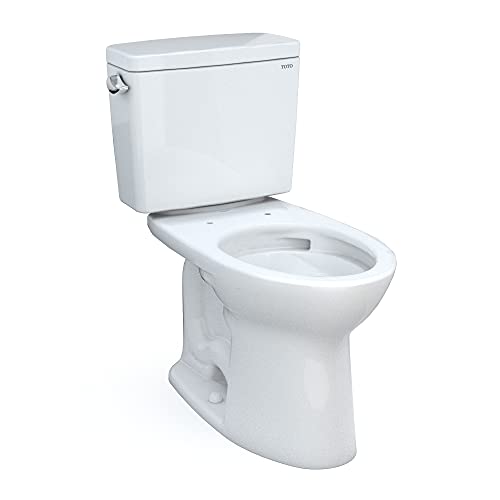
| TOTO Drake II | Best overall replacement | 1,000 g | 1.28 | Yes | Check price |
| Kohler Cimarron | Comfort height, reliable valve | 1,000 g | 1.28 | Yes | Check price |
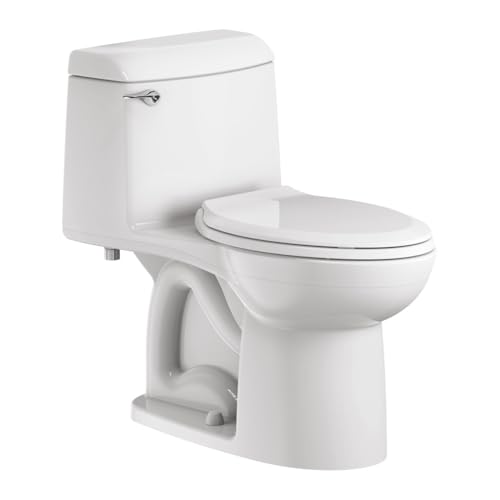
| American Standard Champion 4 | Large trapway, clog resistance | 1,000 g | 1.6 | No | Check price |
| TOTO Drake | Budget-friendly, proven design | 1,000 g | 1.6 | No | Check price |
| Woodbridge T-0001 | Modern one-piece, easy cleaning | 800 g | 1.28 | Yes | Check price |
| Swiss Madison St. Tropez | Wall-hung, modern design | 600 g | 1.28 | Yes | Check price |
| Gerber Viper | Budget two-piece | 1,000 g | 1.28 | Yes | Check price |
The EPA estimates that household leaks waste nearly 1 trillion gallons of water annually in the United States, and the running toilet is among the most common sources. A single household toilet that runs intermittently at night, cycling the fill valve every 45 minutes, adds approximately 30 to 50 gallons of waste daily and 1,000 to 1,500 gallons monthly. At average US water rates, that adds $10 to $20 per month to the water bill for what is ultimately a $6 flapper replacement. Over a year without repair, a slow leaking toilet costs more in wasted water than most replacement toilet fill kits.
The water waste calculation also explains why WaterSense certification and MaP scores matter beyond just flush performance. A toilet that is WaterSense certified at 1.28 GPF and scores 1,000 g on MaP testing has been independently verified to clear the maximum test load with less water per flush, which means the flush valve and fill system operate fewer cycles per day under normal use. Fewer cycles mean less mechanical wear on the flapper and fill valve, which extends the interval before parts need replacing and reduces the probability of the nighttime running cycle starting in the first place.
If a toilet has been repaired twice in three years for nighttime running, the underlying issue is usually an older tank valve body that can no longer hold a clean seat. Individual part replacement stops working as the valve body itself corrodes or warps. At that point, replacing the toilet with a current WaterSense model certified at 1.28 GPF and tested at 1,000 grams on the MaP scale is cheaper over a three-year horizon than continuing to replace individual parts in an aging system. The TOTO Drake II is the most consistent recommendation in that scenario because its tower-style flush valve has fewer moving parts than a traditional flapper-and-chain system, reducing long-term maintenance.
The Drake II's Double Cyclone flushing system and 1.28 GPF delivers a MaP score of 1,000 grams with a tower flush valve that has fewer mechanical parts to wear and leak than traditional flapper assemblies, making nighttime running far less likely over years of use.
Check price on AmazonKohler's Cimarron pairs a canister flush valve with the Class Five flushing engine to hit 1,000 g MaP at 1.28 GPF, and its canister seal is straightforward to replace if wear eventually causes nighttime running, making maintenance far simpler than a traditional flapper arrangement.
Check price on AmazonThe Champion 4's wide-open 4-inch accelerator flush valve and 2-3/8 inch fully glazed trapway hits 1,000 g MaP, and American Standard's EverClean surface helps prevent the mineral deposits inside the tank that ultimately degrade seals and start the nighttime running cycle.
Check price on AmazonA flapper that does not match the flush valve opening is one of the most common reasons a nighttime running problem persists after a repair attempt. The original 2-inch versus 3-inch confusion catches many homeowners. If a 2-inch flapper was fitted on a 3-inch seat opening, the flapper simply cannot cover the hole. The water leak continues, the dye still colors the bowl, and the running continues exactly as before. Pull the flapper, measure the drain opening with a tape measure, and verify the size before purchasing a replacement.
The flush valve seat is the other frequent culprit after a flapper swap. Even a perfectly sized flapper cannot seal against a seat that has mineral ridges, pitting, or a hairline crack in the porcelain ring. If the dye test still shows color in the bowl after installing a correctly sized new flapper, run a finger around the seat and feel for irregularities. Light scale cleans off with a vinegar soak and a non-abrasive pad. Deeper damage requires a seat repair kit, which bonds a new sealing ring over the damaged surface. For ongoing issues with flush power alongside the running toilet, see our guide on how to improve toilet flush power, which covers the rim jets and fill system together.
If the issue is not the flapper or seat, check the chain. A chain that is a link too long can curl under the flapper each time it closes. The flapper appears to drop flat but is actually resting on a loop of chain. Run the dye test with the tank lid off so you can watch the flapper close in real time. If the chain folds under, shorten it one link and retest. For a complete overview of weak or partial flush causes that sometimes overlap with running toilet symptoms, our guide on toilet not flushing properly covers the full diagnostic sequence.
The overwhelming majority of toilets that run at night have a fixable tank leak traced to one of the five causes covered above. But a small percentage have an external water loss: a supply line with a pinhole leak that slowly drops line pressure and allows the fill valve to sense a demand, a cracked tank that drips onto the floor behind the toilet, or a loose tank-to-bowl connection. These situations are identified by drying the outside of the tank and the floor area, then watching carefully during the next refill cycle for any dripping or moisture. A wet floor around the base of the toilet combined with nighttime running points toward a base seal or supply issue rather than a flapper problem.
If the toilet is in a guest bathroom or basement that is not used daily, nighttime running may be the result of sediment in the supply line disturbing the fill valve seal when the house pressure shifts. This is common in homes with older galvanized supply pipes or hard water. Turning the supply valve fully off, then back on forcefully, sometimes flushes sediment off the fill valve seat and stops the running temporarily. A permanent fix requires cleaning or replacing the fill valve and, in severe cases, inspecting the supply stop valve for internal corrosion.
For issues where the toilet is also flushing poorly alongside the running, a weak toilet flush fix guide addresses how low water pressure and partial tank fills interact with flush performance. And if the toilet is experiencing recurring clogs alongside the running, why does my toilet keep clogging explains how a low tank water level from a running toilet actually reduces flush power enough to cause secondary clogging issues.
Nighttime running toilets often go unrepaired for months because the sound is intermittent and easy to ignore during the day. The repair sequence is short and inexpensive in almost every case, and the dye test makes it possible to confirm the cause in 20 minutes with a bottle of food coloring. The only situation that justifies skipping the repair sequence and going straight to a toilet replacement is a unit older than 15 years that is already using 3.5 GPF or more: at that point, upgrading to a 1.28 GPF WaterSense-certified toilet like the TOTO Drake II or Kohler Cimarron saves more water annually than the parts cost to repair the old unit, and the new mechanical components come with a fresh manufacturer warranty.
The leak causing the running exists all day, but daytime noise from the household masks the sound. At night, when the house quiets, the fill valve cycling every hour or two becomes audible. The cause is the same regardless of time of day: water is escaping the tank through a worn flapper, an overflowing fill tube, or a failing fill valve.
Add food coloring to the tank water, wait 20 minutes without flushing, and check the bowl. If the color has entered the bowl, the flapper is not sealing. You can also feel the flapper rubber: if it is stiff, brittle, warped, or has a visible groove worn into the seal ring, it needs replacing regardless of the dye test result.
The EPA estimates that a leaking toilet can waste 200 gallons or more per day in severe cases. A slow, intermittent leak that cycles the fill valve once an hour wastes 30 to 60 gallons per day. Over a year that is 10,000 to 20,000 gallons wasted from a single toilet, costing $80 to $200 or more depending on local water rates.
Yes. The five most common causes of a running toilet, a worn flapper, a long lift chain, a high water level, a dirty fill valve, and a rough valve seat, all require basic tools and inexpensive parts available at any hardware store. Most repairs take 20 minutes or less. The dye test tells you exactly which part to address before you buy anything.
Most older two-piece toilets use a 2-inch flapper. Many newer high-efficiency models from TOTO, Kohler, and American Standard use a 3-inch flapper for faster flush delivery. Fitting the wrong size means the flapper cannot cover the drain opening and the toilet will continue to run. Measure the drain opening or check your toilet's model number specifications before buying.
Most rubber flappers last three to five years before the rubber begins to stiffen and lose its seal. In homes that use chlorine tablets or drop-in tank cleaners, flappers can degrade in as little as one to two years because chlorine attacks the rubber. Silicone flappers last longer than rubber but cost slightly more upfront.
Yes, noticeably. A slow leak cycling the fill valve once an hour adds 30 to 60 gallons of wasted water per day. At average US water and sewer rates, that translates to $10 to $20 per month for a mild leak and significantly more for a fast one. A $6 flapper is typically the fix, making a running toilet one of the highest-return plumbing repairs in the home.
No, it is the same problem. A toilet that runs for a few seconds and stops is the fill valve refilling the tank after a small amount of water leaked out through the flapper or valve seat. The refill stops when the float reaches the set level. The cycle repeats when enough water has leaked out again. The short run time means the leak is slow; the fix is the same.
The overflow tube is the tall vertical pipe inside the tank that prevents flooding by draining into the bowl if the fill valve fails. If the water level in the tank is set too high, water continuously spills over the top of this tube into the bowl, triggering the fill valve to run. The fix is to lower the float so the water level sits about one inch below the tube opening.
Most plumbers advise against drop-in chlorine bleach tablets in the tank. While they do reduce staining in the bowl, the concentrated chlorine attacks rubber flappers and gaskets, shortening their lifespan from three to five years to one to two years and significantly increasing the likelihood of a nighttime running problem. A periodic in-bowl cleaner causes far less damage to tank components.
On a modern Fluidmaster-style adjustable float, turn the adjustment dial or screw counterclockwise to lower the water set point. On an older ballcock style with a metal or plastic arm and ball, gently bend the arm downward or turn the adjustment screw at the pivot point. The goal is a water level that sits at the molded fill line inside the tank or one inch below the overflow tube.
A traditional flapper is a rubber or silicone disc on a hinge that lifts to release water and drops to seal the drain. A canister flush valve, used by Kohler in many of its models, is a cylinder that lifts vertically off a full-diameter seat ring. Canister valves release water more quickly and with a wider opening, but they use a seal ring rather than a flapper. The diagnostic and replacement process is similar but uses different replacement parts.
Yes. A hairline crack in the tank porcelain allows water to slowly seep out, dropping the tank level and triggering the fill valve. This would show as moisture or drips on the outside of the tank rather than color in the bowl on the dye test. A cracked tank cannot be reliably repaired and typically requires toilet replacement.
If the flapper appears intact, check the chain first: shorten it by one or two links if it is long enough to fold under the seal. Then check the water level: if it is at or above the overflow tube, lower the float. If neither resolves it, clean the valve seat with vinegar and a non-abrasive pad. These three free or near-free steps fix a significant share of running toilets without any parts replacement.
MaP (Maximum Performance) scores, published by IAPMO Research and Testing and available at map-testing.com, measure how many grams of solid waste a toilet clears per flush. A score of 500 g is acceptable, 800 g is good, and 1,000 g (the test maximum) is excellent. Toilets scoring 1,000 g at 1.28 GPF, such as the TOTO Drake II, Kohler Cimarron, and Gerber Viper, provide the best combination of flush reliability and water efficiency.
No, a running toilet is not an emergency in the sense of causing immediate water damage. However, it does waste significant water continuously and should be addressed within a day or two. If the fill valve runs constantly and never stops, or if water appears on the floor around the toilet, treat it as urgent and shut off the supply valve while you arrange for repair.
Yes. A small flapper leak expands as the rubber continues to degrade, and mineral scale on the valve seat accumulates over time, worsening the seal. What begins as a brief refill cycle once or twice a night can become a continuous trickle within months. Fixing it early while the repair involves only a flapper is far less expensive than waiting until the valve seat or fill valve also needs attention.
If the dye test shows a clear bowl after 20 minutes but the fill valve still hisses and runs at night, the flapper is sealing correctly and the problem is in the fill valve. A fill valve that cannot fully close will run the tank up to the overflow point and then continue trickling in. Cleaning the diaphragm seat inside the valve sometimes resolves it, but on valves over five years old, replacement is more reliable.
Fluidmaster produces the most widely compatible fill valves and flappers and is stocked by nearly every hardware store. Kohler and TOTO both sell model-specific replacement parts through their own channels. American Standard's repair kits are available online and at major home improvement retailers. For a failing toilet rather than just tank parts, TOTO, Kohler, and Gerber consistently earn the highest marks in aggregated owner durability reviews and warranty coverage.
Yes. Hard water deposits calcium and magnesium scale on the flush valve seat, creating a rough surface that a flapper cannot fully seal. Scale also builds on the fill valve diaphragm, preventing it from fully closing. In hard-water areas, toilets often need flapper and fill valve replacements twice as frequently as in soft-water areas. A vinegar soak of the tank annually slows scale buildup and extends part life.
A toilet that runs at night is almost always a flapper problem diagnosed with a $0 dye test and fixed with a sub-$10 part. Work through the five-step sequence above, starting with the dye test to confirm which direction the leak is flowing, then address flapper, chain, water level, and fill valve in that order. If repeated repairs have not resolved the issue, upgrading to a TOTO Drake II or Kohler Cimarron, both scoring 1,000 grams on MaP testing at EPA WaterSense-certified 1.28 GPF, eliminates the aging mechanical components that cause nighttime running while significantly cutting water use.
Drainline carry measures how far solid waste travels in a pipe after one flush. Learn what the MaP test measures and why…
Read the guideToilet floor bolts spinning instead of tightening usually means a broken flange or stripped nut. Here is how to diagnose it and…
Read the guideShould tile run under the toilet or stop at the flange? Learn the right order, why it matters for leaks, and how…
Read the guide