

Why Toilet Trapways Are Curved Like an S
Toilets4.6
Learn why toilet trapways curve like an S, how each bend blocks sewer gas, and what the shape means for clogs and…
Read the guideMost toilet cleaning advice online recycles the same handful of tips without matching the chemistry to the stain. This guide does: it identifies every common toilet stain type, explains the specific chemical reaction that removes it, gives you the correct dwell times, exposes the popular hacks that actually cause damage, and covers which toilet features (glaze type, rim design, trapway width) determine how cleanable your fixture is in the first place.
For a mineral or rust ring, use an acid-based gel (citric acid for light buildup, hydrochloric acid for heavy deposits) with a 15-to-30-minute dwell, never bleach. For organic grime and biofilm, a thick clinging bleach gel under the rim with a 5-minute dwell outperforms any amount of scrubbing. The TOTO Drake II with CeFiONtect glaze is the easiest production toilet to keep clean because the nano-particle surface prevents stain adhesion at the molecular level.
Clean chemistry plus adequate dwell time equals a clean toilet. That is the whole equation, and almost every cleaning frustration traces back to violating one of those two variables: using bleach on a mineral ring (wrong chemistry) or scrubbing after 30 seconds (wrong dwell time). This guide addresses both, stain by stain, with the underlying science and the specific products that actually deliver results.
The toilet itself matters too. For the fixtures that are easiest to keep spotless, including models with TOTO's CeFiONtect nano-particle glaze, Kohler's CleanCoat surface, and American Standard's EverClean antimicrobial coating, see our guide to the best flushing toilets. The right fixture cuts your cleaning time permanently.
| Stain Type | Correct Chemistry | Minimum Dwell | Common Mistake | Effectiveness |
|---|---|---|---|---|
| Mineral / Hard Water Ring | Acid-based gel (HCl or citric acid) | 15-30 min | Using bleach (no effect on calcium) | High with correct product |
| Organic Grime / Biofilm | Bleach gel or disinfecting gel | 5-10 min | Using acid cleaner alone (kills less bacteria) | High with correct product |
| Rust / Iron Staining | Oxalic acid or Iron OUT remover | 15-20 min | Scrubbing dry (scratches glaze) | High with correct product |
| Pink Ring (Serratia) | Bleach gel + rim block prevention | 10 min | Thinking it is a mineral stain | High short-term; prevent recurrence |
| Black Under-Rim Mold | Bleach gel applied directly to rim | 10-15 min | Surface spray that does not cling | High with thick gel + angled brush |
| Yellow Uric Acid Deposits | Bleach gel or extended acid soak | 20-30 min | Light scrub with no dwell time | Moderate to high |
Toilets accumulate staining quickly because the bowl interior is a warm, wet environment where two independent processes compound each other: mineral deposits from hard water form a microscopically rough layer on the porcelain glaze, and that rough surface then gives bacteria and organic matter greater surface area to grip. According to the U.S. Geological Survey, roughly 85 percent of American homes have water classified as moderately to very hard (above 60 mg/L), which means mineral deposition in the bowl is the norm rather than the exception. Once a mineral base layer forms, each flush introduces more organic contamination that bonds to the rough surface faster than it bonds to smooth porcelain, creating a compounding cycle that makes the toilet look dirty days after a thorough clean.
Two structural factors accelerate this cycle. First, the temperature of the tank water: in summer months or in homes without insulation around the tank, warmer water releases dissolved calcium more readily onto the bowl surface with each flush, accelerating mineral deposition at the waterline. Second, the flush volume matters. Toilets using 1.28 GPF (EPA WaterSense certified) rinse the bowl with significantly less water than older 1.6 GPF or 3.5 GPF models, which means any residue left behind in a low-flow flush stays in contact with the bowl longer between uses.
The fastest effective toilet-cleaning method takes 8 minutes total: apply a thick clinging gel cleaner under the rim and around the bowl waterline first, then immediately clean the toilet exterior (seat, tank, lid, base) with a disinfecting wipe while the gel dwells inside. After 5 minutes the organic film and surface bacteria have been neutralized; scrub the bowl briefly with a toilet brush and flush. The critical variable is letting the chemistry work before scrubbing rather than scrubbing first with no dwell time, which adds 10 minutes of physical effort and still produces inferior results. Use an acid-based gel for mineral rings and a bleach gel for organic staining.
Step 1 (0:00): Apply a thick gel cleaner under the rim, coating the full circumference. Aim the angled nozzle upward into the rim channel and squeeze slowly as you rotate around the bowl. Let the gel fall naturally into the bowl water below. Step 2 (0:30): Move immediately to the exterior. Wipe the tank lid, tank body, seat top, seat underside, lid underside, the rim edge you can see, and the base of the toilet with a disinfecting wipe or spray-and-wipe with a bathroom cleaner. This takes 3 to 4 minutes and happens while the bowl gel dwells. Step 3 (4:30): Scrub the bowl with a toilet brush, angling the head under the rim and then working the waterline ring and bowl sides. Step 4 (6:00): Flush. The flush rinses the bowl and the brush head simultaneously. Step 5 (6:30): Dry the exterior surfaces with a clean cloth or paper towel. Done in under 8 minutes.
For a heavily stained bowl, apply the cleaner at night and leave it until morning. A 6 to 8 hour dwell with an acid-based gel on a heavy mineral ring frequently removes deposits that 20 minutes of scrubbing did not touch, because the dissolving reaction is time-dependent, not force-dependent. Apply the gel, lower the lid to prevent pet or child access, and flush in the morning. A brief brush is usually all that remains. For the scrubber that handles this best, our guide to the best toilet brushes of 2026 covers curved-head and angled models that reach under the rim effectively.
The biggest time-waster in toilet cleaning is scrubbing immediately after applying the product. Most people apply, scrub for 30 seconds, and then flush, which means the active ingredient never had meaningful contact time with the stain. If you do one thing differently starting today, apply your cleaner, set a timer for at least 5 minutes (10 is better), walk away, and then scrub. A 5-minute dwell with the right product will outperform 5 minutes of immediate scrubbing every time, on any stain type.
Hard water stains are calcium carbonate and magnesium deposits that bleach cannot dissolve because bleach is an oxidizing agent designed to break down organic compounds, not mineral salts. The correct chemical is an acid: citric acid for light to moderate mineral buildup (food-grade, septic-safe, low fumes), hydrochloric acid at 9 to 10 percent concentration (commercial products such as Lime-A-Way or Lysol Toilet Bowl Cleaner) for heavy or long-standing deposits, or white distilled vinegar (5 percent acetic acid) for very light buildup. Apply the acid product, let it dwell for a minimum of 15 minutes, scrub, and flush. For deposits accumulated over months, an overnight dwell is more effective than any amount of same-day scrubbing. Never mix acid cleaners with bleach, as this produces chlorine gas.
White distilled vinegar at 5 percent acidity dissolves light to moderate calcium deposits. Pour 2 cups undiluted into the bowl, work some under the rim with the brush, and let it sit for 30 to 60 minutes. For the specific waterline ring, cut paper towels into strips, soak them in vinegar, press them against the ring on the bowl wall, and leave them for 1 to 2 hours so the acid maintains contact with the deposit instead of draining to the trap. This works reliably on rings a few weeks old. For rings accumulated over months, the vinegar concentration is too low to dissolve the full deposit; move to citric acid or a commercial formula.
Food-grade citric acid dissolved in warm water (1 tablespoon per cup of water, applied to the bowl) is a meaningfully stronger acid than vinegar and works on moderate buildup while remaining septic-safe and producing almost no fumes. Dwell for 1 to 2 hours. Citric acid also works as a tank treatment: dissolve 1/4 cup in 2 cups warm water, add to the tank via the overflow tube, and let it soak for 1 hour to dissolve calcium from fill valve and flapper components. For related bathroom surface cleaners, see our guide to the best bathroom cleaners of 2026.
Commercial toilet bowl cleaners with hydrochloric acid (HCl) at 9 to 10 percent concentration dissolve even severe, long-standing mineral deposits. Apply the gel to coat the bowl and rim, dwell 15 to 30 minutes (or overnight for very heavy deposits), scrub, and flush. Ventilate the bathroom during and after application. Do not use HCl cleaners on natural stone (marble or travertine) or on colored porcelain. Never mix with any bleach product, and do not pour into the tank; the acid concentration will damage rubber flappers and fill valve seals. Drain cleaners that fight mineral-related blockages work on a similar acid mechanism; see our guide to the best drain cleaners of 2026.
The most common mistake people make with hard-water rings is reaching for a bleach product because the bowl looks dirty. Bleach whitens organic grime, but it has zero dissolving effect on calcium or magnesium deposits. If you have a ring that does not respond to bleach after multiple cleanings, it is almost certainly a mineral deposit, and the fix is citric acid or hydrochloric acid, not more bleach. Citric acid is the right starting point for most households because it is safe, low-fume, septic-friendly, and effective on moderate buildup. Heavy deposits may need a commercial HCl formula and an overnight dwell.
The underside of the toilet rim is the hardest surface to clean because it faces downward and is mostly invisible, but it is where biofilm, mineral deposits, and mold concentrate most heavily since cleaning water and brush strokes rarely reach it. The correct method is applying a thick clinging gel (not a spray) directly under the rim using an angled nozzle, dwelling for 5 to 10 minutes, and then scrubbing with a toilet brush angled upward. For the small water-jet ports inside the rim that can clog with calcium, pour 1 to 2 cups of undiluted white vinegar into the tank overflow tube after shutting off the water supply; the vinegar drains through the ports and dissolves mineral blockages from the inside out after a 30-to-60-minute soak.
Two-piece toilets including the TOTO Drake, TOTO Drake II, Kohler Highline, Kohler Cimarron, American Standard Cadet 3, and American Standard Champion 4 distribute flush water through a ring of small ports drilled around the underside of the rim. Over time, calcium from hard water narrows or blocks these ports, which visibly weakens the flush (water enters the bowl unevenly or trickles on one side) and creates a persistent dark ring around the rim interior. To clean them: shut off the supply valve, flush to empty most of the tank, pour 1 cup of white vinegar into the tank overflow tube, and let it sit for 1 hour. Use an angled mirror to inspect each port, and a wooden toothpick or bent paper clip to gently clear any softened deposits. Restore the water and flush twice to rinse.
Some TOTO Aquia IV configurations, Swiss Madison St. Tropez variants, and several European-market models use a fully open-rim or rimless bowl design that eliminates the hidden channel entirely. Water enters from a single channel or direct jet rather than through ports under a rim ledge, which means there is no rim underside to accumulate deposits and no ports to clog. If under-rim cleaning is a persistent issue in your household, a rimless bowl design is worth specifically selecting when next replacing the toilet.
Several popular toilet cleaning hacks are either ineffective or actively damaging. Chlorine bleach tablets placed in the tank appear to keep the bowl fresh but continuously expose the flapper, fill valve seals, and gaskets to concentrated chlorine, causing rubber degradation and failure within 6 to 12 months according to warnings from TOTO, Kohler, and American Standard. Coca-Cola contains only 0.055 percent phosphoric acid versus 9 to 10 percent in commercial acid cleaners, making it minimally effective on established mineral rings and capable of leaving a sugar residue. WD-40 is a petroleum product that creates a film attracting further grime and is harmful to wastewater systems when flushed. Baking soda and vinegar mixed together largely neutralize each other's cleaning chemistry, making the combination weaker than either product used alone.
Drop-in chlorine bleach tablets are one of the most widely used and most damaging toilet cleaning products sold. The mechanism is simple: a concentrated chlorine solution forms in the tank and exposes every rubber and plastic component to sustained chlorine contact. TOTO explicitly states in its product documentation that bleach-containing in-tank cleaners void warranty on affected components. American Standard and Kohler issue the same advisory. A $5 flapper that lasts 4 to 5 years under normal use typically fails within 12 months of consistent bleach tablet exposure. The resulting running toilet wastes 200 or more gallons per day and requires a service call or DIY repair. If you want automated cleaning chemistry in the tank, use an enzyme-based or oxygen-bleach tablet that does not contain chlorine. See our guide to the best toilet bowl cleaners of 2026 for safe alternatives.
Coca-Cola's phosphoric acid concentration is roughly 170 times weaker than a commercial acid toilet cleaner. It can dissolve a faint surface mineral film on a freshly cleaned bowl given a long dwell, but it does nothing meaningful to an established ring and leaves residual sugar that feeds bacterial growth. WD-40 is petroleum-based: it temporarily shifts surface deposits and gives the bowl a transient sheen, but it coats the porcelain in a film that attracts grime, cannot be fully flushed, and is an environmental pollutant in the wastewater system. The baking-soda-and-vinegar fizz produces carbonic acid gas bubbles that have a mild mechanical effect on loose surface grime, but the neutralization of acetic acid by sodium bicarbonate dramatically reduces the acid concentration available for dissolving mineral deposits; both products work better applied separately.
The four most effective strategies for extending the interval between toilet cleanings are: (1) apply a rim gel stamp or slow-release rim block under the rim so every flush deposits a mild cleaning and deodorizing agent on the bowl surface; (2) add a half-cup of white vinegar to the tank monthly to slow calcium accumulation on internal components before it transfers to the bowl; (3) close the toilet lid before every flush to reduce the aerosol plume that redeposits fecal particles on surrounding surfaces and back into the bowl; and (4) if replacing the toilet, choose a model with TOTO CeFiONtect, Kohler CleanCoat, or American Standard EverClean glaze, all of which resist stain adhesion significantly better than standard vitreous china.
The most impactful long-term cleaning hack is the glaze on the toilet bowl itself. TOTO's CeFiONtect is a nano-particle ionic-barrier coating applied over the standard glaze on the TOTO Drake II, UltraMax II, Vespin II, and Aquia IV. It creates a surface so smooth at the molecular level that bacteria and mineral ions have far less surface area to bond to compared to standard vitreous china. Aggregated owner reviews consistently describe TOTO CeFiONtect bowls as visibly easier to clean: grime wipes off without scrubbing, and mineral rings form more slowly even in hard-water areas. Kohler's CleanCoat on the Cimarron and Highline Arc produces a similar result through a different surface treatment chemistry. American Standard's EverClean surface on the Cadet 3 and Champion 4 uses an antimicrobial additive in the glaze that inhibits bacterial reproduction on the bowl surface, specifically targeting the biofilm cycle that causes persistent organic rings. Woodbridge's T-0001 and T-0019 use a high-gloss smooth glaze that, while not a nano-particle coating, is noticeably smoother than entry-level builder-grade porcelain and resists stain adhesion better than basic competitors in its price range. The Swiss Madison St. Tropez and some Gerber Viper configurations pair a standard glaze with a rimless bowl design that eliminates the primary hiding location for under-rim biofilm, which is a practical cleaning advantage even without a premium surface coating.
A 2020 study published in the journal Physics of Fluids measured the aerosol plume from a standard flush and found that particles can travel up to 3 feet above the bowl rim and remain airborne for several minutes. That plume deposits fecal matter and bacteria on every nearby surface including the seat, tank lid, countertops, and any toothbrushes stored in the open. Closing the lid before flushing does not eliminate the aerosol entirely but reduces its height and spread substantially, keeping both surrounding surfaces and the bowl interior cleaner between cleaning sessions. This is genuinely one of the highest-impact zero-cost cleaning hacks available.
A consistent weekly routine prevents the compounding cycle. Weekly: apply a rim block or gel stamp under the rim, wipe the exterior with a disinfecting wipe, and do a 60-second brush of the bowl interior. Total time: under 5 minutes. Monthly: clean the under-rim ports with the vinegar overflow-tube method, scrub the tank interior after a vinegar soak, and inspect the flapper and fill valve for discoloration or softening. Total time: 20 to 30 minutes. Quarterly: replace rim blocks, check fill valve performance, inspect the wax ring for seepage at the base. The 5-minute weekly session is always far easier than the restoration session that follows 3 weeks of skipped maintenance.
Run a finger along the ring. If the texture is rough and chalky, it is primarily mineral (calcium), and the fix is an acid-based cleaner with a 15-minute or longer dwell. If the texture is slimy or soft, it is primarily biofilm, and a bleach gel with a 5-minute dwell removes it cleanly. If both textures are present (which is common in hard-water areas), clean in sequence: acid cleaner first to dissolve the mineral base, flush and rinse, then bleach gel to disinfect and whiten the now-clean surface.
A pink ring in the toilet bowl is almost always the bacterium Serratia marcescens, which produces a pinkish-red pigment and thrives in moisture. It is not mineral, it is not related to iron in the water, and it is not a mold. A bleach-based gel kills it on contact with a 10-minute dwell. It regrows from airborne spores within days if the surface is not kept clean and the bowl flushes daily. Control strategy: clean with bleach gel, install a rim block that releases mild disinfectant with every flush, and flush the toilet every 24 hours in any guest bathroom to prevent stagnation. In infrequently used bathrooms, weekly automatic flushing is the most reliable prevention.
A dark or black ring under the rim that recurs is either a mold colony or a manganese mineral deposit. Mold responds to a bleach gel with a 10-to-15-minute dwell followed by firm angled scrubbing; if the black color returns within 2 to 3 days after bleach cleaning, the cause is likely manganese (a mineral), which needs an acid-based cleaner. If persistent mold is confirmed, improving bathroom exhaust ventilation is the structural fix: a bathroom with inadequate airflow cannot dry out sufficiently between uses to prevent mold colonization of the toilet and surrounding fixtures.
Orange or rust staining is iron from the water supply or from aging iron pipes. It does not respond to bleach and scrubbing alone scratches the glaze. Products containing oxalic acid (Bar Keepers Friend) or sodium hydrosulfite (Iron OUT) are the correct treatment: wet the stained area, apply the product, dwell for 15 minutes, and scrub with a non-abrasive brush. For ongoing iron staining, a whole-house iron filtration system is the only permanent solution. Surface treatment is maintenance, not a fix for the source.
Yellow staining comes from two primary sources: uric acid deposits from infrequent cleaning (which respond to a bleach soak or extended acid dwell of 20 to 30 minutes) or iron-tinted mineral deposits. If yellow color appears in the tank water rather than only the bowl surface, inspect the rubber components inside the tank: aging flappers and rubber seals can leach yellow-orange pigment into the water, which then deposits on the bowl surface with every flush. In that case, the fix is replacing the flapper and fill valve, not a stronger cleaning product.
The TOTO Drake (1.6 GPF, G-Max flush) and TOTO Drake II (1.28 GPF, Double Cyclone flush) are among the top-selling two-piece toilets in the United States. Both are available with CeFiONtect glaze, which is worth the upcharge specifically for cleaning purposes. The Drake II's Double Cyclone flush creates centrifugal water action that naturally rinses more of the bowl surface with each flush, reducing the frequency of manual cleaning compared to a standard gravity flush. The Drake's rimmed design means quarterly rim port maintenance (the vinegar overflow-tube method) is necessary for maintaining flush performance. MaP test scores for the Drake II reach 1,000 grams, meaning it clears waste efficiently with minimal residue per flush, which also reduces the frequency of bowl staining from waste buildup.
The TOTO UltraMax II (1.28 GPF, one-piece) and Vespin II (1.28 GPF, two-piece with washlet-integration design) both carry the Double Cyclone flush system and CeFiONtect glaze on standard configurations. The UltraMax II's one-piece skirted design means the exterior cleans in a single wipe pass with no crevices between the trapway and floor. MaP scores for the UltraMax II reach 1,000 grams. The Vespin II's skirted trapway provides the same exterior cleaning advantage in a two-piece format and is EPA WaterSense certified at 1.28 GPF.
The Kohler Highline and Cimarron are both Class Five flush system toilets (1.28 GPF, EPA WaterSense certified) with the AquaPiston canister flush valve that produces 360-degree water entry into the bowl. Neither model carries a nano-particle glaze at standard price points, making weekly cleaning more important than on CeFiONtect models to prevent stain bonding on the standard vitreous china surface. The Cimarron's comfort height (16.5 inches to rim) is the better choice for accessibility and ease of cleaning the exterior base area. CleanCoat is available on select Kohler Highline Arc configurations and meaningfully improves stain resistance on those specific variants.
The American Standard Champion 4 uses a 4-inch wide flush valve (the widest of any standard residential toilet) and a 2-3/8 inch fully glazed trapway, which minimizes waste residue on the bowl sides per flush. The EverClean antimicrobial surface on the Cadet 3 inhibits bacterial growth on the glazed bowl surface at the molecular level, which specifically targets the biofilm cycle responsible for persistent organic rings. The Champion 4 holds a MaP score of 1,000 grams and the Cadet 3 reaches 800 to 1,000 grams depending on the specific configuration. Both are EPA WaterSense certified at 1.28 GPF.
The Woodbridge T-0001 (two-piece) and T-0019 (one-piece) feature high-gloss smooth glaze and dual-flush (1.0 / 1.6 GPF) systems. The T-0019's fully skirted design is the easier exterior cleaner. The Swiss Madison St. Tropez's rimless bowl configuration is the key cleaning advantage: no hidden rim channel for biofilm accumulation, and a gloss surface that owners describe as easy to wipe clean. The Gerber Viper and Gerber Avalanche use a 3-inch flush valve with MaP scores reaching 800 to 1,000 grams respectively, with 1.28 GPF EPA WaterSense certification on most configurations. Standard glaze on all Gerber models means regular cleaning maintenance is needed to prevent stain adhesion, but the large trapway reduces clogging-related waste residue significantly.
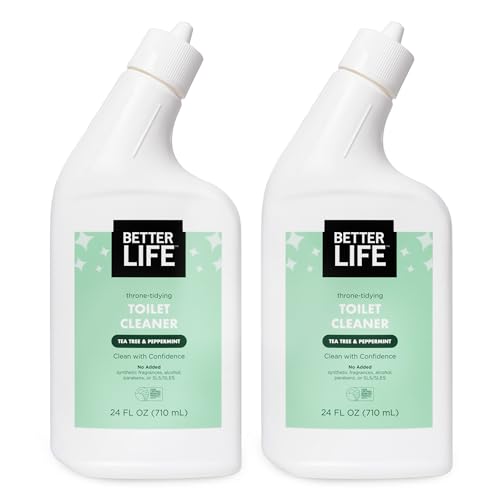
Thick clinging bleach gel with an angled-neck bottle that coats the underside of the rim, whitens organic grime, and disinfects the bowl surface with a 5-minute dwell. The most broadly useful everyday bowl cleaner for most households.
Check price on AmazonHydrochloric acid-based gel that dissolves calcium, lime, and rust deposits that bleach never touches. The correct product for homes with hard water or iron staining; apply and dwell 15 to 30 minutes for best results.
Check price on AmazonPlant-based, bleach-free formula using lactic acid and biodegradable surfactants to clean and deodorize with no harsh fumes. Fully septic-safe and effective on organic grime and light mineral buildup with a 10-minute dwell.
Check price on AmazonFor the full breakdown of all cleaner categories including rim gel stamps, in-tank tablets, and dedicated rust-stain removers, see our complete guide to the best toilet bowl cleaners of 2026. For bathroom surface cleaners that cover tiles, tubs, and counters alongside the toilet, see the best bathroom cleaners of 2026. For chemical drain treatments that address slow drains alongside toilet maintenance, see the best drain cleaners of 2026.
The most durable cleaning hack is selecting the right toilet to start with. A TOTO Drake II with CeFiONtect glaze or a Kohler Highline Arc with CleanCoat will spend the next 20 years resisting stain adhesion in ways a standard vitreous china bowl simply cannot match. For people already dealing with a standard-glaze bowl, the equivalent performance gain comes from a consistent weekly 5-minute routine: apply a rim block, wipe the exterior, brush the bowl. Prevention is cheaper than restoration, and the 5-minute weekly clean prevents the need for the 30-minute monthly restoration session that is the alternative.
Rapid re-staining after cleaning almost always means the mineral layer was not fully removed. Calcium and magnesium deposits leave a microscopically rough surface on the porcelain after bleach cleaning, and that roughness lets organic matter and bacteria re-adhere faster than on smooth porcelain. The fix is a thorough acid treatment to dissolve the mineral layer first (citric acid or a hydrochloric acid cleaner, 15-to-30-minute dwell), followed by a bleach gel to disinfect the now-smooth surface. Once the porcelain is smooth again, the weekly interval before re-staining lengthens significantly.
Pouring a small amount of liquid bleach into the tank occasionally is less damaging than using chlorine drop-in tablets continuously, but it is still not recommended by TOTO, Kohler, or American Standard. Any bleach in tank water continuously exposes the flapper, fill valve seals, and gaskets to chlorine, accelerating their deterioration. For occasional tank disinfection, a brief bleach rinse followed by multiple flushes to clear the chemical is the safest approach. For ongoing tank maintenance, use enzyme-based or oxygen-bleach products that do not contain chlorine.
No. Bleach (sodium hypochlorite) and vinegar (acetic acid) produce chlorine gas when mixed, a toxic respiratory irritant that causes coughing, burning, and at high concentrations is dangerous to inhale. If you want to use both in the same cleaning session, apply one, flush multiple times to clear it completely, ventilate the bathroom, and then apply the other. If the bowl still smells of bleach, do not add any acid product yet.
For a bleach-based gel targeting organic grime, a 5-minute dwell is the practical minimum and 10 minutes is better. For an acid-based cleaner targeting mineral or rust deposits, 15 to 30 minutes is the practical minimum, and overnight (6 to 8 hours) is more effective for heavy, established rings. Dwell time is the primary variable in cleaning effectiveness; the difference between a 5-minute and 30-minute dwell with the correct chemistry is usually more significant than the difference between brands of the same cleaner type.
A pink ring in the toilet bowl is almost always the bacterium Serratia marcescens, which naturally produces a pinkish-red pigment and thrives in moist, organic-film environments. It is not related to water mineral content or rust, and it is not a mold. It is killed by bleach-based gel cleaners with a 10-minute dwell. Because it regrows from airborne spores quickly in moist bathrooms, a rim block or continuous-release rim gel stamp that delivers mild disinfectant with every flush is the most effective prevention strategy after initial treatment.
Apply a commercial acid-based gel cleaner (hydrochloric acid) under the rim and around the waterline, lower the toilet lid, and leave it overnight (6 to 8 hours). In the morning, the mineral deposits are chemically dissolved; a simple flush and light brush is usually sufficient to clear them without scrubbing. For the waterline ring specifically, vinegar-soaked paper towels pressed against the ring and left for 2 to 4 hours can dissolve light to moderate deposits with no scrubbing required because the acid maintains contact with the mineral surface instead of draining away.
The combination produces carbonic acid gas bubbles with a mild mechanical cleaning effect on loose surface grime, but the neutralization reaction reduces the acid concentration available for dissolving mineral deposits below what vinegar delivers alone. Each product is more useful applied separately: vinegar as an acid soak for light mineral deposits (30-to-60-minute dwell), baking soda as a mild abrasive scrub for surface grime on porcelain that is not heavily stained. Mixed together, they are better than no cleaner but weaker than either product used individually with proper dwell time.
It depends on the type. Rim gel stamps (adhesive gels applied to the underside of the rim) are generally safe for the porcelain, tank components, and septic systems. In-tank enzyme and oxygen-bleach tablets are also generally safe for internal components. Chlorine bleach tablets placed in the tank are not safe for long-term use: the concentrated chlorine in tank water deteriorates rubber flappers, fill valve seals, and gaskets, typically within 6 to 12 months of continuous use. TOTO, Kohler, American Standard, and most other major manufacturers recommend against chlorine in-tank tablets in their product literature.
Apply a thick clinging gel cleaner under the rim using the bottle's angled nozzle, coating the full circumference. Let it dwell for at least 5 to 10 minutes, then scrub with a toilet brush angled upward under the rim. For the jet ports inside the rim (on rimmed bowls), the most effective method is the overflow-tube vinegar soak: shut off the water, flush to lower the tank, pour 1 cup of undiluted white vinegar into the overflow tube, and let it soak for 30 to 60 minutes before restoring water and flushing twice. This clears calcium from inside the ports, which scrubbing from outside the bowl cannot reach.
Turn off the water supply valve, flush to drain most of the tank, and pour 2 cups of white vinegar into the remaining water. Let it soak for 1 to 2 hours (or overnight for heavy calcium buildup), then scrub the interior walls with a long-handled brush, restore the water supply, and flush two to three times to rinse. For black mold or pink slime in the tank, add 1 cup of household bleach instead of vinegar, soak 30 minutes, and flush three times to clear. Never combine bleach and vinegar in the tank at the same time.
In most cases, even long-standing mineral deposits can be dissolved by an acid-based cleaner with sufficient dwell time, sometimes requiring multiple overnight applications. True permanent etching of the porcelain glaze is unusual on quality fixtures from TOTO, Kohler, or American Standard, but it can occur if abrasive scrubbing has been used repeatedly on a heavily mineralized bowl, as abrasion removes glaze along with deposits. Once the glaze is scratched, staining accelerates because the roughened surface has more area for deposits to grip.
The bowl interior should be cleaned weekly to prevent mineral and organic deposits from bonding to the porcelain surface. The exterior (seat, tank, lid, base) should be wiped weekly as well. A deeper monthly clean addresses under-rim ports and the tank interior. In high-traffic bathrooms or homes with water hardness above 150 mg/L, twice-weekly bowl cleaning prevents accumulation faster than a once-weekly session can address. In infrequently used bathrooms, flush the toilet daily even if unused to prevent biofilm growth in a stagnant bowl.
White distilled vinegar is safe in a toilet tank in moderate quantities (1 to 2 cups per treatment) to dissolve calcium deposits on the fill valve, flapper, and tank walls. Let it sit for 1 to 2 hours and then flush three times to rinse. Do not use vinegar as a continuous tank treatment; extended low-level acid exposure can soften rubber flapper material over time. Never add vinegar to a tank that still contains bleach from a previous treatment; wait until the tank has been fully flushed and rinsed.
Black mold or dark fungal growth (typically Aspergillus or Penicillium species) in a toilet bowl results from warm, humid conditions combined with organic matter in the water as a food source. It is most common under the rim where water rarely reaches during flushing, and in infrequently used bathrooms where the bowl sits stagnant for days at a time. A bleach gel applied directly to the affected area with a 15-minute dwell kills the mold colony. Improving bathroom exhaust ventilation is the structural fix for persistent mold recurrence; poor airflow keeps the bathroom too moist to prevent regrowth.
Rust stains are iron deposits from the water supply or from aging iron pipes; they do not respond to bleach and scrubbing alone scratches the porcelain glaze. The correct products are those containing oxalic acid (Bar Keepers Friend) or sodium hydrosulfite (Iron OUT Rust Stain Remover). Wet the stained area, apply the product to the damp surface, dwell for 15 to 20 minutes, and scrub with a non-abrasive toilet brush, then flush. For ongoing iron staining, the permanent solution is a whole-house iron filtration or water softener system; surface treatment is maintenance, not a fix for the source.
A wet pumice stone can remove heavy mineral and rust deposits from vitreous china toilet bowls without chemicals, but the technique matters: keep both the pumice and the bowl surface wet at all times, use light pressure, and rub in a single direction without pressing hard. A dry pumice stone or heavy scrubbing pressure scratches the glaze, accelerating future staining. Pumice is most useful as a last resort for deposits that did not respond to acid cleaners with adequate dwell time; the acid approach is always preferable as a first step because it cannot scratch the glaze.
Yes, significantly. Toilets with nano-particle or antimicrobial glazes (TOTO CeFiONtect, Kohler CleanCoat, American Standard EverClean) resist stain adhesion and require less frequent and less intensive cleaning than standard vitreous china. Rimless bowl designs (found in some TOTO Aquia IV and Swiss Madison St. Tropez configurations) eliminate the hidden channel under the rim where biofilm and mineral deposits accumulate most heavily. One-piece skirted toilets (TOTO UltraMax II, Woodbridge T-0019, Kohler Santa Rosa) are faster to clean on the exterior because there are no exposed crevices between the trapway ridges and floor. These design differences compound meaningfully over the life of the toilet.
A toilet ring that returns after each cleaning means the underlying mineral layer was never fully removed and is providing a rough surface for organic matter to re-adhere. Use a commercial acid cleaner with an overnight dwell, scrub, and flush. Repeat the acid treatment the next day if the porcelain still feels rough or chalky at the waterline. Once the surface feels smooth when rubbed with a gloved finger, switch to a weekly bleach gel or rim block maintenance routine to prevent the organic layer from re-establishing on the now-smooth porcelain. The key indicator is how the surface feels, not how it looks: smooth means the mineral base is gone.
Hydrogen peroxide at 3 percent (standard household concentration) is a mild oxidizing disinfectant that kills many bacteria and whitens light organic staining. It is a reasonable bleach-free alternative for households avoiding chlorine fumes, and it is septic-safe. It does not dissolve mineral deposits or rust, and its disinfection power is lower than a bleach gel at equivalent concentration. For a bleach-free maintenance clean, pour 1 cup of 3 percent hydrogen peroxide into the bowl, dwell 30 minutes, brush, and flush. It works best as a weekly maintenance product on an already-clean bowl rather than as a primary stain remover for set-in deposits.
CLR (Calcium, Lime and Rust Remover) is an acid-based cleaner formulated specifically for mineral and rust deposits. It is safe for use on standard white vitreous china porcelain toilet bowls when used as directed (typically a 2-to-3-minute dwell per label instructions). Do not use CLR on colored or marbled porcelain, natural stone surrounds, or brass fittings. Do not pour CLR into the toilet tank, as the acid concentration will damage rubber and plastic components including the flapper. Flush thoroughly after use and never mix CLR with bleach products.
Every toilet cleaning hack that delivers real results rests on the same two principles: match the chemistry to the specific stain (acid for minerals and rust, bleach gel for organics and biofilm, never mixed), and give the chemistry adequate dwell time before scrubbing. Skipping either principle is why most cleaning sessions take longer and yield worse results than they need to. For long-term cleaning ease, the highest-impact structural choice is a toilet with TOTO CeFiONtect, Kohler CleanCoat, or American Standard EverClean glaze, all of which resist stain adhesion at the surface level in ways that no cleaner can replicate. For any toilet, a consistent 5-minute weekly routine prevents the compounding cycle that turns a 5-minute weekly clean into a 30-minute monthly restoration session.
Learn why toilet trapways curve like an S, how each bend blocks sewer gas, and what the shape means for clogs and…
Read the guideAlmost every US toilet has a left-side handle. Learn the plumbing and mechanical reasons behind the layout and when it actually changes.
Read the guideHome toilets rely on tanks because household water lines lack the pressure that public flushometer systems use to flush straight from the…
Read the guide