
Toilet Drainline Carry Explained
Toilets4.6
Drainline carry measures how far solid waste travels in a pipe after one flush. Learn what the MaP test measures and why…
Read the guideWater left in a toilet tank, bowl trap, or supply line can freeze, expand, and crack the porcelain. This guide walks through every step to fully drain and protect a toilet before temperatures drop, whether you are closing a vacation cabin, winterizing an RV, or safeguarding an unused bathroom in a home that loses heat.
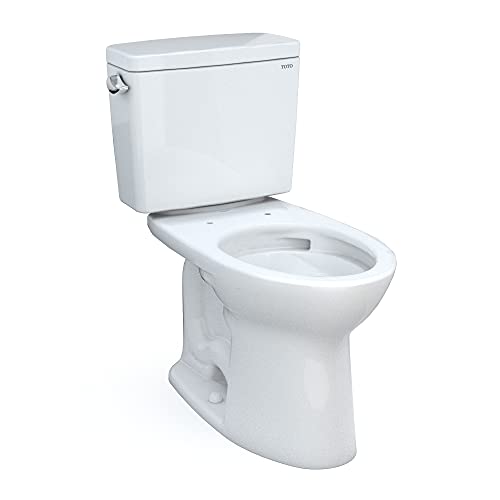
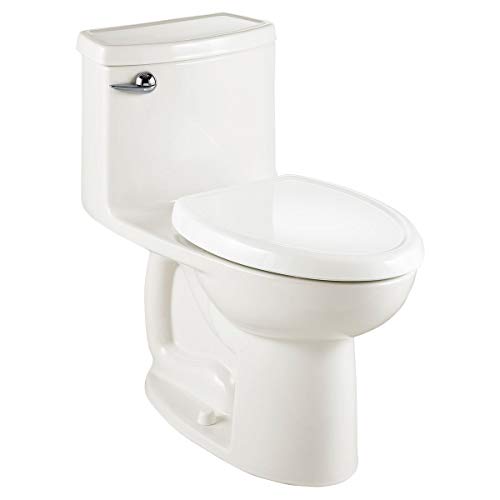
Shut off the supply valve, flush once to empty the tank, then use a wet-dry vacuum to remove residual water from the tank and bowl. Add 1 to 2 cups of propylene glycol RV antifreeze to the bowl so it flows into the trap. Disconnect the supply line for fully unheated buildings. The TOTO Drake and American Standard Cadet 3 are the two easiest two-piece toilets to drain completely because their tanks have clear geometry and their parts are widely available year-round.
A cracked toilet from a winter freeze costs hundreds of dollars to replace, and that number climbs quickly if pooled water also damages the subfloor beneath it. The fix is inexpensive and straightforward: drain all standing water from the tank and bowl, protect the trap with non-toxic antifreeze, and disconnect the supply line before the first hard freeze. The steps below apply whether you own a standard gravity-fed two-piece like the TOTO Drake or Kohler Highline, a pressure-assisted model, or a one-piece from brands like Woodbridge, Swiss Madison, or Gerber.
This guide is built on published plumbing engineering guidance, manufacturer maintenance documentation, and the patterns that appear consistently in owner feedback on seasonal toilet use. We do not physically test toilets in a lab. We compare specs, drain-geometry data, and real-world maintenance reports. If you want context on which models have the most serviceable designs, our best flushing toilets roundup explains flush-valve and trapway design in depth.
| Supply Item | Purpose | Required? |
|---|---|---|
| Propylene glycol RV antifreeze (pink) | Protects the trap from freeze damage | Yes |
| Wet-dry vacuum (shop vac) | Removes residual tank and bowl water | Strongly recommended |
| Adjustable wrench | Disconnects supply line at tank | Yes (unheated buildings) |
| Large sponge or turkey baster | Absorbs the last 1 to 2 cups in the tank | Recommended |
| Bucket | Catches water drips from supply line | Optional |
| Teflon tape | Reseals supply line fitting in spring | Optional |
Toilet tanks are the most commonly cracked component because they hold the largest volume of water and sit against thin china walls. But the bowl trap is the most expensive failure point. The trap is the U-shaped or S-shaped section of the bowl that holds a water seal to block sewer gases. When that water freezes, it can split the porcelain right at the floor, destroying the bowl from the inside. Because the trap is part of the bowl casting, not a separate component, a cracked trap means a full toilet replacement.
Supply lines and fill valves hold less water but can also fail. Braided stainless steel supply lines resist freeze-splitting better than the older ribbed plastic type, but the threaded connectors at both ends are still vulnerable. A single thaw-and-refreeze cycle in an unheated structure is enough to crack a fitting and cause significant water damage when the building is reopened in spring.
The antifreeze choice is the most important supply decision. RV and marine antifreeze uses propylene glycol as its base, is dyed pink to distinguish it from automotive products, and is rated safe for potable water lines and septic tanks. It stays liquid to around minus 50 degrees Fahrenheit in full-strength concentration. Automotive antifreeze uses ethylene glycol, which is acutely toxic and not appropriate for drain systems or toilets. When you see a pink jug labeled RV or marine antifreeze at a hardware store, that is the correct product. If the jug is green, orange, or yellow and mentions radiators or engines, set it aside.
The shut-off valve is on the wall or floor directly behind the toilet base, on the supply line running to the tank. Turn the handle clockwise until it stops. On most Kohler, American Standard, and TOTO toilets this is a 3/8-inch compression-style valve. If the valve is corroded or stiff and will not close fully, shut water off at the building main instead. Confirm the valve holds by proceeding to flush and watching that the tank does not refill.
Press and hold the flush handle until water stops running. The tank will drain to the bottom, leaving roughly 1 to 2 cups of water sitting below the flush valve seat. The bowl will drop significantly but the trap curve will still hold water. This is normal, expected, and handled in the antifreeze step below.
Lift the tank lid and set it aside. Use a wet-dry vacuum or large sponge to remove all remaining water from the tank bottom. Focus on the area under the fill valve tower and around the flush valve seat, where small pockets collect. On TOTO Drake models, the tower-style fill valve has a different profile than the ball-float assemblies on older Kohler models, but the residual water volume is similar in both cases. The goal is a tank that is as close to dry as you can achieve, because even a half inch of standing water can freeze and crack the china.
Insert a wet-dry vacuum hose into the bowl and remove as much standing water as possible. A standard shop vac can extract most of the visible bowl water in about 30 seconds. You will not remove all water from the trap curve, but reducing the water volume before adding antifreeze means the antifreeze reaches the trap at full concentration rather than diluted. Diluted antifreeze may not provide adequate protection at very low temperatures.
Pour 1 to 2 cups of propylene glycol RV antifreeze directly into the bowl. Let it flow down into the trap naturally. Pour a second cup 30 seconds later to push undiluted antifreeze further into the trap curve. Do not flush after adding antifreeze. The goal is to leave it sitting in the trap all winter. A single 1-gallon jug of RV antifreeze typically costs $6 to $10 at a hardware store and treats 4 to 6 toilets at the 1 to 2 cup dose.
For climates that regularly see temperatures below minus 10 degrees Fahrenheit, use the full 2-cup dose without mixing with additional bowl water. At full strength, standard propylene glycol RV antifreeze remains liquid to minus 50 degrees Fahrenheit, which exceeds the coldest recorded temperatures across the continental United States.
For any building that will remain below freezing for more than a few days, disconnect the supply line. Place a bucket under the connection at the tank bottom, use an adjustable wrench to unscrew the supply line nut, and let any trapped water drip out. Do the same at the shut-off valve end. Store the empty line raised so it does not pool at a low point. For a home that only briefly loses heat during a cold snap, closing the supply valve is sufficient without full disconnection.
For a completely unheated space, leave the tank lid ajar or stored separately. This allows any residual moisture to evaporate rather than condensing and pooling at the bottom of the sealed tank. On one-piece toilets from TOTO (UltraMax II, Aquia IV), Woodbridge (T-0001, T-0019), or Swiss Madison (St. Tropez), the tank lid design may differ; note how it is secured before removal so reassembly in spring is straightforward.
The step homeowners most commonly skip is the wet-vac pass on the bowl before adding antifreeze. Pouring antifreeze directly onto 1 cup of bowl water dilutes it by roughly 20 to 30 percent. RV antifreeze rated to minus 50 degrees at full concentration may only protect to around minus 20 degrees when moderately diluted, which is insufficient for northern mountain states and the upper plains in a hard winter. Vacuum the bowl down first, then add antifreeze, and you get the full protection the product is rated for.
If you choose not to use antifreeze, the process demands thoroughness. A small turkey baster can extract the final tablespoon or two of water from the trap after vacuuming. Some plumbers pour a small amount of food-grade mineral oil into the trap as a freeze barrier, since oil floats on any residual water and reduces the surface area exposed to freezing air. This is less common on residential toilets and provides less protection than propylene glycol antifreeze, but it is a non-toxic option where antifreeze supply is limited.
In climates that stay above 28 degrees Fahrenheit even in the coldest weeks, and where the toilet is in an insulated interior room rather than an unheated outbuilding, a vacuum-and-dry approach without antifreeze is generally adequate. Below that threshold, or in a fully unheated building, use antifreeze regardless.
Before reconnecting the supply line, check the rubber washers at both ends. If either washer looks compressed, cracked, or discolored, replace it before tightening. A new supply line costs a few dollars and eliminates the slow drip at the tank connection that shows up after a reconnect if the washer has aged out. Wrap supply line thread fittings with two turns of Teflon tape if you removed them fully.
Once the tank refills, confirm the fill valve cycles normally and shuts off cleanly. The water line should sit approximately 1 inch below the top of the overflow tube. If the bowl does not refill to its normal level after flushing, the flapper may have stiffened during the cold idle and is not seating fully. A replacement flapper for most TOTO, Kohler, American Standard, and Gerber models costs under $10 at any hardware store. For more on fill valve behavior by model and generation, see our Best Toilets of 2026: Top Picks for Every Bathroom guide.
One-piece toilets like the Woodbridge T-0019 or Swiss Madison St. Tropez have skirted trapway designs that can hold more water around the base during draining, and their integrated body makes it harder to visually confirm the tank is fully empty. If your seasonal property currently has a one-piece toilet, follow the same steps but spend extra time with the wet vac around the base perimeter, and pour a slightly larger antifreeze dose into the bowl to compensate for any residual water in the concealed lower trap area.
Older toilets using 3.5 GPF or 1.6 GPF tanks hold more total water than modern 1.28 GPF EPA WaterSense-certified models, which takes longer to drain but does not change the process. The same steps apply. If the seasonal property is also due for a toilet upgrade, consider a simple-geometry two-piece that is easy to service and winterize each year.
These three models combine straightforward draining geometry, high independent MaP scores, and proven long-term reliability, making the annual winterizing and spring recommission routine as simple as possible.
Open two-piece tank with a standard 3-inch flush valve empties completely with a single vacuum pass. Replacement flappers and fill valves are stocked at virtually every hardware retailer, making spring recommissioning straightforward even in rural areas.
Check price on AmazonKohler's canister flush valve seals across a wide surface area rather than a single flapper edge, which significantly reduces the slow post-idle drip that appears on rubber-flapper toilets after months sitting cold. MaP score of 1000 g and 1.28 GPF.
Check price on AmazonThe Cadet 3 posts a 1000 g MaP score and 1.28 GPF at a lower price than TOTO or Kohler. Its EverClean surface resists the mold and mineral staining that can develop in an idle bowl during an off-season closure, which is a real benefit on a seasonal property.
Check price on AmazonFor a fully unheated seasonal property, the single best pre-winter investment is replacing the fill valve and flapper on whichever toilet is already installed, not necessarily buying a new one. A worn fill valve that barely shuts off will fail the moment spring water pressure returns, leading to a running toilet you have to fix on the same day you open the cabin. New Fluidmaster fill valve and a matching flapper cost under $20 total, fit most major brands including TOTO, Kohler, American Standard, Woodbridge, and Gerber, and remove the most common source of spring recommission problems.
The most frequently seen error is skipping the wet-vac step and relying entirely on antifreeze. Antifreeze poured over standing bowl water is diluted immediately, reducing its freeze protection. Always reduce bowl water volume as much as possible before adding antifreeze, so the product reaches the trap at close to full concentration.
The second common mistake is leaving the supply line connected on a property that will be unheated for an extended period. Even with the shut-off valve closed, supply lines hold residual water. In a deep freeze, that water expands and can crack the connector threads. Disconnection takes two minutes and eliminates the risk entirely.
Third: using automotive antifreeze. Ethylene glycol (green or orange, engine-cooling products) is toxic, inappropriate for drain systems, and damaging to septic bacteria. Only propylene glycol antifreeze labeled for RV or marine plumbing belongs in a toilet.
Pressure-assisted models such as some American Standard and Kohler lines use a sealed Flushmate pressure vessel inside the tank. After shutting the water supply and flushing, press the flush handle 4 to 5 additional times to release internal pressure from the vessel. Then vacuum the outer tank bottom and add antifreeze to the bowl as you would any gravity toilet. The inner pressure vessel does not require separate draining, but consult your manufacturer documentation for models older than five years.
RV toilets are typically winterized as part of the full RV water system routine rather than as a standalone fixture. Drain the fresh, gray, and black tanks, bypass the water heater, then pump propylene glycol RV antifreeze through the supply lines until pink fluid exits at the toilet. Hold the flush pedal down so antifreeze coats the rubber bowl seal, which is the component most prone to drying and cracking during a cold, dry winter idle. The black holding tank also needs a small antifreeze dose after draining to prevent any residual water in the tank valves from freezing.
If your seasonal property serves older family members, our Best Toilets for Seniors: Comfort Height and Safety guide covers comfort-height models that combine accessibility features with serviceable two-piece designs suited to a seasonal home. For a rental property that will be winterized between tenant stays, see our Best Toilets for Large Families (Heavy Use, Low Clog) guide for models with the lowest maintenance burden under heavy use.
Mountain and northern-plains property owners sometimes ask whether it is worth insulating the toilet supply line rather than winterizing each fall. For a property occupied more than half the year, pipe insulation on exterior-wall runs is genuinely worth doing alongside a good heat tape installation. But for a seasonal home that will sit empty and cold for four or more months, there is no substitute for draining and protecting the toilet directly. Insulation slows the rate of heat loss; it does not stop a pipe or toilet from freezing in a building with no internal heat source across a January week at zero degrees Fahrenheit.
Toilets can crack when interior temperatures drop below 32 degrees Fahrenheit and water in the tank or trap is present. In practice, a brief overnight dip to 28 or 30 degrees in an insulated interior bathroom rarely causes damage. The real risk is when a space stays below freezing for several consecutive hours, typically at 25 degrees Fahrenheit or lower, especially in uninsulated structures or buildings with no internal heat source.
Pour 1 to 2 cups of propylene glycol RV antifreeze into the bowl after removing as much standing water as possible with a wet-dry vacuum. The antifreeze flows into the trap and mixes with residual water there. For climates below minus 10 degrees Fahrenheit, use the full 2-cup dose. Do not flush after adding antifreeze; leave it sitting in the trap through the winter.
No. Do not use automotive antifreeze (ethylene glycol) in a toilet. It is acutely toxic to people and pets, has a sweet taste that attracts animals, and is damaging to septic systems. Only use propylene glycol antifreeze labeled for RV, marine, or plumbing applications. Look for the pink color and the words RV antifreeze or potable water safe on the jug.
Yes. Shutting off the supply valve is the first step. Without cutting the water supply, the tank refills each time you flush, preventing you from fully emptying it. If the local shut-off valve is not closing fully, shut water off at the building main before proceeding with the rest of the winterizing steps.
For buildings that will stay unheated for weeks or months, yes. Even with the shut-off valve closed, water can sit in the braided supply line and in the threaded fittings. In a deep freeze that water can expand and crack a connector, causing a major water release when the property is reopened. Disconnection takes two minutes and completely eliminates that risk.
After shutting off the supply valve and flushing once, use a wet-dry vacuum or large sponge to remove the residual 1 to 2 cups of water sitting at the tank bottom. Focus on the area under the fill valve tower and around the flush valve seat, where small pockets remain even after the tank appears empty. A dry cloth wipedown after vacuuming removes any water film from the tank walls.
It depends on the crack location. A cracked tank on a two-piece toilet can sometimes be replaced with just a new tank from the same model line, which costs less than a full replacement. A cracked bowl, particularly at the base near the trap or floor flange, almost always requires full replacement because the bowl is one casting. Cracks in supply line fittings or fill valves are inexpensive to fix with new components.
About 20 to 30 minutes per toilet the first time, and closer to 15 minutes once you have done it before. Having the supplies ready (wet-dry vacuum, antifreeze jug, wrench, bucket) before you start cuts the time significantly. Multiple toilets in one property can usually be completed in sequence in under an hour.
Slightly. One-piece toilets have a more integrated structure that makes it harder to visually confirm the tank is fully drained. Skirted trapway models like the Woodbridge T-0001 or Swiss Madison St. Tropez may trap additional water around the lower body near the floor. The steps are identical, but plan a few extra minutes with the wet-dry vacuum on a one-piece model.
Yes. Propylene glycol RV antifreeze is safe to leave in the bowl and trap for an entire winter season. It does not damage porcelain, rubber gaskets, or any internal components. In spring, flush once or twice to clear it from the system before normal use. No special cleaning or rinsing is required beyond those flushes.
No. The wax ring is a solid wax seal between the toilet base and the floor flange. It does not hold water and is not affected by freezing temperatures. Removing and reinstalling a wax ring unnecessarily risks compromising the seal and creating a sewer gas leak at the floor. Leave the wax ring in place during winterizing.
After shutting off the supply, flush and then press the flush handle 4 to 5 additional times to fully depressurize the inner Flushmate vessel. Then vacuum the outer tank bottom and add antifreeze to the bowl as you would a gravity toilet. The inner pressure vessel does not need separate draining under normal circumstances. Check manufacturer documentation for models older than five years.
Any propylene glycol RV and plumbing antifreeze rated for potable water systems works correctly. Widely available brands include Camco, Star Brite, and RecPro. Look for a product rated to at least minus 50 degrees Fahrenheit on the label, which provides adequate protection for even the coldest continental US locations when used at the specified concentration without excess dilution.
Yes, though it requires more time and patience. A large sponge wrung into a bucket can remove the tank residual water if you work through the corners and low points carefully. A turkey baster can pull water out of the bowl before adding antifreeze. The wet-dry vacuum simply makes both steps faster and more complete, which is why it is strongly recommended rather than required.
Yes. Adding RV antifreeze to the bowl keeps the trap filled with a liquid that will not evaporate or freeze, which maintains the trap water seal blocking sewer gas from entering the building. A dry or frozen trap loses this seal, which is why leaving treated liquid in the trap is a specific goal of winterizing rather than trying to empty the trap completely.
Turn off the water supply immediately. Do not attempt to thaw with an open flame. Use a hair dryer or warm towels applied to the outside of the tank or bowl to raise the temperature slowly. Once thawed, inspect carefully for cracks before restoring water pressure. Restore water slowly and watch all connection points for drips before leaving the system under full pressure.
No. A home that maintains at least 55 degrees Fahrenheit throughout winter does not need toilet winterizing. For toilets on exterior walls in very cold climates, the practical precaution is leaving the cabinet doors below the sink open so warm air circulates, not adding antifreeze to the toilet. Save the full winterizing routine for unheated or intermittently heated structures.
TOTO, Kohler, and American Standard have the widest parts distribution across hardware retailers and online suppliers. For a remote seasonal property, this matters because a fill valve or flapper that fails on reopening needs to be sourced locally if a same-day fix is needed. Woodbridge and Swiss Madison are sold widely online but have thinner local hardware store distribution in rural areas.
No. Bleach-based in-tank tablets should not be left in a winterized, dry tank. They require water to dissolve and activate, and in a dry tank they can concentrate against the rubber flapper and corrode it over a winter season. Remove any in-tank tablets before you begin the winterizing process. Plain tank is better for a seasonal idle.
Signs of freeze damage include visible hairline cracks on the tank or bowl exterior, water pooling at the base that does not correspond to a running fill valve, the bowl not holding its water level between flushes (indicating a trap crack), or the supply line connection leaking at the tank fitting. Any of these warrant stopping water flow and inspecting before continuing use. A plumber can assess whether a crack is surface-level or a through-crack requiring replacement.
Winterizing a toilet is a 7-step routine that takes under 30 minutes and costs less than $10 in supplies. Shut off the supply valve, flush and vacuum the tank dry, remove bowl water with a wet-dry vacuum, add 1 to 2 cups of propylene glycol RV antifreeze to the trap, and disconnect the supply line for a fully unheated building. The tank-drying step matters most: even a half inch of standing water in a sealed tank can crack the porcelain when it freezes. For a seasonal property being outfitted or upgraded, the TOTO Drake and American Standard Cadet 3 are the easiest two-piece toilets to drain and recommission year after year. For more on choosing the right toilet for a year-round or part-time home, see our Best Toilets for Home: Reliable Picks for Daily Use guide.
Drainline carry measures how far solid waste travels in a pipe after one flush. Learn what the MaP test measures and why…
Read the guideToilet floor bolts spinning instead of tightening usually means a broken flange or stripped nut. Here is how to diagnose it and…
Read the guideShould tile run under the toilet or stop at the flange? Learn the right order, why it matters for leaks, and how…
Read the guide