


How Often Should You Clean a Toilet?
Cleaning & Maintenance4.6
Clean a toilet fully once a week, wipe the handle and seat with a disinfecting cloth two to three times between weekly…
Read the guideLimescale is the hard, chalky white or gray-orange crust that settles at the waterline, under the rim and around the siphon jets of a toilet bowl. It is the one stain a bleach gel will never remove, because it is mineral, not organic. The honest fix is an acid that dissolves calcium carbonate: white vinegar or citric acid for light to moderate buildup, and a commercial descaler with lactic, phosphoric or sulfamic acid for thick, set-in deposits. The key is dwell time. Acid must sit directly on the deposit long enough to break the mineral bond, which means lowering the water level first, then waiting thirty minutes to several hours before scrubbing. This guide explains exactly how to remove limescale from the bowl, the waterline ring, the hidden rim jets and the siphon hole, with the right product for each severity level, a safe step-by-step method, and the habits that stop scale returning.
For light toilet limescale, pour undiluted white vinegar into a lowered bowl and leave it overnight, then scrub with a wet pumice stone. For thick orange or gray rings that reappear within days, switch to CLR Calcium, Lime & Rust Remover or a citric acid poultice held in place with soaked toilet paper. The difference is dwell time on dry deposit, not scrubbing force.
Limescale is a chemical problem, and understanding that one fact explains why most cleaning attempts fail. The chalky white band at the waterline, the crusty gray buildup under the rim and the orange tinge around the siphon jets are all hardened mineral deposits, mostly calcium carbonate with magnesium and sometimes iron, left behind as hard water evaporates and the dissolved minerals crystallize onto the glaze. Bleach whitens and disinfects organic film, but it has no chemistry to attack a mineral deposit. Scrubbing harder does not help either, because scale is bonded to the porcelain at the molecular level. The only thing that genuinely dissolves limescale is an acid strong enough to react with calcium carbonate, given enough contact time to break the bond, followed by light agitation to lift the softened crust away.
We do not run our own cleaning trials. Instead we compare published manufacturer safety data, the active acid in each descaler and the mineral class it targets, EPA WaterSense and public-health guidance on safe cleaning, whether each formula is labeled septic-safe and safe for porcelain and rubber seals, and patterns across thousands of verified owner reviews. For the fixtures this method maintains and the bowls that resist scale best, see our pillar guide to the best flushing toilets.
The single most effective change most people can make is to stop scrubbing immediately after applying the acid. The acid needs time to react with the calcium carbonate and convert it from a hard crystal to a soft, loosened mineral that a brush or pumice can remove. People who scrub at thirty seconds are moving hard scale around a wet bowl; people who wait six to eight hours are lifting chemically softened material with barely any effort. Patience is the method.
The best product depends entirely on how thick and how old the scale is. For a thin chalky band that has built up over a few weeks, household white vinegar at full strength or citric acid powder dissolved in warm water is genuinely effective, cheap, safe for porcelain and seals, and completely septic-friendly. For a hardened ring that has set over months, a formulated descaler carries a higher acid concentration, clings better and works faster. For orange or rust-brown scale, the cause is iron in the water on top of calcium, and a product targeting both calcium and rust, such as CLR, is the right call because plain vinegar barely touches iron staining.
When even a strong acid leaves a stubborn raised ridge, a wet pumice stone is the finishing tool. Used wet on a wet surface it abrades softened mineral without scratching vitreous china, and it is the single most effective tool for the final removal of a thick ring that acid has softened but not fully dissolved. The acid-plus-pumice combination handles deposits that neither tool clears alone. For the everyday bowl gels that keep a descaled bowl clean, see our guide to the best toilet bowl cleaners of 2026.
| Remover | Best For | Active Acid | Dwell Time | Septic Safe |
|---|---|---|---|---|
| White vinegar | Light, recent scale | Acetic acid (5%) | 30 min to overnight | Yes |
| Citric acid powder | Light to moderate scale | Citric acid | 1 to 8 hours | Yes |
| CLR Calcium, Lime & Rust | Thick scale and iron stains | Lactic and gluconic acid | 2 min, repeat as needed | Yes (diluted) |
| Lime-A-Way | Hard-water rings | Phosphoric and sulfamic acid | 5 to 10 min | Use sparingly |
| Sulfamic acid descaler | Very thick, set-in scale | Sulfamic acid | 15 to 30 min | Use sparingly |
| Pumice stone (with acid) | Final mechanical lift | Abrasion (wet only) | Use wet on wet surface | Yes |
If we had to recommend one routine approach for a typical hard-water ring, it is citric acid powder dissolved in hot water, applied to a lowered bowl, left overnight. Citric acid is stronger than vinegar, nearly odorless, completely safe for porcelain and septic systems, and the overnight dwell does ninety percent of the work while you sleep. People reach for harsh commercial descalers too early. Nine times in ten, citric acid with patient dwell time wins without the fumes or the risk to rubber seals.
The waterline ring and the scale just below it are the hardest to treat for a simple reason: they sit underwater, and acid poured into a full bowl is diluted immediately and washed away from the deposit. The fix is to expose the scale by removing the water. Shut the supply valve and flush, which drains the tank and drops the bowl level. To push the water further down, pour a bucket in quickly from height so the siphon pulls the bowl down, then bail the remaining water out with a disposable cup. Now the scale is exposed to air and the acid will sit on it undiluted.
With the deposit exposed, apply acid generously and hold it in contact with a poultice. Tear toilet paper into strips, soak them in vinegar or descaler, and press them directly onto the ring and the scale below it. The paper holds the acid against the deposit instead of letting it run to the bottom of the bowl. Leave the poultice for several hours or overnight. After the dwell, scrub with a wet pumice stone, restore the water and flush. This exposure-plus-poultice method is far more effective than any amount of scrubbing through standing water, and it is the technique that clears scale most people assumed was permanent.
Hidden scale inside the flush passages is the most common and most overlooked cause of a toilet that flushed strongly for years and now seems weak. The rim jets are the small angled holes spaced around the underside of the rim that send water swirling into the bowl on every flush. Over time, mineral scale narrows or blocks them, so less water reaches the bowl and the flush loses power. To clear them, hold undiluted white vinegar or a commercial descaler against the underside of the rim with a soaked cloth, or use a small squeeze bottle to inject acid up into each hole. Let the acid dwell for at least an hour, then run a thin wire, a small Allen key or a straightened paperclip into each jet to break the softened scale loose. Flush to wash the debris out of the rim channel and into the bowl.
The siphon jet, the single larger hole at the very bottom front of the bowl that drives the siphon when you flush, also collects scale and matters just as much to flush power. Treat it the same way: hold acid against it with a soaked cloth, dwell for an hour, probe it clear with a thin tool, then flush. Restoring clear rim jets and a clear siphon jet often recovers most of a flush that owners assumed required a new toilet. For the full diagnosis of a weak or incomplete flush, see our guide to how to improve toilet flush power.
This is the most common mistake in toilet cleaning, and it wastes enormous effort. Bleach is excellent at its actual job: killing germs and whitening the brown or gray organic film at the waterline, which is why a bleached bowl can look whiter and still have a hard scale ring underneath. But bleach has no chemistry to attack calcium carbonate, so applying it to limescale changes nothing except the smell. Vinegar, citric acid and commercial descalers work because they are acids that react with and dissolve the mineral. If your stain wipes off with bleach, it was organic film. If it shrugs off bleach and feels like a raised, crusty ridge, it is mineral scale and needs acid.
The safety point matters. Bleach and acid must never be in the bowl at the same time. Mixing bleach with vinegar, CLR, Lime-A-Way or any acid releases chlorine gas, which is harmful to breathe in a small bathroom. The right approach is to treat organic grime with bleach gel first, flush fully, then separately treat any mineral ring with acid. Keep the two chemistries as two separate steps with a thorough flush between them. For the disinfecting side of the cleaning routine, see our guide to the best toilet bowl cleaners of 2026.
Limescale is a direct symptom of hard water, and the root cause is the mineral content of your water supply rather than anything you are doing wrong. Water picks up calcium and magnesium as it passes through limestone and chalk rock, and the more it carries, the harder it is. Every time hard water sits in the bowl and evaporates at the waterline, or evaporates slowly inside the warm rim channel, it leaves minerals behind as solid scale. Homes on very hard municipal water or private well water can see a chalky band reappear within one to two weeks of cleaning, while soft-water homes can go months. Well water often adds dissolved iron, which is why some scale is orange or rust-colored rather than white or gray.
Because the cause is the water itself, the durable solutions address the water or protect the bowl surface. A whole-house water softener removes calcium and magnesium before they reach the toilet and is the only real cure, eliminating scale throughout the home. Short of that, a continuous in-bowl cleaner or rim hang-on product slows fresh deposition by keeping the glaze coated, and a more frequent descaling schedule catches scale while it is thin and lifts with light effort. In hard water, descaling every two to four weeks is far more practical than waiting for a visible ring that then needs hours and multiple cycles to remove. For the bowls that resist scale and staining best, see our guides to best toilets for hard water and the best hard water stain removers.
Removing scale is only half the job. In a hard-water home it rebuilds unless you change something about the water, the cleaning frequency or the bowl surface. The three approaches below address the problem at different levels, and combining them keeps a descaled bowl clear far longer than any one approach alone.
Removes calcium and magnesium before water reaches the toilet, eliminating scale throughout the home. The only true cure for chronic hard-water buildup in every fixture, appliance and pipe, not just the toilet bowl.
Check price on AmazonA strong, nearly odorless, septic-safe acid for a regular descaling soak every two to four weeks that catches scale while it is thin. Cheap, gentle on porcelain and rubber seals, and highly effective with an overnight dwell on a lowered bowl.
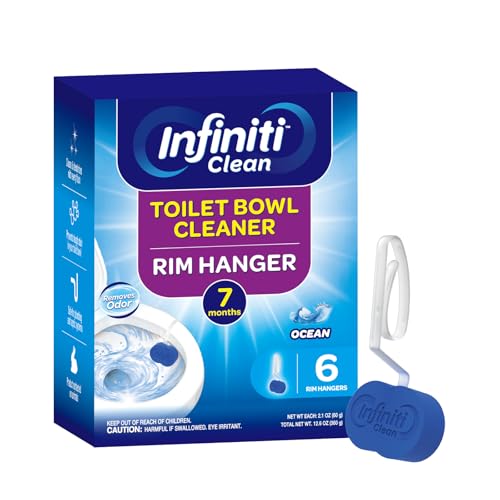
Check price on AmazonA rim hang-on product that coats the glaze with a protective film on every flush, slowing fresh mineral deposition between cleans. Avoid in-tank bleach types around an older rubber flapper, and never mix with an acid descaler in the same session.
Check price on AmazonBeyond products, frequency matters more than anything else. Descale every two to four weeks in a hard-water home rather than waiting for a heavy visible ring. Thin, fresh scale dissolves in minutes with vinegar, while a set-in ring fights you for hours and multiple cycles. Keeping the bowl from sitting stagnant also helps. A guest toilet in a hard-water home scales fast at the waterline because the same water sits and evaporates in place for days. Flushing it regularly refreshes the water and reduces the rapid band formation. For the brushes that make routine descaling faster and easier, see our guide to the best toilet brushes of 2026.
The glaze on the inside of a toilet bowl is the surface minerals stick to, and its density and smoothness determine how aggressively scale bonds. Standard vitreous china has microscopic surface texture that gives minerals and waste a grip. Treated glazes like TOTO's CeFiONtect use an ion-barrier coating that fills those micro-pores and creates a smoother, less porous surface. In hard-water owner reviews, TOTO models with CeFiONtect, including the TOTO Drake, Drake II, UltraMax II, Aquia IV, Entrada and Vespin II, are among the most frequently praised for slow mineral buildup and easy cleaning. Kohler's antimicrobial PureClean glaze on models such as the Highline and Cimarron, and American Standard's EverClean surface on the Champion 4 and Cadet 3, provide similar benefits. Woodbridge T-0001 and T-0019 models use a smooth porcelain glaze that also sheds deposits more easily than older uncoated surfaces. Gerber Viper and Avalanche models and the Swiss Madison St. Tropez use dense vitreous china that performs reasonably in hard water. The MaP (Maximum Performance) score, which measures flush power, matters too: a toilet with a 1000-gram MaP score flushes away debris more completely each time, leaving less material to dry and form scale, while a 500-gram model may leave residue that contributes to buildup. EPA WaterSense-certified toilets at 1.28 GPF or less also reduce the total mineral volume entering the bowl per day.
A treated glaze does not eliminate limescale in hard water, but it meaningfully changes the cleaning experience. Scale on an uncoated bowl bonds tightly and often needs a pumice stone. The same scale on a CeFiONtect or EverClean surface frequently wipes off with a brush after a short vinegar soak. Over years, that difference in cleaning effort is significant. If you are replacing a toilet and live in a hard-water area, the glaze specification should be on your checklist alongside MaP score and GPF. See the full breakdown in our guide to best flushing toilets.
Years-old scale is thick, layered and bonded hard, so the realistic approach is repetition rather than one heroic effort. Each acid soak softens the outer layer of the deposit; the pumice stone removes that layer; and the next soak reaches the layer beneath. Trying to remove a thick ring in a single application fails because the acid only penetrates so far before it is chemically spent. Lower the water level, apply a strong commercial descaler or make a citric acid poultice by soaking toilet paper in a concentrated citric acid solution and pressing it onto the scale, leave it overnight, scrub away the softened layer with a wet pumice stone, then apply fresh acid and repeat. Two to three cycles will clear deposits that looked permanent.
For the most extreme cases, a fine wet-and-dry sandpaper around 400 grit used wet on a wet surface can reduce a raised ridge that pumice has stopped improving, but this demands a genuinely light touch to avoid dulling the glaze. Reserve it for deposits that have survived three full acid-and-pumice cycles. If the bowl is permanently etched, pitted or discolored from years of scale and abrasive cleaning, no product restores the glaze, and replacement is the honest answer. Our guide to the best drain cleaners of 2026 covers the products that address the pipe-side of a hard-water home alongside the bowl cleaning products above.
Lower the water level by turning off the supply valve and flushing, then apply white vinegar or citric acid for light scale, or a CLR-type commercial descaler for thick or orange rings. Let it dwell at least thirty minutes, ideally several hours on a stubborn ring. Scrub the softened deposit with a wet pumice stone or stiff nylon brush, turn the water back on, flush and repeat the cycle if scale remains.
Yes, for light to moderate scale that has built up over weeks rather than years. White vinegar contains acetic acid at around five percent concentration, which reacts with and dissolves calcium carbonate. It works best with a long dwell time on a lowered bowl, ideally overnight, with the vinegar held against the deposit by a paper poultice. For thick or iron-stained scale it needs to be stepped up to a stronger commercial descaler.
Bleach whitens and disinfects organic stains but has no chemistry to attack a mineral deposit. Limescale is calcium carbonate, which only dissolves in acid, and bleach is a base. Applying bleach to limescale changes the smell and may temporarily mask the color but leaves the mineral deposit intact. Switch to an acid, vinegar or a commercial descaler, and never mix the two in the same bowl.
At least thirty minutes for light, recent scale, and overnight for a hardened ring. Lower the water level first so the vinegar sits on the exposed deposit undiluted. For the waterline ring, press vinegar-soaked strips of toilet paper directly against the scale so the acid stays in contact instead of running to the bottom of the bowl. The longer the dwell, the softer and easier to remove the deposit will be.
Citric acid is stronger than vinegar and nearly odorless, making it the better routine option for moderate to heavy scale, especially dissolved in hot water and left to dwell overnight. Vinegar is fine for light, recent deposits and is always on hand. Both are safe for porcelain and septic systems. For very thick or iron-stained scale, step up to a commercial descaler, and finish either with a wet pumice stone to lift the loosened deposit.
A pumice stone used correctly will not scratch vitreous china glaze, because pumice is softer than the glaze when both surfaces are wet. Always wet the stone and the bowl surface before using it, never use it dry, and let the acid soften the scale first so the pumice only has to lift the chemically loosened mineral. Stop if you feel the glaze resisting or see the color of the glaze appearing on the stone.
Hold vinegar or a commercial descaler against the underside of the rim by soaking a cloth in the acid and pressing it up against the rim channel, or inject the acid into each small jet hole with a squeeze bottle. Let it dwell for an hour or more so the acid works on the hidden scale inside the channel. After the soak, probe each jet hole with a thin wire or Allen key to break the softened scale loose, then flush thoroughly to clear the debris.
Yes. Scale building inside the rim channel narrows or blocks the small rim jets and reduces the water that reaches the bowl on each flush, directly weakening the swirl and the overall flush performance. Scale can also narrow the larger siphon jet at the bottom front of the bowl that drives the trap. Descaling the jets with acid and clearing each hole with a thin probe often recovers most of a flush that owners attributed to a worn-out toilet.
Orange or rust-brown scale is iron staining on top of the calcium deposit, common in homes with well water or older pipes that carry dissolved iron. Plain vinegar barely touches iron, so use a product that targets both calcium and rust, such as a CLR-type cleaner or a dedicated iron and hard-water stain remover. The method is the same: lower the water, apply the product directly, let it dwell, scrub with a pumice stone and repeat as needed.
Mixing vinegar and baking soda creates a fizzing reaction that looks impressive but is largely ineffective for limescale. The two neutralize each other, leaving mostly salty water with almost no acid or cleaning power. If you want the fizzing action, use the baking soda as a mild abrasive paste on the bowl after the acid has done its dwell, not mixed in at the same time. For real limescale, a longer acid dwell without the neutralizer does far more work.
Very hard water causes rapid scale buildup because it carries a high concentration of dissolved calcium and magnesium that deposit quickly as water evaporates at the waterline. Well water, areas drawing from limestone aquifers, and older pipes can all contribute. If your water hardness is above 200 milligrams per liter, a chalky ring can reappear within one to two weeks. A whole-house water softener is the only true fix; regular acid descaling manages the buildup without removing the cause.
Coca-Cola contains phosphoric acid and carbonic acid at very low concentrations, so it can soften very light, recent scale if left overnight, but it is far weaker than vinegar or citric acid, sticky, and leaves a sugar residue that creates its own cleaning problem. For anything beyond a faint mineral film it is a poor choice. Use white vinegar instead: it costs less, works better and leaves no residue.
In hard water, do an acid descaling pass every two to four weeks rather than waiting for a visible ring to appear. Thin fresh scale dissolves in minutes with vinegar, while a set-in ring can take hours and multiple cycles. Keep the regular weekly bleach-gel clean for organic grime and germs, and treat the acid descaling as a separate, more frequent task that catches the mineral band while it is still soft and thin.
Yes. A whole-house water softener removes calcium and magnesium from the water before it reaches any fixture, so limescale stops forming throughout the home. It is the only permanent cure for chronic hard-water buildup in toilets, sinks, showers and appliances. Without one, you are managing scale rather than preventing it, using frequent acid descaling and a continuous bowl coating to slow the rate of rebuilding.
Yes, CLR Calcium, Lime and Rust Remover is labeled safe for porcelain and toilet bowls when used as directed and rinsed thoroughly. Apply it to a lowered bowl so it contacts the scale directly, let it dwell for two to three minutes for each application, then flush. Do not leave CLR in contact with rubber seals or tank components longer than the label allows, do not use it in a septic system at full strength undiluted, and never mix it with bleach or ammonia.
Heavy scale left for years combined with abrasive scrubbing can dull or etch the glaze, and a pitted bowl will not return to a smooth finish even after the scale is removed. Most scale, though, comes off cleanly with patient acid soaks and pumice, leaving the underlying glaze undamaged. If the porcelain surface is permanently roughened or etched after descaling, the glaze is gone and the bowl will scale faster going forward. At that point, replacing the toilet with a model that has a treated glaze is the practical answer.
TOTO's CeFiONtect ion-barrier glaze, available on the Drake, Drake II, UltraMax II, Aquia IV and Vespin II, consistently shows the slowest mineral adhesion in hard-water owner reviews. Kohler's PureClean antimicrobial glaze on the Highline and Cimarron, and American Standard's EverClean surface on the Champion 4 and Cadet 3, perform similarly. All three create a denser, less porous surface that gives calcium carbonate less to bond to, so scale forms more slowly and wipes off sooner.
Turn off the water supply valve, the oval valve on the wall or floor behind the toilet, then flush the toilet. The tank empties and the bowl drops most of the way. To lower the bowl further, pour a bucket of water into the bowl quickly from waist height: the sudden volume triggers the siphon and pulls the bowl down to nearly empty. Bail the remaining inch with a disposable cup so the scale is fully exposed and dry before you apply the acid.
Sulfamic acid products are effective on very thick scale and easier to handle than hydrochloric acid, making them a reasonable next step after citric acid has not fully worked. Strong hydrochloric products such as certain drain-type cleaners are powerful but harsh on rubber seals, metal components and septic systems, so use them only as a last resort with full ventilation, rubber gloves and eye protection. Always try citric acid or a commercial descaler like CLR first before reaching for hydrochloric chemistry.
The cleaning chemistry and method are identical, but a one-piece toilet with a skirted trapway gives you less access to scrub the outside base and the area where the bowl meets the floor. For rim jets and siphon hole treatment, the process is the same regardless of toilet style. Woodbridge T-0001 and T-0019 and Swiss Madison St. Tropez one-piece models have smooth outer profiles that make wiping the exterior easier, though the interior descaling process does not change.
Limescale is mineral, and it only ever comes off with acid, never bleach. The method that consistently works is lowering the bowl water so the acid contacts the dry deposit directly, then applying the right acid for the severity: white vinegar or citric acid for light to moderate scale, a CLR-type commercial descaler for thick or orange iron-stained buildup. Dwell time is the variable most people get wrong. Thirty minutes is a minimum, overnight is better, and thick old rings need two to four complete acid-and-pumice cycles. Use a wet pumice stone after the acid has softened the deposit, not before. Clear the rim jets and siphon hole too, because hidden scale there is the most overlooked cause of a weak flush. To stop scale returning in a hard-water home, descale every two to four weeks while the deposit is thin, coat the bowl with a continuous rim cleaner, and treat the water with a softener for a permanent solution. The right acid, direct contact and patience clear deposits that looked permanent, and acid and bleach must never be in the bowl at the same time.
Clean a toilet fully once a week, wipe the handle and seat with a disinfecting cloth two to three times between weekly…
Read the guide
Orange and rust-brown streaks in a toilet bowl are iron oxide, a mineral deposit that bleach cannot dissolve and often intensifies. This…
Read the guide
The toilet tank sits out of sight and out of mind until the flush goes weak, the bowl develops a mystery ring,…
Read the guide