



How Often Should You Clean a Toilet?
Cleaning & Maintenance4.6
Clean a toilet fully once a week, wipe the handle and seat with a disinfecting cloth two to three times between weekly…
Read the guideKeeping a toilet clean longer is a problem of prevention, not harder scrubbing. Every dirty bowl tells the same story: a fresh deposit landed on the glaze, nobody removed it while it was soft, and over days it bonded into a ring that now takes real effort to remove. The brown waterline film, the chalky hard-water band and the pink bacterial ring all start as a thin layer that a brush lifts in seconds. The entire art of extending cleanliness is keeping that layer from ever forming, or wiping it before it sets. Do that correctly and the time between full cleans stretches from a few days into two weeks or more. This guide covers the real reasons a bowl goes dirty fast, the glaze technology and flush design that resist staining, the continuous cleaners and daily habits that genuinely stretch the clean window, and the upstream choices from bowl surface to trapway that decide whether your toilet rinses itself or accumulates residue you have to fight later.
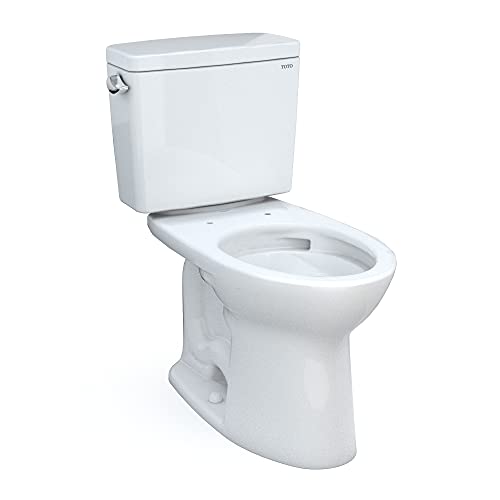
To keep a toilet clean longest, start with a CEFIONTECT-glazed TOTO Drake II or UltraMax II so waste and minerals slide off the porcelain on every flush, then add a continuous in-bowl cleaner like Kaboom Scrub Free to treat the water with each flush, and do a thirty-second weekly wipe before anything is visible. Smooth glaze plus continuous treatment plus early wiping keeps the bowl clean for two weeks or more.
Most people try to extend cleanliness by scrubbing harder, which does nothing about what happens in the days after you clean. The bowl gets dirty between cleans, not during them, so the only way to stay clean longer is to slow what builds in that window. Three mechanisms drive buildup: organic film from bacteria and waste settling on the glaze, mineral deposition from hard water at the waterline, and a pink or black bacterial ring growing in standing water. Each starts slow and accelerates once a starter layer exists, so removing that first thin layer before it bonds is everything. The three-layer system below addresses each mechanism in order.
We do not run our own cleaning trials. We compare published manufacturer specifications, the glaze and surface technology each brand documents, MaP flush-test scores that show how completely a bowl clears and rinses, EPA WaterSense water-efficiency data, the active ingredient and target stain of each continuous cleaner, and the patterns across thousands of verified owner reviews. For the toilets that resist staining best from the start, see our pillar guide to the best flushing toilets.
The practical system runs in order. First, the bowl surface. A smooth, low-porosity glaze with a fully rinsing flush gives organic film and minerals far fewer anchor points. TOTO's CEFIONTECT glaze, documented as an ultra-smooth ceramic layer, leaves pores too small for most particles to settle into, so waste and minerals slide with the flush water rather than bonding. Kohler uses comparable smooth-surface treatment on its Cimarron and Highline Tall models, and American Standard's VorMax bowl geometry is engineered to prevent waste from clinging to the porcelain. These are not marketing claims but verifiable glaze and bowl design choices that change what happens between cleans.
Second, continuous treatment. An in-bowl rim stamp or gel, like Kaboom Scrub Free or Clorox Automatic Toilet Bowl Cleaner, releases a small dose of surfactant and cleaner with each flush, coating the glaze so fresh film and minerals form more slowly. Third, the weekly wipe, a thirty-second brush pass done before any film is visible, removes the starter layer while it is still soft. For the brush that makes this effortless, see our guide to the best toilet brushes of 2026.
Standard ceramic glaze looks smooth but has microscopic pores and surface irregularities that trap waste particles, bacteria and mineral crystals, giving film and rings a place to anchor and grow. Premium glaze treatments address this at the surface level. TOTO's CEFIONTECT, an ion-barrier ceramic coating, creates a surface smoother at the microscopic level than conventional glaze, reducing the physical grip available to organic and mineral deposits. The TOTO Drake II and UltraMax II, two of the most popular mid-range choices with this glaze, draw owner reports across thousands of verified reviews noting the bowl stays clean noticeably longer and wipes down with far less scrubbing. Kohler's ContinuousClean-compatible models and American Standard's EverClean antimicrobial surface treatment pursue the same goal through different surface chemistry.
The real-world implication is that if you are buying a toilet with staying-clean-longer as a priority, the glaze is worth more than the flush style or the tank height. A smooth-glaze bowl paired with a daily wipe keeps the benefit compounding flush after flush for the life of the toilet. A porous standard glaze undermines every other step in the system. If staying clean longer is your goal, spend on the glaze before any other feature.
If you are buying a new toilet specifically to reduce cleaning, choose the glaze before you choose the flush type, the bowl height or the brand aesthetic. A smooth, ion-barrier surface like CEFIONTECT does more for day-to-day cleanliness than any product you pour in, because it changes whether dirt can stick at all rather than trying to remove it after it does. The glaze keeps paying off every flush for the life of the toilet, while most other upgrade features are invisible in daily use within a week of installation.
The mechanism is simple. A rim stamp or in-bowl gel, attached under the rim or sitting in the bowl, releases a measured dose of surfactant and cleaner on every flush. The surfactant coats the glaze surface so fresh organic film and minerals have a harder time settling and bonding. The cleaner conditions the standing water so the pink and black bacterial ring grows more slowly, especially important in low-use bathrooms. The result is a clean bowl that stays clean visibly longer before the next wipe is needed.
The limits matter. A continuous cleaner works on a clean bowl, not a dirty one. If a ring has already set in, the rim stamp will not remove it. And in-tank bleach tablets carry one specific caution: constant bleach exposure can degrade an older rubber flapper and tank seals, so they are better replaced with the bowl-side form in older toilets. The most durable setup is a smooth-glaze bowl plus an in-bowl rim cleaner refreshed every one to two weeks, on top of the weekly thirty-second wipe. For the continuous cleaner and brush picks that support this routine, see the best toilet bowl cleaners of 2026.
MaP testing, conducted by independent laboratories under a standardized protocol using soybean paste at specified gram loads, measures how much solid waste a toilet clears per flush. A score of 800 grams (g) is considered the threshold for residential performance; 1,000 g is the maximum test rating. A high-MaP toilet clears waste completely, removing the residue from the bowl and trap that otherwise becomes the seed of film and odor. Toilets that score 500 g or below frequently need two flushes to clear a full load, doubling the residue exposure.
Beyond raw clearing power, the flush geometry affects the glaze rinse. TOTO's Tornado flush uses two angled nozzles to send water spiraling around the full bowl interior, rinsing the glaze from rim to trap on every flush. American Standard's VorMax channels the full flush volume into a high-velocity scrubbing rinse that specifically targets the bowl sides where film accumulates. These rinsing designs keep the glaze actively washed thousands of times a year, which compounds into measurably less film buildup between cleans. If your current toilet flushes weakly and films up fast, flush power is a real and fixable factor, not just a comfort issue.
Water hardness is measured in grains per gallon (GPG) or milligrams per liter (mg/L). The U.S. Geological Survey classifies water above 7 GPG (120 mg/L) as hard. At those levels, calcium carbonate and magnesium precipitate onto the glaze at the waterline where evaporation concentrates them. In well water, dissolved iron adds orange-brown streaks. Both types of deposit bond to the glaze over days, and the longer they sit, the harder they become, eventually forming a calcified ring that resists even acid cleaners without extended dwell time.
The two-part response is to slow and catch. Slowing means a continuous in-bowl cleaner that coats the glaze so fewer mineral particles settle per flush, and possibly a water softener that removes mineral ions before they reach the bowl. Catching means running an acid descaling cleaner, such as Lime-A-Way or Lysol Lime and Rust Remover, every two to four weeks instead of every one to two months, so the band is thin when you attack it and lifts in a single dwell. A thin deposit takes sixty seconds of dwell and a light scrub; a two-month ring can take multiple treatments over days. For hard-water and rust-specific removers, see our guide to the best bathroom cleaners of 2026.
The three picks below cover the three layers of the system: a bowl surface that resists staining at the porcelain level, a continuous in-bowl cleaner that treats the water on every flush, and an acid descaler for the hard-water tier. Each was chosen by its documented mechanism, target stain, safety profile and aggregated owner experience, not marketing language.
| Product | Role | Best For | Key Active | Septic Safe | Rating |
|---|---|---|---|---|---|
| Kaboom Scrub Free Continuous Cleaner | Continuous in-bowl | Slowing film and mineral buildup | Surfactant + cleaner | Yes | 4.5 |
| Clorox Automatic Toilet Bowl Cleaner | In-tank continuous | Low-use bathroom ring prevention | Bleach + surfactant | As directed | 4.4 |
| Lime-A-Way Toilet Bowl Cleaner | Acid descaling | Hard-water calcium and lime band | Dicarboxylic acid | As directed | 4.6 |
| TOTO Drake II with CEFIONTECT | Low-porosity bowl | Resisting all deposit types | Ion-barrier ceramic glaze | N/A | 4.8 |
| OXO Good Grips Toilet Brush | Weekly wipe tool | Fast pre-grime brush pass | N/A (brush) | N/A | 4.7 |
| Iron OUT Rust Stain Remover | Iron/rust removal | Well-water iron streaks | Sodium hydrosulfite | As directed | 4.6 |
Attaches under the rim and doses the bowl with surfactant on every flush, coating the glaze so organic film and mineral particles have a harder time settling. Owners report the bowl staying visibly cleaner for one to two weeks without additional scrubbing.
Check price on AmazonCEFIONTECT ion-barrier glaze paired with TOTO's Tornado flush means waste and minerals slide off the bowl surface instead of bonding, keeping the glaze visibly clean days longer than a standard porous bowl.
Check price on AmazonAn acid gel that dissolves the calcium and lime band a smooth glaze and continuous cleaner slow but cannot fully stop in hard-water homes. Use it every two to four weeks before the band thickens, alone and never mixed with bleach.
Check price on AmazonProducts and bowl design do the heavy lifting, but the habits that support them decide whether the system actually pays off. None of these takes more than thirty to sixty seconds, and together they separate a bowl that stays clean for two weeks from one that looks gray within three days.
The single most effective habit is a thirty-second brush of the bowl, once a week, done before any grime is visible. A fresh starter deposit lifts in one light pass with no scrubbing. The same deposit left until it shows on the porcelain has already started bonding and needs dwell time and effort. Cleaning a little ahead of the dirt, rather than reacting to it, is the counterintuitive key to spending far less total time on the toilet. For a brush designed to make this thirty-second pass effortless, see the best toilet brushes of 2026.
The water sitting in the bowl is where the pink or black bacterial ring grows, especially in low-use bathrooms. A continuous in-bowl cleaner conditions that water on every flush, and in a rarely used toilet, flushing every few days to refresh the water prevents the ring from establishing and keeps the trap from drying out and releasing sewer odor. The bacterial ring, often Serratia marcescens, is an airborne bacteria that lands in standing water, so keeping the water treated continuously is the only defense that does not require daily scrubbing.
Each flush generates an aerosol plume of microscopic droplets that lands on the seat, lid, handle and the wall behind the toilet within seconds. Closing the lid contains that plume in the bowl. The habit slows how fast the high-touch surfaces around the bowl collect germs and grime between wipes, which means those surfaces stay cleaner longer with less effort. It is a free habit that compounds daily.
Using a bleach gel on a hard-water ring, or an acid cleaner on a bacterial film, wastes effort and leaves the real problem behind. Organic grime and bacterial film need a disinfecting or bleach-based cleaner. Calcium and lime bands need an acid cleaner. Iron and rust streaks need a rust remover. Identifying the stain type before reaching for a product is what makes each clean actually complete the job, rather than partially addressing one problem while missing another.
A splayed or smelly brush smears bacteria around the bowl rather than lifting deposits off it, and a brush stored wet in a sealed cup breeds colonies that re-deposit with each use. Replace the brush roughly every six months and let it air-dry upright in a ventilated holder between uses. A clean brush in good condition makes the weekly thirty-second pass actually effective instead of cosmetically useless.
The habit that changes everything is wiping the bowl before it looks dirty, not after. Almost everyone who says their toilet gets filthy fast is cleaning reactively, waiting until there is a visible ring, by which point the deposit has bonded and the clean is a chore. Flip the sequence: a quick brush once a week on a bowl that still looks fine takes thirty seconds and keeps it that way. Add a continuous cleaner and a smooth-glaze bowl and you will genuinely lose track of the last time scrubbing the toilet felt like work.
The concern that a low-flow toilet cannot rinse the bowl as well as a high-volume older model was reasonable in the 1990s, when the first generation of low-flow toilets often flushed weakly and left residue. Modern EPA WaterSense-certified toilets, such as the TOTO UltraMax II at 1.28 GPF, the Kohler Cimarron at 1.28 GPF, and the Gerber Avalanche at 1.28 GPF, solve this by redesigning the entire flush path to deliver more cleaning energy per gallon rather than simply reducing the volume. Independent MaP testing confirms that the top-scoring WaterSense models clear 800 to 1,000 g of waste per flush, matching or exceeding the performance of older 3.5 GPF toilets that scored far lower on the same test.
The one real tradeoff is that a lower water volume can leave a marginally longer waterline mark in a high-traffic household, because evaporation at a lower water line concentrates minerals in a slightly different spot. This is minor, entirely managed by the continuous cleaner and periodic acid pass, and is no reason to avoid a water-saving toilet that saves roughly 15,000 to 20,000 gallons per year in a family of four. The best modern low-flow bowls with CEFIONTECT or comparable smooth glazes often stay cleaner than the old high-volume toilets they replace, because the glaze does more than the water volume ever did.
Two design details beyond the glaze affect how long a bowl stays clean at the parts you cannot easily see or reach. A fully glazed trapway resists waste adhering inside the trap, keeping the hidden section from harboring buildup and odor that gradually affects how the whole toilet smells between cleans. A rough or unglazed trapway, common in some budget models, collects residue with each flush that slowly degrades the trap and can create smell even when the visible bowl looks clean. When comparing toilets, TOTO, Kohler, American Standard and Woodbridge all offer fully glazed trapways on their mid-range and above models. Gerber's Viper and Avalanche also specify a fully glazed trapway, as does the Swiss Madison St. Tropez.
Bowl shape also matters. A skirted or concealed trapway eliminates the curved ceramic ridge on the outside of the toilet where grime and moisture collect and mold grows, which is a separate cleaning burden from the inside of the bowl. The Woodbridge T-0001 and T-0019 and the Swiss Madison St. Tropez use skirted designs that eliminate this exterior crevice entirely. A rimless or open-rim bowl removes the concealed under-rim channel where traditional bowls accumulate biofilm and minerals that are nearly impossible to reach with a brush. With the whole bowl exposed to the flush and to your brush, nothing hides. For toilet models with these features, the guide to the best drain cleaners of 2026 covers keeping the line past the trap clear so the full system stays fresh.
The table below compares the key staying-clean features of the most relevant toilet models across TOTO, Kohler, American Standard, Woodbridge, Swiss Madison and Gerber so you can see which specs align with each component of the three-layer system.
| Model | Glaze Type | Flush System | MaP Score | GPF | Rimless | Trapway | Check Price |
|---|---|---|---|---|---|---|---|
| TOTO UltraMax II | CEFIONTECT | Tornado | 1,000 g | 1.28 | No | Fully glazed | Check price |
| TOTO Drake II | CEFIONTECT | Tornado | 1,000 g | 1.28 | No | Fully glazed | Check price |
| TOTO Vespin II | CEFIONTECT | Tornado | 1,000 g | 1.28 | No | Fully glazed | Check price |
| Kohler Cimarron | Standard glaze | AquaPiston | 1,000 g | 1.28 | No | Fully glazed | Check price |
| American Standard Champion 4 | EverClean | Champion | 1,000 g | 1.6 | No | Fully glazed | Check price |
| American Standard Cadet 3 | EverClean | Cadet | 800 g | 1.28 | No | Fully glazed | Check price |
| Woodbridge T-0001 | Standard glaze | Dual flush | 800 g | 1.28 / 0.8 | No | Skirted | Check price |
| Swiss Madison St. Tropez | Standard glaze | Single flush | 800 g | 1.28 | No | Skirted | Check price |
| Gerber Avalanche | Standard glaze | Gravity | 1,000 g | 1.28 | No | Fully glazed | Check price |
| Kohler Highline Tall | Standard glaze | AquaPiston | 800 g | 1.28 | No | Fully glazed | Check price |
Reading the table by your priority: if minimizing the time between cleans is the goal, CEFIONTECT glaze plus a 1,000 g MaP score is the most powerful combination, which lands on the TOTO UltraMax II, Drake II and Vespin II. If you prefer a skirted exterior that removes the outside crevice buildup problem, the Woodbridge T-0001 and Swiss Madison St. Tropez trade the premium glaze for a sleaner exterior profile. If flush power is the priority and you do not mind a porous glaze, the American Standard Champion 4 at 1,000 g MaP and 1.6 GPF combines raw clearing strength with EverClean antimicrobial surface treatment. For the full ranking and deep reviews of these models, see the guide to the best flushing toilets.
Combine a smooth, low-porosity glaze with a continuous in-bowl cleaner that treats the water every flush and a thirty-second weekly wipe done before any grime is visible. The glaze gives dirt nothing to grip, the continuous cleaner slows film and mineral buildup, and the early wipe removes the thin starter layer while it is still soft. Together these three layers stretch the clean window from a few days to two weeks or more.
The TOTO UltraMax II and TOTO Drake II with CEFIONTECT glaze are the top choices for staying clean the longest. The CEFIONTECT ion-barrier ceramic coating leaves the surface too smooth for most particles to anchor, and the Tornado flush rinses the entire bowl interior on every flush. Both score 1,000 g on MaP testing and carry a one-year warranty on the toilet with TOTO's CEFIONTECT coverage on the glaze.
Yes. CEFIONTECT is TOTO's ion-barrier ceramic glaze that leaves the surface far less porous than standard glaze, so waste and minerals slide off with the flush water instead of bonding. Owners of CEFIONTECT-glazed models like the Drake II and UltraMax II consistently note the bowl stays clean noticeably longer between cleans and wipes clean far more easily when cleaning is needed.
They genuinely extend the time between full cleans by slowing film and mineral buildup. In-bowl rim stamps and gels coat the glaze and condition the standing water on each flush, keeping a clean bowl cleaner for one to two weeks at a time. They work on a clean bowl, not a dirty one, so use them alongside a smooth glaze and a real weekly wipe rather than as a replacement for cleaning.
In-tank bleach tablets work but carry one specific risk: constant bleach exposure can degrade an older rubber flapper and tank seals over time, leading to a running toilet. They are safer in a newer toilet and best replaced with bowl-side in-rim cleaners that keep the bleach out of the tank. If you use them, check the flapper for swelling or cracks every few months.
Yes. A strong, fully rinsing flush clears waste completely and washes the entire bowl surface on every flush, leaving less residue to build into film. Toilets with high MaP scores, 800 g or above, and rinsing flush designs like TOTO's Tornado or American Standard's VorMax wash the glaze far more thoroughly than an old single-port flush, so deposits have fewer chances to settle and bond between cleans.
Look for a MaP score of 800 g or above for residential use, with 1,000 g being the maximum test rating and the gold standard for staying clean. A 1,000 g MaP score means the toilet cleared the maximum test load in a single flush, leaving no residue in the bowl or trap that could seed future film or odor. Most TOTO, Kohler Cimarron, American Standard Champion 4 and Gerber Avalanche models reach 1,000 g.
That ring is a colony of airborne bacteria, most often Serratia marcescens, that settles in the standing water and at the waterline, especially in humid bathrooms and low-use toilets where the water sits undisturbed. It is not a mineral stain so bleach disinfects it, but a continuous in-bowl cleaner and regular flushing of a rarely used toilet prevent it from establishing in the first place.
Use a continuous in-bowl cleaner to slow mineral settling on the glaze, run an acid descaling cleaner like Lime-A-Way every two to four weeks before the band thickens, and consider a whole-house water softener to remove the calcium and lime at the source. Hard-water deposits are not organic, so a bleach gel does nothing to them. Acid and prevention are the only tools that work.
Yes. Each flush generates an aerosol plume of microscopic droplets that lands on the seat, lid, handle and the wall behind the toilet within seconds of the flush. Closing the lid before flushing contains the plume inside the bowl, slowing how fast the high-touch surfaces around the toilet collect grime and germs. It is a free habit with a real cumulative effect on how long everything around the bowl stays clean.
Modern WaterSense-certified low-flow toilets stay clean as long as older high-volume models and often longer, because today's designs pair 1.28 GPF with engineered rinsing flushes and smoother glazes. The smaller flush volume can leave a slightly longer waterline mark in heavy-use households, but this is minor, managed by a continuous cleaner and periodic acid pass, and far outweighed by the water savings of 15,000 or more gallons per year.
Yes. A rimless or open-rim toilet removes the concealed under-rim channel where traditional bowls accumulate biofilm, mineral deposits and bacteria out of reach of both the flush and your brush. With the entire bowl interior exposed to the flush and to cleaning tools, nothing hides and festers. Rimless designs are among the easiest toilet bowls to keep clean and are worth specifically looking for when buying new.
Refresh an in-bowl rim stamp or gel every one to two weeks, or whenever it has visibly dissolved, to keep the glaze continuously coated and the standing water treated without a gap. Letting the cleaner run out leaves a window where film and bacterial rings can establish. Pair the continuous cleaner with the weekly brush pass rather than relying on it alone, since it slows buildup but does not remove anything that has already set.
Yes, a whole-house water softener is the most effective long-term fix for a hard-water ring. It removes the calcium and lime ions from the supply before they reach the bowl, so the chalky waterline band forms extremely slowly or not at all. With softened water the acid descaling tier of the routine largely disappears. It is an investment, but it keeps every fixture in the house cleaner, not just the toilet.
Yes. A fully glazed, smooth trapway resists waste adhering inside the trap, keeping the hidden part of the toilet from harboring buildup and odor. A rough or unglazed trapway collects residue with each flush that slowly degrades flush performance and contributes to smell even when the visible bowl looks clean. TOTO, Kohler, American Standard, Woodbridge, Swiss Madison and Gerber all specify fully glazed trapways on their mid-range and above models.
Before. A fresh deposit lifts with a light brush in thirty seconds, while the same deposit left until it is visible has already started bonding to the glaze and needs dwell time and scrubbing. Cleaning ahead of the visible dirt, once a week on a bowl that still looks fine, is the counterintuitive key to spending far less total time on the toilet and to the bowl always looking freshly cleaned.
The combination that works best is a CEFIONTECT-glazed TOTO bowl like the Drake II or UltraMax II, a continuous in-bowl cleaner like Kaboom Scrub Free refreshed every one to two weeks, a weekly thirty-second brush pass before grime appears, and an acid cleaner like Lime-A-Way run every two to four weeks in hard-water homes. Layering smooth glaze, continuous treatment and the right cleaners matched to their stain type is what keeps the bowl clean longest.
Yes, a skirted or concealed-trapway toilet like the Woodbridge T-0001 or T-0019 or the Swiss Madison St. Tropez eliminates the curved exterior ridge of a traditional toilet where moisture collects, mold grows and grime builds up in the crevice behind the ceramic. Removing that exterior cleaning burden means fewer surfaces that need regular wiping, which reduces the total time spent keeping the toilet clean.
The main risks in a rarely used toilet are standing water growing a bacterial ring and the trap seal evaporating and releasing sewer odor, not heavy grime. Use a continuous in-bowl cleaner to keep the water treated, flush the toilet every two to three days to refresh the water and refill the trap, and do a quick wipe weekly. A full clean before guests arrive handles the rest, since low traffic means buildup is slow compared to a daily-use bathroom.
Both are surface treatments intended to resist staining, but they work differently. TOTO CEFIONTECT is an ion-barrier ceramic glaze that reduces surface porosity at the microscopic level so particles cannot anchor. American Standard EverClean is an antimicrobial surface treatment that inhibits bacterial and mold growth on the glaze. CEFIONTECT has stronger documented owner evidence for staying clean longer, while EverClean specifically targets microbial ring prevention. Many buyers in hard-water areas find the Champion 4's 1,000 g MaP plus EverClean a strong alternative at a lower price than TOTO.
Keeping a toilet clean longer is a prevention problem, not a scrubbing problem. Build the system in three layers: first, a smooth low-porosity glaze like TOTO CEFIONTECT paired with a 1,000 g MaP flush that rinses the entire bowl on every flush; second, a continuous in-bowl cleaner like Kaboom Scrub Free refreshed every one to two weeks to coat the glaze and condition the standing water; third, a thirty-second brush pass weekly done before any grime is visible. In hard-water homes add an acid descaler like Lime-A-Way every two to four weeks and consider a water softener for the long term. Close the lid before flushing to contain aerosol spray, look for a fully glazed trapway and a rimless or skirted bowl when buying new, and match every cleaner to its stain type rather than reaching for bleach on a mineral ring. Do all three layers together and the time between full cleans stretches from days into two weeks or more with less total effort than reactive scrubbing has ever required.
Clean a toilet fully once a week, wipe the handle and seat with a disinfecting cloth two to three times between weekly…
Read the guide
Orange and rust-brown streaks in a toilet bowl are iron oxide, a mineral deposit that bleach cannot dissolve and often intensifies. This…
Read the guide
The toilet tank sits out of sight and out of mind until the flush goes weak, the bowl develops a mystery ring,…
Read the guide