Whether the supply is cut for a plumbing repair, a municipal shutoff, a burst pipe, or a prolonged emergency, a standard gravity toilet keeps working. Pour water the right way and the bowl clears exactly as it does on a normal flush, no running supply or electricity required. This guide explains every proven method, how much water each takes, which toilet designs make manual flushing easiest, and how to plan so a shutoff never catches your household off guard.
Quick Answer
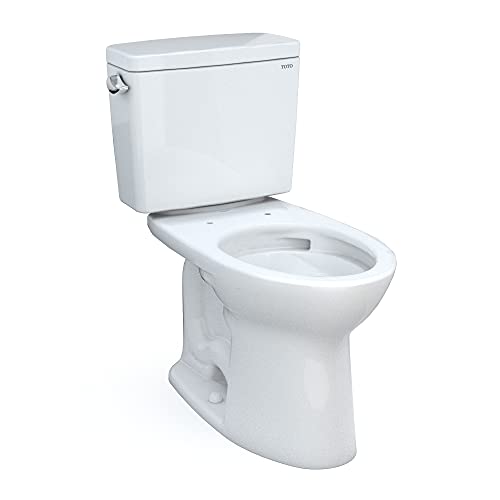
The fastest method is the bucket-pour: fill a bucket with 1 to 1.5 gallons of water and pour it directly into the bowl in one steady motion. The rapid volume fills the trapway, triggers the gravity siphon, and the bowl clears exactly as it does on a normal flush. Modern 1.28 GPF WaterSense toilets like the TOTO Drake II respond reliably on about 1 gallon poured with conviction.
A toilet that will not refill feels alarming the first time it happens, but the mechanics are far simpler than the panic suggests. A standard gravity toilet does not need a pressurized supply line or a full tank to flush. The flush is driven by water weight and the siphon effect in the trapway, not by incoming line pressure. The tank you normally rely on is simply a reservoir that releases its stored water quickly when you press the handle. Supply that same volume of water by hand, either directly into the bowl or by refilling the tank, and the toilet flushes exactly as it always has.
This guide is built the same way we research everything on this site. We do not physically simulate water shutoffs or pour buckets in a test lab. We compare manufacturer published specifications, independent MaP (Maximum Performance) flush-test scores, EPA WaterSense water-use data, and the consistent patterns found across thousands of aggregated owner accounts. That foundation lets us rank these methods reliably, explain the physics behind why each works, and identify which toilet designs handle manual flushing on the least water.
Before anything else: find out why the water is off. If a pipe has burst or a leak is active, close the main household shutoff valve before you do anything else. A shut-off valve turned clockwise stops incoming water and prevents damage. Once the flow is controlled, deal with the toilet. If the outage is planned, fill the bathtub and spare containers ahead of time. Either way, stop pressing the flush handle on an empty tank repeatedly, since it does nothing and adds minor wear to the flush mechanism.
How do you flush a toilet when the water is off?
Fill a bucket with 1 to 1.5 gallons of water and pour it directly into the toilet bowl in a single fast, steady motion from about waist height. The rapid volume fills the trapway, triggers the gravity siphon, and the bowl clears exactly as it does on a normal flush. Pour speed matters as much as volume: a slow trickle will not activate the siphon even if the total water added is correct.
The bucket-pour into the bowl is the fastest and most reliable way to flush when the supply is off. It bypasses the tank entirely and delivers water in the same swift volume that a flushing tank does. Here is exactly how to do it:
Fill a bucket or large pitcher with 1 to 1.5 gallons of water from any available source: a pre-filled bathtub, a rain barrel, a neighboring outdoor spigot, bottled water, dehumidifier output, or stored containers. The water does not need to be potable. Flush water enters the sewer immediately and never re-enters the household supply, so any non-drinking gray water works perfectly.
Step 2: Position yourself close to the bowl
Lift the toilet seat and stand close to the bowl. Plan to pour from about 6 to 12 inches above the rim, not from shoulder height. A low pour delivers momentum without splashing. Aim the stream toward the drain opening at the center-bottom of the bowl so the water drives downward into the trapway rather than swirling at the sides.
Step 3: Pour in one continuous, committed motion
Tilt the bucket and pour the full volume in one smooth stream over about 3 to 5 seconds. Do not start and stop. The siphon needs a rapid rise in water level to fill the trapway and overflow the siphon crest. Commit to a fast, steady pour and you will hear the familiar gurgle and swirl as the siphon activates and the bowl empties. The toilet then settles back to its normal standing water level.
Step 4: Check and repeat if needed
If the bowl drains fully, the flush succeeded. If the water level rose and settled without triggering the siphon, the pour was too slow or the volume was just short. Add a little more water and try again with a faster motion. A properly triggered siphon is unmistakable: the water pulls down quickly in about 3 to 6 seconds and the bowl empties completely.
Tip: pre-fill the bathtub before any scheduled shutoff. A standard bathtub holds 40 to 80 gallons. At 1 to 1.5 gallons per manual flush on a modern WaterSense toilet, one full tub provides 26 to 80 flushes before you run out. Most planned shutoffs last a few hours at most. One pre-filled tub covers a family of four comfortably through any typical repair window.
Can you flush by filling the tank instead of pouring into the bowl?
Yes. Pour water directly into the tank until it reaches the fill line (about 1.28 gallons on a WaterSense toilet), then press the handle as normal. The flush valve opens, the tank water dumps into the bowl, and the siphon activates exactly as in a normal flush. This method is slower to prepare but produces a more controlled, engineered flush, especially on older 1.6 and 3.5 GPF models.
If you prefer the feel of a normal lever flush, or if a direct bowl-pour has not fully cleared a heavy load, refilling the tank manually is an excellent alternative. Remove the tank lid carefully and set it aside on a towel (it is heavy porcelain and cracks if dropped). Pour water into the tank until the level reaches the fill line marked inside, which sits roughly an inch below the top of the overflow tube. On a modern 1.28 GPF toilet that is just over 1 gallon. Replace the lid, press the handle, and the flush valve lifts to release the water in the controlled way the toilet was engineered for.
The tank-fill method has a real advantage on older higher-GPF toilets. Bowls designed around a 1.6 or 3.5 GPF tank dump depend on that full volume arriving through the flush valve at once. A direct bowl-pour sometimes does not replicate that exact hydraulic pattern as precisely, so refilling the tank and flushing with the handle produces a cleaner, fuller flush on those designs. On modern 1.28 GPF gravity toilets from TOTO, Kohler, American Standard, Woodbridge, Swiss Madison, and Gerber, the direct bowl-pour is generally just as effective and faster. Use whichever method works better on your specific toilet model.
How much water does a manual toilet flush actually need?
A modern 1.28 GPF EPA WaterSense toilet needs approximately 1 to 1.5 gallons poured into the bowl to reliably trigger the siphon. Older 1.6 GPF toilets want about 1.5 gallons, and pre-1994 3.5 GPF toilets may need 2 gallons or more. Pour speed allows you to flush slightly under the rated volume on efficient models. This difference is significant during an extended outage where every stored gallon counts.
The water required per manual flush is directly tied to the toilet's designed GPF rating and the efficiency of its trapway geometry. Modern EPA WaterSense certified toilets are specifically engineered to clear a full bowl on 1.28 gallons, which means each manual flush costs you 1 to 1.5 gallons of your stored supply. Older 3.5 GPF toilets may need double that, cutting your available flushes in half from the same bathtub reserve. The table below shows how this math works across common toilet types:
The data shows why a modern 1.28 GPF WaterSense toilet is a genuine advantage during any outage. If your home has a mix of toilet ages, prioritize the efficient ones during an outage and use older models only for minimal liquid-only flushes. A 3.5 GPF toilet in a guest bath burning through your stored bathtub water two gallons at a time will exhaust your supply much faster than the kitchen toilet at 1.28 GPF.
What water sources work for flushing during a shutoff?
Any non-potable water source works for manual flushing: pre-filled bathtubs, rain barrels, pool or hot-tub water, dehumidifier condensate, water saved from cooking, and melted snow. Toilet flush water enters the sewer directly and never re-enters the household supply, so it does not need to be drinkable. Reserve clean drinking water for drinking and hygiene only.
One of the most practical facts about manual flushing is that the water needs no treatment, filtration, or purity standard. It goes directly into the bowl and immediately into the sewer or septic system. This frees you to draw from any available water source without touching your drinking supply. Here are the best options ranked by volume and practicality:
Pre-filled bathtub (best for planned shutoffs)
A standard bathtub filled to the rim holds 40 to 80 gallons. A shutoff you know about in advance gives you time to fill it the night before or the morning of the work. One full tub provides well over 30 flushes on a modern WaterSense toilet, enough for most families through a half-day or full-day outage. This is the simplest and highest-volume approach for any scheduled plumbing work, meter replacement, or municipal maintenance window.
5-gallon buckets and storage containers
Clean 5-gallon buckets, food-grade water containers, or plastic storage bins filled in advance and stored near each bathroom give you a portable, distributed water reserve. At roughly 1.5 gallons per flush, a single 5-gallon bucket provides 3 flushes, so a few buckets per bathroom covers most shutoffs without anyone having to carry water from across the house.
Rain barrels
A 55-gallon rain barrel connected to a downspout diverter is a passive, self-refilling emergency supply. Rainwater is ideal for flushing and costs nothing to collect. Even a modest rainfall fills a 55-gallon barrel completely. Households in areas prone to municipal shutoffs or seasonal storms benefit from keeping a barrel in place year-round as standing outage insurance.
Pool or hot-tub water
A backyard swimming pool contains thousands of gallons, making it an effectively unlimited flushing reserve during any residential outage. Carry water from the pool by bucket (about 1.5 gallons per trip) rather than trying to run a pump line. The chlorine in pool water has no effect on the toilet and goes straight to the sewer where it is neutralized at the treatment plant.
Dehumidifier condensate and appliance water
A whole-house or portable dehumidifier produces distilled condensate water continuously. In humid climates this can reach several gallons per day. The output is mineral-free and completely odorless, making it an excellent passive flush reservoir that accumulates on its own. Drain pan water from an air conditioner and the final rinse water from a washing machine cycle are similarly suitable.
Melted snow and ice
In winter outages, snow and ice are abundant water sources that cost nothing to collect. Melt them indoors in a large pot, strain out any debris, and use the melt water for flushing. A 5-gallon bucket of compacted snow yields roughly 0.5 to 1 gallon of water depending on snow density, so collect more than you think you need. This source works reliably in cold-weather outages when other supplies may be frozen.
Editorial Take
The households that manage a water outage with no stress are the ones that separated their water mentally before the shutoff happened. Clean water for drinking, gray water for flushing, and a container next to each toilet. That is the whole system. A full bathtub and three 5-gallon buckets handles 90 percent of residential shutoffs without anyone needing to ration carefully. The 10 percent that require real rationing are multi-day emergencies where a high-MaP WaterSense toilet genuinely stretches your stored supply further than an old 3.5 GPF model can.
Which toilet design makes manual flushing easiest?
A gravity-flush toilet with a high MaP score of 800 grams or more and EPA WaterSense certification at 1.28 GPF is the easiest toilet to flush manually. High-MaP models trigger reliably on a smaller, faster pour because their trapway geometry is optimized for clearing maximum waste on minimum water. The TOTO Drake II and Gerber Viper (both 1,000 gram MaP at 1.28 GPF) are top examples.
Not all toilets respond equally well to a bucket-pour. The key variable is how the toilet's hydraulic design handles the incoming water. A toilet with a high MaP score achieved that rating by moving a large mass of waste on its rated water volume. That same engineering makes the bowl respond quickly and completely to a bucket-pour: less water required, siphon activates faster, bowl clears more reliably. A low-MaP toilet may still flush manually, but it often needs a larger pour, a faster technique, or both, which burns through stored water faster.
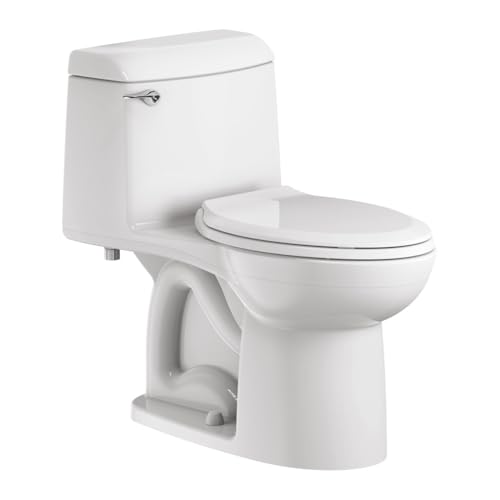
Gravity-flush two-piece toilets with wide, fully glazed trapways at 2 inches or larger are the most reliable manual-flush performers across published specifications and aggregated owner reports. The TOTO Drake II has earned a 1,000 gram MaP rating at 1.28 GPF through TOTO's Double Cyclone rim-wash and siphon jet design. The American Standard Champion 4 pairs a 2-3/8 inch glazed trapway with a 1,000 gram MaP score and an oversized 3-inch flush valve. The Kohler Cimarron's AquaPiston canister allows 360-degree water entry around the flush valve, producing a fast, full tank dump that triggers the siphon cleanly from a tank refill. For a full comparison of the strongest-flushing models, see our roundup of the best flushing toilets.
Toilet bowl shape plays a minor but real role. An elongated bowl has a slightly larger water surface and a wider drain approach, which catches a poured stream more easily than a round bowl's narrower target. For households with seniors or anyone with mobility limitations, a comfort-height elongated bowl also makes the bucket carry easier since you are pouring from a standing position rather than bending to a low bowl. Our guide to the best toilets for seniors covers comfort-height models that combine accessibility with strong flush efficiency.
Does a pressure-assist or smart toilet flush during a water shutoff?
A pressure-assist toilet will not flush manually the same way a gravity toilet does. It relies on incoming supply pressure to charge its sealed internal canister, and a shutoff removes that pressure. A smart toilet's electronic functions (bidet, auto-flush, deodorizer) also require both water and electricity. Standard gravity toilets are the most outage-resilient option because they flush on any bucket of water with no pressure or power.
This distinction matters more than most buyers realize until they face an outage. A pressure-assist toilet, such as a Flushmate-equipped model, works by using water-line pressure to compress air inside a sealed inner tank. That pressurized air then releases explosively through the bowl on every flush for a very forceful clearing. When the supply is off, the pressurized charge depletes after one or two handle presses and cannot recharge until supply returns. Pouring a bucket into a pressure-assist bowl does not trigger the pressurized flush, and may only produce a partial clearing since the bowl geometry was designed around the pressure system rather than a simple gravity pour.
Electric and smart toilets face the same limitation plus a power dependency. Kohler Veil, TOTO Neorest, and Swiss Madison bidet-integrated smart toilets all need both electricity and water supply for most functions. A combined power-and-water outage, which commonly happens during storms, renders these models largely inoperable. For families in regions prone to storm outages, well-pump failures, or frequent utility interruptions, a straightforward gravity toilet is the resilient choice. Our comparison of gravity flush versus pressure-assist toilets covers the full tradeoffs if you are deciding between systems for a new installation.
How do you prepare for a planned water shutoff?
Before a scheduled shutoff, fill the bathtub and any large containers, do a final flush on each toilet to use the existing tank water, place a dedicated bucket next to each bathroom toilet, and post a note reminding household members to use the bucket instead of the handle. This ten-minute preparation covers most shutoffs of any length without rationing.
A scheduled shutoff, such as a meter replacement, a city main repair, or planned plumbing work, gives you advance notice to prepare. Here is the complete preparation sequence:
The night before or morning of the shutoff
Fill the bathtub to the rim with water. Fill any 5-gallon buckets, large pots, or storage containers you have available. Place a 1.5 to 2-gallon bucket or pitcher next to each toilet in the house you plan to use during the shutoff. Having water at the point of use is far more convenient than carrying a heavy bucket from another room for every flush, especially for children, elderly household members, or anyone with limited mobility.
Right before or just after the shutoff begins
Press the flush handle on each toilet once. This uses the tank water already stored for a normal flush and leaves the tank empty. An empty tank prevents the accidental overflow that can happen if someone presses the handle by habit thinking the water will return. Some households prefer to leave a small amount of water in each tank so the tank-refill method is also available, which is equally valid.
Post a visible reminder
Leave a note on each toilet lid: "Water is off, use the bucket." This prevents confusion, especially for visitors, young children, or anyone who shares the home and may not know about the shutoff. An accidental handle press on an empty tank is harmless, but the reminder prevents wasted bucket water on failed handle presses and reduces anxiety in the household.
Know your shutoff valve location
If the utility crew is working externally you typically need to do nothing to your interior valves. But if the shutoff is caused by an interior leak or burst pipe, locate your home's main shutoff valve, usually near where the main supply line enters the house or near the water meter, and know that turning it fully clockwise closes the supply. This knowledge stops leaks fast when seconds matter.
Editorial Take
The ten-minute preparation routine covers the vast majority of planned shutoffs without any stress or rationing. The single step most households skip is placing a dedicated container next to each toilet, and that one omission turns a seamless process into an annoyance of carrying heavy buckets across the house repeatedly. A 1.5-gallon pitcher stored under the bathroom sink costs almost nothing and makes manual flushing feel completely normal. Families with large households or seniors will especially notice the difference. See our guide on best toilets for large families for high-use, low-clog models that also flush efficiently on minimal water during shutoffs.
What is the full sequence for flushing during a water outage?
Here is the complete order of operations, from the free flush you already have stored to long-term rationing strategies for an extended emergency. Work through it in sequence: use the easiest, cheapest water source first and escalate only as the outage extends.
Step 1: Use the free tank flush first
Your tank holds one full flush of clean water from before the supply shut off. Press the handle once and use that stored water before reaching for a bucket. This free flush is the easiest one you have, and many people waste it by going straight to the bucket without checking the tank first.
Step 2: Sort your water by quality
Designate your cleanest drinking water for drinking and hygiene only. Use gray water, bathtub water, rainwater, pool water, or appliance water for every toilet flush. Keeping these two categories separate means you conserve your drinkable supply without using it for sanitation.
Step 3: Choose bowl-pour or tank-refill based on your toilet
For any modern 1.28 GPF gravity toilet, pour directly into the bowl for the fastest flush on the least water. For an older 1.6 or 3.5 GPF toilet, or when a bowl-pour has not fully cleared a solid load, refill the tank to the marked fill line and flush with the handle to use the toilet's engineered flush mechanism.
Step 4: Pour fast, aim center, commit to one motion
Dump a full 1 to 1.5 gallons in one smooth, fast pour aimed at the drain center. The speed is what triggers the siphon. A slow trickle will not flush regardless of volume. Commit to one quick motion and the bowl will clear. A second pour immediately after the first can complete the flush if the siphon started but did not fully drain.
Step 5: Ration during a long outage
For a multi-day outage, use smaller pours (0.8 to 1 gallon) for liquid-only flushes on high-efficiency toilets that trigger easily, and save full 1.5-gallon pours for solid waste. This can cut your total water consumption by 30 to 40 percent per day without any real inconvenience. Coordinate with other household members so everyone follows the same approach.
Step 6: Emergency alternatives if water runs very low
If stored water runs critically low during a very extended outage, camping-style portable toilets, heavy-duty compostable waste bags designed for emergency use, or outdoor facilities can serve as a temporary backup. These are last-resort options for true emergencies, not necessary for a typical same-day or next-day shutoff.
Which toilet uses the least water per manual flush?
Ultra-high-efficiency toilets rated at 0.8 GPF, such as certain TOTO Entrada or Cadet 3 configurations, need the least water per flush. Among mainstream models, the TOTO Drake II at 1.28 GPF and 1,000 grams MaP, the Gerber Viper at 1.28 GPF and 1,000 grams MaP, and the Kohler Cimarron at 1.28 GPF and 800 grams MaP all clear a full load on about 1 gallon of manual pour water.
Choosing a toilet partly for outage efficiency is a sound long-term decision. The toilet that uses the least water on a normal flush also needs the least water on a manual pour, so every stored gallon stretches further. The toilets below are top performers on water efficiency combined with clearing power, which is the combination that matters most when you are working from a bucket. For a full ranked list see our guide to the best toilets of 2026 for every bathroom type and our specific comparison of efficient models at the best toilets for home daily use.
Best for Outage Efficiency
TOTO Drake II Two-Piece
1,000 g MaP at 1.28 GPF
4.7
The Drake II earns a perfect 1,000 gram MaP score at 1.28 GPF through TOTO's Double Cyclone rim-and-siphon-jet design, triggering its siphon on about 1 gallon of bucket water and leaving very little water needed per manual flush during an outage.
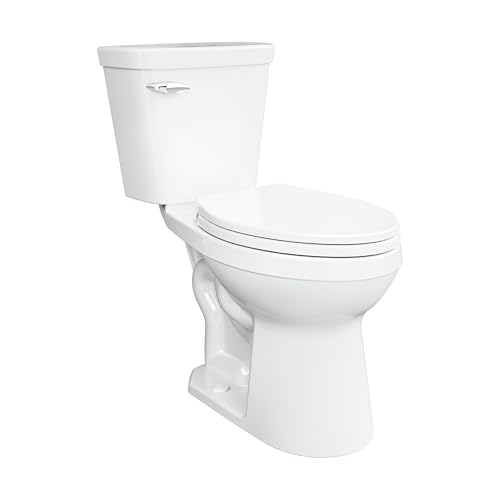
The Viper achieves a 1,000 gram MaP rating at 1.28 GPF at a much lower price than TOTO, delivering the same reliable siphon activation on a 1-gallon bucket-pour with no pressure system that can fail during an outage.
The Cimarron's 360-degree AquaPiston canister allows water to enter the bowl from all sides simultaneously, so a tank refill produces an even, fast flush and the bowl clears cleanly on 1.28 gallons poured with standard technique.
Most people never shop for a toilet with outage readiness in mind, yet the toilet choice makes a real difference once you are working from a stored bathtub. A 1,000 gram MaP toilet at 1.28 GPF flushes on roughly half the water of a pre-1994 3.5 GPF model, which doubles the number of flushes you get from the same reserve. That efficiency pays off every single day on the water bill too. If you are replacing a toilet in a home with aging supply lines, a well pump, or storm risk, a high-MaP gravity model like the Drake II or Gerber Viper is the most outage-resilient fixture you can install. Pressure-assist and smart toilets have their strengths, but a bucket flush is not one of them.
How do you handle a multi-day water outage?
A same-day shutoff is trivially managed with a pre-filled bathtub. A multi-day emergency caused by a major main break, a storm, a well-pump failure, or a disaster requires a more deliberate strategy. Here is how to extend your flushing supply across multiple days without running out or compromising hygiene.
Tiered flushing based on waste type
For liquid-only waste on a modern WaterSense toilet, 0.8 to 1 gallon is often enough to trigger the siphon since liquid waste offers almost no resistance to the trapway. Reserve 1.5-gallon pours for solid waste. Over a typical household day, this saves roughly 0.5 gallons per flush on liquid visits, which accumulates to several gallons of water saved across a family of four.
Coordinate household flushing habits
During a genuine water emergency, the classic water-saving principle of not flushing every single liquid-waste visit is medically safe and dramatically reduces total consumption. Post a shared household rule and make sure everyone understands it. Clear communication prevents wasted bucket water and reduces friction when water is tight.
Establish an emergency water collection routine
Place buckets outside to collect rain if the weather allows, drain the water heater tank (which typically holds 40 to 80 gallons of hot water accessible via the drain valve at its base), and use any water displaced by melting snow or ice. A hot water heater drain is a resource many households overlook: that stored water is clean enough for flushing for weeks.
Know when to use alternatives
If an outage extends beyond 3 to 5 days and stored water becomes critical, portable camping toilets with waste bags, chemical portable toilet units, or properly managed outdoor sanitation are legitimate alternatives. These are standard emergency preparedness options, not shameful last resorts. FEMA and CDC emergency guidelines both recommend having portable sanitation backup for extended water emergencies.
FAQ
Frequently asked questions
? How do you flush a toilet when the water is off?
Fill a bucket with 1 to 1.5 gallons of water and pour it directly into the bowl in one fast, steady motion from waist height. The rapid volume fills the trapway, triggers the gravity siphon, and the bowl clears exactly as it does on a normal flush. Pour speed matters as much as volume: a slow trickle will not activate the siphon even if the total water added is correct.
? Can you flush a toilet without running water?
Yes. A standard gravity toilet does not need a pressurized supply line to flush. The flush is driven by the weight of water in the trapway and the resulting siphon effect, not by line pressure. A bucket of water poured into the bowl or the tank triggers the same process the stored tank water does on a normal flush.
? How much water do you need to manually flush a toilet?
A modern 1.28 GPF WaterSense toilet needs approximately 1 to 1.5 gallons poured into the bowl to reliably trigger the siphon. Older 1.6 GPF toilets need about 1.5 gallons, and pre-1994 3.5 GPF models may need 2 gallons or more. Pouring quickly lets you flush on slightly less than the rated volume on efficient models.
? Should you pour water into the bowl or the tank?
Either works. Pouring into the bowl is faster and uses slightly less water on modern high-efficiency toilets. Filling the tank to the fill line and pressing the handle produces a more controlled, engineered flush that clears better on older 1.6 and 3.5 GPF models. If a bowl-pour does not fully clear a heavy load, switch to the tank-refill method.
? Can I use the water already in the tank?
Yes, and you should use it first. When the water shuts off, the tank holds the full amount from its last refill, which is one complete flush ready to go. Press the handle once for a normal flush at no cost before reaching for a bucket. After that single free flush the tank will not refill until the supply returns.
? What kind of water can I use to flush a toilet during an outage?
Any non-potable gray water works: bathtub water, rainwater, pool or hot-tub water, dehumidifier condensate, water saved from cooking or dishwashing, and melted snow or ice. Flush water enters the sewer immediately and never re-enters the household supply, so it needs no treatment or purity standard. Reserve clean drinking water for drinking and hygiene.
? Why does my toilet not flush even when I pour water in?
Almost always the pour is too slow. A trickle raises the water level gradually without filling the trapway fast enough to start the siphon. Dump a full 1 to 1.5 gallons quickly in one committed motion aimed at the drain center. The speed is what triggers the flush. A second fast pour immediately after the first can complete the siphon if it started but did not fully drain.
? How many flushes can I get from a full bathtub?
A standard bathtub holds 40 to 80 gallons depending on size. At 1 to 1.5 gallons per manual flush on a modern 1.28 GPF toilet, one full tub provides roughly 26 to 80 flushes. For a family of four using the bathroom normally, that covers most planned shutoffs of a day or more with water left over.
? Is it safe to flush a toilet manually during a water shutoff?
Completely safe for both the toilet and the plumbing. The bowl, trapway, and drain are passive components that respond to water from any source. A bucket-pour uses the same drain path as a tank flush and causes no damage to the toilet, the seals, or the downstream plumbing. The one exception is an active sewer backup, where flushing pushes waste back up through lower drain points.
? Will pressing the flush handle when the tank is empty damage anything?
No, but it accomplishes nothing. Pressing the handle on an empty tank simply lifts the flapper briefly and releases no water. The mechanism suffers minimal wear from repeated dry trips, but nothing breaks. It is better to refill the tank or pour into the bowl rather than cycling the handle repeatedly on an empty tank.
? Can you flush a pressure-assist toilet during a water shutoff?
Not reliably in the same way as a gravity toilet. Pressure-assist models use incoming water-line pressure to charge a sealed internal canister. When supply is off, that charge depletes after one or two normal flushes and cannot recharge. A bucket poured into a pressure-assist bowl may produce a partial flush but not the forceful pressurized clearing the design relies on.
? What happens to a smart toilet during a power and water outage?
Smart toilet electronics, including the bidet seat, auto-flush, warm air dry, and deodorizer, all require electricity and water supply to operate. During a combined outage the electronic functions go offline. The core bowl, however, is still a gravity flush that responds to a bucket-pour just like any standard toilet, so basic flushing is still possible.
? How do I make a limited water supply last as long as possible?
Use smaller pours of 0.8 to 1 gallon for liquid-only flushes and save full 1.5-gallon pours for solid waste. Use gray water for every flush, keeping clean water only for drinking. A modern WaterSense toilet stretches each stored gallon further than an older high-GPF model. If the outage is extended, coordinate household flush habits to reduce total daily flushing.
? Can I use pool water or rainwater to flush a toilet?
Yes. Pool water, rainwater, pond water, and collected meltwater are all excellent flush water sources. Strain out any large debris so it does not enter the trapway, but no other treatment is needed. Pool chlorine is neutralized at the sewage treatment plant. These sources stretch your clean water reserve and are the right first choice for flush water during any outage.
? What should I do when the water comes back on after a shutoff?
Turn the supply shutoff valve counterclockwise to restore water. The fill valve will open, refill the tank to the marked level, and shut off automatically. You may hear air spitting from the fill valve briefly as the line repressurizes, which is normal. Run the tap in a nearby sink for a moment to clear any sediment before relying on the toilet fully. No other adjustments are needed.
? Does a WaterSense toilet make outages easier to manage?
Yes. An EPA WaterSense toilet at 1.28 GPF or less clears a full bowl on roughly half the water of a pre-1994 3.5 GPF toilet, which means each manual flush costs less stored water and your reserve lasts significantly longer. A high MaP score confirms it still clears waste in one flush at that volume, so you do not waste water double-flushing.
? How do I prepare for a planned water shutoff?
Fill the bathtub and spare containers the night before or the morning of the shutoff. Press the flush handle on each toilet once to use the stored tank water as a free final flush. Place a 1.5-gallon bucket or pitcher next to each bathroom toilet. Post a reminder note on each toilet lid for household members. This preparation takes about ten minutes and covers most shutoffs of any typical length.
? Is a gravity toilet or pressure-assist better for outage resilience?
A gravity toilet is significantly more resilient. Gravity toilets flush on any bucket of water with no electricity and no supply pressure. Pressure-assist toilets lose their forceful flush after one or two uses without supply pressure and are difficult to flush manually. For households in outage-prone areas, a high-MaP gravity toilet is the more dependable choice by a large margin.
? Can I use water from a hot water heater tank during an outage?
Yes. A residential hot water heater tank holds 40 to 80 gallons of stored water accessible via the drain valve at the bottom of the tank. This water is suitable for toilet flushing. Attach a garden hose to the drain valve and direct it into buckets. This source is often overlooked but represents a large, already-stored water supply for sanitation use during extended outages.
Manufacturer published specifications (TOTO, Kohler, American Standard)
Our Verdict
Flushing a toilet with the water off requires nothing more than 1 to 1.5 gallons of water poured quickly into the bowl or used to refill the tank. Use the free tank flush first, then pour gray water from the bathtub, rain barrel, or pool for every subsequent flush, and keep drinking water separate. Pour fast to trigger the siphon, ration on liquid-only flushes during extended outages, and the toilet stays fully functional. The most outage-resilient fixture is a gravity-flush toilet with a high MaP score and a 1.28 GPF WaterSense rating: the TOTO Drake II, Gerber Viper, and Kohler Cimarron all clear a full bowl on about 1 gallon of poured water, stretch stored water further than older high-GPF designs, and require no pressure or power to flush reliably.
Nadia tracks EPA WaterSense certification, GPF and long-term water-saving performance, focusing on fixtures that cut water use without sacrificing flush power. All findings come from published efficiency data and verified owner reviews, not lab testing.
Updated August 2026 · Toilets
Keep reading
Related guides
Why Toilet Trapways Are Curved Like an S
Toilets
4.6
Learn why toilet trapways curve like an S, how each bend blocks sewer gas, and what the shape means for clogs and…