

Best French Toilets (2026)
Toilets4.6
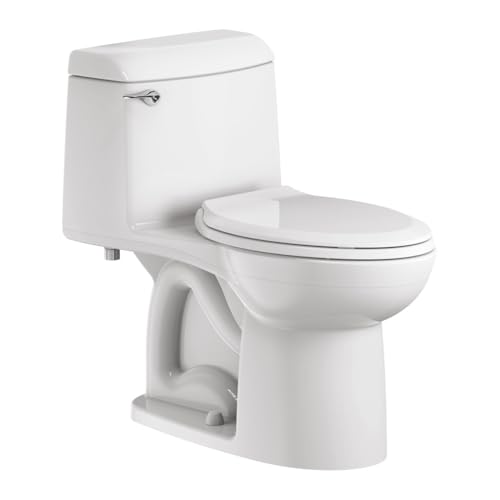
Refined, softly curved one-piece and skirted silhouettes with a polished, Parisian-elegant profile, paired with verified MaP flush scores rather than a stylist's…
Read the guideIf the water in your toilet bowl rises to the brim and then drains at a crawl, you are dealing with a partial clog or a venting issue. This guide explains exactly what causes the problem and how to fix it without calling a plumber.
Research updated June 2026.
Water that rises high and drains slowly is almost always a partial obstruction in the toilet trap or waste line. The most common causes are a clogged trap, a blocked vent pipe, or a failing flush valve. Most homeowners can clear it with a plunger, closet auger, or by checking the vent. If the problem returns, the toilet or drain line may need professional attention.
The most common cause is a partial clog in the trapway or the drain line beyond the toilet. When you flush, water cannot exit fast enough, so it backs up into the bowl. A blocked vent pipe can also create a vacuum that slows drainage. Less common causes include a worn flapper that lets water trickle in, or a buildup of mineral deposits in the trap.
When you flush a toilet, the siphonic action pulls waste and water from the bowl through the trapway and into the drain. If anything restricts that flow, water rises in the bowl until the siphonic action breaks, then it drains slowly. The severity of the clog determines how high the water rises and how long it takes to drain.
Partial clogs are often caused by too much toilet paper, flushable wipes that don't actually break down, or foreign objects like a child's toy. Over time, mineral scale from hard water can narrow the trapway, especially in older homes. If the problem happens with every flush, suspect a vent blockage or a main line issue.
Most homeowners mistake a slow-draining toilet for a main sewer line clog. A true main line clog usually affects multiple fixtures (sinks, showers, other toilets). If only one toilet has the rising water problem, the issue is almost certainly in that toilet's trap or the branch drain immediately below it.
Start with a plunger designed for toilets (with a flange). Create a good seal and push firmly, then pull back sharply. If that fails, use a closet auger to break up or retrieve the clog inside the trap. If the problem persists, check the vent pipe on your roof for blockages. For stubborn mineral buildup, a vinegar soak or professional descaling may be needed.
Here is the step-by-step approach that resolves 90 percent of slow-draining toilets:
Use a flange plunger, not a flat sink plunger. Push the flange into the toilet drain opening to create a seal. Push down slowly to force water into the drain, then pull up sharply. Repeat 10 to 15 times. If water drains freely after plunging, the clog was loose material. If the water still rises and drains slowly, move to the next step.
A closet auger is a flexible cable with a crank handle designed to navigate the toilet trap. Insert the auger into the bowl opening and crank while pushing forward. When you feel resistance, you have reached the clog. Crank gently to break it up or hook it. Pull the auger out slowly. Flush to test.
A blocked vent pipe prevents air from entering the drain system, which slows drainage. Go onto your roof and locate the vent pipe (a plastic or cast-iron pipe sticking up). Shine a flashlight inside. If you see debris, nests, or ice, clear it with a plumber's snake or a garden hose. If you cannot reach it safely, call a professional.
If plunging and augering fail, the clog may be lodged in the toilet's internal trap. Shut off the water supply, flush to empty the tank, and sponge out the bowl. Unbolt the toilet from the floor, lift it, and set it on its side. Use a wire hanger or auger to clear the trap from the bottom. This is also a good time to check for mineral buildup.
Never use chemical drain cleaners in a toilet. The chemicals generate heat that can crack the porcelain or damage the wax ring. They also rarely dissolve the clog because the water in the bowl dilutes them. Stick to mechanical methods.
Toilets with large trapways (2-1/8 inches or wider) and high MaP scores (800 grams or above) are least likely to clog and drain slowly. Models like the TOTO Drake II, American Standard Champion 4, and Kohler Highline are designed with wider passages and powerful siphonic action that clear waste quickly.
If you are shopping for a new toilet to avoid slow drainage issues, focus on three specs: trapway diameter, MaP score, and flush type. Gravity-fed toilets with a 3-inch flush valve and a 2-1/8-inch trapway are the gold standard. Pressure-assisted toilets are also very clog-resistant but are louder and more expensive.
| Model | MaP Score | GPF | Flush Type | Trapway | Height | Best For | Check Price |
|---|---|---|---|---|---|---|---|
| TOTO Drake II | 1000g | 1.28 | Gravity (Tornado) | 2-1/8" | 16-1/8" | Overall reliability | Check price |
| American Standard Champion 4 | 1000g | 1.28 | Gravity (PowerWash) | 2-3/8" | 16-1/2" | Clog resistance | Check price |
| Kohler Highline | 900g | 1.28 | Gravity (Class Five) | 2-1/8" | 16-1/2" | Value and performance | Check price |
| Woodbridge T-0001 | 800g | 1.28 | Gravity (Dual flush) | 2-1/8" | 16-1/2" | Dual flush efficiency | Check price |
| Gerber Viper | 800g | 1.28 | Gravity (Vortex) | 2" | 16-1/2" | Budget-friendly | Check price |
The TOTO Drake II uses the Tornado flush system, which uses two nozzles to create a centrifugal rinse that clears the bowl without a large water spot. Its 2-1/8-inch trapway and 3-inch flush valve make it one of the most clog-resistant toilets on the market. The American Standard Champion 4 has an even wider trapway at 2-3/8 inches and a 4-inch flush valve, making it nearly impossible to clog with normal use.
If you already own a toilet that clogs frequently, you can improve its performance by upgrading to a 3-inch flush valve kit or switching to a pressure-assisted flush system. However, these modifications are not always compatible with every toilet model.
MaP (Maximum Performance) testing is the industry standard for measuring a toilet's ability to clear waste. A score of 800 grams or higher means the toilet can flush a load equivalent to a full day's waste for an adult. Toilets that score 1000 grams are essentially clog-proof under normal household use.
No, a bad flapper or fill valve does not cause water to rise and drain slowly. Those parts affect how the tank fills and how much water is released, but they do not restrict the flow of waste through the trapway. However, a flapper that leaks can cause continuous trickling, which may make the bowl appear to drain slowly because fresh water is constantly entering.
If your toilet runs intermittently or the bowl water level seems to change without flushing, check the flapper. A worn flapper allows water to seep from the tank into the bowl, raising the water level slightly. This can make it look like the water is draining slowly when it is actually being replenished. Replace the flapper if it is cracked or warped.
The fill valve controls the tank refill after a flush. If it is faulty, the tank may not fill completely, resulting in a weak flush. A weak flush can mimic a slow drain because there is not enough water volume to push waste through the trap. Adjust the fill valve to ensure the tank fills to the correct water level mark inside the tank.
Call a plumber if you have plunged and augered without success, if multiple fixtures are draining slowly, or if you suspect a blocked main sewer line. Also call if you see sewage backing up into other drains, hear gurgling sounds from sinks or showers when you flush, or notice foul odors coming from drains.
These symptoms point to a blockage in the main sewer line, which requires professional equipment like a motorized auger or hydro-jetting. A plumber can also use a camera to inspect the drain line for tree root intrusion, collapsed pipe, or severe scale buildup. Do not attempt to clear a main line clog yourself; it is messy and dangerous.
If the problem is isolated to one toilet and mechanical methods have failed, the issue may be a foreign object lodged deep in the trap. A plumber can remove the toilet and clear the obstruction quickly. The cost of a service call is usually worth the time and frustration saved.
This is caused by a partial clog in the toilet trap or drain line. The water cannot exit fast enough, so it backs up into the bowl before slowly draining.
Yes. A blocked vent pipe prevents air from entering the drain system, creating a vacuum that slows drainage. This often affects multiple fixtures.
A flange plunger with a rubber flap that extends into the toilet drain opening. This creates a better seal than a flat sink plunger.
Insert the auger into the bowl opening, crank the handle while pushing forward, and gently break up or hook the clog. Pull the auger out slowly and flush.
No. Chemical drain cleaners can damage porcelain and rarely dissolve clogs in toilets. Mechanical methods like plunging or augering are safer and more effective.
Yes. Excessive toilet paper is the most common cause of partial clogs. Flush multiple times if needed, or use less paper per flush.
No. Despite being labeled flushable, most wipes do not break down quickly and can cause clogs. Dispose of them in the trash.
If only one toilet is affected, the clog is in that toilet or its branch drain. If multiple fixtures are slow or backing up, the main sewer line is likely blocked.
MaP stands for Maximum Performance. It measures how many grams of waste a toilet can flush. A score of 800g or higher indicates strong clog resistance.
Yes. Mineral deposits can build up inside the trapway over time, narrowing the passage and slowing drainage. Descaling with vinegar can help.
Only if mechanical clearing fails and the toilet is old or has a narrow trapway. Modern toilets with wider trapways and higher MaP scores are much more reliable.
Expect to pay between $100 and $300 for a standard service call. Main line clogs can cost $300 to $600 or more depending on the severity.
Yes. A failing flush valve, low tank water level, or blocked vent can cause slow drainage without a physical clog in the trap.
Toilets with a 3-inch flush valve and a 2-1/8-inch or larger trapway, such as the TOTO Drake II or American Standard Champion 4, are the most reliable.
Toilet water that rises and drains slowly is almost always a partial clog that you can fix yourself with a plunger or closet auger. If the problem persists, check the vent pipe or consider upgrading to a toilet with a wider trapway and a high MaP score. The TOTO Drake II and American Standard Champion 4 are the most reliable choices for avoiding slow drainage issues. For recurring problems, call a plumber to inspect the main line.
How we rank & our data sources
We do not run physical lab tests. Rankings are built from published, verifiable data and real owner feedback, never paid placement.
Researched by Marcus Bell · Last updated June 28, 2026 · Our review method
Refined, softly curved one-piece and skirted silhouettes with a polished, Parisian-elegant profile, paired with verified MaP flush scores rather than a stylist's…
Read the guide
Clean, low-profile silhouettes with real MaP-verified flush performance and efficient dual-flush water use, sized for a minimalist Nordic bathroom without sacrificing function.
Read the guide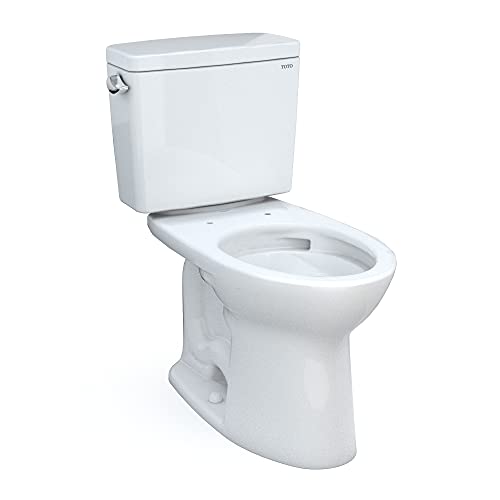
Classic two-piece toilets with tall tanks and elegant, understated proportions, the quiet country-house look that suits a traditional English bathroom without tipping…
Read the guide