A toilet tank that refuses to fill, or that trickles full so slowly you wait two minutes between flushes, is one of the most common and most fixable bathroom problems there is. Refilling a tank is a simple piece of plumbing: when you flush, the flapper drops and reseals the bottom of the tank, the float falls with the water level, and that falling float opens the fill valve, which pours fresh water in from the supply line until the float rises back to its shutoff point. When the tank will not fill, one link in that simple chain has broken. The job is figuring out which link, and the good news is that the cheapest fixes solve the problem far more often than the expensive ones.
This guide is built the way we research everything on this site. We do not physically install toilets or run flush tests in a lab. Instead we work from how a fill cycle actually functions, compare manufacturer specifications, reference independent MaP (Maximum Performance) flush-test scores and EPA WaterSense water-efficiency standards, and lean on the repair patterns that appear consistently across thousands of verified owner reviews. That combination lets us put these fixes in a reliable order, beginning with the no-cost checks that fix the majority of cases and ending with the point at which a replacement toilet genuinely is the smarter call.
Before you touch anything. Take the tank lid off, set it flat somewhere safe, and flush once while watching from above. Note whether the fill valve hisses water in at all, where the float sits, whether the refill tube is squirting into the overflow pipe, and whether the water level rises and then slowly sinks back down. Ninety seconds of watching tells you which fix below to start with and saves an hour of guessing.
Why is my toilet tank not filling with water?
A toilet tank that will not fill is failing somewhere in its refill chain: the supply valve is closed or partly closed, the fill valve is clogged or worn out, the float is set too low or stuck, the refill tube is kinked, or a leaking flapper is draining water out as fast as it enters. The fix depends on which of these is failing, so identifying the exact symptom first is essential.
A tank that will not fill covers several distinct symptoms, and each points to a different cause. The tank might stay bone dry with no sound at all, which means water is not getting in, so suspect the supply valve or a dead fill valve. It might hiss and trickle in very slowly, which points to a partly closed valve, low pressure, a clogged fill valve or a kinked refill tube. It might fill only partway and stop short of the line, which is usually a float set too low. Or it might appear to fill and then quietly sink back down, which is a leaking flapper, not a fill problem at all. Matching your exact symptom to the right section below is the fastest path to a fix.
How do I diagnose why my toilet tank will not fill?
Lift the tank lid and flush while watching from above. Confirm the wall supply valve is fully open, listen for water entering through the fill valve, check that the float can rise and fall freely, and see whether the refill tube is kinked or pulled out of the overflow pipe. Then watch a filled tank for a few minutes to see if the water level drops on its own, which reveals a leaking flapper rather than a fill fault.
Diagnosis is three quick checks. First, reach behind the toilet and confirm the shutoff valve is turned fully counterclockwise to open, because a half-closed valve is the single most common cause of slow filling. Second, do the tank watch described above to see whether water enters at all, how fast, and whether the float and refill tube are working. Third, fill the tank, add a few drops of food coloring, and wait fifteen minutes without flushing: if the colored water level drops or color bleeds into the bowl, your flapper is leaking and the tank is fighting a slow drain rather than failing to fill. These three checks narrow the field dramatically before you replace a single part.
Fix 1: Check the supply shutoff valve behind the toilet
Always start here, because it is the most common cause of a tank that will not fill or fills too slowly, and it costs nothing to check. Reach behind the toilet near the floor and find the small oval or football-shaped handle on the water line. That is the shutoff valve, and it controls how fast water reaches the tank. It should be turned fully counterclockwise, all the way open. It is extremely common for one to be left partly closed after a repair, a new fill valve install, or a hose flush of the line, and a half-closed valve quietly starves the tank for the next several years.
Turn the valve gently but fully counterclockwise until it stops. Do not force a stuck valve, since older ones can seize and the stem packing can leak if you crank too hard. With the valve fully open, flush and watch the tank fill. If it now fills quickly to the line, you are done, and this single check fixes a surprising number of slow-fill complaints. If the valve was already fully open and the tank still fills slowly, move on to the fill valve, but make a note that the supply side is good so you do not circle back to it.
Tip. If the shutoff valve itself is corroded, will not turn, or drips at the stem, it is an inexpensive part and a straightforward swap with the home's main water shut off. A modern quarter-turn ball valve is more reliable than the old multi-turn compression type and makes future repairs faster.
Fix 2: Clean or replace the fill valve
The fill valve, sometimes called the ballcock on older toilets, is the tall vertical assembly on the left side of the tank that lets fresh water in and shuts it off when the tank is full. It is the workhorse of the refill cycle, and when it clogs or wears out, the tank fills slowly, intermittently, or not at all. Sediment, rust flakes and mineral grit from the supply line collect in the valve's small inlet seal and choke the flow, which is the leading reason a previously fine toilet starts filling sluggishly.
On a modern cup-style fill valve such as a Fluidmaster, you can often clear it without replacing it. Shut the supply valve, flush to empty the tank, then twist off the valve cap, place an upturned cup over the open top, and briefly turn the water back on so a burst of pressure flushes debris up and out through the valve. Reassemble and test. If the valve still fills slowly, hisses constantly, will not shut off, or is an old brass ballcock, replace it. A universal fill valve is inexpensive, installs in fifteen minutes with the water shut off, and instantly restores a fast, quiet fill. A fresh valve is the single most reliable cure for a chronically slow tank.
Tip. When you set the height of a new cup-style fill valve, the top of the valve, called the critical level mark, must sit at least an inch above the overflow tube. This is a backflow safety requirement that keeps tank water from ever being siphoned back into your home's drinking supply. Most valves twist to adjust their height in seconds.
Fix 3: Adjust the float to the correct level
The float is what tells the fill valve when to stop. As the tank fills, the float rises, and when it reaches its set point it shuts the valve off. If the float is set too low, the valve closes early and the tank stops filling well below the proper line, leaving a weak flush every time even though nothing is actually broken. If the float is stuck against the tank wall or another part, it cannot rise at all and the valve may never shut off, or may behave erratically.
There are two float styles. A modern fill valve uses a cup-shaped float that rides up and down the valve body, adjusted with a screw or a slide clip on a thin rod. An older toilet uses a ball float on the end of a long metal arm. For the cup style, turn the adjustment screw clockwise or slide the clip up to raise the shutoff level; for the ball-and-arm style, gently bend the arm upward or use its adjustment screw. Set the resting water level to the molded fill line stamped on the tank's back wall or overflow tube, usually about an inch below the top of the overflow pipe. Make sure the float moves freely through its full travel and never rubs the tank wall.
Tip. Do not set the float above the marked fill line to chase extra flush power. Water above the line just runs down the overflow tube and is wasted, and it can keep the fill valve cycling and running. The fill line is the engineered maximum for that tank. Hit it exactly, not above it. For more on getting a full flush, see our guide to
how to improve toilet flush power.
Fix 4: Straighten and reseat the refill tube
Look inside the tank and you will see a thin flexible tube running from the top of the fill valve to the overflow pipe, the open vertical tube in the center of the tank. This is the refill tube, and it has a quiet but important job: during the fill cycle it squirts a small stream down the overflow pipe to refill the bowl back to its proper water level. If this tube is kinked, pinched, cracked, or has popped out of the overflow pipe, two things can happen. The bowl may not refill enough, leaving a low water line and a weaker flush, or the tube may dump water straight into the overflow so the tank itself fills slowly or never reaches the line.
Trace the tube and make sure it runs in a smooth curve with no sharp kinks, then confirm it clips neatly onto the rim of the overflow pipe so its stream goes down inside, not over the side. The tube should sit above the waterline, never submerged, because a submerged refill tube can siphon tank water out and prevent a proper fill. Most fill valves include a small angle clip for exactly this. Straightening or reseating this tube is a no-cost fix that often restores both a full tank and a properly filled bowl at once.
Why does my toilet tank fill slowly?
A toilet tank that fills slowly usually has a partly closed supply valve, a clogged fill valve, or low household water pressure. Mineral grit and sediment narrowing the fill valve inlet is the most common cause in older homes. Open the wall valve fully, flush debris out of the fill valve cap, and if the fill is still slow, replace the fill valve, which is the most reliable cure.
A slow fill means water is getting into the tank, just not fast enough. That points to the delivery side: the supply valve that controls flow, the fill valve that meters it, and the household pressure that drives it. Work those in order. Open the shutoff fully, then clean or replace the fill valve, which solves the large majority of slow fills. If the tank still crawls and other fixtures in the house are also weak, the problem may be low home water pressure or a clogged supply line rather than the toilet itself, and that is a whole-house issue to investigate separately.
Fix 5: Rule out a leaking flapper draining the tank
This one fools people constantly, because the tank looks like it will not fill when it is actually filling fine and then leaking the water back out. The flapper is the rubber or silicone seal at the bottom of the tank that drops to reseal after each flush. If it does not seal, the tank water slowly drains into the bowl, the float falls, and the fill valve kicks on to top it off again. The result looks and sounds like a tank that constantly runs or never quite finishes filling, when the real fault is the seal.
Run the dye test: fill the tank, add a few drops of food coloring or a dye tablet, and wait fifteen minutes without flushing. If colored water appears in the bowl or the tank level drops, the flapper is leaking. Lift it and check the rubber for stiffness, warping, cracks or a mineral-crusted seal ring, and check that the seat it lands on is clean and smooth. Also confirm the lift chain has only slight slack and is not slipping under the flapper to prop it open. Replace a worn flapper, since they are inexpensive, mostly universal, and a two-minute swap. A constant phantom refill can also read as a recurring problem when the real issue is a slow leak, much like a recurring clogging complaint that traces back to one overlooked part.
Fix 6: Check household water pressure and the supply line
If the supply valve is fully open, the fill valve is new and clean, the float and refill tube are set right, and the tank still fills slowly, the limit may be upstream of the toilet. Low household water pressure starves every fixture, and a toilet tank, which refills on demand, shows it clearly as a long, lazy fill. A clogged supply line, a failing pressure regulator, or sediment in the braided supply hose can all throttle the water reaching the tank.
Check whether other fixtures, especially nearby faucets, also run weak. If they do, the issue is whole-house pressure, not the toilet, and that points to the main supply, the pressure regulator, or the meter, often a job for a plumber. If only the toilet is slow, inspect the braided supply hose for a kink or a partly closed inline screen, and confirm the small inlet screen inside the fill valve is clear. Isolating whether the problem is the toilet or the house keeps you from replacing toilet parts that were never the cause.
Editorial TakeThe order matters more than any single fix. We see people buy a whole new fill valve, or even a new toilet, when the real culprit was a shutoff valve someone left half closed after a repair. Always open the wall valve fully and run the dye test before spending a dollar. Those two free checks correctly point you at the cause in the large majority of slow-fill and no-fill cases, and they keep you from throwing money at the wrong part.
Should I repair or replace a toilet whose tank will not fill?
Repair first. The cheap fixes, including opening the supply valve, cleaning or swapping the fill valve, adjusting the float, reseating the refill tube and replacing a leaking flapper, solve nearly every fill problem for little money. Replace the toilet only when its flush is also weak after a full refill, which means the bowl design is the limit. At that point choose a model with a MaP score of 800 grams or higher and WaterSense certification.
The deciding factor is whether the problem is the parts or the toilet itself. Fill components wear out, are cheap, and swap in minutes, so the fill valve, flapper, float and supply valve are almost always worth fixing before replacing the whole fixture. Replacement only enters the picture when the tank fills fine after repair but the toilet still flushes weakly, which is a flush-power problem rather than a fill problem. That pattern, common with older 3.5 GPF or first-generation low-flow toilets, means the bowl geometry cannot build a strong siphon and no fill adjustment will overcome it. This is where the MaP score becomes the buying signal. For the full diagnostic on a chronically weak flush, our weak toilet flush fix guide walks through every cause in detail, and our toilet not flushing properly guide covers the bowl-side symptoms.
If the answer is a new toilet, choose for flush power
When the diagnosis points to the toilet itself rather than its fill parts, the upgrade pays off immediately, and you should choose specifically for clearing power. Look for a high MaP score (aim for 800 grams or higher), a large trapway (2 inches or more), and EPA WaterSense certification so you get strong performance and low water use together. The three models below are consistent strong performers across published specifications and aggregated owner feedback, and they cover the most common needs. For the full ranked list, see our roundup of the best flushing toilets.
Best Overall Flush
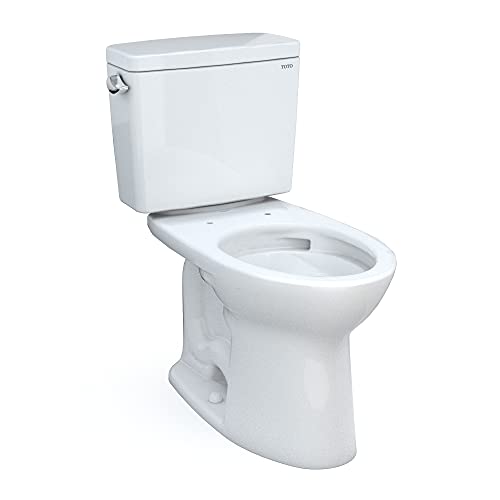
TOTO Drake II
Powerful single-flush clearing for daily use
The Drake II pairs a top-tier MaP score with TOTO's Double Cyclone flush and a 1.28 GPF rating, so it clears waste forcefully on one flush while staying efficient and quiet, with a reliable, widely stocked fill valve.
Check price on Amazon
Strongest Power
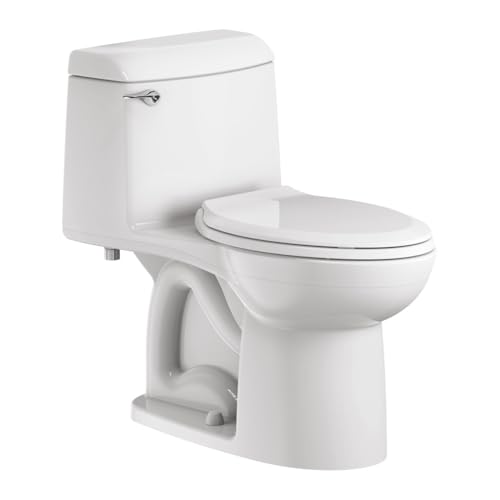
American Standard Champion 4
High-traffic bathrooms that fight clogs
A wide 2-3/8 inch trapway and a large flush valve give the Champion 4 a forceful, clog-resistant flush, making it a strong upgrade when an old toilet keeps backing up or its tank parts are worn out.
Check price on Amazon
Best Value Upgrade
Kohler Cimarron
A reliable, efficient replacement on a budget
Kohler's AquaPiston canister flush moves a fast, full volume of water at 1.28 GPF, giving the Cimarron a strong, clean rinse and dependable clearing, with easy-to-source replacement fill and flush parts.
Check price on Amazon
Other proven options worth a look include the one-piece TOTO UltraMax II for a seamless easy-clean body, the Kohler Highline for wide availability and parts support, the dual-flush TOTO Aquia IV for water savings, and value-focused Woodbridge T-0019, Swiss Madison St. Tropez and Gerber Avalanche models that deliver strong flush specs at a lower position. Whatever you choose, confirm the rough-in distance matches your existing toilet before ordering, and check that replacement fill and flush valves are easy to find for that brand.
Editorial TakeIf you are replacing a toilet at all, do not buy on looks alone, and do not let a failed fill valve push you into a hasty purchase, since that part is a cheap fix on any toilet. When a new toilet genuinely is warranted, the single spec that predicts whether you will be happy is the MaP score, and for a primary bathroom we steer people to 800 grams or higher every time. A TOTO Drake II or American Standard Champion 4 will out-clear a stylish budget bowl with a 350 gram score every day.
How to keep a tank filling fast once you have fixed it
Once the tank fills full and fast again, a little maintenance keeps it that way, especially in hard-water areas where mineral grit is the slow enemy of fill valves and flappers alike.
Flush the fill valve once a year
The cup-style flush trick described above, briefly running pressurized water through the open valve top, clears the grit that accumulates and keeps the fill fast. Doing it once a year, or after any work on the home's water main that stirs up sediment, prevents the gradual slowdown that sends most people shopping for a new valve they may not need yet.
Replace worn flappers and fill valves before they fail
Flappers, fill valves and lift chains are wear items. A flapper that is a few years old and starting to stiffen, or a fill valve that hisses a little longer than it used to, is cheap insurance to swap on a quiet weekend rather than during an emergency overflow or a running-toilet water-bill spike. Fresh parts keep the tank filling cleanly and shutting off crisply.
Mind the supply valve after any repair
Any time the water is shut off for a repair, the most common new problem afterward is a supply valve left half open. Make it a habit to fully open the shutoff and watch one complete fill cycle before you walk away. That single check prevents the most frequent slow-fill complaint of all.
Keep reading
Related guides
FAQ
Frequently asked questions
? Why is my toilet tank not filling up at all?
A tank that stays completely dry means water is not reaching it. The most common reasons are a supply shutoff valve that is fully closed and a fill valve that has failed or clogged shut. Reach behind the toilet and turn the wall valve fully counterclockwise, then flush and listen for water entering. If it still does not fill with the valve open, the fill valve needs cleaning or replacement.
? Why does my toilet tank fill so slowly?
A slow fill means water is getting in but not fast enough. The usual causes are a supply valve left only partly open, sediment and grit clogging the fill valve, or low household water pressure. Open the wall valve fully, flush debris out of the fill valve cap, and if it is still slow, replace the fill valve. If other fixtures are weak too, suspect whole-house pressure.
? Why does my toilet tank fill then slowly empty?
That is almost always a leaking flapper, not a fill problem. The tank fills fine, then the worn flapper lets water seep into the bowl, the float drops, and the fill valve runs again to top it off. Run a dye test by adding food coloring to a full tank and waiting fifteen minutes. If color reaches the bowl, replace the flapper, which is an inexpensive two-minute swap.
? Can a partly closed shutoff valve stop a tank from filling?
Yes, and it is the single most common cause of slow filling. The valve behind the toilet should be turned fully counterclockwise to open. It is frequently left half closed after a repair or a new valve install, which restricts how fast the tank refills and leaves a weak first flush and a long wait between flushes. Open it all the way and confirm the tank fills quickly to the line.
? How do I clean a clogged toilet fill valve?
On a modern cup-style fill valve, shut the supply, flush to empty the tank, twist off the valve cap, hold an upturned cup over the open top, and briefly turn the water back on so a pressure burst flushes debris out. Reassemble and test. If it still fills slowly or hisses constantly, replace the valve, since a universal fill valve is cheap and installs in about fifteen minutes.
? How do I adjust the float so the tank fills to the right level?
For a modern cup float, turn the adjustment screw clockwise or slide the clip up to raise the shutoff level. For an older ball-and-arm float, gently bend the arm upward or use its screw. Set the resting water to the molded fill line on the tank wall or overflow tube, usually about an inch below the top of the overflow pipe. Make sure the float moves freely and never rubs the tank.
? What is the refill tube and why does it matter?
The refill tube is the thin flexible tube running from the fill valve to the overflow pipe. During filling it squirts a small stream down the overflow to refill the bowl to its proper level. If it is kinked, cracked, or popped out of the overflow, the bowl may not refill and the tank can fill slowly. Straighten it and clip it onto the overflow rim so it sits above the waterline, never submerged.
? Why does my toilet keep running and never finish filling?
A toilet that runs continuously is usually losing tank water as fast as it fills. A leaking flapper, a lift chain too long that slips under the flapper, a float set too high so water spills down the overflow, or a fill valve that will not shut off are the common causes. Check the flapper seal and chain first, then confirm the water shuts off right at the fill line, not above it.
? Can low water pressure cause a toilet tank to fill slowly?
Yes. Because a tank refills on demand, low household water pressure shows up clearly as a long, lazy fill. If nearby faucets also run weak, the problem is whole-house pressure, the main supply, or a failing pressure regulator rather than the toilet. If only the toilet is slow, check the braided supply hose for a kink and the small inlet screen inside the fill valve for debris.
? Should I replace the whole fill valve or just clean it?
Try cleaning first if the valve is a modern cup style, since the pressure-flush trick often clears the grit causing a slow fill. Replace it outright if it is an old brass ballcock, if it hisses constantly, will not shut off, or still fills slowly after cleaning. A new universal fill valve is inexpensive and the most reliable long-term cure for a chronically slow tank.
? Why does the tank fill but the bowl water stays low?
That points to the refill tube. If it is kinked, detached, or no longer squirting into the overflow pipe, the bowl does not get its post-flush refill, so the bowl water sits low and the flush weakens. Reseat the refill tube onto the overflow rim and make sure it is delivering a steady stream during the fill cycle. The tank and bowl refill at the same time when it is set right.
? How much does it cost to fix a toilet tank that will not fill?
Most fixes are inexpensive because the common culprits are cheap parts: a fill valve, flapper, refill tube or supply valve each install in minutes with basic tools, and opening a shutoff valve or flushing debris costs nothing. The only expensive outcome is replacing the whole toilet, which is reserved for the rare case where the bowl design is the limit after the tank already fills and flushes are still weak.
? Why is my toilet fill valve hissing constantly?
A constant hiss means the fill valve is letting a trickle through and never fully shutting off. That happens when the valve seal is worn, when grit is holding it slightly open, or when a leaking flapper or high float setting keeps it cycling. Check the flapper and float first, clean the valve, and replace it if it still hisses, since a valve that runs nonstop wastes water and inflates the bill.
? What is a good MaP score if I end up replacing the toilet?
MaP (Maximum Performance) testing reports how many grams of solid waste a toilet clears in one flush. A score of 600 grams handles an average household, 800 grams is strong, and 1000 grams is the maximum for a residential gravity toilet. If a fill problem leads you to replace the toilet entirely, aim for 800 grams or higher in a primary bathroom to avoid double flushes.
? Does a new fill valve need to be set at a certain height?
Yes. On a cup-style fill valve, the top of the valve, marked as the critical level, must sit at least an inch above the overflow tube. This backflow safety requirement keeps tank water from being siphoned back into the home's drinking supply if pressure ever drops. Most valves twist to adjust height in seconds, so set it correctly before securing the lock nut.
? Will a 1.28 GPF WaterSense toilet fill more slowly than an old one?
No, the gallons-per-flush rating describes how much water a flush uses, not how fast the tank refills. A modern 1.28 GPF WaterSense toilet like the TOTO Drake II actually needs less water per fill, so it often refills faster than an old 3.5 GPF model. Fill speed depends on the fill valve, supply valve and home pressure, not the GPF rating.
? Why did my tank stop filling right after I shut off the water?
The most likely reason is that the supply shutoff valve was not fully reopened, or it seized partly closed after being turned. Older multi-turn valves can stick or lose their washer when cycled. Turn it fully counterclockwise and watch a complete fill. If it now leaks at the stem or will not open fully, replace it with a quarter-turn ball valve for reliable future shutoffs.
? Which brands are most reliable when I replace a toilet?
TOTO, Kohler and American Standard lead for flush performance, parts availability and warranty support, which is why they appear most across strong aggregated owner reviews and why their fill and flush parts are easy to source. Woodbridge, Swiss Madison and Gerber offer competitive specs at lower positions. For any brand, prioritize a MaP score of 800 grams or higher and EPA WaterSense certification.
Sources
- EPA WaterSense, epa.gov/watersense
- MaP (Maximum Performance) flush testing, map-testing.com
- Manufacturer published specifications (TOTO, Kohler, American Standard)
Our Verdict
A toilet tank that will not fill is almost always a quick, cheap fix rather than a dead fixture. Lift the lid and work in order: open the supply valve fully, clean or replace the fill valve, set the float to the fill line, reseat the refill tube, replace a leaking flapper, and rule out low home pressure. That sequence solves nearly every fill problem for little or no money, and a fresh universal fill valve cures the stubborn cases. Only when the tank fills fine but the flush is still weak does the toilet itself become the limit, and that is when a high-MaP, WaterSense-certified model like the TOTO Drake II, American Standard Champion 4 or Kohler Cimarron is the lasting answer. Diagnose before you replace, and your money goes to the real problem.