A toilet that sweats is not broken, and it is not leaking from a crack or a seal. The water beading on the outside of the tank and running down to pool on the floor is condensation, the same physics that fogs a cold glass of iced tea on a summer afternoon. It is harmless to the toilet itself, but it is far from harmless to the room. Left alone, that steady drip rots subfloor, stains tile grout, breeds mildew along the base, and can warp the trim and baseboards behind the toilet over a single humid season. The good news is that condensation is fully understood and fully fixable, and most homes can stop it without replacing anything.
This guide is organized the way a careful tradesperson would think about the problem: start with the cheapest, most common contributors you can change in minutes, then work toward the structural fixes, and only treat a new insulated toilet or a plumbing valve as the answer once the simple causes are ruled out. Along the way it explains the dew-point physics that actually drives sweating so you can diagnose your own bathroom instead of guessing. For the broadest cross-brand ranking of high-power fixtures, the pillar guide to the best flushing toilets goes wider. This page has one job: explain why your toilet sweats and how to stop the condensation for good.
How we research and rank
We do not test toilets in a lab. We compare manufacturer specifications, published MaP (Maximum Performance) flush-test gram scores, tank construction including factory insulation liners, EPA WaterSense listings and aggregated owner ratings across major retailers. For diagnosing condensation we lean on the building science of dew point, humidity and surface temperature, plus the failure patterns owners report most often. Where a fix is cheap and likely, like venting the room or replacing a leaking flapper, we say so plainly rather than pushing a new toilet first.
First principles
What actually causes a toilet to sweat
Sweating is condensation, not a leak. It happens when the surface temperature of the porcelain falls below the dew point of the air around it. Three things drive that gap, and naming the right one is the whole game.
Every cold surface in a humid room is a candidate for condensation. Air holds a certain amount of water vapor, and the warmer and more humid the air, the more vapor it carries. The temperature at which that air can no longer hold its moisture and begins to release it as liquid is called the dew point. When the outside of a toilet tank or bowl sits below that dew point, the air touching the porcelain gives up its moisture onto the surface, and you get the film of water that beads, runs and drips. A toilet sweats whenever the porcelain is cold enough and the air is humid enough for those two numbers to cross.
Three factors control whether they cross. The first is the temperature of the water filling the tank: cold groundwater entering at 50 to 60 degrees Fahrenheit chills the porcelain well below room dew point. The second is the humidity and warmth of the bathroom air, driven by hot showers, poor ventilation and the season. The third, often overlooked, is a toilet that runs or refills constantly because of a worn flapper, which keeps a fresh stream of cold water flowing through the tank and holds the surface permanently cold. The sections below take each in turn, in the order you should check them.
Cause 1
Cold incoming water chilling the tank
The most fundamental cause. The water that refills the tank after every flush arrives cold from the supply line, and it cools the porcelain to a temperature below the dew point of warm, humid bathroom air.
After every flush, the tank refills with fresh water straight from your home's cold supply line. In much of the country that water enters at 50 to 60 degrees Fahrenheit, and in winter or in homes drawing from deep wells it can be colder still. That cold water chills the thin porcelain wall of the tank from the inside, and the porcelain in turn chills the layer of air touching its outer surface. If that air is warm and humid, as bathroom air usually is, its dew point sits well above the chilled porcelain temperature, and condensation forms on the outside of the tank within minutes of the refill.
This is why sweating is worst right after a flush, worst in summer when air is most humid, and worst in homes with very cold incoming water. It is also why a toilet in a rarely used guest bathroom may sweat less: the water in its tank has had time to warm to room temperature. The fundamental fix for this cause is to slow the heat transfer between the cold water and the room air, either by insulating the tank or by warming the incoming water slightly, both covered in the fixes below. You cannot change the temperature of your groundwater, but you can stop it from chilling the porcelain so aggressively.
Tip: confirm it is condensation, not a leak, before anything else
Dry the outside of the tank and bowl completely with a towel, then drop a few drops of food coloring into the tank water and wait an hour without flushing. If the water reappearing on the outside is clear, it is condensation from the air. If it is tinted, you have an actual leak from a cracked tank, a loose bolt or a failed gasket, which is a different repair entirely. This two minute test tells you which problem you are solving before you spend a cent.
Cause 2
High bathroom humidity and poor ventilation
The other half of the equation. Hot showers and a sealed, unvented bathroom raise the dew point of the air until even a moderately cool tank starts to sweat heavily.
Condensation needs two ingredients: a cold surface and humid air. You usually cannot change the cold water, but you can almost always change the humidity. A long hot shower pumps the bathroom full of warm water vapor, raising the dew point of the air sharply. If that moisture has nowhere to go, because there is no exhaust fan, the fan is undersized or broken, or the door stays shut, the humid air lingers and condenses on every cool surface in the room, with the cold toilet tank the first and worst offender. This is why sweating spikes during and after showers and why it is far worse in bathrooms without a working vent fan.
Improving ventilation is the single highest-value fix for most sweating toilets, and it is often free or inexpensive. Run an exhaust fan during every shower and for fifteen to twenty minutes afterward, crack a window when weather allows, and consider a fan timer or a humidity-sensing switch that runs the fan automatically until the room dries out. In a bathroom that lacks a fan entirely, adding one is the most effective structural fix you can make, and it solves fogged mirrors, mildew and peeling paint at the same time as the sweating toilet. Lowering the room's humidity raises the gap between dew point and porcelain temperature so the two no longer cross.
Tip: measure your bathroom humidity before you guess
A small hygrometer costs very little and removes the guesswork. Bathroom relative humidity should fall back toward 50 percent or below within twenty minutes of a shower. If it sits at 70 percent or higher for an hour, your ventilation is the dominant cause of the sweating, and fixing the fan will do more than any tank insulation. Measure first, then fix the biggest contributor rather than spending on the wrong solution.
Cause 3
A running or leaking flapper keeping the tank cold
An overlooked mechanical cause. A flapper that does not seal lets the tank refill constantly, so a continuous stream of cold water keeps the porcelain permanently chilled and sweating.
The flapper is the rubber seal at the bottom of the tank that lifts when you flush and then drops to reseal so the tank can refill and rest. As flappers age they warp, stiffen or build up mineral scale, and they begin to leak past the seal. That slow leak lets water trickle out of the tank into the bowl, which makes the fill valve cycle on again and again to top the tank back up. Each refill brings in another slug of cold supply water, so instead of the tank water warming toward room temperature between flushes, it stays cold all day. A constantly cold tank sweats far more than one allowed to warm up, and many homeowners chasing condensation never realize a thirty cent leak is the engine driving it.
The tells are easy to read. A toilet that hisses or runs intermittently when no one has flushed, a fill valve that kicks on by itself every few minutes, or a faint sound of trickling water all point to a flapper that no longer seals. You can confirm it with the same food coloring test used above: dye the tank, wait without flushing, and if color seeps into the bowl, the flapper is leaking. Replacing a worn flapper is inexpensive and quick, and on a sweating toilet it does double duty, both stopping a water waste leak and letting the tank warm up so it condenses less. For related mechanical checks on a toilet that will not behave, our guide on what to do when your toilet is not flushing properly and how to fix it covers the flapper and fill valve in detail.
Cause 4
An uninsulated single-wall tank
Some tanks are built to sweat. A thin single-wall porcelain tank transfers cold straight to its outer surface, while an insulated tank breaks that path and stays warmer.
Not all toilet tanks are built the same way. A basic single-wall tank is one layer of porcelain, so the cold of the incoming water passes almost directly to the outer surface that meets the room air. That direct path is what makes a single-wall tank such a reliable condenser in a humid bathroom. By contrast, an insulated tank has a layer of closed-cell foam liner bonded to the inside of the tank wall. That foam breaks the thermal bridge between the cold water and the outer porcelain, keeping the outside surface much closer to room temperature so its dew-point gap never closes. Insulated tanks barely sweat even in demanding conditions.
Many manufacturers offer factory-insulated versions of their popular models. TOTO offers an insulated tank option on the Drake, and Kohler, American Standard and others list anti-sweat or insulated liner versions of mainstream toilets. If your bathroom has cold water, high humidity you cannot easily fix, and a basic single-wall toilet, an insulated tank is the cleanest permanent cure. You can also retrofit insulation into an existing tank with a self-adhesive foam liner kit, though factory insulation performs more reliably and avoids the fit and adhesion issues of a DIY liner. When you are choosing a replacement anyway, specifying the insulated version costs little and ends the sweating by design.
Cause 5
Seasonal and regional swings
Why the same toilet sweats some months and not others. The interplay of incoming water temperature and air humidity changes with the seasons and your climate.
A toilet that drips all summer and stays bone dry in winter is behaving exactly as the physics predicts. In humid summer months the bathroom air carries far more vapor, raising its dew point well above the chilled porcelain, so condensation is heavy. In dry winter air the dew point drops, and even though the incoming water is colder, the air may no longer be humid enough to condense, so the sweating stops. Homes in humid coastal and southern climates sweat year-round, while dry mountain and desert climates may never see it. Knowing your pattern tells you how aggressive a fix you need.
This seasonality also explains why ventilation and dehumidification work so well: they attack the humidity side of the equation, which is the side that swings most. A whole-room dehumidifier in a chronically humid bathroom, or a house-wide dehumidifier in a damp basement bath, can stop sweating without touching the toilet at all. If your toilet only sweats in the worst few months, a stronger exhaust fan or a portable dehumidifier may be all you ever need. If it sweats every day of the year, the permanent fixes, an insulated tank or a tempering valve, earn their place.
Why does my toilet sweat even when nothing has changed?
A toilet that suddenly starts sweating without any change in use almost always has a new driver: rising seasonal humidity, a vent fan that has weakened or failed, or a flapper that has aged into a slow leak keeping the tank constantly cold. Check the room ventilation and the flapper seal first, then consider seasonal humidity, before assuming the toilet itself is the problem.
The permanent fixes
How to stop toilet condensation for good
Once you understand the dew-point physics, the fixes are obvious: lower the humidity, warm the porcelain, or insulate it. Here are the proven solutions, from cheapest to most permanent.
The cheapest and most universal fix is ventilation. Run a properly sized exhaust fan during and after every shower, add a window when you can, and use a humidity-sensing or timed switch so the room always dries out. In many bathrooms this alone drops the air below the dew point that the cold tank can reach, and the sweating stops without touching the toilet. A portable or whole-room dehumidifier does the same job more aggressively for stubborn cases. Pair ventilation with the flapper fix above, since a leaking flapper undermines every other effort by keeping the tank perpetually cold.
When humidity control is not enough, attack the cold porcelain directly. An insulated tank, whether a factory-insulated model or a retrofit foam liner kit, keeps the outer surface near room temperature so it never reaches dew point. The most thorough plumbing fix is a mixing or tempering valve, sometimes sold as an anti-sweat valve, installed on the toilet supply line. It blends a small amount of hot water into the cold fill so the tank refills at a milder temperature, raising the porcelain above the dew point. This requires a hot water line near the toilet and is best installed by a plumber, but it is the most reliable cure for severe sweating in very humid climates with very cold incoming water.
What is the best toilet to prevent sweating and condensation?
The best toilet to prevent condensation has a factory-insulated tank that breaks the thermal bridge between cold fill water and the room air. The TOTO Drake offers an insulated tank option and pairs it with a 1,000 gram MaP flush, making it the strongest all-around choice. Kohler and American Standard also list insulated or anti-sweat tank versions of their mainstream models.
At a glance
Sweating causes and fixes compared
A side-by-side summary of the causes, ranked roughly from cheapest and most common to most permanent. Start at the top and stop when the dripping stops. The tinted row is the fix most owners overlook and the one most likely to solve a sudden sweating problem.
Editorial Take
If we had to name the single most overlooked driver of a sweating toilet, it is a slow-leaking flapper paired with a weak exhaust fan. Replace the flapper so the tank can warm between flushes, then run the fan long enough after every shower to actually dry the room, and a large share of condensation problems disappear for the price of a flapper and a habit change. Reach for an insulated tank or a tempering valve only after those two free or near-free steps fail, and you will save yourself the cost and effort of a plumbing job you may not need.
When the toilet is the cause
What makes an anti-sweat toilet better than a standard one?
If you have ruled out humidity and a leaking flapper and the fixture still drips, the tank construction is the deciding spec. An insulated tank is what separates a toilet that sweats from one that stays dry.
The spec that controls sweating is tank insulation. A factory-insulated tank carries a layer of closed-cell foam bonded to the inside wall, which breaks the thermal path from cold water to outer porcelain and keeps the outer surface near room temperature. In practical terms, an insulated tank in a humid bathroom stays dry where a single-wall tank would run with water. When you are shopping for a replacement that will not sweat, the insulated or anti-sweat tank version is the feature to specify, and it usually adds little to the spec sheet while solving the problem by design.
Read insulation alongside flush performance so you do not trade one problem for another. A good anti-sweat toilet should also flush strongly, so pair the insulated tank with a high MaP score and a wide glazed trapway. MaP, short for Maximum Performance, measures the grams of solid waste a toilet clears in one flush: 600 grams handles a typical home, 800 grams is strong, and 1,000 grams is the practical ceiling. A toilet that combines a factory-insulated tank with a 1,000 gram MaP flush and a 1.28 GPF EPA WaterSense rating, like an insulated TOTO Drake, gives you a dry tank and a powerful, efficient flush at once. The three picks below all target that balance.
How much does it cost to stop a toilet from sweating?
Most sweating is stopped for free or for a few dollars by running the exhaust fan longer and replacing a leaking flapper. A retrofit tank insulation liner kit is inexpensive and DIY. The most thorough fixes, a factory-insulated replacement toilet or a plumber-installed anti-sweat tempering valve, cost more but permanently end the drip in the hardest cases.
Top recommendations
Three toilets that resist sweating
If humidity control and a flapper fix have not been enough, these three models pair a sweat-resistant or insulated-tank approach with a strong, efficient flush. Each suits a different situation, from an everyday insulated upgrade to a value pick and a modern styled option.
Best Overall
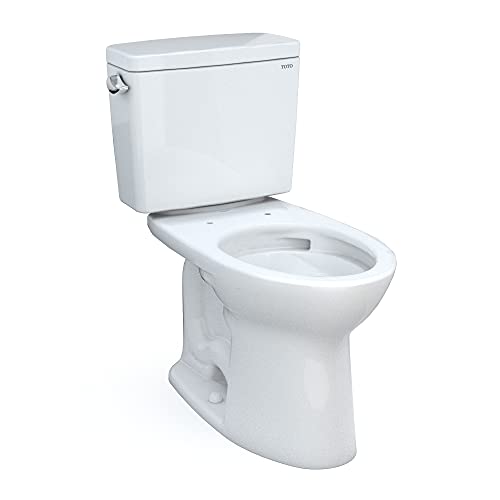
TOTO Drake (Insulated Tank)
Everyday anti-sweat default
TOTO offers the Drake with an insulated tank that breaks the cold-water thermal bridge, paired with a fully glazed 2.125 inch trapway and a 1,000 gram MaP flush at 1.28 gallons. A dry tank and a powerful, efficient flush together.
Check price on Amazon
Best Value
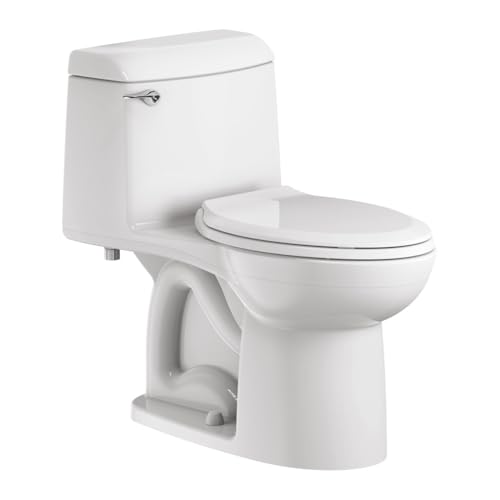
American Standard Cadet 3
Insulated-tank value option
American Standard lists insulated-tank versions of the Cadet 3, a strong everyday flusher with a wide 2.125 inch trapway and a 1.28 GPF WaterSense rating. The value choice for a dry tank without a premium price.
Check price on Amazon
Modern Pick
Kohler Cimarron
Styled comfort-height upgrade
Kohler offers insulated-tank options on mainstream models including the Cimarron, whose Class Five canister flush hits a strong MaP score at 1.28 GPF. A clean, modern comfort-height bowl paired with a sweat-resistant tank build.
Check price on Amazon
The diagnostic routine
The step-by-step way to stop your toilet sweating
Run these checks in order. Each one is quick, and stopping at the first that solves the problem saves you money and effort. This is the same logic a methodical tradesperson follows.
1. Confirm it is condensation, not a leak
Dry the tank and bowl completely, add a few drops of food coloring to the tank, and wait an hour without flushing. Clear water reappearing on the outside is condensation. Tinted water means an actual leak from a crack, bolt or gasket, which is a different repair. This sets your baseline before you spend anything.
2. Lower the bathroom humidity
Run the exhaust fan during every shower and for fifteen to twenty minutes after, crack a window when weather allows, and add a humidity-sensing or timer switch. A hygrometer confirms whether the room dries back below 50 percent. In many bathrooms this single step ends the sweating.
3. Check and replace a leaking flapper
Listen for a fill valve that cycles on its own or a faint trickle, and use the dye test to confirm a flapper leaking into the bowl. Replace a worn flapper so the tank can warm up between flushes instead of refilling with cold water all day. This also stops a quiet water waste leak.
4. Add insulation to the tank
If venting and the flapper fix are not enough, insulate the tank. A self-adhesive closed-cell foam liner kit retrofits into an existing tank, or you can replace the toilet with a factory-insulated model. Either breaks the thermal bridge and keeps the outer porcelain near room temperature.
5. Consider a dehumidifier for seasonal sweating
If the toilet only drips in humid months, a portable or whole-room dehumidifier attacks the humidity directly and can stop sweating without touching the toilet. This is often the simplest answer in damp basement baths and humid coastal climates.
6. Install an anti-sweat tempering valve for severe cases
For year-round sweating in very humid climates with very cold incoming water, a plumber can install a mixing or tempering valve on the supply line. It blends a little hot water into the cold fill so the tank refills warmer and stays above the dew point. This is the most reliable permanent cure for the hardest cases.
Editorial Take
Resist the urge to jump straight to a plumbing valve or a new toilet. In the field, the order that stops the most sweating for the least money is ventilation, then the flapper, then tank insulation, and only then a tempering valve. We have seen homeowners pay for a mixing valve when a stronger exhaust fan and a five dollar flapper would have ended the drip. Buy the permanent fix only after you can point to the specific driver, year-round humidity with very cold water, that justifies it. When you replace a toilet anyway, specify the insulated tank version: it costs little extra and ends the sweating by design while you also gain a stronger flush.
Does an insulated tank really stop a toilet from sweating?
Yes, an insulated tank is the most reliable fixture-level fix. The closed-cell foam liner bonded inside the tank breaks the thermal bridge between the cold fill water and the outer porcelain, keeping the outside surface near room temperature so it never reaches the dew point. An insulated tank stays dry in humid bathrooms where a single-wall tank would run with condensation.
Across the major brands, the pattern holds. TOTO leads on engineering and offers insulated tank options on the Drake alongside its glazed CeFiONtect trapway. Kohler counters with insulated versions of the canister-valve Cimarron and Highline, and American Standard offers insulated builds of the value-priced Cadet 3 and others. Woodbridge, Swiss Madison and Gerber bring modern styling and a range of tank constructions. Whichever brand you choose, the rule for a dry tank is the same: specify an insulated or anti-sweat tank, and pair it with a high MaP score and an EPA WaterSense rating so you gain flush power and efficiency at the same time. For more on matching the fixture to your bathroom, our guide on how to improve toilet flush power with seven proven fixes covers the flush side, and the broad guide to why a toilet keeps clogging and how to fix it covers the related mechanical checks.
The bottom line
Stopping the sweat for good
A sweating toilet is sending a signal, not failing. The cause is condensation, and it is almost always specific and findable: humid bathroom air, cold incoming water, a leaking flapper holding the tank cold, or a thin single-wall tank with no insulation. Work through them in order, starting with the free fixes of ventilation and a flapper replacement, and most households stop the drip without replacing anything. When the diagnosis does point to the fixture or the climate, an insulated tank or an anti-sweat tempering valve ends the condensation permanently, and the water damage to your floor and trim stops with it. Confirm the cause first, then check the current price on Amazon for whichever fix or replacement your diagnosis calls for. For a related weak-flush issue often found alongside sweating, our weak toilet flush fix guide with causes and solutions walks through the tank mechanics.
Our Verdict
Stop the humidity, then stop the cold. Run the exhaust fan long enough to dry the room, replace a leaking flapper so the tank warms between flushes, and add tank insulation if needed, in that order. Most sweating ends there for free or close to it. If the fixture or climate is the driver, an insulated-tank TOTO Drake cures the drip by design, with the American Standard Cadet 3 as a value pick and an anti-sweat tempering valve for the most severe, year-round cases.