Why Toilet Trapways Are Curved Like an S
Toilets4.6
Learn why toilet trapways curve like an S, how each bend blocks sewer gas, and what the shape means for clogs and…
Read the guideFrom pressure-assist to tornado flush, every major flushing system explained, compared, and ranked using MaP scores, GPF ratings, and real-world clog resistance data.
TOTO's Tornado Flush and Double Cyclone systems consistently outscore rivals in MaP testing, routinely clearing 1,000 grams at 1.28 GPF. Pressure-assist ranks second for raw power in commercial settings. For most households, a gravity-feed toilet rated 800+ g on MaP with an oversized trapway is the best balance of performance and quiet operation.
Flush technology is the single biggest performance variable in any toilet. Two toilets sitting side by side can use identical water volumes yet one clears waste completely on every flush while the other clogs weekly. The difference is almost always engineering inside the tank and bowl: the geometry of the trapway, the shape of the rim jets, and the hydraulics driving water through the system. This guide ranks every major flushing method by the only metrics that actually matter -- MaP score, gallons per flush, trapway diameter, and owner-reported reliability.
If you have already identified your top candidates and want a curated shortlist, see our main guide to the best flushing toilets of 2026. This article focuses specifically on the technology behind each flushing system and when each one is the right choice.
The main flush technologies available in 2026 are gravity-feed (including modern tornado and cyclone variants), pressure-assist, dual-flush, double-vortex, and siphonic jet systems. Gravity-feed designs dominate the residential market because they are quiet, low-maintenance, and increasingly efficient; pressure-assist and tornado-flush variants occupy the performance tier for users who prioritize clog elimination above all else.
Gravity-feed is the mechanism used in roughly 85 percent of residential toilets sold in North America. Water stored in the tank drops under its own weight into the bowl, creating a siphon that pulls waste down the trapway. Modern gravity-feed designs have improved dramatically since the federal 1.6 GPF mandate took effect. Today, EPA WaterSense-certified 1.28 GPF gravity toilets from brands like Kohler, American Standard, and Gerber routinely achieve MaP scores of 600 to 900 grams -- well above the EPA WaterSense minimum threshold of 350 grams per flush.
The key variables that separate a good gravity toilet from a mediocre one are tank water volume at the moment of flush, rim hole geometry (or rimless channel design), and trapway diameter. A fully glazed 2-inch trapway is the entry threshold for acceptable clog resistance. The best models, including the Kohler Cimarron and the American Standard Cadet 3, use 2.125-inch or larger fully glazed trapways that give waste very little surface to catch on.
Gravity-feed remains the dominant residential choice not because it is the most powerful flushing technology -- pressure-assist beats it -- but because it operates quietly, needs almost no maintenance, and the gap between a well-engineered gravity toilet and a pressure-assist unit has narrowed considerably. A gravity toilet scoring 1,000 g on MaP is genuinely difficult to distinguish from pressure-assist in everyday use.
TOTO's Tornado Flush, used across its mid-to-premium lineup including the UltraMax II and the Aquia IV, replaces the traditional rim holes with two or three nozzles positioned at opposing angles inside the bowl. Water enters in a centrifugal pattern, spinning across the entire bowl surface rather than falling from the rim. This does two things: it cleans more of the bowl with each flush, and it concentrates hydraulic force at the trapway entrance for a stronger, more consistent pull.
Tornado Flush toilets consistently earn MaP Premium status (1,000 g or higher) while using only 1.28 GPF or less. The TOTO UltraMax II, for instance, carries a published MaP score of 1,000 g and is EPA WaterSense certified. The rimless bowl design also makes cleaning significantly easier because there are no underside rim channels for mineral deposits or bacteria to accumulate.
The Tornado Flush architecture is particularly effective for households dealing with hard water or irregular cleaning schedules. Because the nozzle pattern wets the entire bowl surface on every flush, scale buildup is slower and the bowl stays visibly clean longer between scrubbing sessions. That is an underappreciated advantage that does not show up in MaP scores.
Pressure-assist toilets use a sealed plastic vessel inside the tank. As water fills the vessel, it compresses the air inside. When the flush valve opens, that pressurized air drives water into the bowl at greater velocity than gravity alone can achieve. The result is a noticeably louder flush with substantially higher solid waste clearance per gallon.
Pressure-assist units from brands like Gerber and American Standard (the Titan line) are popular in commercial settings, multi-story buildings, and households with older, narrower drain lines. They are particularly effective where slow drain flow limits what a gravity toilet can accomplish. The tradeoff is noise (typically 10 to 15 decibels louder than gravity models), higher upfront cost, and slightly more complex repair when the pressure vessel eventually needs replacing -- typically every 10 to 15 years.
TOTO's Double Cyclone system, found on models like the Aquia IV dual-flush, uses two nozzles rather than the three used in the full Tornado Flush configuration. The hydraulic principle is identical: opposing water streams create a centrifugal wash across the bowl. Double Cyclone models typically use 1.0 GPF on the low-flush cycle and 1.28 GPF on the full flush, making them among the most water-efficient high-performance options available. EPA WaterSense certification is standard across the Aquia IV line.
Dual-flush technology, developed by Caroma in Australia and now mainstream across North American brands, gives users two flush volumes -- typically 0.8 to 1.0 GPF for liquid waste and 1.28 to 1.6 GPF for solid waste. The Woodbridge T-0001 and Swiss Madison Concorde are popular dual-flush gravity models in the mid-price tier. American Standard's H2Option is a two-piece dual-flush option that fits a more traditional aesthetic.
The water savings over a single-flush 1.6 GPF toilet are real but often overstated in marketing. A household where the low flush is used 60 percent of the time will save roughly 20 to 30 percent on toilet water consumption annually versus an older 1.6 GPF single-flush model. That matches EPA WaterSense estimates. The performance caveat is the low-flush cycle: on cheaper dual-flush toilets, the 0.8 GPF cycle is barely adequate for solid waste, creating extra flushes that erase the savings. Choose a dual-flush toilet with a MaP score of at least 500 g on the full flush and verify the low flush is rated at least 350 g before purchasing.
North American toilets are almost universally siphonic: a large water surface covers most of the bowl and a siphon actively pulls waste through the trapway. European and some Asian-market toilets use a washdown design with a smaller water spot, a steeper bowl angle, and no siphon -- waste is pushed rather than pulled. Washdown toilets use less water per flush but leave more of the bowl exposed, requiring more frequent cleaning and generating more noise. Siphonic designs are generally preferred for residential use in North America because of the larger water surface, quieter operation, and effective odor containment.
Flushing performance is measured primarily through MaP (Maximum Performance) testing, an independent protocol that loads a toilet with soybean paste in 50-gram increments to find the maximum grams cleared in a single flush. EPA WaterSense requires a minimum score of 350 grams; most quality toilets score 600 to 1,000 grams; MaP Premium designation requires 1,000 grams or higher at 1.28 GPF or less. For households with any history of clogs, a score of 800 grams or above is the practical minimum to target.
MaP testing was developed jointly by the California Urban Water Conservation Council and Toronto and Region Conservation and is maintained at map-testing.com. The database is publicly searchable by manufacturer and model. Before purchasing any toilet, search the specific model number in the MaP database. Some manufacturers publish MaP scores on product pages; many do not, making the independent database the only reliable source.
EPA WaterSense sets a secondary standard: toilets earning WaterSense certification must use 1.28 GPF or less AND pass MaP testing at the 350-gram threshold. The 350-gram floor is quite low, however. A toilet can carry the WaterSense label and still struggle with solid waste. Always cross-reference with the actual MaP score, not just the certification label.
| Flush Technology | Typical GPF | Typical MaP Range (g) | Noise Level | Maintenance | Best For | Check Price |
|---|---|---|---|---|---|---|
| TOTO Tornado Flush | 1.28 / 0.9 | 800 - 1,000+ | Low | Very Low | All households, best all-around | Check price |
| Pressure-Assist | 1.0 - 1.28 | 900 - 1,000+ | High | Moderate | Commercial, old narrow drains | Check price |
| Gravity-Feed (standard) | 1.28 - 1.6 | 500 - 900 | Very Low | Very Low | Most residences, budget-conscious | Check price |
| Dual-Flush Gravity | 0.8 / 1.28 | 400 - 800 | Low | Low | Water-conscious households | Check price |
| Double Cyclone (TOTO) | 1.0 / 1.28 | 700 - 1,000 | Low | Very Low | Dual-flush + high performance | Check price |
| Siphonic Jet (standard) | 1.28 - 1.6 | 500 - 850 | Low-Medium | Low | Standard residential, reliable | Check price |
TOTO's Tornado Flush and Double Cyclone systems use as little as 0.9 GPF on the partial flush while maintaining MaP scores at or near 1,000 grams -- the best efficiency-to-performance ratio currently available. Among standard single-flush toilets, any EPA WaterSense-certified 1.28 GPF model scoring 800 g or higher on MaP delivers strong performance at roughly 20 percent less water than a 1.6 GPF toilet.
Water efficiency in toilets has two distinct dimensions that are sometimes conflated: the volume per flush (GPF) and the flush effectiveness per gallon. A toilet using 1.6 GPF that clogs regularly wastes far more water -- through multiple flushes -- than a 1.28 GPF model that clears waste on the first attempt every time. The true efficiency metric is grams cleared per gallon, and by that measure, TOTO's Tornado Flush platform leads the market.
The EPA WaterSense program estimates that replacing a 3.5 GPF pre-1994 toilet with a 1.28 GPF model saves approximately 13,000 gallons per person per year. Switching from a 1.6 GPF to a 1.28 GPF model saves roughly 4,000 gallons per person annually -- still meaningful in water-stressed regions. California, for example, requires 1.28 GPF or less for all new residential construction and toilet replacements, and other states have followed with similar mandates.
The practical efficiency gains from dropping below 1.0 GPF on a single-flush toilet are increasingly questionable without a proportional improvement in flush hydraulics. Several 0.8 GPF "ultra high-efficiency" toilets on the market earn MaP scores below 350 grams -- the absolute minimum. In those cases, the repeated double-flush rate in real households eliminates any water savings and frustrates users. Stick to 1.28 GPF models with verified MaP scores above 800 grams for the best real-world outcome.
A 3-inch flush valve releases water from the tank to the bowl faster and in greater volume per unit of time compared to a standard 2-inch valve. This faster water release improves hydraulic force at the start of the flush, which is critical for initiating the siphon that clears waste. Most high-performance gravity toilets -- including the American Standard Champion 4 and the Kohler Cimarron -- use 3-inch flush valves, and the improvement in clog resistance over 2-inch valve models is measurable in MaP scores and owner reports.
The flush valve size determines how quickly the stored water column drops into the bowl. A 3-inch valve has approximately 2.25 times the opening area of a 2-inch valve, which translates into a significantly faster initial rush of water. That velocity spike is what creates the hydraulic shock needed to engage the trapway siphon reliably, especially when solid waste is present.
American Standard built the Champion 4 specifically around a 3-inch flush valve combined with a large 2.375-inch fully glazed trapway -- one of the widest trapways in any residential toilet. The resulting MaP score of 1,000 grams made the Champion 4 a benchmark model when it launched and it retains that MaP Premium status today. Kohler's Cimarron uses a 3-inch canister valve with a similar design philosophy and consistently scores in the 900 to 1,000 gram range.
The practical implication for buyers: if a toilet specification lists only a 2-inch flush valve and does not specifically advertise an oversized trapway or a high MaP score, look at the MaP database before purchasing. Many budget toilets use 2-inch valves and 2-inch trapways and earn MaP scores below 500 grams -- a combination that will frustrate users in households with heavier use patterns.
Pressure-assist is still a valid choice in 2026 for commercial installations, multi-story buildings with marginal drain flow, or households where clogs are a recurring problem despite trying high-MaP gravity toilets. For most new residential installations, however, the noise penalty and higher repair complexity of pressure-assist systems are difficult to justify given how close the best gravity and tornado-flush toilets now come to pressure-assist performance at 1.28 GPF.
Pressure-assist technology has not fundamentally changed since the 1990s. The plastic pressure vessel (sold under brand names like Flushmate, which supplies most major OEMs) stores water at line pressure -- typically 20 to 80 PSI -- and discharges it rapidly when the flush handle is activated. The result is a powerful, loud flush that is virtually immune to clogging.
The noise issue is real and consistently the top complaint in owner reviews of pressure-assist toilets. The discharge sounds like a small explosion -- which is arresting the first time you encounter it at 2 AM. In apartment buildings or homes with bedrooms adjacent to bathrooms, that noise profile is a significant quality-of-life issue. Commercial settings where noise is less relevant and drain conditions are more variable remain the natural home for pressure-assist technology.
Gerber's Avalanche series and the American Standard Titan are the most commonly specified pressure-assist toilets in residential contexts in 2026. Both earn MaP scores of 1,000 grams. The Flushmate pressure vessel they use carries a 10-year warranty. Replacement vessels are available but require shutting off the water supply and some mechanical comfort -- it is not a straightforward DIY repair for most users.
The strongest case for pressure-assist in 2026 is a household with an older 3-inch drain line from the toilet to the main stack, typically found in homes built before the 1970s. In those configurations, the slower drain velocity limits what gravity toilets can achieve regardless of MaP score. Pressure-assist compensates by pushing waste into the drain with more force, reducing the dependence on passive drain flow.
The following picks represent the best implementations of each flushing technology available in 2026, selected based on published MaP scores, EPA WaterSense certification status, trapway specifications, and aggregated owner reviews across major retail platforms.

The TOTO UltraMax II delivers MaP Premium performance with Tornado Flush technology in a one-piece design that has set the standard for residential flushing power at 1.28 GPF for over a decade.
The Tornado Flush system in the UltraMax II works through two opposed nozzles that generate a centrifugal water pattern covering the entire bowl interior. Unlike rim-hole designs where water falls vertically and misses significant bowl area, the UltraMax II wets the full bowl surface on every flush. Owner reviews consistently highlight the combination of powerful clearing performance and near-silent operation -- a combination that gravity toilets with pressure-assist cannot match.
TOTO's SanaGloss ion-barrier surface treatment creates a glaze that resists mineral and organic buildup more effectively than standard vitreous china. In aggregated long-term owner reviews, UltraMax II users report notably less scrubbing frequency compared to previous toilets, which aligns with what the rimless design plus SanaGloss would predict. The unit is certified for EPA WaterSense and qualifies for water utility rebates in most US markets.
The UltraMax II occupies a rare position: it is simultaneously the quietest and among the most powerful residential toilets available. For households prioritizing performance without pressure-assist noise, this is the correct choice and the MaP Premium score backs that up objectively.
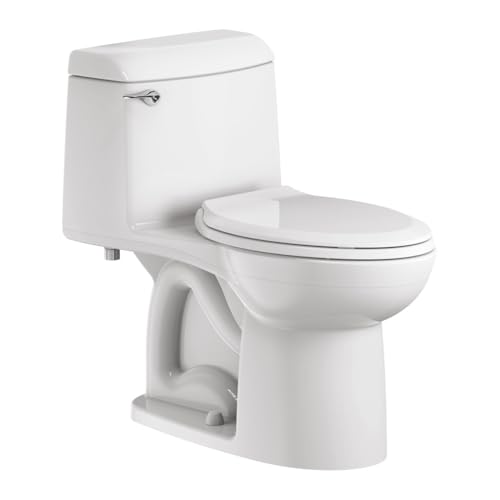
The American Standard Champion 4 combines the widest trapway in its class (2.375 inches) with a 3-inch flush valve and earns a 1,000-gram MaP Premium score -- making it the strongest gravity two-piece toilet available at its price point.
The Champion 4's 2.375-inch fully glazed trapway was engineered specifically to eliminate clogs. American Standard tested this design with materials including golf balls and plastic bags in factory validation, and the real-world data from owner reviews confirms the engineering intent: clog complaints are rare in long-term ownership reviews of the Champion 4 compared to category averages.
The 1.6 GPF rating means the Champion 4 does not qualify for EPA WaterSense certification and will not earn a water utility rebate. That is a genuine tradeoff for buyers in high-cost water districts. However, for users whose primary concern is never having to plunge their toilet, the Champion 4's combination of oversized trapway and 3-inch valve is a proven, durable solution. Parts for the Champion 4 are stocked at most hardware retailers nationwide.
The Champion 4 remains the go-to recommendation for households with children, heavy use patterns, or a history of clogs that have persisted across multiple toilet replacements. The 2.375-inch trapway is genuinely oversized and it shows in both MaP testing and real-world owner reports.
The TOTO Aquia IV pairs TOTO's Double Cyclone flushing system with a true dual-flush mechanism at 1.0 and 1.28 GPF, delivering EPA WaterSense performance and strong MaP scores in a sleek modern profile.
TOTO's Double Cyclone in the Aquia IV uses two nozzles angled to create a centrifugal rinse pattern across the bowl. The 1.28 GPF full flush earns a perfect 1,000-gram MaP score -- matching the UltraMax II's rating -- well above the WaterSense minimum and more than adequate for heavy household use patterns. The 1.0 GPF partial flush is rated at approximately 350 to 400 grams, which is sufficient for its intended use but should not be used for solid waste.
The Aquia IV's dual-flush actuator is a push-button plate on the tank lid -- one button for the partial flush, one for the full flush. Some owners report the tactile distinction between buttons is not immediately intuitive, which can lead to accidental partial flushes. That said, the mechanism is reliable long-term and TOTO's warranty covers the actuator. This is the most recommended dual-flush toilet for water-efficiency-focused households based on the combination of Double Cyclone technology and verified MaP performance.
The Aquia IV resolves the core problem with budget dual-flush toilets: the full flush actually works. Too many inexpensive dual-flush models earn sub-500 gram MaP scores on the full flush, creating a toilet that saves water on paper but generates extra flushes in practice. The Aquia IV's perfect 1,000-gram rating closes that gap completely.
The Kohler Cimarron uses Kohler's AquaPiston canister valve -- a 3-inch opening technology that delivers water from all sides of the canister rather than a single flapper opening -- and earns EPA WaterSense certification at 1.28 GPF with MaP scores typically in the 900-gram range.
Kohler's AquaPiston canister is a meaningful improvement over a standard flapper. Because the canister lifts and water enters from 360 degrees around the base, the initial rush of water into the bowl is more uniform and hydraulically consistent than a one-directional flapper opening. Kohler reports the AquaPiston is 90 percent less likely to leak compared to a standard flapper, which is relevant because slow tank leaks that go undetected are a significant source of residential water waste.
Owner reviews of the Cimarron are positive across the 2.5 to 4-year ownership window, with most complaints focused on the standard gravity limitations common to all 2-inch-class trapway toilets rather than specific Cimarron faults. For buyers in the EPA WaterSense market who want a reliable Kohler product without the premium TOTO price, the Cimarron is the practical choice. Kohler's one-year warranty is industry standard; their parts availability at retail is excellent.
The AquaPiston is genuinely better than a flapper for long-term leak prevention, and that functional advantage matters more over a 10-year ownership period than the MaP score gap between the Cimarron and a 1,000-gram model for households with typical use patterns.
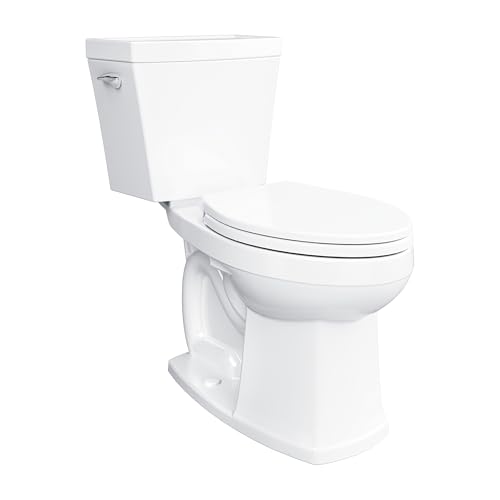
The Gerber Avalanche with Flushmate pressure-assist technology delivers MaP Premium performance (1,000 g) using 1.1 GPF -- the strongest grams-per-gallon ratio of any widely available toilet -- with the expected pressure-assist noise tradeoff.
The Flushmate pressure vessel inside the Gerber Avalanche requires a minimum supply pressure of 20 PSI to charge properly. Most residential municipal connections run 40 to 80 PSI, so this is rarely an issue. However, homes on private well systems with pressure tanks set to a low range, or those at the far end of municipal supply lines, should verify their static supply pressure before specifying a pressure-assist toilet.
Long-term owner reviews of pressure-assist Gerber models consistently rate clog resistance at or near the maximum and noise at the minimum acceptable end of the scale. The practical recommendation is to reserve this technology for bathrooms where the toilet will see heavy daily use -- a master bath with a family of four, a commercial half-bath -- and to use quieter gravity or tornado-flush technology in bathrooms adjacent to bedrooms.
Gerber's commercial reputation is built partly on the Avalanche's reliability in restaurant and office installations, where multiple daily users and variable waste loads stress gravity toilets. In those contexts, the noise is irrelevant and the clog elimination is exactly what facilities managers want.
The Woodbridge T-0001 is a contemporary one-piece dual-flush toilet offering 0.8 and 1.6 GPF modes in a sleek skirted profile at a price point substantially below TOTO and Kohler -- with adequate MaP performance for most standard household use.
The Woodbridge T-0001 appeals to buyers who prioritize bathroom aesthetics alongside functional performance. The skirted trapway conceals plumbing lines and creates a modern, elongated silhouette that reads as more expensive than its price. The soft-close seat and chrome push-button dual-flush actuator are included -- features that often add cost on competing models.
Performance is the T-0001's limitation relative to TOTO and Kohler. The 600-gram MaP score on the full flush means it will handle standard household use comfortably but will be more prone to clogging than a Champion 4 or UltraMax II in heavy-use scenarios. The 0.8 GPF partial flush is borderline adequate for liquid waste only. Owner reviews support this characterization: the T-0001 performs reliably in guest bathrooms and low-to-moderate use settings, with occasional complaints arising in high-use installations.
The Woodbridge T-0001 is best positioned as a guest bath or secondary bath option where aesthetics matter and daily use intensity is moderate. Specify a TOTO or American Standard model for primary family baths where clog resistance is non-negotiable.

The American Standard Cadet 3 is an EPA WaterSense-certified 1.28 GPF gravity toilet with a 2.125-inch fully glazed trapway and a consistent MaP score in the 750 to 800 gram range -- a solid, proven design that has been refined over two decades.
The Cadet 3 represents American Standard's core residential gravity offering, positioned below the Champion 4 in clog resistance but above entry-level models in performance. Its 2.125-inch fully glazed trapway is the standard for quality mid-range gravity toilets. The 800-gram MaP score reflects a toilet that will handle normal household use reliably, including households with teenagers and adult family members, without the clog incidents that plague sub-600-gram models.
Replacement flappers, fill valves, and handles for the Cadet 3 are available at virtually every hardware retailer in North America. That parts accessibility matters over a 15 to 20-year ownership window when minor components inevitably need replacement. American Standard's DuraClean surface on newer Cadet 3 configurations provides some improvement over standard vitreous china in stain resistance, though it does not match TOTO's SanaGloss in published performance data.
The Cadet 3 is the safe, dependable replacement choice for homeowners who want proven performance, easy future maintenance, and a price point that leaves budget for other bathroom projects. It lacks the engineering spectacle of the Champion 4 or UltraMax II but rarely generates complaints from owners in appropriate use contexts.
Trapway diameter directly determines the maximum solid waste that can pass through without clogging. A fully glazed 2.375-inch trapway (American Standard Champion 4) clears waste that would clog a standard 2-inch trapway regardless of flush system. Trapway glazing prevents organic buildup on the ceramic surface that would otherwise narrow the effective passage over time. Every high-MaP toilet pairs its flush system innovation with an oversized, fully glazed trapway -- the two work together rather than independently.
The trapway is the S-shaped channel at the base of the bowl that waste travels through to reach the drain. Its diameter is measured at the narrowest point. A toilet with a 3-inch flush valve but a 2-inch trapway will still clog because the bottleneck is the trapway, not the valve. The combination of large flush valve, oversized trapway, and adequate tank water volume is what produces a 1,000-gram MaP score.
Glazing inside the trapway serves a secondary but important function over the life of the toilet. Unglazed or partially glazed trapways develop mineral scale and biofilm accumulation that progressively narrows the effective passage. A toilet that performs adequately at installation may develop a clog tendency 5 to 10 years later due to trapway buildup. Fully glazed trapways resist this degradation substantially. When a manufacturer specifies "fully glazed trapway," the glaze extends continuously from the bowl outlet through the entire S-trap channel to the outlet at the floor flange.
Skirted or concealed trapway designs present a tradeoff: they create a cleaner visual appearance and easier exterior cleaning, but the skirting makes trapway access for unclogging more difficult. Most skirted toilets, including the Woodbridge T-0001 and the Swiss Madison Concorde, maintain a standard internal trapway size despite the exterior shroud. The visual simplification does not improve internal hydraulics.
For related guidance on how flushing power interacts with drain line design, see our article on common toilet drain problems and solutions and our guide to toilet trapway sizes explained.
EPA WaterSense is a voluntary certification program administered by the US Environmental Protection Agency that identifies water-efficient products meeting both efficiency and performance standards. For toilets, WaterSense certification requires two things: the toilet must use 1.28 gallons per flush or less, and it must pass MaP testing at a minimum threshold of 350 grams per flush.
The 350-gram MaP threshold is the program floor, not a performance target. A toilet scoring exactly 350 grams will clear waste most of the time for most users, but will underperform in high-use settings or with above-average solid waste loads. The WaterSense label is a necessary but not sufficient indicator of performance -- always check the specific MaP score for the model you are considering.
WaterSense certification also unlocks utility rebates in most US water districts. Programs vary by location, but rebates of 50 to 200 dollars per toilet are common in California, Texas, Arizona, and other water-stressed states. The EPA maintains a WaterSense product finder at epa.gov/watersense that lists currently certified toilet models. Many manufacturers maintain WaterSense certification on their product pages, but the EPA database is the authoritative source because certifications can lapse if a manufacturer does not renew.
For more detail on how EPA WaterSense interacts with state building codes, see our guide to water-efficient toilets and rebates.
Choosing a flushing system is fundamentally a process of matching technology to use context. Start with these four questions:
How many people use this toilet daily? One to two users per day is low intensity. A standard gravity toilet scoring 700 to 800 grams on MaP will handle low-intensity use without issues. Three or more daily users, especially including children, creates higher demand. Specify a 900+ gram model -- TOTO Drake II, American Standard Champion 4, or Kohler Cimarron -- for medium-to-high intensity residential use.
Is water cost or consumption a priority? If utility rebates or water conservation matter, limit selection to EPA WaterSense certified 1.28 GPF or lower models and verify MaP scores above 600 grams. Avoid the trap of choosing 0.8 GPF ultra-efficient toilets that require double-flushing -- the double flush negates the savings.
Is the installation in a bedroom-adjacent bathroom? Pressure-assist toilets are effective but audibly intrusive. Choose gravity or tornado-flush technology for bathroom locations where noise at night is a quality-of-life concern.
Has there been a persistent clog history? If previous toilets in the same location have required regular plunging, the issue may be the drain line rather than the toilet. Before spending more on a premium toilet, verify the drain slope (minimum 1/4 inch per foot toward the main stack) and check for partial blockages in the line. If the drain is clear, the Champion 4's 2.375-inch trapway or a pressure-assist model will resolve most stubborn clog patterns.
For a broader comparison of top-rated models across all categories, see our best flushing toilets guide and our specific roundup of the best toilets for clog prevention.
MaP Premium designation is awarded to toilets that clear 1,000 grams or more in a single flush at their rated GPF. A score above 1,000 grams -- the test ceiling -- also earns the Premium designation. Many TOTO, American Standard Champion 4, and Gerber pressure-assist models earn MaP Premium status.
No. Flush strength depends on the combination of water volume, valve speed, bowl geometry, and trapway design. A well-engineered 1.28 GPF toilet routinely outperforms a poorly designed 1.6 GPF toilet on MaP testing. GPF measures water consumption, not performance. Always check the MaP score separately.
TOTO's Tornado Flush uses two or three angled nozzles instead of traditional rim holes to send water into the bowl in a centrifugal spiral. This wets the full bowl surface and concentrates hydraulic force at the trapway entrance, producing higher MaP scores than most standard gravity designs at the same GPF.
The flush system and MaP score are determined by the bowl geometry, trapway, and flush valve design -- not by whether the toilet is one-piece or two-piece. A two-piece toilet with a 3-inch valve (Champion 4) can match or exceed a one-piece toilet's MaP score. One-piece toilets offer fewer leak points at the tank-to-bowl joint, but that is a durability consideration, not a flushing one.
Pressure-assist toilets produce a distinctive sharp sound -- typically in the 85 to 95 dB range at close range for the pressure discharge -- compared to the quieter gurgling of gravity toilets (60 to 75 dB). The difference is consistently the leading complaint in owner reviews of pressure-assist models. In commercial settings where restrooms are separate from sleeping areas, the noise is rarely cited as a problem.
A fully glazed trapway has a smooth ceramic glaze applied through the entire interior S-trap channel from the bowl outlet to the floor flange outlet. The glaze reduces friction, prevents mineral and biofilm buildup, and maintains effective passage diameter over the life of the toilet. Partially glazed trapways omit glaze in sections where application is difficult, creating rougher surfaces that accumulate buildup faster.
No. Pressure-assist technology requires a specially designed tank designed to house and contain the pressurized vessel. Standard gravity tanks cannot be retrofitted. If you want pressure-assist performance, you need to replace the entire toilet.
Most pressure-assist systems using Flushmate technology require a minimum static supply pressure of 20 PSI to charge the vessel adequately. The maximum operating pressure is typically 80 PSI. Municipal residential connections typically deliver 40 to 80 PSI; private wells and buildings at the end of supply lines may fall below the 20 PSI minimum.
Yes, but the savings are often less than marketing suggests. If users correctly select the partial flush for liquid waste approximately 60 percent of the time, EPA estimates project annual savings of 4,000 to 6,000 gallons per person versus a 1.6 GPF single-flush toilet. The savings disappear if users default to the full flush for all waste, or if the partial flush underperforms and triggers extra flushes.
The original TOTO Drake uses a G-Max gravity flush system at 1.6 GPF. The Drake II is an updated model using the Double Cyclone flush technology at 1.28 GPF with EPA WaterSense certification. The Drake II consistently outperforms the original Drake in MaP testing despite using less water per flush, due to the improved nozzle hydraulics. For new installations, the Drake II is the current recommended version.
Standard rubber flappers in gravity toilets typically last 4 to 7 years before degrading and causing slow leaks. Canister valves (Kohler AquaPiston) and ceramic disc valves generally last longer -- 10 to 15 years in normal service. Pressure-assist vessels (Flushmate) carry 10-year warranties and are designed for similar service life. Toilet fill valves across all systems typically need replacement every 7 to 10 years.
Bowl shape (elongated vs. round) has minimal effect on flushing performance. Both shapes can be designed around identical trapway diameters and flush valve systems. The choice between elongated and round is primarily a comfort and space consideration: elongated bowls provide more seating area and are preferred by most adults; round bowls have a smaller footprint and suit compact bathroom configurations.
Comfort height (16 to 18 inches to the rim, also called ADA height or chair height) versus standard height (14 to 15 inches) does not meaningfully affect flushing performance. The flush system and trapway design are independent of seat height. Comfort height is the standard recommendation for adults and required for ADA compliance.
Kohler's AquaPiston is a canister-style flush valve that opens from all sides simultaneously, allowing water to enter the bowl from 360 degrees around the canister base rather than through a single flapper opening. Kohler states this produces a faster, more complete bowl rinse than a standard flapper. The AquaPiston is used across Kohler's mid-to-premium toilet lines including the Cimarron and Highline.
TOTO offers a one-year warranty on parts and finish for most models, with some premium lines extending to three years. Kohler provides a limited lifetime warranty on toilet vitreous china and a one-year warranty on flushing mechanisms. American Standard offers a one-year limited warranty on parts. Gerber provides a limited lifetime warranty on the vitreous china and one year on flush components. Flushmate pressure vessels carry their own 10-year vessel warranty independent of the toilet brand.
Yes, by a meaningful margin in long-term maintenance terms. Traditional rim-hole toilets have underside channels where water exits through multiple small holes. These channels accumulate mineral scale and bacteria that standard cleaning tools cannot reach effectively. Rimless designs (TOTO Tornado Flush, some Geberit and Swiss Madison models) direct water from nozzles that are fully accessible for cleaning, eliminating hidden bacterial accumulation points.
MaP (Maximum Performance) testing uses a standardized soybean paste to simulate solid waste in 50-gram increments, measuring the maximum grams cleared in a single flush. The protocol was developed by the California Urban Water Conservation Council and Toronto and Region Conservation and is independently administered. The searchable database of results is maintained at map-testing.com. MaP testing is the industry standard for objective toilet performance comparison in North America.
California requires 1.28 GPF or less for all new residential toilet installations and replacements under the California Green Building Standards Code (CALGreen). Several California water districts impose stricter local requirements. Texas, Colorado, and a growing number of other states have adopted similar 1.28 GPF maximums for new construction.
For most households in 2026, TOTO's Tornado Flush platform -- led by the UltraMax II and Drake II -- represents the best balance of MaP-certified flushing power, quiet operation, EPA WaterSense efficiency, and long-term hygiene. Buyers with persistent clog issues who need the absolute maximum clearing power should choose the American Standard Champion 4 (gravity) or a Gerber Avalanche (pressure-assist). Dual-flush buyers unwilling to sacrifice performance should choose the TOTO Aquia IV with Double Cyclone over budget dual-flush alternatives that underdeliver on the full-flush cycle. Flush technology choice ultimately comes down to three variables: MaP score verified independently, GPF compliance with local code, and noise tolerance -- rank them in that order and the correct choice becomes clear.
Learn why toilet trapways curve like an S, how each bend blocks sewer gas, and what the shape means for clogs and…
Read the guideAlmost every US toilet has a left-side handle. Learn the plumbing and mechanical reasons behind the layout and when it actually changes.
Read the guideHome toilets rely on tanks because household water lines lack the pressure that public flushometer systems use to flush straight from the…
Read the guide