
Best French Toilets (2026)
Toilets4.6
Refined, softly curved one-piece and skirted silhouettes with a polished, Parisian-elegant profile, paired with verified MaP flush scores rather than a stylist's…
Read the guideA data-driven comparison of flush mechanics, trap geometry, water efficiency, and clog resistance between pan-style squat toilets and modern Western pedestal models -- so you can choose the right fixture for any install.
Research updated June 2026.
Modern sitting toilets with pressure-assist or tower-flush technology -- such as the TOTO Drake or American Standard Champion 4 -- deliver measurably stronger, more reliable flush power than most squat toilet designs. Squat pans excel at drain alignment and minimal trapway blockage, but high-MaP pedestal models hold the overall flushing advantage for residential and commercial use.
Flush power depends on three interacting factors: the volume of water released per flush (GPF), the speed at which that water enters the bowl (determined by rim-hole geometry or a single-jet siphon jet), and the depth and curvature of the trapway. A toilet that releases water slowly through multiple small rim holes loses kinetic energy before waste reaches the trap, while a single-port or tower-flush design concentrates water into a high-velocity jet that scours the trap opening and initiates the siphon faster. MaP (Maximum Performance) testing quantifies this by measuring the maximum grams of soybean paste a toilet can flush in a single attempt -- the industry benchmark for flush power comparison.
The Maximum Performance (MaP) testing program, administered independently and referenced by organizations including the EPA WaterSense program, rates toilets on a scale where 250 g is the minimum acceptable threshold and 1,000 g represents the highest rating available. Most current sitting toilets tested by MaP fall between 500 g and 1,000 g. Squat toilet pans, by contrast, are rarely submitted for formal MaP testing because their geometry, installation depth, and reliance on a separate flush valve or cistern differ fundamentally from pedestal configurations.
Understanding the mechanics behind each style is critical before making a direct flush-power comparison.
A squat toilet pan relies on a flush valve or overhead cistern that releases water across a flat ceramic surface, using gravity and slope to carry waste through a floor-level drain. Because there is no siphonic trapway below the pan itself, the flush does not create a sustained vacuum siphon the way a pedestal toilet does -- water flows across the pan and into a floor trap rather than pulling waste through a curved internal tube. This makes the flush fast and simple, but it also means squat toilets depend on adequate floor drainage slope and a separate P-trap or S-trap installed in the floor to prevent sewer gas from entering the room.
Squat pan flush designs fall into two broad categories. The first uses a wall-mounted cistern and a gravity-fed flush valve, directing water through a channel along the rear of the pan. The second uses a flushometer or high-pressure valve connected directly to the water supply, common in commercial facilities across South Asia, Southeast Asia, and the Middle East. Both approaches achieve the same goal: covering the pan surface with water rapidly enough to push waste down the drain without requiring the user to touch the fixture.
Because squat pans have no internal trapway, the ceramic bowl itself is relatively simple to manufacture and install. However, the drain system must include a floor trap with a water seal to prevent odors -- and if that floor trap dries out or is poorly installed, odor problems become significant. This is a real-world maintenance consideration that any plumber installing a squat toilet in a Western building must address during rough-in.
Plumbing engineers who install squat toilets in commercial facilities outside their region of origin frequently note that the floor trap depth -- typically 50 mm water seal required by most codes -- is the single most common source of post-install complaints. Without it, the absence of an internal toilet trapway leaves the room directly connected to the sewer. In residential retrofits, this detail is often overlooked during renovation planning.
A sitting toilet generates flush power through a siphonic action initiated by rapid water entry into the bowl. Water enters through the rim or a dedicated siphon jet at the base of the bowl, fills the trapway quickly, and creates a vacuum that pulls waste through the curved trap channel with sustained suction -- a fundamentally different mechanism from gravity flow across a flat pan surface. This siphon effect amplifies the cleaning power beyond what the raw water volume alone would achieve, which is why a 1.28 GPF high-efficiency toilet can outperform older 3.5 GPF models in MaP tests.
The TOTO Drake II, for example, uses a Double Cyclone flushing system that replaces multiple rim holes with two nozzle ports that generate a centrifugal water flow across the entire bowl surface while simultaneously charging the siphon jet. Published MaP data places the Drake II at 1,000 g -- the maximum rating -- using only 1.28 gallons per flush. The American Standard Champion 4 achieves a MaP score of 1,000 g at 1.6 GPF using a 2-3/8-inch fully glazed trapway, the largest in its class, according to American Standard's published specifications.
The Kohler Cimarron with AquaPiston flush technology uses a canister valve that opens 360 degrees, delivering 90 percent more water directly into the bowl than a standard 3-inch flapper valve. Kohler's published testing data shows this design dramatically reduces the "slow start" problem where water entering a bowl hesitates at the rim before dropping to the jet. Faster bowl entry means the siphon initiates sooner, and the waste is pulled through the trap more completely.
The shift from rim-hole to single-nozzle or dual-nozzle flushing in premium sitting toilets during the 2010s was not driven by aesthetics -- it was an engineering response to the federal 1.6 GPF mandate. Manufacturers needed to do more with less water, and concentrating the flush through fewer, larger openings at calculated angles proved to be the most effective solution. The result is that a 2026-era 1.0 GPF toilet like the Woodbridge T-0001 dual flush can outperform many older 3.5 GPF toilets in raw MaP scoring.
Squat toilets have a structural advantage in clog prevention because they have no internal trapway to obstruct -- waste falls directly through a floor-level drain opening that is typically wider than any pedestal toilet trapway. Sitting toilets compensate through trapway design: fully glazed, oversized trapways in models like the American Standard Champion 4 and TOTO Drake minimize friction and debris accumulation, achieving comparable real-world clog resistance to the open-drain squat design. For sitting toilets, fully glazed trapways rated at 2 3/8 inches or wider are the practical benchmark for clog-resistant performance.
Clog data from plumbing service records consistently shows that the most common cause of toilet blockages in Western sitting toilets is trapway diameter below 2 inches combined with a non-glazed ceramic surface inside the trap. Rough, unglazed ceramic creates friction that allows fibrous material to snag and accumulate. Fully glazed trapways -- where the smooth ceramic coating extends all the way through the internal S-bend -- reduce this friction substantially.
The American Standard Champion 4 is specifically marketed on its fully glazed 2-3/8-inch trapway, and aggregated owner reviews on retail and plumbing forums consistently identify it as one of the least frequently clogged toilets in residential use. The TOTO Drake uses a 2 1/8-inch glazed trapway, which is smaller but paired with the G-Max or E-Max flushing system that generates sufficient velocity to minimize debris accumulation.
Squat toilets, for their part, almost never clog at the pan level. Blockages when they occur are downstream in the floor trap or the building drain, and they tend to present differently -- a slow drain rather than a standing-water overflow. This is an important practical distinction: a clogged squat toilet is less likely to overflow onto the bathroom floor, while a clogged sitting toilet with a full tank behind it can overflow quickly if the siphon fails to clear.
EPA WaterSense-certified sitting toilets must use 1.28 gallons per flush or less while meeting minimum MaP performance thresholds of 350 g, and hundreds of current models achieve 1,000 g MaP scores at 1.28 GPF or below. Squat toilet cisterns and flush valves are typically rated by the manufacturer rather than by an independent WaterSense certification process, and many commercially available squat toilet flush valves use 1.5 to 2.0 liters (0.4 to 0.53 GPF) for a liquid flush or 4 to 6 liters (1.05 to 1.58 GPF) for a full flush -- but these figures are not independently verified and vary widely by region and product. In markets where WaterSense certification is a purchasing requirement, sitting toilets hold a clear advantage in documented water efficiency.
The EPA WaterSense program, established in 2006, created a certification pathway that requires third-party laboratory testing before a toilet can display the WaterSense label. As of 2026, over 3,000 toilet models carry WaterSense certification. No squat toilet pan in the US market carries WaterSense certification as a complete unit, primarily because the certification applies to toilet assemblies, and squat pans are sold separately from their cistern or flush valve hardware.
This does not mean squat toilets are inherently less water-efficient -- it means the efficiency claim is harder to verify. A well-configured squat toilet with a quality dual-flush valve can use comparable water volumes to a WaterSense-certified sitting toilet. But a poorly specified flush valve on a squat pan installation can waste far more water per flush than any modern sitting toilet, since there is no certification process ensuring minimum efficiency.
| Metric | Squat Toilet Pan | Modern Sitting Toilet | Notes |
|---|---|---|---|
| Siphon Action | None (gravity drain) | Full siphonic | Siphon amplifies flush power beyond raw GPF |
| Internal Trapway | None | Fully glazed 2 1/8" to 4" wide | Squat relies on separate floor trap |
| MaP Test Score | Not independently rated | 250 g to 1,000 g (label required) | Most premium sitting toilets score 800 g+ |
| GPF Range (typical) | 0.4 to 1.6 GPF (unverified) | 0.8 to 1.6 GPF (WaterSense verified) | Sitting toilet GPF independently certified |
| WaterSense Certification | Not available as a unit | 3,000+ certified models | Major purchasing advantage for sitting toilets |
| Clog Risk at Bowl Level | Very low (no trapway) | Low (fully glazed oversized trap) | Winner: Squat for raw drain clearance |
| Overflow Risk When Clogged | Low (slow drain pattern) | Moderate (tank water can overflow) | Squat fail mode is safer |
| Flush Velocity | Moderate (gravity-dependent) | High (siphon jet + tower/canister valve) | Sitting toilet wins for bowl scouring |
| Maintenance Complexity | Low (minimal internal parts) | Moderate (flapper, fill valve, flush valve) | Squat tanks have fewer failure points |
| Bowl Self-Cleaning | Limited (flat surface) | High (cyclone or rim wash) | Sitting toilet rim wash superior |
Posture does not directly affect the flush mechanism of either toilet type -- flushing is independent of how the user is positioned. However, the squatting posture associated with squat toilets affects the physical path waste takes before entering the drain: the anorectal angle straightens in a full squat, which tends to result in waste falling more directly and compactly into the drain opening compared to the seated position. This means that for the squat toilet, the physical properties of waste entering the drain are somewhat more favorable for unobstructed passage, but this is a biological factor rather than a plumbing or flush-power factor.
This is a nuance that sometimes gets lost in comparisons that conflate health claims with plumbing performance. The flush mechanism of a squat toilet -- gravity-fed water across a pan surface -- is unchanged regardless of posture. The relevant plumbing question is whether waste falls predictably into the drain opening, and squat toilet geometry does make this somewhat more consistent than in sitting toilets, where waste first contacts the bowl surface before the flush carries it to the trap.
For plumbing professionals evaluating installation options in healthcare, eldercare, or public facilities, this is a secondary consideration at most. Primary flush performance factors remain water volume, valve type, trapway size, and drain slope.
Based on MaP test data and published manufacturer specifications, the toilets consistently scoring at or near the 1,000 g MaP maximum include the TOTO Drake (G-Max and E-Max), TOTO Drake II (Double Cyclone, 1.28 GPF), TOTO UltraMax II (Tornado Flush, 1.0 GPF), American Standard Champion 4 (1.6 GPF), American Standard Cadet 3 (1.28 GPF), and Kohler Cimarron (AquaPiston, 1.28 GPF). These models represent the benchmark for sitting toilet flush power and are the most frequently cited in plumber recommendations for problem installs where clog resistance is critical.
The best flushing toilets available in 2026 share several design traits: fully glazed trapways, single large-port or dual-nozzle flush entry, and a tank or valve design that opens rapidly to maximize initial flow velocity. These characteristics matter more than raw GPF in determining real-world flush power.
The TOTO UltraMax II deserves specific mention for achieving a 1,000 g MaP rating at only 1.0 GPF -- the lowest water volume of any 1,000 g-rated model in its size class. It uses TOTO's Tornado Flush system, which directs water through two nozzle ports in a centrifugal pattern that scours the entire bowl surface before engaging the siphon jet. For installations in drought-restricted areas where ultra-low GPF is required, this model represents the current peak of efficiency-to-power engineering in a sitting toilet.
Woodbridge's T-0001 dual-flush model uses a tower flush valve and achieves strong MaP scores (800 g+ for the full flush mode) at 1.6/1.0 GPF dual-flush configuration. Swiss Madison's Chateau series uses a skirted design with a concealed trapway, which makes MaP verification from third parties more limited -- but published scores land in the 500 to 800 g range, making it a mid-tier choice for flush power. The Gerber Avalanche uses a 3-inch flush valve and fully glazed 2 1/8-inch trapway, scoring above 600 g in published MaP data.
For more on how these models compare on specific metrics, see our guide to high-MaP-score toilets and our breakdown of best flushing toilets for low water pressure installs.
Installing a squat toilet in a building designed for sitting toilets requires several plumbing modifications: the rough-in drain must be repositioned to a floor-level opening rather than a wall or floor stub-out configured for a pedestal toilet, a floor trap with a minimum 50 mm water seal must be installed to replace the internal trapway the sitting toilet would normally provide, and the supply line must be repositioned to feed a wall-mounted cistern or floor-level flush valve rather than a pedestal tank. These modifications typically require opening the floor slab in concrete construction and repositioning multiple supply and drain rough-ins -- a significant renovation scope that most residential plumbing contractors estimate at two to four times the cost of a standard toilet replacement.
In markets where squat toilets are standard -- including most of South Asia, Southeast Asia, parts of the Middle East, and Japan's older residential stock -- the rough-in plumbing is designed from the foundation up to accommodate pan-style fixtures. Floor drain traps are pre-installed at the correct depth, supply lines are positioned at the correct height for wall-mounted cisterns, and floor slopes are built into the subfloor during construction. Retrofitting a Western bathroom to these specifications in an existing building is not a simple swap.
Conversely, installing a sitting toilet in a building designed for squat fixtures requires the opposite set of modifications: filling in the floor-level drain, installing a new wax-ring stub-out at the correct height and position, running a supply line to tank height, and often reinforcing the floor to carry the weight of a ceramic pedestal. Neither conversion is trivial.
For anyone comparing these fixture types on flush performance alone without considering the plumbing context, the installation cost differential almost always tips the practical decision toward whatever type the building was designed for.
Plumbing contractors in mixed-use buildings that serve international populations -- airports, hospitals, and commercial facilities near universities with large international student bodies -- sometimes install both fixture types in separate stalls within the same restroom. The supply and drain rough-in for each type is kept entirely separate, which is far more cost-effective than trying to make one system do both jobs. If you are planning a large commercial build where both fixture types are a practical requirement, design them as parallel installations from the rough-in stage rather than attempting any shared infrastructure.
Flush noise in sitting toilets is primarily a function of tank fill rate and the siphon break at the end of the flush cycle. Modern toilets with dual-float fill valves and soft-close flappers fill more quietly than older designs. TOTO's Tornado Flush and Kohler's AquaPiston systems are notably quieter than older single-port designs because the centrifugal water flow dampens the initial impact noise. High-efficiency toilets at 1.28 GPF also produce less siphon break noise than older 3.5 GPF toilets because the water volume draining at the end of the cycle is smaller.
Squat toilet flush noise is primarily the sound of water cascading across a ceramic pan surface -- a broad, high-frequency splash rather than the lower rumble of a siphon cycle. Many users in commercial settings report squat toilet flush events as louder and more spatially prominent than sitting toilet flushes, though this varies significantly with the flush valve type and cistern size.
Odor control is where the design distinction matters most. A sitting toilet's S-trap or P-trap maintains a permanent water seal inside the bowl, preventing sewer gas from rising into the room between uses. A squat toilet relies on a separate floor trap for this function -- and if that trap is not properly maintained or goes dry from infrequent use, odor problems occur immediately. In commercial facilities with squat toilets, automatic trap primers are sometimes installed to ensure the floor trap never dries out. In residential installs, this is a maintenance requirement that sitting toilets do not share.
For related guidance on odor control in low-flush installations, see our article on common toilet flush problems and fixes.
ADA Standards for Accessible Design (ADA Standards 604) specify that accessible toilet seats must be between 17 and 19 inches above the finished floor. Squat toilets are installed at or near floor level and are structurally incompatible with these requirements -- a squat toilet cannot be made ADA-compliant for ambulatory use. This makes squat toilets effectively unusable in any facility covered by the ADA in the United States, including all new commercial construction and public accommodations, unless a parallel accessible sitting toilet stall is provided.
Sitting toilets, by contrast, offer a wide range of ADA-compliant configurations. Comfort height toilets (17 to 19 inches seat height) from TOTO, Kohler, American Standard, and every major manufacturer are available with MaP ratings of 800 g or above and WaterSense certification. The TOTO Drake II in ADA-compliant configuration, for example, combines a 1,000 g MaP score with a 17.25-inch seat height and WaterSense certification at 1.28 GPF.
For eldercare, rehabilitation facilities, and any installation where accessibility compliance is required, sitting toilets are the only compliant option.
No. Modern sitting toilets with siphonic flushing and MaP scores of 800 g to 1,000 g flush more powerfully than most squat toilet designs, which rely on gravity flow across a flat pan surface without a siphon. Squat toilets have no internal trapway to obstruct, which reduces clog risk at the pan level, but this is not the same as flush power.
MaP stands for Maximum Performance and refers to an independent flush test that measures the maximum grams of waste surrogate (soybean paste) a toilet can remove in a single flush. Scores range from 250 g (minimum threshold) to 1,000 g (maximum rating). The higher the MaP score, the more confidently the toilet will clear waste. Most squat toilet pans are not submitted for MaP testing, making direct comparison difficult.
No squat toilet pan in the US market currently holds EPA WaterSense certification as a complete unit. WaterSense certification applies to full toilet assemblies tested as a unit, and squat pans are sold and installed separately from their flush hardware. This does not mean squat toilets cannot be water-efficient, but their efficiency is not independently verified the way sitting toilet GPF ratings are.
The American Standard Champion 4 is widely cited for having the largest fully glazed trapway of any mass-market sitting toilet, at 2-3/8 inches wide. This oversized, fully glazed trapway is the primary reason it achieves a 1,000 g MaP score and is consistently recommended for households with frequent clogging problems.
EPA WaterSense-certified sitting toilets use 1.28 GPF or less, with many ultra-high-efficiency models at 1.0 GPF. Squat toilet flush valves and cisterns typically use between 0.4 and 1.6 GPF depending on the manufacturer and configuration, but these figures are not independently certified in the US market the way WaterSense GPF ratings are.
Squat toilets are less prone to pan-level clogs because they have no internal trapway to obstruct. Blockages in squat toilet installations typically occur downstream in the floor trap or building drain, and they present as slow drainage rather than bowl overflow. Sitting toilets with fully glazed oversized trapways approach squat toilets in real-world clog resistance, but the squat design holds a structural advantage for raw drain clearance.
Yes, based on available data. The TOTO Drake and Drake II both achieve MaP scores of 1,000 g at 1.28 GPF using TOTO's G-Max or E-Max flushing systems. No equivalent independent performance certification exists for squat toilet pans, making the TOTO Drake the more verifiable choice for flush power performance.
Conversion costs vary widely by market and building type, but most residential plumbing contractors estimate $800 to $2,500 or more for a full conversion including rough-in repositioning, floor work, new fixture, and supply line adjustment. In concrete slab construction, costs are higher because slab cutting is required. Retrofitting in either direction is substantially more expensive than a like-for-like toilet replacement.
Yes. Because squat toilet pans have no internal trapway with a water seal, a separate floor trap with a minimum water seal depth (typically 50 mm per most plumbing codes) must be installed. If this floor trap dries out from infrequent use, sewer gas can enter the room. Sitting toilets have a permanent water seal inside the bowl that prevents this problem without maintenance.
No. ADA Standards for Accessible Design require toilet seats to be 17 to 19 inches above the finished floor. Squat toilets are installed at floor level and cannot meet this requirement. Any facility covered by the ADA that installs squat toilets must also provide a fully compliant sitting toilet in an accessible stall.
The Kohler AquaPiston is a canister-style flush valve that opens 360 degrees, delivering water into the bowl from all sides simultaneously. Kohler's published data shows this design releases 90 percent more water directly into the bowl per flush compared to a standard 3-inch flapper valve, which improves siphon initiation speed and overall flush efficiency in their Highline and Cimarron toilet lines.
The TOTO Tornado Flush, used in models like the UltraMax II and Aquia IV, replaces traditional rim holes with two nozzle ports that direct water in a centrifugal pattern around the bowl interior. This tornado-like water movement scours the entire bowl surface before engaging the siphon jet, producing thorough cleaning with less water. The UltraMax II achieves a 1,000 g MaP score using only 1.0 GPF with this system.
EPA WaterSense requires toilets to achieve a minimum MaP score of 350 g to qualify for certification, in addition to the 1.28 GPF or less water use requirement. In practice, most WaterSense-certified models substantially exceed this minimum, with the majority of premium models scoring 600 g to 1,000 g.
Yes, for the full-flush mode. The Woodbridge T-0001 dual-flush toilet uses a tower flush valve that achieves MaP scores above 800 g on the full flush (1.6 GPF) mode. The reduced flush (1.0 GPF) mode is designed for liquid waste only and scores significantly lower, which is by design. Dual-flush toilets with tower valves generally outperform those with flapper valves on MaP tests because tower valves open more rapidly.
The American Standard Cadet 3 is a strong mid-range option with a 1.28 GPF rating (WaterSense certified) and MaP scores in the 800 g range. The Champion 4 uses a larger trapway and achieves a higher MaP ceiling at 1.6 GPF. The Cadet 3 is the better choice where water efficiency is the primary concern; the Champion 4 is better where maximum clog resistance is the priority.
They can, but it is not guaranteed. Some squat toilet flush valves are set to release very small volumes (under 0.5 GPF) for liquid waste, which beats most sitting toilet configurations. However, because squat toilet GPF is not independently verified or certified in the US market, the actual water savings vary widely by product and installation. WaterSense-certified sitting toilets provide a guaranteed maximum of 1.28 GPF with independent verification.
A siphon jet is a dedicated water inlet port located at the base of a sitting toilet bowl, positioned to direct a concentrated stream of water into the entrance of the trapway. Its purpose is to rapidly fill the trapway with water and initiate the siphonic vacuum that pulls waste through the trap. Toilets without a siphon jet (wash-down designs) rely entirely on rim water flow to push waste toward the trap, which is less powerful.
Check the manufacturer's product specifications page or the toilet's specification sheet. A fully glazed trapway will be explicitly listed as such. You can also look inside the trapway opening with a flashlight -- a fully glazed interior has the same smooth, shiny surface as the exterior of the bowl. An unglazed trapway will appear rougher and more matte in texture. Fully glazed trapways are standard in most American Standard, TOTO, and Kohler premium models.
The closest approximation is the wash-down style toilet used in Europe and Asia, which has a less curved internal trap and a shorter bowl profile -- closer to a gravity-drain design than a full siphonic design. These are not common in North America. In the North American market, the widest, most open sitting toilet trapways are in the American Standard Champion 4 line and TOTO's double cyclone models.
TOTO, Kohler, and American Standard consistently appear at the top of plumber recommendation surveys and aggregated owner reviews for long-term reliability. TOTO's ceramic glaze (CeFiONtect) and Kohler's trip lever and valve designs are frequently cited for lower service call frequency. Gerber offers strong reliability at a lower price point. Swiss Madison and Woodbridge are newer brands with growing positive owner review records but shorter long-term data histories than the established three.
For residential and commercial installations in North America, modern sitting toilets hold a decisive advantage in flush power, water efficiency certification, accessibility compliance, and odor control. Squat toilet pans offer a structural clog-resistance benefit through their open-drain design and perform reliably in buildings designed for them, but the absence of independent MaP testing and WaterSense certification makes direct flush-power comparison impossible on equal terms. If flush performance is your primary concern, the TOTO Drake II, TOTO UltraMax II, American Standard Champion 4, and Kohler Cimarron represent the current ceiling of sitting toilet flush engineering -- and all are supported by independently verified MaP scores and EPA WaterSense certification. Install the fixture type your plumbing rough-in was designed for, and if you are working with a sitting toilet install, choose any of these four models for confident, clog-resistant performance.
How we rank & our data sources
We do not run physical lab tests. Rankings are built from published, verifiable data and real owner feedback, never paid placement.
Researched by Marcus Bell · Last updated July 1, 2026 · Our review method
Refined, softly curved one-piece and skirted silhouettes with a polished, Parisian-elegant profile, paired with verified MaP flush scores rather than a stylist's…
Read the guide
Clean, low-profile silhouettes with real MaP-verified flush performance and efficient dual-flush water use, sized for a minimalist Nordic bathroom without sacrificing function.
Read the guide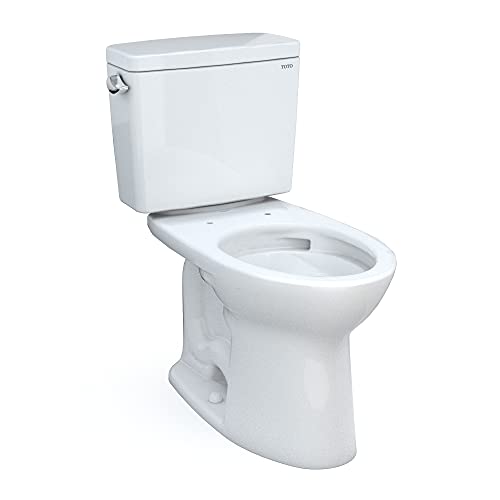
Classic two-piece toilets with tall tanks and elegant, understated proportions, the quiet country-house look that suits a traditional English bathroom without tipping…
Read the guide