
Best French Toilets (2026)
Toilets4.6
Refined, softly curved one-piece and skirted silhouettes with a polished, Parisian-elegant profile, paired with verified MaP flush scores rather than a stylist's…
Read the guideHow the size, number, and angle of rim jets determine whether your toilet flushes powerfully or leaves waste behind -- and what manufacturers have learned about optimizing both.
Research updated June 2026.
More rim holes spread water evenly around the bowl, reducing staining and improving rinsing coverage, but fewer, larger, precisely angled jets concentrate velocity and deliver stronger swirl force. The best-flushing toilets use optimized jet geometry -- not raw hole count -- to maximize MaP scores while staying within EPA WaterSense limits.
Every time you press the handle, water cascades from a ring of small openings drilled into the underside of the toilet rim. These are rim holes -- also called rim jets or rim ports -- and they are the hidden engineering variable that separates a sluggish 500-gram flush from one that clears a MaP-certified 1,000 grams of waste with a single pull.
Most homeowners never think about rim holes. Most plumbing guides skip them entirely. Yet toilet engineers at TOTO, Kohler, American Standard, and Gerber spend considerable R&D effort on jet geometry because it governs bowl rinse coverage, swirl momentum, clog resistance, and long-term cleanliness -- all without adding a single drop of extra water.
This guide explains exactly how rim holes work, what the research says about hole count versus hole size, why some high-performance toilets have eliminated the rim channel entirely, and how to read these specs when choosing a toilet for your home.
Toilet rim holes are small ports drilled into the inner ledge beneath the toilet rim through which tank water enters the bowl during a flush cycle. Water flows from the tank, through the rim channel (a hollow passage inside the porcelain rim), and exits through these jets at calculated angles to rinse the bowl walls and generate the rotational water column that forces waste through the trapway.
The rim channel acts as a manifold, distributing water from the tank inlet across the full circumference of the bowl. Each hole's diameter, angle relative to the bowl surface, and spacing determines how much of the bowl wall gets rinsed and with what velocity.
Standard toilets -- the kind found in most homes -- have between 6 and 30 rim holes depending on manufacturer design philosophy. Wide spacing between holes means each jet has more water pressure behind it but covers less surface area per hole. Close spacing means better coverage but each individual jet has less force.
The angle of the holes matters as much as the count. Holes angled tangentially (pointing sideways along the bowl wall) create a swirling motion that generates centrifugal force, helping water climb the bowl sides and then converge into the trapway. Holes angled more directly downward produce a curtain-wash effect, which is better for rinsing bowl walls but less effective at building swirl momentum.
Ceramic engineers designing rim hole geometry run computational fluid dynamics simulations to model flow velocity, turbulence, and coverage area at a given gallons-per-flush rate. The goal is a turbulent enough water column to suspend solids while maintaining enough swirl velocity to transport them fully through the trapway. This is why two toilets with identical 1.28 GPF ratings can have radically different MaP scores.
When a rim hole becomes partially blocked -- by mineral deposits, hard water scale, or debris -- the flush pattern changes. You may notice one section of the bowl wall not getting wet during a flush. That asymmetry reduces swirl efficiency and can result in waste deposits accumulating in the unrinsed zone.
Not necessarily. More holes mean better bowl rinse coverage and less staining, but they also mean each individual jet has lower velocity because the same water volume is divided among more openings. The highest MaP-scoring toilets optimize jet count and geometry together rather than simply maximizing hole count.
This is the core tension in rim hole design: coverage versus velocity.
High hole count (20 to 30+ holes) gives you a near-complete water curtain around the bowl interior. Every section of the bowl wall gets rinsed on each flush. This is excellent for hygiene -- bacteria and mineral deposits have fewer dry zones to colonize. It also prevents the brown or gray staining pattern you see in toilets where water never reaches certain sections of the rim curve.
Low hole count (6 to 12 holes) means each jet carries substantially more water per opening. The velocity at each point is higher, which generates more turbulence and swirl force. This can be advantageous for waste transport, particularly for solid waste that requires significant hydraulic momentum to move through the trapway.
The most honest answer is that hole count is a proxy for something more important: total swirl energy delivered to the water column at the start of the flush. A toilet with 10 precisely angled, correctly sized jets can outperform one with 28 smaller, randomly spaced holes on a MaP flush test while both use the same 1.28 gallons per flush.
MaP testing (Maximum Performance testing) measures how many grams of waste surrogate a toilet can reliably flush with a single activation. A score of 800g to 1,000g is considered excellent. The test does not distinguish between rim hole configurations -- it only records outcomes. Toilets that achieve 1,000g MaP Premium certification consistently tend to have either highly optimized jet geometry or a direct siphon jet supplementing the rim jets.
The siphon jet is a large, forward-facing port at the bottom of the toilet bowl that directs a concentrated stream of water into the trapway entrance to initiate the siphon action. It works alongside rim holes: rim jets rinse the bowl and create swirl, while the siphon jet provides the hydraulic "push" to pull waste through the trap.
Most toilets have both rim holes and a siphon jet. The two systems serve different phases of the flush cycle.
During the first fraction of a second after the flapper opens, water rushes from the tank into both the rim channel and the siphon jet. The siphon jet creates an immediate high-velocity stream aimed at the trapway entrance. This starts the siphon: it displaces water in the trapway, creates a pressure differential, and begins pulling the bowl contents through.
Simultaneously, rim jets flood the bowl walls with water. Their swirling action creates a rotating water column that concentrates bowl contents toward the center and then down into the trapway. The siphon action completes when air breaks the seal at the end of the flush.
In some older or very low-cost toilets, the siphon jet is absent or undersized. In those designs, rim jets alone must generate enough momentum to initiate siphon action -- which is why hole geometry is even more critical in washdown-style and rim-jet-only designs.
In TOTO's Tornado Flush system, the company essentially redesigned this whole architecture: rather than dozens of small rim holes, Tornado Flush uses two large nozzle ports positioned to create a powerful cyclonic swirl. The result is near-complete bowl coverage with fewer but larger jets and a more concentrated swirl pattern. This design achieves MaP scores of 1,000g while using only 1.28 GPF (Tornado Flush) or 1.0 GPF (in the TOTO Aquia IV dual-flush configuration on its 0.8 GPF full-flush setting paired with the larger flush).
TOTO's published engineering notes on the Tornado Flush describe the two-port system as generating 2.5 times the swirl force of a conventional rim-hole design at the same GPF. Independent MaP data supports this: the TOTO Drake II (Tornado Flush) consistently scores 1,000g MaP Premium -- the maximum rating -- at 1.28 GPF, outperforming many competitors with conventional rim channels.
Calcium and magnesium carbonate deposits from hard water accumulate inside the rim channel and gradually narrow or fully block rim holes over months to years, reducing flush coverage and swirl efficiency. Once blocked, affected areas of the bowl stop getting rinsed, leading to staining and reduced flush performance that can be mistaken for low water pressure.
This is one of the most underappreciated causes of declining flush performance in older toilets. The toilet that flushed perfectly when installed five years ago now leaves residue behind -- not because the toilet is worn out, but because its rim jets are progressively narrowing.
Hard water (defined as water with >120 mg/L of dissolved calcium carbonate) leaves scale deposits wherever water evaporates or sits. The rim channel is a perfect environment for this: water fills it during every flush, leaves behind minerals as it drains, and the dark, enclosed space allows buildup to accumulate undisturbed.
Signs of partially blocked rim holes include:
Cleaning blocked rim holes typically involves pouring diluted muriatic acid or a commercial calcium/lime remover into the overflow tube inside the tank (which connects to the rim channel), letting it soak for 20 to 60 minutes, then flushing. For visible holes, a stiff wire or bent wire hanger can physically dislodge deposits after the chemical soak loosens them.
Toilets with fewer but larger rim holes -- like those using the Tornado Flush or Kohler's AquaPiston technology -- tend to resist mineral blockage better than designs with many small holes, simply because larger openings require more deposit accumulation to become functionally blocked.
TOTO's Tornado Flush, American Standard's PowerWash rim (used in the Champion 4 and Cadet 3), Kohler's AquaPiston valve systems, and Gerber's Viper flushing technology all represent optimized rim jet engineering, each using different approaches to maximize flush power within EPA WaterSense water limits.
Here is how the major brands approach rim hole design:
| Brand / Model | Flush System | Rim Hole Design | MaP Score | GPF | WaterSense | Check Price |
|---|---|---|---|---|---|---|
| TOTO Drake II / UltraMax II | Tornado Flush | 2 large nozzle ports, cyclonic swirl | 1,000g (MaP Premium) | 1.28 | Yes | Check price |
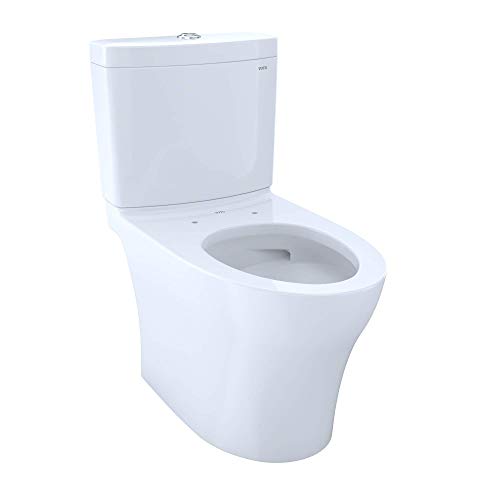
| TOTO Aquia IV | Tornado Flush (dual) | 2 large nozzle ports | 800g (0.8 GPF) / 1,000g (1.28 GPF) | 0.8 / 1.28 | Yes | Check price |
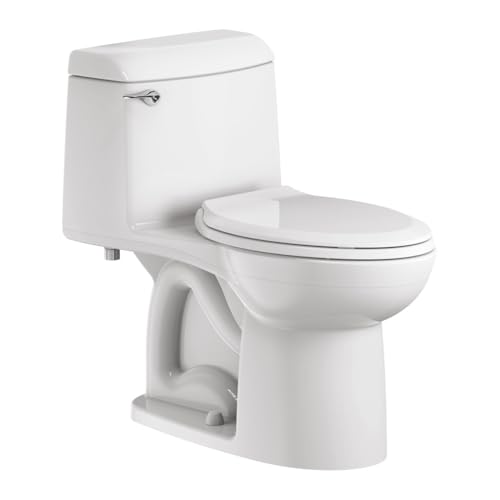
| American Standard Champion 4 | PowerWash Rim | Full-coverage rim channel, large siphon jet | 1,000g (MaP Premium) | 1.6 | No (1.6 GPF) | Check price |
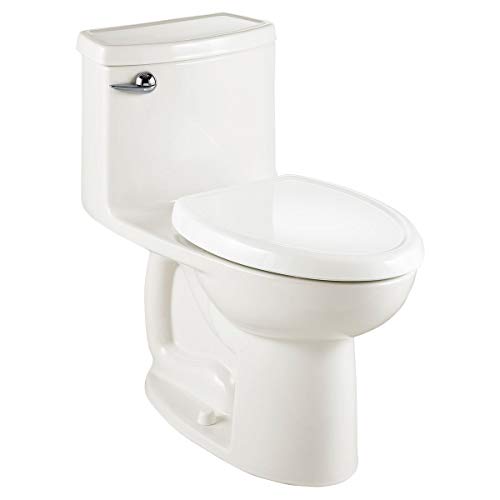
| American Standard Cadet 3 | PowerWash Rim | Full rim coverage, optimized jet spacing | 1,000g (MaP Premium) | 1.28 | Yes | Check price |
| Kohler Highline / Cimarron | AquaPiston Canister | Conventional rim holes, canister valve improves flow | 600g to 800g | 1.28 | Yes | Check price |
| Gerber Viper | Viper Flushing | Optimized rim, large trapway (2 1/8 in) | 800g to 1,000g | 1.28 | Yes | Check price |
| Woodbridge T-0001 | Dual Flush | Rimless skirted design, direct wash | 600g to 800g | 1.0 / 1.6 | Yes | Check price |
| Swiss Madison Ivy | Dual Flush | Rimless bowl, direct jet wash | 500g to 700g | 0.8 / 1.28 | Yes | Check price |
MaP scores sourced from published map-testing.com database. Scores listed are typical values for the standard configuration; exact scores vary by specific SKU and tank size. WaterSense certification requires 1.28 GPF or less.
Rimless toilets eliminate the traditional underside rim and its hidden channel, instead directing water across the bowl via exposed jets or a full-perimeter direct wash. This improves hygiene because there are no hidden surfaces for bacteria to colonize, but it changes flush dynamics since the water delivery pattern must compensate for the absence of traditional rim-jet swirl.
Rimless toilet design -- common in European markets and increasingly available in the US through brands like Woodbridge and Swiss Madison -- solves a genuine hygiene problem. The hollow rim channel of a conventional toilet is essentially a closed tube that never dries out completely, creating ideal conditions for bacterial colonization and mold growth that standard cleaning cannot reach.
By eliminating the hidden rim channel, rimless designs expose all water-contacting surfaces to cleaning. This is a real advantage, and the European market has largely moved in this direction.
The engineering challenge is compensating for the loss of conventional rim-jet swirl. Rimless toilets use several approaches:
The tradeoff: rimless designs, while cleaner in hygiene terms, often have lower MaP scores than optimized conventional rim designs. Published MaP data shows most rimless toilets in the 500g to 800g range, while top conventional designs regularly hit 1,000g. For most households, 800g is more than adequate -- the vast majority of real-world waste events are below 600g. For households with chronic clogging issues or older pipes requiring maximum flush force, a conventional high-MaP design may serve better.
The Woodbridge T-0001 is one of the best-selling rimless skirted toilets in the US market. Owner reviews consistently praise its ease of cleaning (the skirted sides and rimless bowl leave nowhere for soil to hide) but note that it is not the power-flush champion that the American Standard Champion 4 is. For most homeowners, that tradeoff is entirely worth it.
If hygiene and ease of cleaning is your priority, rimless is compelling. If you need maximum clog-clearing power -- perhaps for a toilet serving heavy use, children, or elderly household members -- the conventional optimized-jet designs still hold an advantage in raw flushing performance.
Blocked rim holes are among the easiest toilet maintenance tasks to handle without a plumber. The tools required cost under $10 and the process takes about 30 minutes of active work plus a chemical soak time.
Hold a small mirror under the rim during a flush. Observe which holes are producing water flow and which are dry or producing only a trickle. Mark the blocked areas with a marker on the outside of the rim so you can reference them after the flush.
For moderate calcium deposits, white vinegar is effective and safe for all porcelain and tank components. For heavy scale (toilets in very hard water regions, or fixtures that have not been cleaned in years), a commercial lime and calcium remover such as CLR or a diluted muriatic acid solution (1 part acid to 10 parts water) works faster. Always wear gloves and eye protection with acid-based cleaners.
Turn off the toilet's water supply valve. Flush the toilet to empty the tank. The overflow tube in the tank connects directly to the rim channel. Pour your cleaning solution into the overflow tube using a small funnel. Use enough to fill the rim channel -- typically 8 to 16 ounces for a full-rim toilet. Plug the individual rim holes temporarily with plumber's putty or toilet paper to keep the solution in the channel rather than draining immediately.
Allow the solution to soak for 20 to 60 minutes depending on severity. Then use a bent wire coat hanger, a straightened paper clip, or a commercial rim jet cleaning tool to physically probe each hole. The chemical soak softens deposits; mechanical action breaks them free. Work systematically around the rim.
Remove any putty or paper plugs. Restore the water supply. Flush several times to clear the cleaning solution and loosened deposits from the rim channel. Return with the mirror and verify that all holes now produce visible water flow.
For prevention, adding a small amount of white vinegar to the tank monthly (pour it directly into the tank, not the bowl) can slow mineral accumulation in the rim channel without affecting the toilet's mechanical components.
When selecting a new toilet, consider that models with fewer but larger rim holes or nozzle-based flush systems (like TOTO Tornado Flush) require less maintenance to maintain full flush performance in hard water areas.
For a broader view of what makes a toilet perform reliably year after year, see our guide to best flushing toilets where we evaluate top models across all these dimensions.
Related reading: our MaP flush test explained guide covers how performance is measured and what scores to look for. For a technical breakdown of the flush mechanism, see how a toilet flush works. If you are dealing with chronic partial clogs, toilet clog causes and prevention addresses the full picture including trapway diameter, which works together with rim hole performance.
Flush valve size and rim hole geometry work together: a large flush valve (3-inch or 4-inch) delivers a faster, higher-volume rush of water to the rim channel and siphon jet, but that water still depends on well-designed rim holes to be converted into effective bowl rinse and swirl force. Neither element alone determines flush performance.
A common misconception is that upgrading to a toilet with a 3-inch or 4-inch flush valve (versus the standard 2-inch) is the single key to better flushing. Flush valve size does matter -- a larger valve opens faster and delivers a more concentrated surge of water at flush initiation, which improves siphon initiation speed. But that advantage is wasted if the rim channel cannot distribute the water effectively.
The American Standard Champion 4 -- whose name refers to its 4-inch flush valve and 2-3/8-inch trapway -- is a good example of a toilet that optimizes both elements. The large valve delivers high-volume water rapidly; the PowerWash Rim distributes it across the full bowl circumference; and the large trapway reduces the resistance waste encounters during transport. The result is a consistent 1,000g MaP Premium score.
Conversely, TOTO's Tornado Flush system achieves the same 1,000g MaP score with a standard flush valve size, because the two large nozzle ports and cyclonic swirl geometry extract more flush energy from the same water volume. The engineering approach is different but the outcome is equivalent.
For consumers evaluating toilets, the most reliable predictor of real-world flush performance remains the published MaP score -- not the valve size, not the hole count, and not the marketing terminology. A toilet with a 1,000g MaP Premium score will outperform one rated 600g regardless of which component the manufacturer chose to optimize.
EPA WaterSense certification (requiring 1.28 GPF or less) and MaP score are the two independent third-party metrics that matter most when comparing flush performance. Together they tell you: this toilet uses water efficiently AND it has been tested to clear a meaningful waste load. Rim hole design, valve size, and flush system technology are the means; MaP score is the measure of the outcome.
To make this practical, here is a direct comparison of three dominant flushing architectures and what published data shows about their performance and maintenance characteristics:
| Architecture | Typical Hole Count | Swirl Method | MaP Range | Hard Water Resistance | Hygiene |
|---|---|---|---|---|---|
| Conventional multi-hole rim | 12 to 30 holes | Distributed tangential jets | 500g to 800g (typical) | Moderate (many small holes prone to blocking) | Hidden rim channel is difficult to clean |
| Optimized nozzle-jet (Tornado Flush) | 2 large nozzle ports | Cyclonic vortex | 1,000g (MaP Premium) | High (large openings resist mineral blockage) | Reduced rim surface, easier cleaning |
| Rimless direct wash | 0 traditional holes; 1 to 2 inlet jets | Bowl-geometry directed flow | 500g to 800g (typical) | High (no hidden channel to block) | Excellent (all surfaces exposed and cleanable) |
No single architecture is superior across every dimension. The right choice depends on whether flush power, hygiene, or maintenance simplicity is your primary priority.
They are called rim holes, rim jets, or rim ports. They are small openings in the underside of the toilet rim through which water enters the bowl from the hollow rim channel during a flush cycle.
Most conventional toilets have between 12 and 30 rim holes. Low-cost basic toilets often have 6 to 12 larger holes, while some premium models with optimized designs (like TOTO Tornado Flush) use only 2 large nozzle ports instead of traditional holes.
Not automatically. More holes improve bowl rinse coverage and reduce staining, but they divide water pressure among more openings, reducing individual jet velocity. The best flush performance comes from optimized hole geometry -- the right count, size, and angle for the specific bowl shape -- not simply maximizing hole count.
Partially blocked rim holes are a common cause of gradual flush power decline. Calcium and mineral deposits from hard water progressively narrow the holes over time. Inspect the holes with a mirror during a flush to see whether all holes are producing water flow.
Yes. Pour white vinegar or a commercial calcium remover into the overflow tube inside the tank to fill the rim channel, let it soak for 20 to 60 minutes, then use a stiff wire to clear individual holes. Flush several times to clear the residue. For heavy scale, diluted muriatic acid works faster but requires caution.
MaP (Maximum Performance) testing measures how many grams of solid waste a toilet can reliably flush with one activation. Scores of 800g to 1,000g indicate excellent performance. Since rim hole geometry directly determines how much flush energy reaches the bowl, MaP scores are an indirect measure of how well the rim hole design is working.
TOTO Tornado Flush replaces the traditional multi-hole rim channel with two large nozzle ports that create a cyclonic swirl. Published engineering data from TOTO describes this as generating approximately 2.5 times the swirl force of conventional rim-hole designs at the same 1.28 GPF water use.
The TOTO Drake II uses the Tornado Flush system, which has two nozzle ports rather than traditional rim holes. This design achieves 1,000g MaP Premium certification at 1.28 GPF, which qualifies for EPA WaterSense recognition.
Generally no. Rimless toilets typically score 500g to 800g on MaP tests compared to 1,000g for the best conventional designs. However, rimless toilets are easier to clean and eliminate the hidden rim channel where bacteria can colonize. For most households, their flush performance is adequate.
Yes. The Champion 4 uses the American Standard PowerWash Rim system, which combines a full-coverage rim channel with a large siphon jet and a 4-inch flush valve and trapway. This design achieves 1,000g MaP Premium certification at 1.6 GPF (it is not EPA WaterSense certified due to its higher water use).
The Kohler AquaPiston is a canister-style flush valve that replaces the traditional flapper. It opens wider and faster than a flapper, delivering a larger volume of water more quickly to the rim channel and siphon jet. This improves flush initiation but the rim holes themselves in most Kohler designs remain conventional in configuration.
Hard water deposits calcium carbonate and other minerals inside the rim channel and on the inner surface of rim holes. Over months to years this progressively narrows the openings, reducing water flow through each hole. Uneven blockage leads to areas of the bowl not being rinsed during flushes, contributing to staining and reduced swirl efficiency.
White vinegar is the safest and most readily available option. CLR (Calcium, Lime, and Rust remover) works faster on heavy deposits. For severe buildup, diluted muriatic acid (10:1 water to acid ratio) is effective but requires protective equipment and good ventilation. All of these are delivered through the overflow tube in the tank to reach the rim channel.
Partial blockage reduces flush performance gradually. Complete blockage of all rim holes is rare because the siphon jet would still operate and some minimal water would still enter the bowl. However, severe rim channel blockage combined with a weak siphon jet can result in a toilet that barely clears liquid waste and fails on solids entirely.
EPA WaterSense certification requires that a toilet use 1.28 GPF or less and pass a basic performance flush test. The certification does not specify rim hole design. However, since achieving WaterSense performance at low water volumes requires efficient water use, well-designed rim hole geometry is often what allows a toilet to pass the performance test at reduced water volume.
For hard water areas, toilets with fewer but larger rim openings or nozzle-port systems are more resistant to mineral blockage. The TOTO Drake II (Tornado Flush, 2 large ports) and American Standard Cadet 3 (PowerWash Rim, full coverage) are frequently cited in owner reviews for maintaining flush performance over multiple years in hard water regions.
The Woodbridge T-0001 uses a rimless skirted design. It eliminates the traditional hidden rim channel and instead uses a direct wash approach where water enters the bowl from exposed inlet points. This makes cleaning easier but places more flush responsibility on the siphon jet and bowl geometry.
No. Rim hole count is rarely listed in standard product specifications. Manufacturers typically describe their flush systems by brand name (Tornado Flush, PowerWash Rim, AquaPiston) rather than by specific hole count. To find hole count, you generally need to consult technical installation documentation or measure a physical unit.
The trapway carries waste out of the bowl after the rim jets and siphon jet have moved it through the bowl. Rim holes generate the initial swirl and rinse action; the trapway is the exit. A large trapway (2 1/8 inches or greater, fully glazed) reduces exit resistance and ensures that waste moved by the rim jets and siphon can clear without restriction. Both elements work together for clog-free performance.
In areas with soft or moderately hard water, rim hole cleaning is generally needed every 1 to 2 years or when you notice uneven bowl wetting. In very hard water areas (hardness above 200 mg/L), twice-yearly maintenance with vinegar poured into the overflow tube can prevent significant accumulation. A monthly small vinegar treatment in the tank is a low-effort preventive approach.
Rim hole count is a secondary variable -- what determines flush performance is the total swirl energy, bowl rinse coverage, and siphon initiation that rim jets deliver at a given GPF. Verified third-party MaP scores remain the only reliable way to compare flush systems across different rim designs. For households in hard water regions, fewer but larger rim openings or nozzle-port systems offer a practical advantage in maintenance over time. For maximum hygiene with acceptable flush performance, rimless designs are the right direction. For maximum flush power, optimized conventional designs with 1,000g MaP Premium certification -- regardless of how they achieve it -- deliver the most reliable results.
How we rank & our data sources
We do not run physical lab tests. Rankings are built from published, verifiable data and real owner feedback, never paid placement.
Researched by Marcus Bell · Last updated July 4, 2026 · Our review method
Refined, softly curved one-piece and skirted silhouettes with a polished, Parisian-elegant profile, paired with verified MaP flush scores rather than a stylist's…
Read the guide
Clean, low-profile silhouettes with real MaP-verified flush performance and efficient dual-flush water use, sized for a minimalist Nordic bathroom without sacrificing function.
Read the guide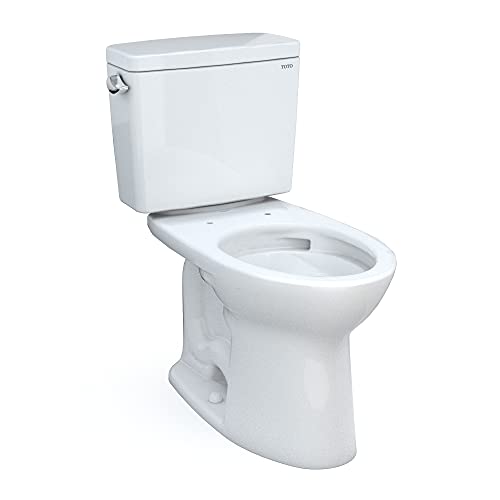
Classic two-piece toilets with tall tanks and elegant, understated proportions, the quiet country-house look that suits a traditional English bathroom without tipping…
Read the guide