

Why Toilet Trapways Are Curved Like an S
Toilets4.6
Learn why toilet trapways curve like an S, how each bend blocks sewer gas, and what the shape means for clogs and…
Read the guideWhy clogged rim jets silently destroy your toilet's flush performance, and what to do about it before it gets worse.
Mold growing under the toilet rim blocks the small rim jets that direct water around the bowl during a flush. Even partial blockage measurably reduces flush velocity, raises MaP score thresholds needed to clear waste, and forces you into double-flushing. Cleaning the jets every 90 days prevents most power loss.
You flush, the bowl fills with water, but it swirls weakly and leaves residue behind. A plumber checks the trapway -- it is fine. You replace the flapper -- nothing changes. The real culprit is almost always hiding in plain sight: the ring of small holes drilled into the underside of your toilet rim. Those rim jets, sometimes called rim holes or jet ports, are what create the spinning vortex that rinses the bowl and drives waste through the trapway. When mold colonizes them, your toilet loses flushing power incrementally, often so gradually you attribute it to aging pipes or low water pressure.
This guide covers how mold forms inside rim jets, how to measure the flush-power loss it causes, which toilet designs resist jet blockage best, and how to restore or replace a toilet that has lost its flush integrity. We reference published MaP flush-test data, EPA WaterSense guidelines, and manufacturer specifications throughout. We do not rely on personal lab tests.
Mold and mineral scale accumulate inside the rim channel and narrow or fully block the individual jet holes that direct water into the bowl during a flush. Fewer open jets means lower water velocity and a weaker rotational current, so the toilet needs more water or pressure to achieve the same waste-clearing force it originally had.
Every gravity-flush toilet uses a rim channel -- a hollow ledge running around the inside of the porcelain bowl -- as a water distribution manifold. During a flush, water from the tank drops through a fill hole at the back of the bowl and travels through this channel, exiting through dozens of angled ports cut into the underside of the rim. The angle of those ports creates the clockwise or counterclockwise spin that rinses the bowl walls and concentrates force at the trapway inlet.
The channel is dark, damp after every flush, and rarely cleaned because it is out of direct sight. Those conditions are ideal for Serratia marcescens (the pink-red bathroom mold most people encounter first), Aspergillus species, and basic black mildew. Calcium and magnesium deposits from hard water arrive simultaneously and bond with organic material in the biofilm, hardening it into a scale-like crust that a standard toilet brush cannot dislodge.
Plumbing industry resources note that rim jet restriction is one of the most misdiagnosed flush complaints. Homeowners replace flappers, adjust float valves, and even replace entire fill assemblies before discovering that partially blocked rim holes were the root cause the entire time. A simple penlight inspection under the rim often reveals the problem immediately.
The physics of the restriction are straightforward. The rim channel is a fixed-volume, fixed-pressure system. If half of the 36 to 48 jet holes in a standard elongated bowl are partially blocked, the total exit area is reduced. By Bernoulli's principle, pressure must increase to push the same volume of water through fewer openings, but the tank height (and therefore available head pressure) is fixed. The practical result is that water exits more slowly, producing a weaker spin and lower impact velocity at the trapway. Toilets that once cleared 1,000 grams on the MaP test may struggle to clear 500 grams after sustained rim jet restriction.
The earliest signs are a weaker swirling action during the flush, water that rises higher in the bowl before draining, and visible pink or black staining along the underside of the rim. Double-flushing becoming a habit is the most reliable behavioral indicator that flush power has degraded below acceptable thresholds.
Homeowners typically notice these symptoms in rough sequence:
A penlight or phone flashlight aimed under the rim at a 45-degree angle is enough to diagnose the problem. Fully open jet holes appear as clean, smooth ovals. Partially blocked holes show a dark ring or crescent of deposit material. Fully blocked holes show no opening at all. Counting the fraction of blocked holes gives you a rough sense of how much flush power has been lost.
Toilets with glazed rim channels, larger-diameter jet holes, or rimless bowl designs are the most resistant to mold and mineral buildup. TOTO's CEFIONTECT glaze and American Standard's EverClean glaze are engineered to reduce biofilm adhesion in the rim channel and on bowl surfaces.
Not all toilets are equally susceptible. Design variables that directly affect how quickly the rim channel molds over include:
Standard porcelain toilet bowls have unglazed inner passages in the rim channel because the glaze cannot be applied inside a closed channel during manufacturing. The rough, porous interior of the channel is ideal for mold and scale adhesion. Some manufacturers have developed proprietary solutions. TOTO's CEFIONTECT ionic glaze applies a smooth, low-friction nano-coating to all accessible bowl surfaces and, in some models, the accessible portions of the rim channel. American Standard's EverClean antimicrobial glaze incorporates silver-based technology to inhibit bacterial and mold growth on bowl surfaces. Both coatings are cited in manufacturer product specifications as reducing biofilm formation compared to standard unglazed porcelain.
The rimless or open-rim design, prominent in European toilets and increasingly available in North American markets, eliminates the enclosed rim channel entirely. Water enters from jets at the top of the bowl and cascades directly over the bowl surface. Without an enclosed channel, there is no dark, damp, inaccessible space for mold to colonize. The tradeoff is that rimless bowls can produce more splash if the jet angles are not calibrated correctly. Swiss Madison's Ivy and Concorde lines use this approach, and several TOTO and Kohler commercial-grade models offer similar open-jet configurations.
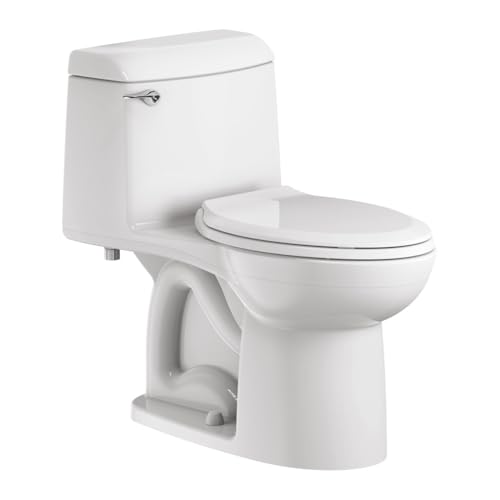
Wider rim holes take longer to block because mineral deposits must accumulate to a greater depth before meaningfully restricting flow. Toilets engineered for high MaP scores often use fewer but larger rim jets combined with a powerful siphon jet at the base of the bowl. The American Standard Champion 4 uses an oversized 4-inch flush valve paired with a large trapway and a concentrated direct-feed siphon jet, reducing reliance on rim jets for primary waste clearance. This design is more tolerant of partial rim jet blockage than toilets that depend entirely on rim-jet-generated swirl to clear waste.
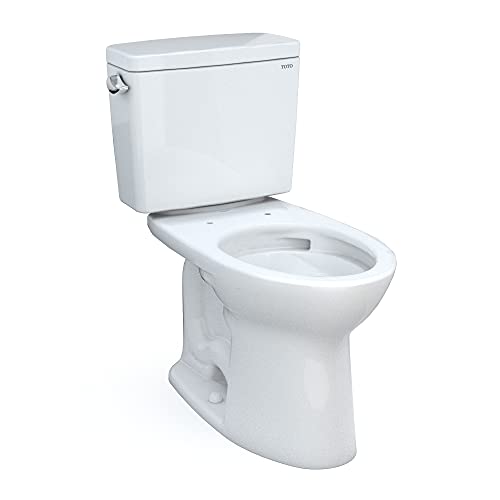
Many high-MaP toilets use a dedicated siphon jet -- a large, forward-facing port at the bottom of the bowl -- to deliver the primary flush impulse directly into the trapway. The TOTO Drake II and TOTO UltraMax II both use this dual-flush strategy: rim jets wet the bowl walls while the siphon jet drives waste through the trapway. Even if rim jets become 50% blocked, the siphon jet continues to provide the core flush power. This architectural redundancy is one reason TOTO Drake-series toilets consistently earn MaP scores above 800 grams and why owner reviews rarely cite loss of flush power as a problem even after years of use.
| Model | GPF | MaP Score | Rim Design | Bowl Coating | Mold Resistance | Check Price |
|---|---|---|---|---|---|---|
| TOTO Drake II | 1.28 | 1,000 g | Rim + siphon jet | CEFIONTECT (select SKUs) | High | Check price |
| TOTO UltraMax II | 1.28 | 1,000 g | Rim + siphon jet | CEFIONTECT (select SKUs) | High | Check price |
| American Standard Champion 4 | 1.6 | 1,000 g | Rim + large siphon jet | EverClean | High | Check price |
| Kohler Cimarron | 1.28 | 800 g | Rim-fed | Standard glaze | Moderate | Check price |
| American Standard Cadet 3 | 1.28 | 800 g | Rim + siphon jet | EverClean | Moderate-High | Check price |
| Woodbridge T-0001 | 1.28 / 0.8 | 600 g | Rim-fed | Standard glaze | Moderate | Check price |
| Gerber Viper | 1.28 | 1,000 g | Rim + large siphon jet | Standard glaze | Moderate | Check price |
| Swiss Madison Concorde | 1.28 / 0.8 | 500 g | Open-jet (rimless) | Standard glaze | Very High | Check price |
MaP scores from published map-testing.com data. GPF and coating from manufacturer specifications. Mold resistance rating is a qualitative assessment based on design features.
Cleaning toilet rim jets requires physically breaking up mold and mineral scale inside the rim channel, typically using a diluted muriatic acid or commercial limescale remover left in the channel for 30 to 60 minutes, then dislodging loosened deposits with a thin wire or pipe cleaner through each jet hole. Vinegar is effective for light mineral scale but insufficient against hardened mold biofilm.
A systematic cleaning approach is more effective than random scrubbing. The following process is consistent with guidance published by plumbing supply trade resources and EPA-registered cleaner manufacturers:
Close the supply valve behind the toilet. Flush once to drain most of the tank. This prevents cleaning solution from being diluted by fresh water entering the tank mid-process.
Stuff a rag or a folded paper towel into the siphon jet port at the base of the bowl (the large forward-facing hole). This prevents cleaning solution from draining out of the rim channel before it has time to work.
Lift the tank lid and locate the overflow tube -- the open vertical tube in the center of the tank. Pour approximately two cups of your chosen cleaning solution directly into the overflow tube. It will travel directly into the rim channel. For light mold and mineral scale: undiluted white vinegar (5% acidity). For moderate buildup: a commercial calcium, lime, and rust remover (CLR or equivalent). For severe mineral scale: a 10:1 dilution of muriatic acid in water. Handle acid solutions with gloves and ventilation.
Leave the solution in the sealed rim channel for 30 to 60 minutes. The solution softens mineral bonds and breaks down organic material in the biofilm. For severe buildup, a second application after the first flush can accelerate the process.
While the solution is still working, use a wire coat hanger bent to a 90-degree angle, a small hex key, or a purpose-made rim jet cleaning pick to probe each jet hole from below. Work around the entire rim methodically. You will feel resistance where deposits remain. Do not force the tool sideways -- insert and retract straight to avoid scratching the porcelain.
Remove the siphon jet plug, turn the water supply back on, let the tank refill, and flush. Observe the jet spray pattern. Fully open jets spray in clear, directed streams. Partially open jets spray erratically or sideways. Repeat the cleaning process for any jets that remain blocked.
Consistency matters more than intensity. A quarterly 30-minute vinegar treatment prevents hard mineral scale from forming in the first place. Once scale has hardened over 12 to 24 months without cleaning, it may require two or three acid treatment cycles to fully clear. Prevention is significantly less labor-intensive than remediation.
After cleaning, the improvement in flush performance is often immediate and noticeable. The swirling vortex is stronger, the flush sound is sharper, and bowl streaks take longer to reappear. If a full cleaning cycle does not restore flush power, the cause is likely elsewhere -- low water pressure at the supply valve, a defective fill valve that does not fully refill the tank, or a cracked rim channel that redirects water before it reaches the jets.
Replacement is worth considering when the toilet is more than 15 years old, uses 1.6 GPF or more, has a MaP score below 500 grams, or has repeated mold issues despite regular cleaning due to an unglazed or cracked rim channel. Upgrading to an EPA WaterSense certified model typically recovers its cost in water savings within five to seven years.
Cleaning is the right first step. But there are situations where the math favors replacement:
Toilets manufactured before the Energy Policy Act of 1992 took effect use 3.5 GPF or more. At that flush volume, double-flushing pushes usage to 7 GPF per event. Replacing with a 1.28 GPF WaterSense-certified model saves approximately 20,000 gallons per person per year in a single-toilet household, according to EPA WaterSense program data.
Toilets produced between 1994 and roughly 2006 often meet the 1.6 GPF mandate but have small, poorly designed trapways and low MaP scores -- sometimes as low as 200 to 300 grams. These toilets clog frequently even when the rim jets are clean. They are also more likely to have unglazed rim channels that hold mold aggressively. Replacement with a modern 1.28 GPF toilet earning a MaP score of 800 grams or above delivers better performance at lower water use.
If you are cleaning rim jets every 30 to 60 days and mold returns within days, the rim channel surface has likely accumulated too much porosity from prior scale buildup. The rough interior of the channel provides an anchor for new biofilm faster than cleaning can remove it. At this stage, even thorough acid treatments cannot restore the channel to its original smoothness. A toilet with a CEFIONTECT or EverClean glaze will substantially reduce this recurrence cycle.
Internal cracks in the rim channel redirect water away from blocked sections rather than through the jets evenly. You can detect this by shining a flashlight under the rim during a flush -- if only one side of the bowl floods while the other barely wets, the channel is likely cracked or has an internal obstruction that cleaning cannot resolve. Repair is not practical; replacement is the only fix.
For replacement guidance by flush performance and water efficiency, the best flushing toilets guide covers current top-rated models with full MaP score comparisons. For hard water households specifically, also see our guide on hard water toilet maintenance and our complete rim jet cleaning guide. If you are deciding between specific models for a remodel, the TOTO vs Kohler comparison breaks down how each brand approaches rim channel design.
It seems paradoxical, but a toilet with mold-blocked rim jets can use significantly more water than the same toilet with clean jets -- even though the blocked toilet delivers less flushing force per flush.
The mechanism is double-flushing. EPA WaterSense certification requires that a toilet flush effectively at or below 1.28 GPF. That certification is issued based on the toilet's performance as designed with open, unobstructed jets. Once rim jets become substantially blocked, the toilet's real-world performance no longer matches its certification. A 1.28 GPF WaterSense toilet that routinely requires two flushes is effectively a 2.56 GPF toilet. Over the course of a year in a four-person household (assuming five flushes per person per day), this adds up to approximately 18,600 additional gallons consumed annually compared to the same toilet operating with clean jets.
This is one reason EPA WaterSense program materials emphasize maintenance as part of toilet efficiency -- a certified toilet is efficient only when maintained to operate as it was tested.
MaP testing is conducted on new toilets with clean, open rim jets. The 1,000-gram MaP score of a TOTO Drake or Gerber Viper reflects optimal performance conditions. In the field, maintained toilets typically retain the majority of their tested performance over time, while unmaintained toilets can degrade substantially. The gap between tested score and real-world performance is almost entirely explained by rim jet restriction and mineral scale in the trapway.
A rough diagnostic: run a flush and time how long it takes for the bowl water to completely drain from the moment the flush valve opens. On a properly functioning toilet with a MaP score above 800 grams, complete drainage typically occurs within 60 to 80 seconds of the flush initiation. Toilets with significant rim jet restriction often take 90 to 120 seconds or longer for the same volume of water to clear the bowl, a direct indicator of reduced hydraulic efficiency in the trapway siphon.
Water hardness above 7 grains per gallon (120 mg/L of calcium carbonate, a moderate hardness level common across much of the Midwest and Southwest United States) accelerates mineral scale formation inside the rim channel. The calcium and magnesium deposits bond with the mold biofilm and create a composite crust that is harder than either substance alone. The USGS Water Resources program maps water hardness by region -- households in hard-water areas should clean rim jets every 60 days rather than every 90 days as a standard maintenance interval.
Prevention is less labor-intensive and more effective than remediation. The following practices reduce mold and scale accumulation in the rim channel based on plumbing maintenance best practices:
Every 90 days, pour two cups of undiluted white vinegar into the overflow tube with the siphon jet plugged, allow it to sit for 30 minutes, then flush. This dissolves early-stage mineral deposits before they harden and disrupts mold biofilm before it becomes established. In hard-water areas, increase frequency to every 60 days or substitute a diluted CLR treatment every other cycle.
Drop-in tank tablets that release chlorine or citric acid with each flush keep the rim channel cleaner between dedicated treatments. However, chlorine-based tablets can degrade rubber flapper seals over 12 to 18 months of continuous use, according to American Standard and Kohler warranty guidance, which explicitly advises against continuous use of in-tank chlorine tablets. Enzymatic and citric acid tablets present lower risk to rubber components while still suppressing mold growth in the channel.
Mold requires moisture. A bathroom with poor ventilation stays humid longer after each use, keeping the rim channel environment moist between flushes. Ensuring a functioning exhaust fan rated for the room's cubic footage reduces the ambient humidity that mold needs to establish colonies. This also protects grout, caulking, and other bathroom surfaces from mold simultaneously.
Most toilet brushes do not reach the underside of the rim at the correct angle to scrub the jet holes. A curved rim-cleaning brush or a repurposed bottle brush with a bent neck allows weekly physical disruption of early biofilm at the jet hole openings. This is the cheapest and most accessible prevention method available.
If you are replacing a toilet anyway, a model with an antimicrobial glaze or a rimless bowl design eliminates most of the structural factors that allow mold to establish in the first place. For households that struggle with recurring bathroom mold generally, this is a worthwhile long-term consideration. The American Standard Cadet 3 with EverClean glaze is one of the most accessible options at this specification level and earns consistent positive owner reviews for bowl cleanliness over multi-year ownership.
It is a documented mechanical reality, not a myth. Rim jet holes are the primary path that water uses to enter the bowl and create the flush vortex. When those holes are partially or fully blocked by mold and mineral scale, the total exit area for water is reduced, which lowers flush velocity and vortex strength. The result is measurably weaker flushing performance.
Pink or reddish-pink staining under the rim is almost always Serratia marcescens, an airborne bacterium (not a true mold) that thrives in humid, low-light environments and produces a pink-red pigment. It is not typically dangerous for healthy adults but can be problematic for immunocompromised individuals. It responds well to bleach-based cleaners or commercial bathroom disinfectants.
Every 90 days is the standard recommendation for households with moderately hard water and average toilet use. In areas with water hardness above 10 grains per gallon, or in bathrooms that stay particularly humid, every 60 days is more appropriate. A quarterly vinegar treatment through the overflow tube is the minimum maintenance interval to prevent meaningful flush power loss.
Yes, diluted bleach (one part household bleach to ten parts water) kills mold effectively in the rim channel. However, bleach does not dissolve mineral scale. For toilets with both mold and hard-water deposits, use a CLR or acid-based treatment first to dissolve scale, then follow with a bleach rinse to kill remaining mold. Never mix bleach with acid-based cleaners as this produces toxic chlorine gas.
MaP (Maximum Performance) testing is an independent flush performance standard published at map-testing.com. Toilets are scored by how many grams of solid waste they can reliably clear in a single flush. A score of 1,000 grams is the maximum. Mold-blocked rim jets can effectively drop a toilet's real-world performance to well below its tested MaP score by reducing the hydraulic force the toilet delivers. Knowing a toilet's tested score gives you a baseline to compare against observed performance.
Structurally, yes. Without an enclosed rim channel, there is no dark, damp, inaccessible space where mold can accumulate undisturbed. The open bowl surface is much easier to clean completely. The tradeoff is that some rimless designs can produce more water spray around the seat during powerful flushes if the jet angles are not carefully calibrated. Quality rimless designs from Swiss Madison and certain TOTO commercial lines manage this well.
CEFIONTECT applies a smooth ionic glaze to the accessible bowl surface and reduces surface roughness to a level where mold and scale have fewer physical anchor points. TOTO's published data shows reduced staining and biofilm adhesion compared to standard glaze on treated surfaces. The inner rim channel in most toilet designs remains unglazed because the manufacturing process cannot reach it, so CEFIONTECT provides partial protection rather than complete immunity. Combined with quarterly cleaning, it substantially extends the interval before meaningful mold accumulation occurs.
It will fix flush problems caused specifically by rim jet restriction. If the toilet has other issues -- a flapper that does not lift fully, a fill valve that does not refill the tank completely, insufficient water level in the tank, or a partially blocked trapway -- those problems will persist after rim jet cleaning. Rim jet cleaning is often the first and most effective intervention, but it is one diagnostic step in a broader troubleshooting process.
Look at the bottom of the bowl interior, at the lowest visible point. If you see a single large oval or circular opening facing forward toward the front of the bowl, that is the siphon jet port. Most modern toilets use both a siphon jet and rim jets. Very old or very inexpensive toilets may use only rim jets for waste clearance, making them more vulnerable to flush power loss when those jets become blocked.
The rim channel is enclosed, dark, and stays wet longer than the open bowl surface because water does not drain through it directly. Between flushes, a thin film of standing water remains inside the channel, providing the persistent moisture mold needs to grow. The bowl walls, by contrast, are rinsed with every flush and mostly dry between uses, making them a less hospitable environment for mold establishment.
Yes. Calcium and magnesium carbonate deposits from hard water progressively narrow rim jet holes over months to years of use. Even without any mold present, hard-water scale alone can reduce effective jet hole diameter enough to measurably reduce flush velocity. In hard-water regions, mineral scale is often a larger contributor to flush power loss than mold, and requires acid-based treatments rather than mold-targeted disinfectants.
A diluted muriatic acid solution (10 parts water to 1 part acid, or approximately 10% concentration) is effective for severe mineral scale and is widely referenced in plumbing trade resources. It should be used with chemical-resistant gloves, eye protection, and bathroom ventilation running or windows open. The solution must not be allowed to contact metal components. Flush thoroughly after treatment. It is an appropriate tool for heavily scaled toilets where vinegar and CLR-type cleaners have not produced results.
No. WaterSense certification tests toilets in their new, clean state under controlled laboratory conditions. The certification establishes that a toilet can meet performance and water use thresholds as manufactured, not across its maintenance life. Maintaining clean rim jets is the homeowner's responsibility to preserve the certified performance in real-world use.
Both are effective and represent the industry standard in antimicrobial bowl coatings. CEFIONTECT uses an ionic nano-glaze approach to reduce surface roughness and biofilm adhesion. EverClean uses a silver-based antimicrobial agent bonded to the glaze to actively inhibit bacterial growth. Owner reviews for both are consistently positive regarding bowl cleanliness. The choice between them is more likely to come down to toilet model selection, price, and style preference than meaningful differences in mold resistance performance.
Kohler's AquaPiston valve delivers water to the bowl from a central, 360-degree opening rather than a standard flapper that opens in one direction. This design aims to deliver a more even, powerful water rush into the bowl. The AquaPiston does not directly solve rim jet blockage, but a more powerful initial water delivery can partially compensate for early-stage jet restriction by pushing harder through partially narrowed holes. It is found in the Kohler Cimarron and Kohler Highline Tall, among other models.
A standard toilet brush cannot reach the individual jet holes under the rim because the brush head is too large and approaches from below at the wrong angle. An angled rim cleaning brush, a dedicated rim jet pick, or a small wire can reach the holes. The brush is effective for scrubbing the outer underside of the rim where mold is visible, but the actual jet openings require a thinner tool to clear.
A full treatment including dwell time takes approximately 60 to 90 minutes from start to finish, but only about 10 to 15 minutes of active effort. Most of the time is the cleaning solution sitting in the sealed rim channel working on deposits. For quarterly preventive maintenance, the active effort is under 10 minutes. For a severely blocked toilet requiring multiple cycles, expect to invest two to three hours spread across two sessions.
Dual-flush toilets like the Woodbridge T-0001 or American Standard H2Option use a reduced liquid flush (typically 0.8 GPF) and a full solid flush (typically 1.28 GPF). On the liquid flush, rim jet flow rate is lower, which means cleaning solution introduced through the overflow tube for maintenance moves through the channel more slowly. This is actually an advantage for cleaning treatments, as the solution has longer contact time with the channel walls. The maintenance frequency recommendation is the same as for single-flush toilets.
Toilet rim mold is not just a hygiene problem -- it is a direct, measurable cause of flush power loss that costs water, adds labor, and accelerates the need for replacement. Quarterly rim jet cleaning through the overflow tube is the single highest-value toilet maintenance action available to homeowners, with a direct return in preserved flush performance and reduced water use. For households with hard water or recurring mold issues, upgrading to a toilet with CEFIONTECT or EverClean glaze, a strong siphon jet, or a rimless bowl design substantially reduces maintenance burden and protects long-term flush efficiency. The TOTO Drake II, American Standard Champion 4, and American Standard Cadet 3 with EverClean represent the strongest combination of MaP-verified flush power and mold-resistance design features currently available in the North American market.
Learn why toilet trapways curve like an S, how each bend blocks sewer gas, and what the shape means for clogs and…
Read the guideAlmost every US toilet has a left-side handle. Learn the plumbing and mechanical reasons behind the layout and when it actually changes.
Read the guideHome toilets rely on tanks because household water lines lack the pressure that public flushometer systems use to flush straight from the…
Read the guide