
Why Toilet Trapways Are Curved Like an S
Toilets4.6
Learn why toilet trapways curve like an S, how each bend blocks sewer gas, and what the shape means for clogs and…
Read the guideA deep look at hydraulics, trapway geometry, MaP scores, and the engineering decisions that separate a consistently clear flush from a perpetual plunger situation.
Clogs form when waste volume exceeds the hydraulic force available at the trapway. Toilets with wider fully-glazed trapways (2.125 inches or larger), high MaP scores (800g+), and pressure-assist or tower-flush valve technology clear waste in a single pass and clog significantly less often than older siphon-jet designs with narrow passages.
A clog forms when solid waste or debris creates a physical blockage inside the trapway or drain line that exceeds the toilet's available hydraulic force to clear it. The three root causes are: insufficient flush velocity to carry solids through the trapway, a trapway diameter too narrow to pass the waste, and a partially obstructed or rough-surfaced passage that allows material to snag. Most residential clogs happen at or just below the trapway exit, not deep in the drain line.
To understand why some toilets almost never clog and others seem to need a plunger every week, you need to understand what happens inside the bowl during the approximately 60 to 90 seconds of a flush cycle. Water stored in the tank releases through a valve, drops into the bowl, and is directed by the rim holes and a primary jet at the base of the bowl into a swirling, pressurized column. That column must accelerate waste up and over the trapway curve before siphonic action takes over to pull everything down the drain.
If any part of that system underperforms -- too little water volume, a restricted jet, or a trapway that bends too sharply -- the siphon either fails to establish or fails to sustain, leaving solids stranded at the trap. The result is a clog, or at minimum an incomplete flush that leaves residue behind.
Engineers at manufacturers like TOTO and Kohler have spent decades refining every variable in this chain, which is why modern high-performance toilets fail to clear a flush so rarely that owners frequently cite it as their single most appreciated feature. Understanding the variables gives you a framework to evaluate any toilet before you buy.
A wider, fully-glazed trapway reduces clog risk in two ways: it increases the physical clearance for solids to pass through, and the smooth ceramic glaze prevents waste from adhering to the passage walls. Most budget toilets have trapway openings of 1.75 to 2 inches; leading clog-resistant designs use 2.125 to 2.375 inch fully-glazed trapways. The glazing is as important as the diameter -- an unglazed or rough surface creates drag that slows waste travel and gives debris a surface to catch on.
The trapway is the S-shaped ceramic passage that waste must travel from the bowl to the drainpipe below the floor. Its internal diameter, smoothness, and the sharpness of its bends collectively determine how easily solids can pass through.
Standard builder-grade toilets often use a 1.75-inch trapway that is glazed only along the visible portion inside the bowl. The hidden ceramic passage behind the toilet body may be rough, porous, or improperly fired. You can test this at a plumbing showroom by shining a flashlight into the trapway while looking at the back -- a dull, matte surface will feel rough to a gloved finger, while a fully-glazed passage reflects light clearly.
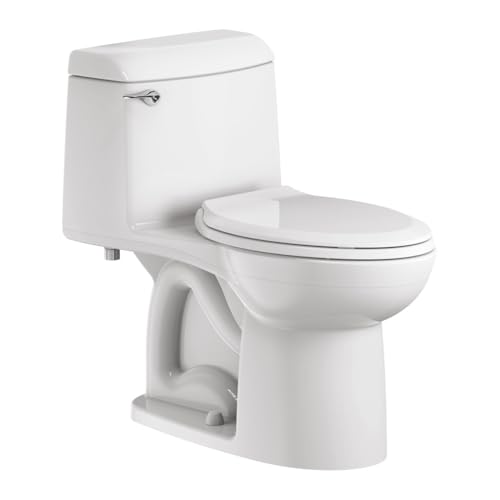
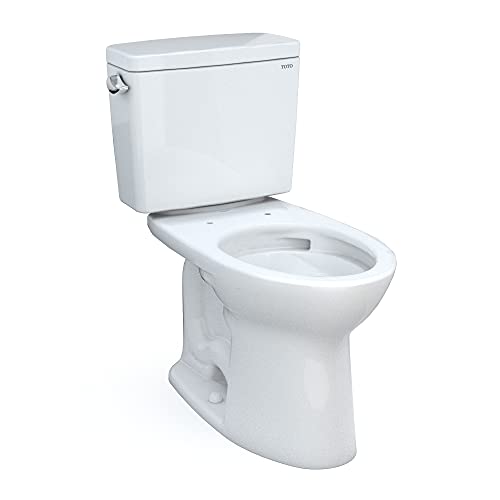
The TOTO Drake and Drake II both feature fully-glazed 2.125-inch trapways, a specification that TOTO has maintained across its gravity-flush lineup for over two decades. American Standard's Champion 4 uses a 4-inch accelerator flush valve paired with a 2.375-inch fully-glazed trapway -- the widest in the residential gravity-flush segment. Kohler's Cimarron uses a 3.25-inch AquaPiston valve that drives water around 360 degrees of the rim, building bowl velocity before it reaches the trap.
A fully-glazed trapway is not a marketing term -- it is a verifiable engineering specification. When comparing two toilets at similar price points, ask specifically whether the glaze extends through the entire trapway passage or only to the visible internal bowl surface. The answer will often distinguish a toilet that lasts years without a clog from one that requires monthly plunging in a household with normal usage.
MaP (Maximum Performance) testing is an independent third-party protocol that measures how many grams of solid waste surrogate (soybean paste packed in latex) a toilet can flush in a single cycle without clogging or leaving residue. The test is conducted by Veritec Consulting and MaP Engineering and published at map-testing.com. A score of 500g is considered minimum acceptable performance; 800g or higher is recommended for households with heavy use; 1,000g (the maximum test value) indicates the toilet passed every load without failure.
Before MaP testing was standardized in 2003, consumers had no objective way to compare toilet flushing performance. Manufacturers could describe a toilet as "powerful" or "high-performance" with no data to support the claim. MaP testing changed that by creating a repeatable, vendor-neutral standard.
The test protocol uses a soybean paste media that approximates the density and consistency of human waste. Technicians place a pre-weighed amount of media in the bowl and initiate a single flush. They then inspect the bowl and trap for any residue. The test runs at incrementally higher loads -- 250g, 350g, 500g, 600g, 700g, 800g, 900g, 1,000g -- and the highest load the toilet clears completely on a single flush is its MaP score.
Here is how leading models perform on MaP testing:
| Model | Flush Type | GPF | MaP Score | Trapway | WaterSense | Check Price |
|---|---|---|---|---|---|---|
| American Standard Champion 4 | Gravity siphon | 1.6 | 1,000g | 2.375 in. glazed | No | Check price |
| TOTO Drake II | Double Cyclone | 1.28 | 1,000g | 2.125 in. glazed | Yes | Check price |
| TOTO UltraMax II | Double Cyclone | 1.28 | 1,000g | 2.125 in. glazed | Yes | Check price |
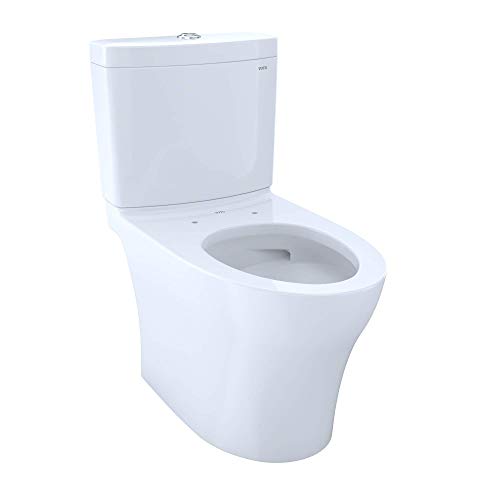
| TOTO Aquia IV | Dual flush | 1.0 / 0.8 | 1,000g (full) | 2.125 in. glazed | Yes | Check price |
| Kohler Cimarron | AquaPiston | 1.28 | 1,000g | 2 in. glazed | Yes | Check price |
| American Standard Cadet 3 | PowerWash rim | 1.28 | 800g | 2.125 in. glazed | Yes | Check price |
| Woodbridge T-0001 | Siphon jet | 1.28 | 800g | 2 in. glazed | Yes | Check price |
| Gerber Viper | Siphon jet | 1.28 | 1000g | 2.125 in. glazed | Yes | Check price |
| Kohler Highline | Class Five | 1.28 | 800g | 2 in. glazed | Yes | Check price |
| Swiss Madison Sublime | Siphon jet | 1.1 | 600g | 1.75 in. glazed | Yes | Check price |
A MaP score of 1,000g does not mean a toilet is indestructible. It means the toilet passed every load in the standardized test. Items outside the test protocol -- wipes labeled "flushable," excessive toilet paper, foreign objects -- can still cause clogs in any toilet regardless of MaP score.
Not necessarily. Modern 1.28 GPF toilets certified by EPA WaterSense must achieve a MaP score of at least 350g, but the best-performing models hit 1,000g despite using 20% less water than older 1.6 GPF models. The key is how efficiently the design uses its water volume -- larger flush valves, better jet geometry, and optimized bowl profiles allow 1.28 GPF toilets to outperform many older 1.6 GPF designs on actual clog resistance.
The EPA WaterSense program sets a maximum of 1.28 gallons per flush for certified toilets and requires a minimum MaP score of 350g. That minimum is low by design -- it sets a floor, not a ceiling. Manufacturers competing for WaterSense certification while also appealing to consumers who prioritize clog resistance have had to innovate rather than simply reduce water volume.
The engineering lever most manufacturers have pulled is flush valve diameter. The traditional 2-inch flapper valve used in millions of toilets meters water into the bowl relatively slowly. American Standard's 4-inch Accelerator valve and TOTO's tower-style flush valves open more of the tank bottom at once, releasing a larger slug of water in a shorter time window. The result is higher peak velocity at the trapway jet, which is the critical moment for establishing siphon action.
TOTO's Double Cyclone technology, used in the Drake II and UltraMax II, adds a second dimension by replacing traditional rim holes with two nozzles that create a cyclonic flow pattern across the bowl surface. This cleans the bowl more effectively and also pre-wets waste before the siphon engages, reducing the friction load on the trapway. The system achieves this at 1.28 GPF with consistent 1,000g MaP scores.
By contrast, a legacy 1.6 GPF toilet with a standard 2-inch flapper, no rim wash, and an unglazed 1.75-inch trapway may clog at loads far below 500g despite using more water. The volume itself is less important than how effectively it is directed.
When a customer asks whether they should choose a 1.6 GPF toilet for better flushing, the honest answer is: not unless the specific 1.6 GPF model has a higher MaP score than the 1.28 GPF alternative you are comparing it to. In most current product comparisons, the 1.28 GPF WaterSense model will match or exceed the older 1.6 GPF design on actual clog resistance while saving roughly 4,000 gallons of water per household annually.
The half-flush mode on most dual-flush toilets releases 0.8 to 1.0 GPF, which is often insufficient to establish full siphonic action. Without complete siphon engagement, solids that reach the trapway may not be fully pulled through, and repeated half flushes deposit small amounts of waste that accumulate into a blockage over days. Choosing a dual-flush toilet with a strong full-flush score (1,000g MaP) and using the full flush for solid waste eliminates most of this risk.
Dual-flush toilets offer real water savings -- the TOTO Aquia IV saves approximately 20% more water than a standard 1.28 GPF toilet when half-flush is used appropriately for liquid waste. But the engineering trade-off is that the half-flush mode is designed only for liquid and light tissue. Its reduced water volume is deliberately insufficient to sustain siphonic action through a loaded trapway.
Problems arise in households where the half flush is used out of habit for all waste. Over a week of this pattern, residue accumulates in the lower trapway and begins to narrow the effective passage diameter. A toilet that scored 1,000g on its full flush may begin clogging at 500g loads simply because the trap is partially fouled from habitual partial flushes.
The solution is not to avoid dual-flush toilets -- they provide genuine environmental and utility-cost benefits. The solution is user education: liquid waste and light tissue only on the half flush, all solid waste on the full flush. Toilets with clear half/full flush button labeling, like the Woodbridge T-0001, have lower misuse rates in reported owner surveys because the distinction is visually obvious.
For households with small children who may not reliably choose the correct flush mode, a single-flush high-efficiency toilet like the TOTO Drake II may be more practical despite using slightly more water per cycle.
For a broader look at which models perform best across all categories, see our best flushing toilets guide, which covers MaP scores, owner reliability data, and long-term maintenance costs for the top residential models.
Bowl shape affects how waste consolidates before entering the trapway -- an elongated bowl with a well-positioned siphon jet concentrates waste at the optimal entry point. Rim design determines how water is distributed across the bowl surface and how effectively it pre-wets and mobilizes solids. Rimless or direct-jet designs reduce the surface area that can accumulate mineral deposits, which over time narrow the jet openings and reduce flush velocity.
The water delivery system inside the bowl has two jobs: wash the bowl surface to prevent residue buildup, and build the hydraulic column that initiates siphon action at the trapway jet. Traditional designs use a series of small holes drilled under the rim that direct water in a swirling pattern. Over months or years, mineral deposits from hard water partially block these holes, reducing both bowl cleanliness and flush power.
TOTO's Tornado Flush technology, used in its Aquia IV series, replaces rim holes with two large directional nozzles positioned at 120-degree angles. This creates a centrifugal flow that covers the entire bowl interior with far less surface area exposed to mineral accumulation. Kohler's AquaPiston valve creates a 360-degree water entry around the entire rim circumference in a different approach to the same problem.
American Standard's EverClean surface glaze adds a dimension beyond basic glazing: it is an antimicrobial coating that inhibits bacterial and mold growth on the bowl surface. While this is primarily a hygiene feature, it also reduces the biofilm layer that can create additional drag for material moving through the trapway passage.
Bowl geometry also matters. A steeper bowl sidewall angle funnels waste more directly toward the siphon jet. Elongated bowls generally perform better than round bowls not because of aesthetic preference but because they position users further back, placing waste deposits more consistently at the bowl's optimal hydraulic center.
| Flush Technology | Used By | Mechanism | Rim Design | Clog Risk | Check Price |
|---|---|---|---|---|---|
| Double Cyclone / Tornado | TOTO | 2 nozzles, centrifugal flow | Rimless nozzles | Very Low | Check price |
| AquaPiston | Kohler | 360-degree rim release | Standard with wide jet | Low | Check price |
| 4-inch Accelerator | American Standard | Wide valve, fast release | PowerWash rim | Low | Check price |
| Class Five | Kohler | Large canister, direct jet | Fully-rimmed | Low | Check price |
| Standard siphon jet | Budget / generic | Flapper valve, rim holes | Traditional rim | Moderate to High | Check price |
| Pressure-assist | Gerber, specialty | Compressed air assist | Varies | Very Low (noisy) | Check price |
Hard water deposits calcium and magnesium carbonate inside rim holes, siphon jets, and trapway passages over time, narrowing effective flow diameters and reducing flush velocity. A toilet that originally had a 2-inch fully-glazed trapway can develop effective clearances of 1.5 inches or less after a decade of hard-water use without descaling maintenance. Regular cleaning with acid-based descalers (white vinegar or commercial lime removers) prevents this and extends effective service life significantly.
The progression of mineral buildup in a residential toilet follows a predictable pattern. In the first year, deposits accumulate primarily on the rim holes and visible bowl surface where water exits. These are easy to see and many households clean them regularly. The harder-to-reach deposits form inside the trapway itself, where neither visual inspection nor standard cleaning tools reach.
Water with hardness above 120 mg/L (7 grains per gallon) -- common across the American Southwest, Midwest limestone regions, and much of the Mountain West -- deposits enough scale inside a standard trapway to measurably reduce flow within three to five years. Toilets with larger, smoother trapways accumulate the same volume of mineral deposits but maintain more residual clearance because they started with more.
The siphon jet port at the very base of the bowl, typically a 0.75-inch to 1-inch opening, is especially vulnerable. This port is responsible for initiating siphon action -- if it narrows from mineral buildup, the toilet loses its ability to establish a full siphon even with adequate water volume. Owners often report a toilet that "used to flush great" beginning to require multiple flushes, which is almost always traceable to partial blockage of the siphon jet port rather than any mechanical failure.
Descaling with diluted white vinegar poured directly into the overflow tube (not the bowl) allows the acid to sit in the rim passages and jet port overnight. Commercial products containing citric acid or hydrochloric acid work faster for severe buildup. Avoid bleach-based cleaners for this purpose -- bleach kills bacteria but does not dissolve mineral scale.
For homes on hard water, toilets with rimless designs like the TOTO Aquia IV have a structural advantage: fewer narrow passages means fewer chokepoints for mineral accumulation.
Many households replace a toilet that "doesn't flush well anymore" when a descaling treatment would restore original performance for a fraction of the cost. Before attributing poor performance to toilet age or mechanical failure, try filling the overflow tube with undiluted white vinegar and letting it sit overnight. If flush performance improves noticeably the next day, mineral buildup -- not toilet failure -- was the cause.
A toilet's internal design is only part of the clog equation. The conditions downstream of the toilet floor flange -- drain slope, stack venting, and overall drain line condition -- determine whether a well-designed toilet's hydraulic output actually clears the system.
Residential drain lines should slope 1/4 inch per linear foot toward the stack. Lines with insufficient slope (common in older construction or improperly installed remodels) allow water to move ahead of solids, leaving waste sitting in the pipe rather than being carried toward the main stack. No amount of flushing power compensates for a flat or reverse-slope drain line.
Vent stacks equalize pressure in the drain system. A blocked vent stack -- from bird nests, leaf debris, or construction damage -- creates negative pressure that pulls water out of trap seals and reduces siphon effectiveness at the toilet. Symptoms include sluggish flushing across multiple fixtures simultaneously and gurgling sounds from other drains when the toilet is flushed.
In older construction with 3-inch drain lines (4-inch is now standard in most jurisdictions), restrictions accumulate from decades of mineral scale and soap residue on pipe walls. A professionally jetted drain line can restore original flow capacity and eliminate recurring clogs that are being wrongly attributed to the toilet itself.
If you are troubleshooting persistent clogs in a toilet that has a strong MaP score and appears to be functioning correctly, the drain system rather than the toilet should be the first area investigated. A plumber with a camera inspection scope can confirm drain slope, vent status, and line condition within an hour. See our toilet rough-in and plumbing guide for more on how drain line specs affect toilet selection.
Pressure-assist toilets use compressed air stored inside a sealed pressure vessel inside the tank to force water into the bowl at higher velocity than gravity alone can achieve. The result is measurably higher flush force -- most pressure-assist units achieve 1,000g MaP scores even with 1.0 GPF or less. However, they are significantly louder (often described as sounding like an airplane lavatory), cost more to purchase and repair, and require access to a water supply line with adequate pressure (minimum 25 PSI).
For commercial applications -- high-traffic restrooms, healthcare facilities, restaurants -- pressure-assist makes a strong case. For residential use, modern gravity-fed toilets from TOTO, Kohler, and American Standard now match or approach pressure-assist performance on clog resistance with far lower noise profiles and simpler, cheaper repairs.
Gerber's Viper and similar pressure-assist residential models retain a following among plumbers who install them in basement bathrooms where water pressure may be lower than ideal for gravity systems and where drain line slope is sometimes compromised by floor constraints. In those specific situations, the extra flushing force of pressure-assist offsets the installation context's limitations.
For information on how drain configuration affects the choice between gravity and pressure-assist systems, see our article on toilet rough-in dimensions and plumbing compatibility.
The following factors, evaluated in order of impact, will steer you toward a toilet that reliably clears waste without intervention:
1. MaP score of 800g or higher. The single most predictive metric. Available free at map-testing.com. Sort by score and filter by GPF to find high-efficiency options that still clear heavy loads. Any toilet with a 1,000g score has passed the highest load the test applies and represents the top tier of clog resistance regardless of brand.
2. Fully-glazed trapway of 2 inches or larger. Confirm this in the manufacturer's spec sheet, not just the marketing page. "Fully glazed" should appear explicitly; "glazed trapway" may refer only to the bowl-side portion. Models from TOTO's Drake and UltraMax families, American Standard's Champion 4 and Cadet 3, and Kohler's Cimarron all meet this standard.
3. EPA WaterSense certification. Confirms 1.28 GPF or less and a minimum 350g MaP score. The best WaterSense toilets far exceed the 350g minimum, so use WaterSense as a starting filter, not a final criterion.
4. Flush valve diameter of 3 inches or larger. Larger valves release more water volume in less time, building higher peak bowl velocity. American Standard's 4-inch Accelerator valve, TOTO's 3-inch tower flush valve, and Kohler's 3.25-inch AquaPiston canister all outperform standard 2-inch flappers on peak flow rate.
5. Aggregate owner reviews mentioning clog frequency. Third-party retail reviews from homeowners who have used a toilet for 6 to 24 months provide real-world validation of MaP scores. Filter reviews that specifically mention "never clog," "plunger," or "multiple flushes" to isolate reliability feedback from aesthetic comments.
For households with children, elderly residents, or individuals with medical conditions that increase solid waste volume, the minimum recommendation is a 1,000g MaP toilet with a 2.125-inch fully-glazed trapway. The TOTO Drake II and American Standard Champion 4 are both consistently available at mainstream retail channels and represent reliable choices at their respective price tiers.
For more on how specific models compare across all performance dimensions, see our best flushing toilets guide and our individual reviews of the TOTO Drake and American Standard Champion 4.
A MaP score of 800g or higher is recommended for most households. A score of 1,000g -- the highest in the test scale -- indicates the toilet cleared every load in the protocol and represents the lowest clog risk available in residential gravity-flush designs.
Tank size matters less than valve diameter and design. A 1.6-gallon tank with a 2-inch flapper valve delivers water more slowly than a 1.28-gallon tank with a 4-inch accelerator valve. The flush valve opening speed and diameter determine peak bowl velocity, which is more important than raw water volume.
If the toilet is in good mechanical condition, the most common causes are mineral buildup narrowing the siphon jet port or rim holes, a drain line with insufficient slope downstream, or a partially blocked vent stack reducing siphon pressure. All three are repairable without replacing the toilet.
No residential toilet is designed to reliably flush wipes labeled "flushable." These products pass the flushability test by breaking down over hours to days, but they do not disintegrate within the flush cycle. They accumulate in the trapway and drain line, eventually forming dense blockages that require professional snaking or hydro-jetting to remove.
The TOTO Drake and Drake II both achieve 1,000g MaP scores with a 2.125-inch fully-glazed trapway and WaterSense-certified 1.28 GPF operation, placing them among the most clog-resistant gravity-flush toilets available. They are consistently cited by plumbers and homeowners as near-zero-maintenance for clog issues under normal residential use.
All standard residential toilets use gravity to move water from tank to bowl. "Siphon jet" refers specifically to the primary opening at the base of the bowl that directs water velocity to initiate siphonic action in the trapway. The distinction that matters for clog resistance is the size of that jet port, the trapway diameter, and the flush valve that controls water flow rate into the bowl.
With a flashlight, look into the trapway from inside the bowl and from the exit at the base of the toilet. A fully-glazed trapway reflects light evenly throughout its length with a smooth, shiny surface. A rough, matte finish indicates unglazed areas. You can also consult the manufacturer's specification sheet, which will state "fully-glazed trapway" explicitly if applicable.
Yes. Hard water deposits calcium carbonate scale inside the siphon jet port, rim holes, and trapway passage, reducing effective flow diameter over time. Households with water hardness above 7 grains per gallon (120 mg/L) should perform quarterly descaling with white vinegar or commercial descaler to maintain original flush performance.
The American Standard Champion 4 is widely recognized as having the widest trapway in its class at 2.375 inches fully glazed, combined with a 4-inch accelerator flush valve. It achieves a 1,000g MaP score at 1.6 GPF. It is frequently cited as the top choice for households with a history of chronic clogging from prior toilets.
Elongated bowls generally outperform round bowls on clog resistance because they position waste deposits more consistently at the hydraulic center of the bowl, improving alignment with the siphon jet. Round bowls can achieve high MaP scores in specific designs, but the elongated configuration gives manufacturers more consistent results across user positions.
For households on municipal water with moderate hardness (7-14 grains per gallon), quarterly descaling is recommended. Households on hard well water above 14 grains per gallon should descale every two months. The procedure involves pouring undiluted white vinegar into the overflow tube and leaving it overnight to dissolve mineral deposits in the rim and jet passages.
Pressure-assist toilets deliver higher peak bowl velocity than gravity-only designs, which gives them an advantage in clearing heavy loads. However, modern 1,000g-rated gravity toilets from TOTO, Kohler, and American Standard perform comparably in most residential applications. Pressure-assist remains preferable for commercial settings, high-traffic facilities, or bathrooms with problematic drain slope conditions.
Yes. Even a 1,000g MaP toilet has limits. Excessive toilet paper reduces the hydraulic energy available to carry solid waste because paper absorbs and holds water, increasing the mass the flush must move. Flushing smaller amounts of paper per cycle or using thinner paper reduces this load and prevents even high-performance toilets from being overwhelmed.
EPA WaterSense certification confirms a toilet uses no more than 1.28 gallons per flush and achieves a minimum 350g MaP score. The minimum MaP requirement is intentionally low -- it establishes a floor, not a target. Consumers should use WaterSense as a starting filter for water efficiency and then compare MaP scores among certified models to find the best combination of efficiency and performance.
Two-flush behavior is almost always caused by either insufficient flush valve output (too slow or too narrow a valve), a partial blockage of the siphon jet from mineral buildup, a low water level in the tank, or a worn flapper that closes before the tank fully empties. In newer toilets, a misadjusted fill valve height is the most common cause and is a simple 5-minute adjustment without tools.
Both models achieve 1,000g MaP scores and carry EPA WaterSense certification at 1.28 GPF. The TOTO Drake II uses a 2.125-inch fully-glazed trapway with Double Cyclone technology; the Kohler Cimarron uses a 2-inch trapway with AquaPiston valve technology. In practice, both are considered top-tier clog resistant options with very similar real-world performance based on aggregated owner reviews.
A blocked vent stack does not directly cause bowl-level clogs but reduces siphon effectiveness by introducing negative pressure into the drain line. This manifests as sluggish flushing, gurgling from nearby drains after flushing, and siphon action that fails to fully establish. If these symptoms appear simultaneously across multiple fixtures, the vent stack rather than the toilet itself should be inspected first.
The Woodbridge T-0001 achieves an 800g MaP score with a 2-inch fully-glazed trapway and WaterSense certification at 1.28 GPF. It performs well for typical household use and its one-piece design eliminates the tank-to-bowl connection where leaks and mineral bridges commonly form in two-piece toilets. It is a reliable option at its price tier, though it falls short of the 1,000g performance achieved by TOTO Drake II or American Standard Champion 4.
Items that should never be flushed include wipes of any kind (including "flushable" variants), cotton balls, feminine hygiene products, paper towels, dental floss, hair, medications, cat litter, and any food waste. These materials either do not disintegrate within the flush cycle, expand when wet, or form matted blockages in the trapway and drain line that toilet paper never creates.
Comfort-height toilets (17 to 19 inches) and standard-height toilets (14 to 15 inches) from the same manufacturer and product line use identical internal hydraulics. The bowl height does not affect flush performance. Any performance difference between a standard and comfort-height version of the same model would reflect manufacturing tolerance variation rather than design difference.
Toilet clogging is an engineering problem with an engineering solution. The combination of a fully-glazed trapway at 2.125 inches or larger, a high-output flush valve that releases water quickly, and a MaP score of 800g or higher virtually eliminates clog risk under normal household use. The TOTO Drake II and American Standard Champion 4 represent the strongest choices in the gravity-flush category, while the TOTO Aquia IV leads among dual-flush options. Pairing any of these with descaling maintenance every three to four months and strict avoidance of non-paper products keeps clog risk near zero indefinitely.
Learn why toilet trapways curve like an S, how each bend blocks sewer gas, and what the shape means for clogs and…
Read the guideAlmost every US toilet has a left-side handle. Learn the plumbing and mechanical reasons behind the layout and when it actually changes.
Read the guideHome toilets rely on tanks because household water lines lack the pressure that public flushometer systems use to flush straight from the…
Read the guide