
Best Scandinavian Toilets (2026)
Toilets4.6
Clean, low-profile silhouettes with real MaP-verified flush performance and efficient dual-flush water use, sized for a minimalist Nordic bathroom without sacrificing function.
Read the guideEverything you need to know about direct-flush, tankless commercial-grade systems -- how they work, where they belong, and whether one makes sense for your space.
Research updated June 2026.
A flushometer toilet uses direct water-supply pressure instead of a tank, delivering a powerful, fast 1.28 to 1.6 GPF flush in under 10 seconds. Built for commercial settings requiring 50+ flushes per day, they demand minimum 25 PSI supply pressure and professional plumbing access -- making them impractical for most residential bathrooms.
A flushometer toilet is a tankless fixture that connects directly to the pressurized water supply line, using a metered valve -- called a flushometer -- to release a precise volume of water with every flush. Unlike gravity-fed tank toilets that refill slowly between uses, flushometers reset in roughly 6 to 10 seconds, allowing back-to-back flushes without waiting. The entire system consists of two main components: the bowl itself (designed with a larger trapway and inlet ports suited to high-velocity flow) and the flushometer valve body mounted to the wall or the toilet's spud connection.
The mechanism inside a flushometer valve is mechanical elegance. When you push the handle or activate the sensor, an internal piston or diaphragm opens briefly, allowing a measured burst of pressurized water to rush through the bowl's rim and siphon jet simultaneously. The design creates a scouring action powerful enough to clear solid waste in a single pass -- which is exactly what high-traffic restrooms need.
There are two main valve types: piston-style valves (older, more rebuildable, common in heavy institutional installs) and diaphragm-style valves (more common today, with fewer moving parts and faster reset). Both accomplish the same result: a timed, metered, high-pressure flush that is completely independent of a water storage tank.
Flushometer valves are rated by manufacturers for a specific minimum dynamic pressure -- typically 25 PSI flowing, with optimal performance between 35 and 80 PSI. Below 25 PSI, the flush cycle is incomplete and waste clearing suffers. Above 80 PSI without a pressure-reducing valve, valve wear accelerates and blow-out noise becomes a problem. Checking your building's dynamic supply pressure before specifying any flushometer is a non-negotiable first step.
Flushometer systems divide into three categories by actuation method: manual handle, push-button, and sensor-activated (touchless). Sensor models have become the default in commercial new construction because they reduce cross-contamination risk and comply more easily with accessibility standards. Within each actuation type, valves are further classified as either top-spud or rear-spud, which determines how the valve body connects to the toilet bowl.
Understanding valve connection types matters when specifying or replacing a flushometer:
The top brands supplying flushometer valves are Sloan Valve Company (the category inventor, founded 1906), Zurn Industries, and American Standard in their commercial product lines. On the toilet bowl side, commercial-grade fixtures come from TOTO, American Standard, Kohler, and Gerber, all of whom produce bowls specifically sized and drilled for flushometer service.
When retrofitting an existing commercial restroom, confirm whether the existing bowl has a standard 1.5-inch or 2-inch spud connection before ordering a replacement valve. Mismatched spud sizes are among the most common and preventable installation errors. Most commercial bowls manufactured after 2000 use the 1.5-inch standard, but older cast-iron bowls may differ.
Flushometers consistently outperform tank toilets on raw clearing speed and per-cycle throughput because they rely on dynamic supply pressure rather than stored gravity head. MaP (Maximum Performance) flush testing -- the industry's benchmark for waste-clearing capacity -- gives many commercial flushometer-fed bowls scores of 1,000 grams or higher, the maximum rating, while even top-performing tank models like the TOTO Drake II or American Standard Champion 4 typically score 800 to 1,000 grams. The key difference is that flushometers maintain high flow velocity throughout the entire flush cycle rather than tapering off as the tank empties.
MaP testing is published by an independent consortium and measures how many grams of a standardized soybean-paste surrogate a toilet clears in a single flush at rated GPF. For context:
| Flush System | Typical MaP Score | GPF (Federal Standard) | Reset Time | Min. Supply PSI |
|---|---|---|---|---|
| Flushometer (commercial) | 1,000 g (max) | 1.28 or 1.6 | 6 to 10 sec | 25 PSI (dynamic) |
| Pressure-assist tank toilet | 800 to 1,000 g | 1.0 to 1.28 | 60 to 90 sec | 20 PSI (min) |
| Gravity-feed tank (high-end) | 700 to 1,000 g | 1.28 to 1.6 | 60 to 90 sec | None (gravity) |
| Gravity-feed tank (standard) | 350 to 700 g | 1.6 | 60 to 120 sec | None (gravity) |
The MaP Premium designation (a subset of the MaP program) requires a minimum score of 350 grams at 1.0 GPF. EPA WaterSense certification requires performance at 1.28 GPF or less -- and flushometer valves rated at 1.28 GPF can earn WaterSense certification when paired with a compliant bowl. The current federal standard caps flushing at 1.6 GPF for any toilet sold in the United States, and most modern flushometers are pre-set to 1.28 GPF from the factory.
Where tank toilets genuinely have the upper hand is residential suitability. Tank designs work at any supply pressure because gravity does the work. A flushometer requires both adequate dynamic pressure AND a dedicated 1-inch supply line (versus the 3/8-inch or 1/2-inch lines found in most homes). That infrastructure gap is the core reason flushometers remain overwhelmingly a commercial technology. For residential flushing power comparisons, see our guide to the best flushing toilets currently available.
A flushometer toilet can technically be installed in a residence if the home has sufficient supply pressure (minimum 25 PSI dynamic, ideally 35 to 60 PSI), a 1-inch cold water supply line running to the bathroom, and enough wall depth for the valve body or concealed rough-in. In practice, most homes built before the 2000s lack a dedicated 1-inch supply branch at the toilet location, making the plumbing upgrade alone a significant cost. Homes with well pumps or municipal pressure below 40 PSI dynamic are generally poor candidates.
If you are evaluating a home flushometer installation, here is what the project actually involves:
For most homeowners who simply want stronger flushing performance, a high-MaP tank toilet like the TOTO Drake II (1,000 g MaP, 1.28 GPF) or American Standard Champion 4 (1,000 g MaP, 1.6 GPF) achieves comparable waste-clearing capacity without the plumbing infrastructure demands. The flushometer path makes sense primarily for custom residential projects, basement bathrooms that already have commercial plumbing, or converted commercial spaces.
One underappreciated residential use case is a high-traffic basement bathroom in a home where the existing supply pressure is already 50 PSI or higher and a 3/4-inch or 1-inch main runs nearby. In that scenario, the incremental plumbing cost drops significantly, and the near-instant reset time can be genuinely useful in a home that hosts frequent gatherings. The bowl itself occupies less floor space than a two-piece tank toilet, which may matter in tight layouts.
Flushometer valves require periodic rebuilding of internal components -- primarily the diaphragm or piston kit, control stop O-rings, and handle packing -- typically every 3 to 7 years in commercial use, or when symptoms such as slow reset, weak flush, continuous running, or handle sticking appear. Most diaphragm rebuild kits cost under $20 and can be replaced without special tools by a knowledgeable plumber or facilities tech in under 30 minutes. The bowl itself requires the same cleaning routine as any ceramic toilet.
The most common flushometer failure modes and their causes:
Compared to tank toilets, flushometers have fewer parts overall -- no fill valve, no float, no flapper, no overflow tube. The trade-off is that repairs require shutting off the control stop (the integral shut-off built into the valve body) and understanding the valve's internal layout, which is less intuitive than a tank rebuild for a first-time DIYer. Sloan, Zurn, and other manufacturers publish detailed exploded-view diagrams and rebuild instructions for every valve model they produce.
On the bowl side, the larger trapway typical of commercial flushometer bowls (often 2.125 to 2.375 inches) is actually more resistant to clogs than the 2-inch trapways common in residential toilets. Proprietary glazing on commercial bowls from TOTO (CeFiONtect) or American Standard (EverClean) helps prevent scale and mineral buildup in high-hardness water environments. See our overview of trapway size and clog resistance for more detail on how bowl geometry affects performance.
Sloan dominates the flushometer valve market with decades of installed base and the widest parts availability. On the bowl side, TOTO's commercial line, American Standard's Plebe and Glenwall models, Kohler's commercial Persuade and Kingston bowls, and Gerber's commercial fixtures all pair reliably with major-brand valves. Brand consistency between valve and bowl is less critical than ensuring the bowl's spud size and rough-in dimension match the valve specification.
Here is a summary of the leading commercial-grade flushometer systems by component category:
| Brand | Product Category | Notable Models | GPF Options | WaterSense Eligible |
|---|---|---|---|---|
| Sloan | Flushometer valve | Royal 111, Regal 186, Optima 8111 | 1.28, 1.6 | Yes (1.28 GPF models) |
| Zurn | Flushometer valve | Z6000AV, Aquaflush ZER6000 | 1.28, 1.6 | Yes |
| American Standard | Bowl + valve | Madera, Plebe, Glenwall | 1.28, 1.6 | Yes |
| TOTO | Commercial bowl | CT705U, CT708U (wall-hung) | 1.28, 1.6 | Yes |
| Kohler | Commercial bowl | Kingston K-4325, Persuade K-4304 | 1.28, 1.6 | Yes |
| Gerber | Commercial bowl | Avalanche Commercial, Maxwell | 1.28, 1.6 | Yes |
For purchasers sourcing commercial restroom replacements, TOTO and American Standard commercial bowls are most commonly found in institutional settings and have the widest replacement parts availability. Gerber's commercial line is notable for its broad color-match options and has a strong warranty program for commercial buyers. Kohler's commercial fixtures tend to carry premium pricing but offer consistent dimensional tolerances that simplify renovation work in existing rough-ins.
Residential buyers curious about high-performance tank alternatives should read our comparison of pressure-assist vs. gravity-flush toilets before committing to the complexity of a flushometer install.
Water efficiency is one area where modern flushometers have closed the gap with residential tank toilets significantly. The first-generation commercial flushometers of the 1980s and 1990s used 3.5 GPF or even 5 GPF per flush. After the 1992 Energy Policy Act mandated a 1.6 GPF maximum, manufacturers retooled valve internals and bowl geometry to maintain clearing performance at lower water volumes.
Today, 1.28 GPF flushometers are standard in new commercial construction. The EPA WaterSense program certifies flushometer-fed systems that meet 1.28 GPF and pass the MaP 350-gram minimum threshold -- though most commercial bowl-and-valve combinations at this GPF rating far exceed 350 grams. EPA data estimates that WaterSense-labeled toilets save an average household approximately 13,000 gallons per year compared to older 3.5 GPF fixtures. In a commercial setting with 100 flushes per day, switching from 1.6 GPF to 1.28 GPF saves roughly 11,680 gallons per year per fixture.
Some jurisdictions (California, Colorado, Hawaii, Georgia, New York City) have adopted standards stricter than the federal 1.6 GPF maximum. In California, the current maximum for commercial toilets is 1.28 GPF under the California Green Building Standards Code (CALGreen). Specifiers working on California projects should confirm valve settings and supply WaterSense certification documentation during permit review.
In large commercial buildings, the aggregated savings from flushometer upgrades can be substantial enough to qualify for utility rebates. Many municipal water utilities offer per-fixture rebates for replacing pre-1994 toilets with WaterSense-certified 1.28 GPF models. Facilities managers should check the EPA WaterSense rebate finder and their local utility's conservation program before budgeting a fixture replacement project -- the payback period on a flushometer valve upgrade is often under two years in high-use restrooms.
The decision between a flushometer and a tank toilet comes down to four variables: usage volume, supply pressure, wall access, and budget for rough-in work.
| Factor | Flushometer | Tank Toilet (Gravity) | Tank Toilet (Pressure-Assist) |
|---|---|---|---|
| Daily flush volume | 50 to 500+ (ideal) | 1 to 30 | 5 to 50 |
| Supply pressure required | 25+ PSI dynamic | None (gravity) | 20+ PSI |
| Reset time | 6 to 10 seconds | 60 to 120 seconds | 60 to 90 seconds |
| Supply line size | 1 inch (minimum 3/4 inch) | 3/8 to 1/2 inch | 1/2 inch |
| Maintenance complexity | Medium (valve rebuilds) | Low (flapper, fill valve) | Medium (pressure tank) |
| Best application | Commercial, institutional | Residential, low traffic | Residential, moderate traffic |
For residential bathroom renovations where flushing power is the primary concern, high-performance gravity-feed toilets from TOTO (Drake, Drake II, UltraMax II, Aquia IV), Kohler (Highline, Cimarron), and American Standard (Champion 4, Cadet 3) achieve MaP scores of 800 to 1,000 grams while working with standard residential plumbing. The Woodbridge T-0001 is a widely reviewed option that offers dual-flush operation (0.8 / 1.6 GPF) at a lower price point.
The flushometer path becomes genuinely compelling for a residential project only when at least two of the following are true: the owner wants touchless flushing for hygiene reasons, the bathroom will serve five or more people daily, the existing plumbing already includes a 3/4-inch or 1-inch supply at the bathroom location, or the aesthetic goal is a commercial or industrial look with no visible tank.
A flushometer toilet is a tankless fixture that flushes using direct water-supply pressure through a metered valve rather than water stored in a gravity tank. The combination of high-velocity flow and precise metering produces a fast, powerful flush used primarily in commercial and institutional restrooms.
Most modern flushometer valves are factory-set to 1.28 GPF, which meets the EPA WaterSense standard. Some older or heavy-duty installations still use 1.6 GPF valves. Both ratings comply with the federal 1.6 GPF maximum. Valves are field-adjustable within a range, but altering the factory GPF setting may void WaterSense certification on certified models.
A minimum dynamic pressure of 25 PSI at the valve inlet is required for a complete flush cycle. Most manufacturers recommend 35 to 60 PSI for reliable performance. Static (idle) pressure does not equal dynamic (flowing) pressure -- always measure with water running elsewhere in the building to simulate realistic load conditions.
Yes, if your home has sufficient supply pressure (25 PSI dynamic minimum), a 1-inch or at least 3/4-inch supply line that can be run to the bathroom, and access to retrofit the wall for the valve body. In most residential homes the plumbing upgrade cost makes a high-MaP tank toilet a more practical choice for improving flushing power.
Because they draw directly from pressurized supply water rather than draining a stored tank. The flow rate during a flushometer cycle is much higher than the gravity-driven flow from a tank, which decelerates as the tank empties. This sustained pressure difference is why flushometers reset in under 10 seconds versus 60 to 120 seconds for tank toilets.
No. That is the defining characteristic of a flushometer design. The valve and supply line replace the tank entirely. This eliminates the risk of a running toilet from a worn flapper or faulty fill valve, but it also means the toilet cannot function during a supply interruption (there is no stored water reserve).
They can be. ADA compliance depends on the bowl's seat height (17 to 19 inches for ADA "comfort height"), the side approach clearance, and the flush actuator location and force requirement. Most commercial flushometer bowls are available in ADA-compliant heights, and sensor-activated valves eliminate the force-to-operate requirement entirely, making touchless flushometers among the most accessible flush systems available.
Noticeably louder. The rush of pressurized water through the valve and bowl typically registers 70 to 80 dB at close range during the flush cycle, compared to 50 to 65 dB for most tank toilets. Concealed valve installations reduce noise somewhat. Some residential users find the sound level acceptable; others do not -- this is worth considering before committing to a home install.
Both are Sloan piston-style flushometer valves, but the Royal is designed for high-use commercial settings with a more robust internal piston assembly and is available in both top-spud and rear-spud configurations. The Regal is positioned as a lighter commercial use valve. Sloan's Optima series uses sensor actuation on the same valve bodies.
In normal commercial use, diaphragm-style valve internals typically need replacement every 3 to 7 years. Signs that a rebuild is needed include continuous running water, a weak or incomplete flush, a handle that sticks or fails to return, or water spraying from the vacuum breaker. Rebuild kits are standardized by valve model and are widely available from plumbing distributors.
Manual and handle-operated flushometers require no electricity at all -- the flush is entirely mechanical. Sensor-activated (touchless) flushometers require power, either from replaceable batteries (typically a 9V or 4 AA cells lasting 1 to 3 years) or from a hardwired AC transformer. Battery-powered sensor valves are more common in renovation applications where running electrical conduit is impractical.
Commercial flushometer-fed bowls regularly achieve the MaP maximum score of 1,000 grams when tested according to the MaP protocol. This represents complete clearing of a 1,000 g waste surrogate load in a single flush at rated GPF. MaP scores are available at map-testing.com for specific model combinations.
Many are. EPA WaterSense certification requires a toilet system (bowl plus flush mechanism) to flush at 1.28 GPF or less and clear a minimum of 350 grams in MaP testing. Most 1.28 GPF flushometer valve-and-bowl combinations that have been submitted for testing exceed the MaP threshold significantly and carry WaterSense certification. Always verify the specific model combination on the EPA WaterSense product list.
A vacuum breaker is a back-flow prevention device required by plumbing codes on flushometer valves. It prevents the siphoning of toilet bowl water back into the potable supply if a sudden pressure drop occurs. Most modern flushometer valves include an integral vacuum breaker in the valve body. Codes in most jurisdictions require it, and it should be inspected during any valve rebuild.
Not directly. Residential tank toilet bowls have a different trapway diameter, inlet port layout, and spud connection than commercial flushometer bowls. You cannot simply remove the tank from an existing toilet and attach a flushometer valve -- the bowl must also be replaced with one designed for flushometer service. A full fixture replacement is required.
Both elongated and round-front bowls are available in commercial flushometer configurations. Elongated bowls (approximately 18.5 inches front-to-back) are most common and are generally preferred for adult users. Round-front bowls (approximately 16.5 inches) are used where space is constrained. Wall-hung flushometer bowls are also available and allow floor clearance for easier cleaning in commercial settings.
Generally yes. Commercial flushometer bowls are designed with larger trapway openings (often 2.125 to 2.375 inches) than typical residential models, and the high-velocity flush cycle is more effective at clearing large loads in a single pass. However, like any toilet, flushometers can clog if non-flushable items are disposed of in the bowl.
Close the control stop on the valve body (the integral shut-off) to confirm the valve is the source. If stopping the control stop stops the running water, the issue is internal to the valve -- most likely a worn, fouled, or incorrectly seated diaphragm. Obtain a rebuild kit for your specific valve model, shut off the control stop, disassemble the valve, replace the diaphragm assembly, and reassemble. This resolves the majority of continuous-run issues.
The rough-in dimension (distance from the finished wall to the center of the floor drain) for most commercial flushometer bowls is 12 inches, identical to the most common residential standard. Some commercial models are also available in 10-inch and 14-inch rough-in configurations. Confirm the rough-in before ordering a replacement bowl, as it is not adjustable once the floor drain is set.
Flushometer systems carry a higher upfront cost for both the valve and the compatible bowl compared to standard residential tank toilets. The valve alone typically costs more than a complete entry-level tank toilet. However, commercial-grade components are designed for decades of high-cycle use, and the long-term maintenance cost per flush is competitive with tank toilets when lifecycle costs are considered over a 20-year horizon.
Flushometer toilets represent the highest level of flush performance and durability available, with near-instant reset times, maximum MaP scores, and decades of proven reliability in the world's most demanding restroom environments. They are the right specification for any high-traffic commercial or institutional project with adequate supply pressure. For residential applications, the plumbing infrastructure requirements make them a specialty choice -- most homeowners achieve comparable flushing power with a high-MaP tank toilet at lower cost and complexity. Understand your pressure, your supply line, and your daily flush volume before making the call.
How we rank & our data sources
We do not run physical lab tests. Rankings are built from published, verifiable data and real owner feedback, never paid placement.
Researched by Derek Whitman · Last updated June 19, 2026 · Our review method
Clean, low-profile silhouettes with real MaP-verified flush performance and efficient dual-flush water use, sized for a minimalist Nordic bathroom without sacrificing function.
Read the guide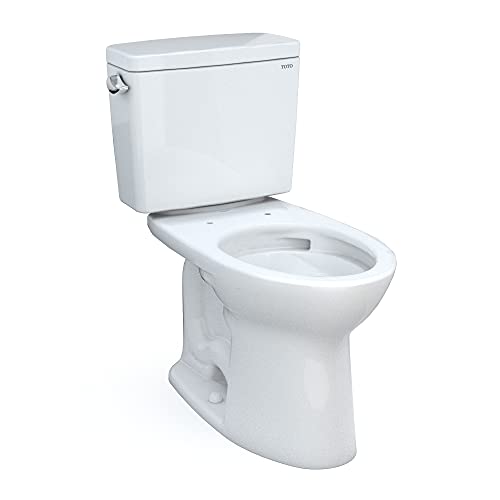
Classic two-piece toilets with tall tanks and elegant, understated proportions, the quiet country-house look that suits a traditional English bathroom without tipping…
Read the guide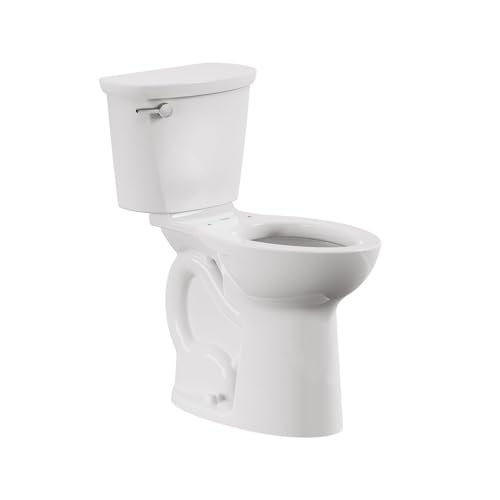
Clean-lined skirted and one-piece toilets with simple geometry and low profiles that suit a broad East Asian-influenced bathroom, backed by real verified…
Read the guide