
Japanese Smart Toilet Culture: Toto vs Panasonic vs INAX
Smart Toilets4.6
Japan invented the modern smart toilet over 40 years ago. Today three manufacturers dominate the category worldwide -- TOTO, Panasonic, and LIXIL…
Read the guideHeated seats, auto-open lids, bidet wash functions, remote controls, and night lights sound appealing -- but smart toilets vary wildly in quality, flushing power, and long-term reliability. This guide cuts through the noise so you buy the right unit for your bathroom and budget.
Research updated June 2026.
For most buyers in 2026, the TOTO Neorest or Washlet+ series delivers the most reliable combination of MaP-certified flushing power, EPA WaterSense efficiency, and bidet comfort. Prioritize MaP score first, then verify features match your specific bathroom rough-in and electrical access before purchase.
A smart toilet integrates electronic bidet wash functions, heated seats, auto-open or auto-close lids, deodorizers, and night lights directly into a single toilet unit -- rather than relying on a separate seat add-on. The toilet bowl, tank (or tankless design), and electronic seat are engineered as one piece, sharing plumbing and electrical connections. Smart toilets require a grounded electrical outlet within reach of the unit, typically within 4 feet, and must meet the same EPA WaterSense and local plumbing code requirements as any standard toilet.
The smart toilet category has expanded rapidly since 2020. You can now find units priced from roughly $500 for basic entry-level models up to $6,000 or more for flagship tankless Japanese-style units from TOTO and Kohler. The price difference reflects genuine engineering gaps -- not just badge premiums. Higher-end units use larger trapways, purpose-engineered flushing systems tested under MaP protocols, and electronic components built for 10-plus years of daily cycling. Lower-cost units may skimp on the flushing system itself while loading up on flashy features that fail within a few years.
Before shopping, understand that a smart toilet is a permanent fixture. Unlike a bidet seat you can swap out in 20 minutes, a full smart toilet replacement involves rough-in measurement, electrical work if no outlet exists, and a full toilet swap. Getting the decision right the first time saves significant labor and cost downstream.
MaP (Maximum Performance) testing measures how many grams of solid waste a toilet can reliably flush in a single cycle, using a standardized soybean paste test medium. A score of 500g is the minimum acceptable threshold; 800g or higher is recommended for households with heavy use or older drain lines. The best smart toilets achieve 1,000g MaP scores, which means they handle the most demanding real-world conditions without repeat flushing.
MaP testing is conducted by independent third-party laboratories and the results are published at map-testing.com. When you look up a smart toilet model, you will see the MaP score listed alongside the flush volume in gallons per flush (GPF). A toilet that achieves a 1,000g MaP score at 1.0 GPF is performing significantly better than one that needs 1.6 GPF to achieve the same clearing power.
Many buyers focus exclusively on features -- heated seats, remote controls, night lights -- and ignore the flushing system entirely. This is a mistake. If a toilet clogs regularly, no amount of warm water washing improves your experience. Always confirm the MaP score before finalizing any smart toilet purchase. A 1,000g MaP rating at 1.28 GPF or less is the standard you should demand.
Smart toilets that carry EPA WaterSense certification must use 1.28 GPF or less per full flush. Dual-flush models with an EPA WaterSense certification use approximately 0.8 to 0.9 GPF on a light flush and 1.28 GPF on a full flush. These figures matter for water bills and for jurisdictions that mandate low-flow fixtures. Look for the blue EPA WaterSense label on the product listing or spec sheet.
The five most important features to evaluate are: bidet wash system (water pressure, temperature control, nozzle self-cleaning), seat heating (warm-up speed and temperature range), flushing technology (MaP score, GPF, and clog resistance), lid automation (auto-open/close, sensor accuracy), and user presets (whether the unit stores settings for multiple household members). Secondary features like deodorizers and night lights are genuine conveniences but should not drive the buying decision.
The bidet wash system is where smart toilets differ most dramatically from each other. Entry-level units offer a single rear wash nozzle with basic pressure adjustment. Mid-range units add a front feminine wash, oscillating or pulsating spray modes, and stainless steel nozzles that self-clean with each use. Premium units like the TOTO Neorest series use EWATER+ electrolyzed water to mist the nozzle and bowl interior before and after each use, reducing the need for chemical cleaners.
Nozzle material matters. Stainless steel nozzles are more hygienic and durable than plastic. Look for a nozzle with self-cleaning spray -- meaning it rinses itself before extending to wash and after retracting. Some units offer a dedicated nozzle cleaning cycle accessible from the remote or app. Avoid units where the nozzle cleaning is manual-only; this becomes a maintenance burden over time.
Water pressure range should span from gentle (for post-procedure or sensitive users) to firm enough for effective cleaning without paper. Units with 5 or more pressure levels give the full household more flexibility. Temperature control with 3 to 5 settings covers most user preferences. Instant heating systems (tankless water heater built into the seat) eliminate the cold-water burst that older warm-water reservoir systems sometimes produce at the start of a wash.
Heated seats are among the most appreciated smart toilet features in colder climates. The key specification is warm-up speed. Reservoir-heated seats maintain warmth continuously, which is convenient but draws constant standby power -- typically 30 to 65 watts. Instant-heat seats (sometimes called "on-demand" heating) draw more power momentarily but only when the seat detects occupancy, lowering 24-hour energy consumption significantly.
TOTO's Washlet+ seat technology uses a seat sensor to activate heating when you sit and reduces the seat to a low standby temperature otherwise. Kohler's Veil and Numi series use similar occupancy-based logic. A unit with an "eco mode" or "energy saver" setting that reduces heating based on your household's usage patterns can cut standby power consumption by up to 50 percent according to published TOTO data.
Smart toilets use several different flushing technologies. Gravity-feed systems (like most standard toilets) are common in mid-range units and are reliable when the trapway and bowl design are well-engineered. Pressure-assist systems add a pressurized tank inside the tank to produce a more forceful flush -- effective but audible. TOTO's proprietary Tornado Flush system uses two or three high-powered nozzles positioned inside the rim to create a centrifugal spiral of water that covers the entire bowl surface rather than cascading from a traditional rim channel. This rim-free design is also easier to clean.
For families with children, heavy daily use, or older cast-iron drain lines with slower flow, a 1,000g MaP score is a practical necessity. For most contemporary homes with standard 3-inch or 4-inch drain lines and moderate use, a 600g to 800g MaP score is adequate. You can find MaP results for specific models at the publicly available database on map-testing.com -- search by brand and model number.
Auto-open lids use proximity sensors to detect your approach and raise the seat or lid before you reach the toilet. Auto-close functions lower the lid after a set delay once you move away. Sensor accuracy varies between brands. Units with narrow detection angles may fail to trigger if you approach from the side. The best implementations use multiple sensors or a wider detection field. Look for user reviews that specifically address sensor reliability -- this is one of the failure points that aggregated reviews reveal clearly.
Higher-end smart toilets store individual user profiles. Each person in the household can program their preferred wash position, pressure, temperature, and seat temperature and recall those settings from a remote or a side panel. TOTO's Neorest series stores up to two user presets on the remote. Kohler's Numi 2.0 offers app-based profiles for multiple users. For households with very different preferences, this feature moves from luxury to genuine utility.
Physical remotes are more reliable than app-only control. Wireless (radio frequency or Bluetooth) remotes work through walls and do not require line-of-sight. Some units come with a wired side panel as a backup. Check whether the unit can still be operated manually if the electronics fail -- some tankless designs become completely non-functional during power outages, while others have a manual flush override.
| Model | MaP Score | GPF | WaterSense | Bidet Nozzle | Seat Heat | Auto Lid | User Presets | Check Price |
|---|---|---|---|---|---|---|---|---|
| TOTO Neorest 700H | 1,000g | 1.0 / 0.8 | Yes | SS self-clean | Instant | Yes | 2 | Check price |
| TOTO Neorest 550H | 1,000g | 1.0 / 0.8 | Yes | SS self-clean | Instant | Yes | 2 | Check price |
| Kohler Numi 2.0 | 800g | 1.28 / 0.8 | Yes | SS self-clean | Instant | Yes | App-based | Check price |
| Kohler Veil Intelligent | 800g | 1.28 / 0.8 | Yes | Self-clean | Instant | Yes | 2 | Check price |
| TOTO Aquia IV Washlet+ | 800g | 1.0 / 0.8 | Yes | Self-clean | Reservoir | Optional | 1 | Check price |
| American Standard Spalet | 600g | 1.28 / 0.9 | Yes | Self-clean | Reservoir | No | 1 | Check price |
| Woodbridge T-0008 | 500g | 1.28 / 0.8 | Yes | Self-clean | Reservoir | Yes | 1 | Check price |
| Swiss Madison Ivy | 500g | 1.28 / 0.8 | Yes | Self-clean | Reservoir | No | 1 | Check price |
The TOTO Neorest 700H earns winner designation because it combines the strongest verified MaP score, lowest flush volume, best-in-class EWATER+ self-cleaning system, and the most reliable sensor automation of any unit in widespread distribution. The Kohler Numi 2.0 is the strongest alternative for buyers who want app integration and hands-free voice control compatibility.
Tankless smart toilets use direct water pressure or an internal pump to flush rather than storing water in an external tank, resulting in a sleeker profile and faster refill between flushes. They are generally higher in cost and require adequate municipal water pressure (typically 15 to 80 PSI). Tank-style smart toilets are easier to install in homes with variable water pressure, more forgiving in rural areas, and available at a wider range of price points -- they are often the better practical choice for most residential installations.
Tank-style smart toilets dominate the market in the $500 to $1,500 range. Units like the TOTO Aquia IV with a Washlet+ seat combine a well-engineered ceramic tank toilet body -- with a documented MaP score -- with an integrated or paired electronic seat. The advantage is that the flushing system is conventional and repairable by any licensed plumber. The electronic seat can be serviced or replaced independently if a component fails years down the road.
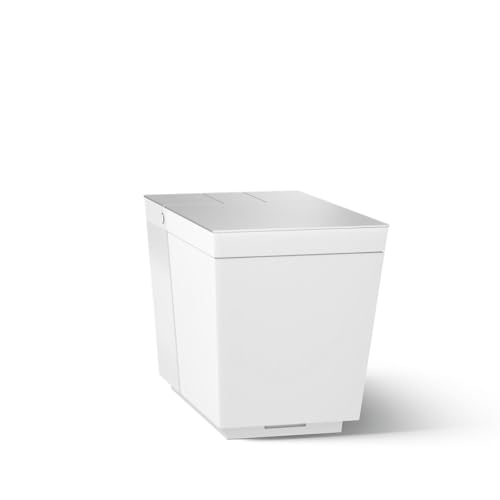
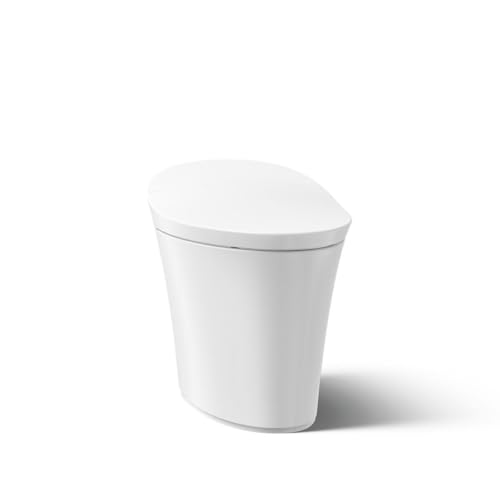
Tankless units like the TOTO Neorest 700H or Kohler Veil are sleeker, take up less visual space, and tend to use slightly less water per flush because they leverage water line pressure directly. However, they require sufficient and consistent water pressure -- homes with well pumps or older galvanized pipes may experience performance issues. Installation is more involved and typically requires a licensed plumber regardless of your DIY confidence level. A tankless unit that loses power during an outage also loses flushing capability unless there is a manual override valve.
For most American homes, a tank-style smart toilet paired with a quality integrated seat offers the best balance of reliability, repairability, and features. Tankless designs make strong sense for primary bathrooms with consistent water pressure, new construction where the electrical rough-in can be planned ahead, and buyers who want the cleanest visual profile. Know your water pressure before committing to a tankless unit -- it is one of the most common sources of dissatisfaction in owner reviews.
TOTO leads in long-term reliability based on aggregated owner review data and independent plumber surveys, with the Neorest and Washlet+ lines showing the lowest reported failure rates among electronic toilet seats and integrated units over a 5-year horizon. Kohler ranks second with strong warranty support. American Standard, Woodbridge, and Swiss Madison offer budget entry points with shorter track records on electronic components. Gerber focuses on commercial-grade flushing hardware but does not manufacture full smart toilet integrated units as of 2026.
TOTO is the originator of the Washlet technology, having introduced the first electronic bidet seat in Japan in 1980. Their manufacturing quality control, EWATER+ self-cleaning system, and global replacement parts availability are unmatched in the smart toilet category. TOTO products sold in North America carry a 1-year warranty on electronic components and a limited lifetime warranty on the vitreous china, which is among the strongest in the category.
Kohler has invested heavily in the smart toilet segment since 2018. Their Numi 2.0 is a genuine TOTO alternative with strong flushing performance (800g MaP) and the most advanced app integration on the market. Kohler's warranty is 1 year on electronics and 1 year on the complete product, which is shorter than TOTO's china coverage. However, Kohler's North American dealer and service network is extensive.
Woodbridge and Swiss Madison offer entry-level full smart toilets at accessible price points. Both carry EPA WaterSense certification and include the core bidet features. Owner reviews consistently flag sensor reliability and seat heating consistency as weaker points compared to TOTO and Kohler. These brands make sense for buyers who want to try a full smart toilet without a premium commitment, provided the bathroom is a secondary or guest bath rather than a high-use primary.
American Standard's Spalet line blends a conventional Champion 4 or Cadet 3 flushing body (well-regarded for clog resistance in standard testing) with an integrated bidet seat. The Champion 4 carries one of the strongest MaP scores in any consumer toilet. The electronic seat components in the Spalet are manufactured to American Standard's spec and carry a 1-year warranty. For buyers who want American Standard's proven flushing reliability with bidet comfort, the Spalet is a practical middle ground.
Rough-in distance is the measurement from the finished wall to the center of the floor drain (the closet flange). Most North American toilets are designed for a 12-inch rough-in. Some older homes have 10-inch or 14-inch rough-ins. Smart toilets are almost exclusively available in 12-inch rough-in configurations -- if your bathroom has a non-standard rough-in, you will need an offset flange adapter or you may be limited to a standard toilet body paired with an add-on bidet seat. Measure your rough-in before browsing listings; this single dimension eliminates more than half the options for non-standard bathrooms and saves significant frustration.
Also measure the distance from the toilet flange to any side wall or vanity. Smart toilets tend to have wider bases and seat assemblies than standard toilets. Allow at least 15 inches of clearance from the center of the toilet to the nearest side obstacle per ADA guidelines, though 18 inches is more comfortable and is the standard for comfort-height accessible installations. For ADA-compliant bathrooms, see our ADA-compliant toilet guide for detailed clearance requirements.
Every smart toilet requires a grounded 120-volt electrical outlet (GFCI-protected per code) within reach of the power cord, which is typically 4 to 5 feet. If your bathroom does not have an outlet near the toilet, factor in the cost of adding one -- this is an electrician job that typically adds $150 to $400 to the project depending on your location and panel access. In bathroom renovation planning, routing the electrical before the tile work goes in is far less expensive than cutting into finished tile later.
Some jurisdictions require the electrical permit and inspection for a new outlet near a water source. Check with your local building department. The GFCI outlet itself must be rated for bathroom use and positioned so the cord reaches the toilet connection point without crossing the floor or creating a trip hazard. Many smart toilet installations route the cord behind the toilet base or through a small chase in the wall for a clean finished appearance.
Smart toilets with rimless bowl designs (like TOTO's Tornado Flush models) are notably easier to clean than traditional under-rim designs because there are no hidden channels where bacteria accumulate. The EWATER+ system in TOTO Neorest units mists the bowl with electrolyzed water before and after each use, which reduces visible soiling and staining over daily use based on published manufacturer testing data.
Nozzle maintenance is straightforward on quality units -- a dedicated nozzle clean cycle sprays the wand before retraction. Avoid using bleach-based cleaners directly on the nozzle or seat; these degrade plastic and rubber components. Manufacturer-recommended cleaners or mild soap and water are safe for all surfaces. The bowl interior can use standard toilet bowl cleaners, but avoid drop-in tank tablets if your unit has a conventional tank -- these degrade the tank flapper and internal hardware over time.
Filters on bidet water inlets (present on most units) should be inspected annually in areas with hard water or sediment. Clogged inlet filters are one of the most common causes of reduced water pressure in the wash function. The filter is usually accessible without tools on most models -- it is a small mesh screen at the water supply connection point.
For related maintenance topics, see our guides on proper toilet cleaning techniques and dealing with hard water staining.
Switching from a 1990s-era 3.5 GPF toilet to a 1.0 GPF dual-flush smart toilet saves approximately 2.5 gallons per flush. At an average of 5 flushes per person per day in a 4-person household, that is 50 gallons per day or roughly 18,250 gallons per year. EPA WaterSense estimates that replacing an older 3.5 GPF toilet with a 1.28 GPF certified model saves nearly 13,000 gallons per year for the average family. Dual-flush units that use 0.8 GPF on light flushes deliver additional savings -- many households find 70 to 80 percent of flushes can use the reduced volume cycle.
Some water utilities offer rebates for installing EPA WaterSense certified toilets. Rebates typically range from $25 to $200 depending on the utility and your location. Check your local water utility's website or the EPA WaterSense rebate finder at epa.gov/watersense to confirm eligibility. Smart toilets that carry the WaterSense label qualify for these programs in jurisdictions that honor them.
For a broader look at how top-rated toilet models compare on flushing power and water efficiency, visit our best flushing toilets roundup, which covers both standard and smart toilet options with MaP scores and GPF data side by side.
Any licensed plumber can install the toilet body itself. The electrical connection (GFCI outlet) requires a licensed electrician if one does not already exist near the toilet. The toilet itself connects to your existing water supply shutoff valve and drain flange just like a standard toilet. Some experienced DIYers install the toilet body themselves but hire an electrician for the outlet.
Tank-style smart toilets can typically still flush manually -- the gravity-feed mechanism works without power, though the bidet seat and lid automation will not function. Some tankless smart toilets have a manual flush lever or button that bypasses the electronics. Check the specific model's specifications before purchasing if power outages are a concern in your area. TOTO Neorest units include a power outage emergency override valve.
Yes, when the nozzle is properly maintained. Self-cleaning nozzles on most mid-range and premium smart toilets rinse with fresh water before and after each use. The nozzle extends from a protected housing inside the seat only during the wash cycle and retracts immediately after, minimizing exposure. TOTO's EWATER+ system uses electrolyzed water for antimicrobial misting. Studies cited in the Journal of Wound, Ostomy, and Continence Nursing have found bidet use reduces bacterial contamination compared to dry wiping alone.
Yes. Most smart toilets allow pressure and temperature settings to be lowered for younger or more sensitive users. The warm water wash is gentler on sensitive skin than dry toilet paper. The main precaution is confirming the seat sensor correctly detects a smaller occupant -- most quality units are calibrated to detect lighter weights. Very young children using a toilet independently may need supervision when learning to operate the remote or side panel.
Yes, smart toilets are compatible with septic systems. The low flush volumes (1.0 to 1.28 GPF) are actually beneficial for septic performance compared to older high-volume toilets. The bidet function adds a small amount of water per use but is not a meaningful additional load on the septic tank. Avoid using drop-in tank cleaning tablets or harsh chemical bowl cleaners that can disrupt the septic system's bacterial balance -- this applies to standard toilets as well.
A MaP score of 800g or higher is recommended for primary bathrooms with regular family use. A score of 1,000g (the maximum tested under standard MaP protocols) is ideal for households with heavy use, children, or older drain lines. Smart toilets with MaP scores below 600g may require multiple flushes in high-use scenarios, which negates their water efficiency advantage.
The vitreous china bowl and base of a smart toilet can last 20 to 50 years with proper care, comparable to any standard toilet. The electronic seat and components typically carry a 1-year manufacturer warranty but are engineered for 5 to 15 years of service depending on the brand. TOTO Washlet seats have well-documented longevity in the 10-plus year range in aggregated user experience. Budget brand electronics tend to show higher failure rates in the 3 to 5 year window based on aggregated owner reviews.
Most tankless smart toilets require between 15 and 80 PSI of water line pressure. Standard municipal water pressure in North American homes runs 40 to 80 PSI, which is adequate for most tankless units. Homes on well pumps with pressure tanks may have variable pressure that dips below 15 PSI during peak demand -- this can cause incomplete flushing in tankless designs. Have your water pressure tested if you are uncertain; pressure gauges are inexpensive and attach to any hose bib.
Many smart toilets are available in ADA-compliant "comfort height" or "right height" versions, with seat heights between 17 and 19 inches from finished floor to seat top. ADA compliance also involves bathroom clearance dimensions (side clearance, approach space) that depend on the overall bathroom layout rather than the toilet alone. Verify the specific model's seat height, confirm it meets your local ADA requirements, and check our ADA toilet guide for full clearance charts.
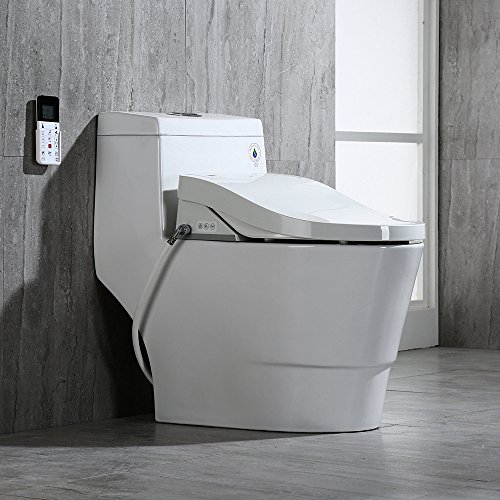
A standard TOTO Washlet is an electronic bidet seat designed to be paired with any compatible toilet. The Washlet+ system is specifically engineered to integrate with TOTO toilet bodies, with concealed wiring and supply lines that route through the toilet base rather than being visible at the side of the toilet. Washlet+ produces a cleaner finished appearance and is the recommended configuration for new installations. Both systems offer equivalent feature sets for a given model tier.
Experienced DIYers who are comfortable with basic toilet replacement can typically handle the plumbing portion -- shutting off water, removing the old toilet, setting the new toilet on the flange, and connecting the supply line. The electrical outlet (if not already present) requires a licensed electrician in most jurisdictions. Tankless models involve more complex connections and are less DIY-friendly. When in doubt, a licensed plumber installation adds certainty and protects the warranty on most models.
EWATER+ is TOTO's system that electrolyzes tap water to create a weak hypochlorous acid solution, which is misted inside the bowl and on the nozzle before and after each use. Hypochlorous acid is a recognized antimicrobial agent -- the same chemistry used in food sanitation applications. TOTO's published data shows meaningful reduction in bowl staining and bacterial load with regular EWATER+ cycling. It is not a replacement for periodic manual cleaning but does reduce the frequency needed to maintain a visibly clean bowl.
No. The performance gap between budget and premium smart toilets is significant in three areas: flushing power (MaP score is typically lower on budget units), electronic component durability (budget units show higher failure rates in owner reviews beyond the 3-year mark), and bidet wash system quality (nozzle material, water temperature consistency, and pressure range are all noticeably better on premium units). Budget units can be acceptable for a low-use guest bathroom; for a primary bathroom, the investment in a mid-range or premium unit pays back in reliability and comfort over time.
TOTO offers a limited lifetime warranty on vitreous china and 1 year on electronic components. Kohler covers 1 year on the complete product. American Standard offers 1 year on electronics and a lifetime warranty on the china body. Woodbridge and Swiss Madison typically offer 1-year full product warranties. Keep your purchase receipt and product registration card -- warranty claims almost always require proof of purchase date and product serial number. Register the product with the manufacturer at installation.
Most smart toilet users report a significant reduction in toilet paper use after switching to regular bidet washing -- commonly cited as 75 to 80 percent reduction in published user surveys. At average US toilet paper consumption rates, this can represent $50 to $150 per year per household in paper savings. Over the product's lifespan, this is a real offset to the higher purchase price, though the extent of savings depends on the household's prior consumption habits.
Most smart toilets are available only in elongated bowl configuration. Round bowl versions are rare in the smart toilet category because the elongated shape is necessary to accommodate the bidet seat mechanism and nozzle position behind the seat hinge. If your bathroom currently has a round toilet footprint, measure the available space carefully -- elongated bowls extend 2 to 3 inches more toward the user than round bowls. Many bathrooms that currently have round toilets can accommodate an elongated smart toilet with a standard 12-inch rough-in.
The vast majority of smart toilet models are available only in white or cotton white (a slightly warmer off-white). TOTO offers Sedona Beige and Colonial White in some Neorest configurations. Kohler offers a small selection of color options on standard toilet bodies that can be paired with smart seats but their integrated smart toilet units are primarily white. Colored smart toilets are rare and typically require a special order with longer lead times. Confirm color availability before ordering if you need a specific bathroom color match.
Yes, but with some maintenance considerations. Hard water causes mineral scale buildup on the bidet nozzle and inside the water inlet filter over time. Inspect and clean the inlet filter screen every 6 to 12 months. Periodic nozzle cleaning with a diluted white vinegar solution (per manufacturer guidance) prevents scale accumulation that can reduce wash pressure. A whole-house water softener or point-of-use filter at the toilet supply line dramatically reduces maintenance burden in areas with hard water above 180 ppm. See our hard water toilet maintenance guide for specific product recommendations.
For 2026, the TOTO Neorest series remains the clear benchmark for smart toilets -- combining a verified 1,000g MaP score, 1.0 GPF EPA WaterSense certification, EWATER+ self-cleaning, and the most reliable sensor and seat electronics on the market. For buyers who want strong flushing power with bidet features at a lower entry cost, the TOTO Aquia IV paired with a Washlet+ seat delivers documented MaP performance and genuine TOTO reliability at a significantly lower price point. In either case, confirm rough-in measurement, verify electrical access, and check the MaP database before finalizing your purchase. Features are secondary to flushing power -- buy a toilet that works reliably first.
How we rank & our data sources
We do not run physical lab tests. Rankings are built from published, verifiable data and real owner feedback, never paid placement.
Researched by Marcus Bell · Last updated June 28, 2026 · Our review method
Japan invented the modern smart toilet over 40 years ago. Today three manufacturers dominate the category worldwide -- TOTO, Panasonic, and LIXIL…
Read the guideA data-driven comparison of TOTO's four flagship Neorest models, covering flushing performance, water efficiency, smart features, and which version is right for…
Read the guideSmart toilets combine bidet functions, heated seats and self-cleaning cycles into one unit, but the electronics and moving parts demand a gentler,…
Read the guide