It helps to separate two things people lump together. "Water pressure" in a toilet means how fast and forcefully water flows from the wall into the tank, which controls how quickly the tank refills. "Flush power" is a related but different idea: how hard the stored tank water hits the bowl and forms a siphon. They feel the same when a toilet acts weak, but the fixes differ. A toilet can have a strong flush yet fill slowly because of a restricted supply, and it can have great supply pressure yet flush poorly because of a worn flapper or clogged jets.
This guide follows the way we research everything on this site. Rather than tearing toilets apart in a lab, we compare how they are engineered, the published specs that predict performance, independent MaP (Maximum Performance) flush-test data, plumbing-code pressure standards, and aggregated owner reviews. We start with the free adjustments at the toilet, widen out to whole-house pressure, and finish with the upgrade path for when the toilet itself is the limiting part.
Start here. Turn off the water at the shutoff valve, flush to empty the tank, then turn the valve back on and time the refill while you watch the flow. A healthy toilet refills in roughly 45 to 90 seconds with a strong, steady stream entering the tank. If the stream is a thin trickle or the refill drags past two minutes, you have a restriction between the wall and the fill valve, and the next sections show you exactly where it usually hides.
What causes low water pressure in a toilet?
Low toilet water pressure is most often caused by a partly closed shutoff valve, sediment clogging the fill valve screen, or a kinked or corroded supply line. Less commonly it traces to genuinely low whole-house pressure, a failing pressure regulator, or mineral scale in the rim jets. The toilet design itself is rarely the cause until every supply-side restriction is ruled out.
Each cause sits at a specific point in the path water travels: from the city main or well pump, through the home's pressure regulator, into the shutoff valve at the wall, through the supply line, into the fill valve, and finally into the tank and bowl. A restriction anywhere along that path shows up as slow filling or a weak rinse. Walk the path from the toilet outward, because the points nearest the toilet are the cheapest and most common culprits. Only after the local checks come up clean is it worth measuring whole-house pressure, which is a larger job.
How do I increase the water pressure to a single toilet?
To raise pressure at one toilet, open the shutoff valve fully counterclockwise, disconnect and rinse the sediment screen inside the fill valve inlet, and replace any kinked, corroded, or undersized supply line with a 3/8-inch braided stainless line. If the fill valve is old or clogged with scale, swap it for a fresh adjustable column valve. These steps restore designed flow without touching house pressure.
When only one toilet is slow and the rest of the house is fine, the problem is local by definition, and that is good news because every local fix is cheap. Work through the four checks below in order. Most single-toilet pressure complaints are solved by the second one.
Check 1: Open the shutoff valve fully
The shutoff valve, also called the stop valve, sits on the wall or floor behind the toilet where the supply line connects. After any repair, cleaning, or a new install, this valve is frequently left only partly open, which throttles the flow into the tank without anyone noticing. Turn it fully counterclockwise until it stops. On an older multi-turn valve, that may be several full rotations; on a quarter-turn lever valve, the handle should sit parallel to the line. If the valve is corroded, stiff, or weeps when fully open, it is worn and worth replacing, because a partly seized stop valve quietly chokes pressure for years.
Tip. If the valve will not open smoothly or you cannot tell how far it turns, shut off the main, replace the old stop with a quarter-turn ball-style valve, and you gain a reliable full-open position plus a faster shutoff for future repairs. It is one of the highest-value cheap upgrades behind any toilet.
Check 2: Clean or replace the fill valve and its inlet screen
This is the single most common reason a toilet fills slowly, and it is the one people overlook. Modern fill valves have a small inlet screen or filter where water enters at the base. Sediment, rust flakes, and mineral grit collect on that screen and choke the flow, so the tank refills in a thin dribble even though the supply pressure is fine. Turn off the stop valve, disconnect the supply line from the bottom of the fill valve, and look for the screen. Rinse it clean, clear any debris from the inlet, then reconnect and test. If the refill jumps back to normal, the screen was the problem.
If cleaning the screen helps only partly, or if the fill valve is more than several years old and full of scale, replace it. A modern adjustable column fill valve is an inexpensive universal part, installs in minutes with no special tools, and often refills faster and quieter than the worn unit it replaces. Set the new valve so the tank water settles about one inch below the top of the overflow tube, which protects flush power at the same time.
Avoid this mistake. Do not crank the shutoff valve open and shut repeatedly to "flush" sediment through. That can knock loose more grit from an old line and pack the fill valve screen worse. Disconnect the line and clean the screen directly instead.
Check 3: Replace a kinked, corroded, or undersized supply line
The flexible supply line that runs from the stop valve to the fill valve is a common hidden restriction. A line that is kinked behind the toilet, internally collapsed, or clogged with rust loses pressure before the water ever reaches the tank. Old chrome rigid risers and narrow-bore lines also limit flow. Replace any questionable line with a quality 3/8-inch braided stainless steel supply line, which has a wide internal bore and resists kinking. Make sure the new line runs in a gentle curve with no sharp bend, and hand-tighten plus a light wrench turn so you do not crush the gasket. This is a few-dollar part that restores full flow when the line was the choke point.
Check 4: Clear scale from the rim jets and siphon jet
If the tank fills at a healthy rate but the bowl still rinses weakly, the restriction is at the delivery end, not the supply. Water enters the bowl through small holes under the rim and through a larger siphon jet at the bottom front. In hard-water homes, mineral scale narrows these openings over months and years, so the bowl water dribbles instead of rinsing forcefully. Warm white vinegar and pour it down the overflow tube so it runs through the rim channel, let it sit several hours or overnight, then ream each rim hole and the siphon jet with a stiff wire. This restores the in-bowl flow that the supply pressure is feeding. For the full bowl-side walkthrough, see our guide on how to improve toilet flush power with seven proven fixes.
Editorial Take
The fill valve inlet screen is where the money is. We see slow-fill complaints over and over where the owner assumed the house needed a pressure pump, when in reality a teaspoon of rust grit was sitting on a screen the size of a fingernail. Always disconnect the supply line and check that screen before you spend anything on whole-house equipment. If you are on a well or in an older home with galvanized pipe, put it on a yearly check, because that is where the sediment comes from.
How do I check and fix low water pressure for the whole house?
Screw a water-pressure gauge onto an outside hose bib or the laundry tub faucet and read the static pressure. Normal household pressure is 45 to 60 psi; below 40 psi feels weak everywhere. If the reading is low, check that the main shutoff is fully open, then inspect the pressure-reducing valve near where the line enters the home, since a failed regulator is the usual whole-house cause.
When several fixtures are weak at once, the problem is upstream of any single toilet and no amount of toilet-side work will fix it. Start by measuring. An inexpensive water-pressure gauge that threads onto a hose bib gives you a real number in seconds. Read it with all other water off (static pressure), then again while a tub fills (flowing pressure). Plumbing practice considers 45 to 60 psi the comfortable target, with code generally allowing 40 to 80 psi. Below about 40 psi, toilets fill slowly and showers feel weak; above 80 psi you risk damaging valves and fill components, which is its own problem.
If the static reading is low, confirm the main shutoff and any meter valve are fully open. Then locate the pressure-reducing valve (PRV), a bell-shaped brass fitting usually near where the main line enters the house. PRVs commonly fail toward low pressure as they age, and adjusting or replacing one is a frequent fix for a whole house that gradually went weak. On well systems, a waterlogged pressure tank or a switch set too low produces the same symptom. If the city pressure itself is genuinely low at the street, a booster pump is the last resort, but that is rare and worth confirming with your utility first.
Tip. If pressure is fine at the gauge but still weak at upstairs fixtures, the cause is often corroded or undersized old galvanized pipe inside the walls, which narrows with rust over decades. That is a re-pipe conversation, but you can confirm it by comparing pressure at a basement bib versus an upstairs faucet.
Comparison: where toilet pressure problems hide and how to fix them
The table below maps each common cause of low toilet water pressure to where it sits in the supply path, what it feels like, and the typical fix. The shutoff valve and fill valve screen are the winners for how often they are the real, free-to-fix cause.
If you have opened the valve, cleaned the screen, and swapped the line and a single toilet still underperforms while the rest of the house is fine, the toilet's own design is likely the ceiling. If the toilet will not flush at all rather than just fill slowly, see how to fix a toilet that is not flushing properly, and for a persistently soft push after a normal fill, our weak toilet flush fix guide walks each cause in order.
Will higher water pressure make my toilet flush better?
For a standard gravity-flush toilet, higher supply pressure only refills the tank faster; it does not increase flush strength, because the flush is powered by gravity acting on the stored tank water. Higher pressure does directly improve pressure-assist toilets, which trap incoming water pressure in a vessel and release it as force. For gravity toilets, flush power comes from MaP-rated bowl design, not supply psi.
This distinction matters because it changes what you should fix. On the gravity toilets in most homes, the tank fills to its set level and then gravity does the flushing, so once the supply is fast enough to refill in a minute or two, adding more pressure buys nothing for the flush itself. Chasing higher house pressure to fix a weak gravity flush is the wrong target; the right target is the tank level, the jets, the flapper, and ultimately the bowl's MaP score. Pressure-assist toilets are the exception: they use the incoming line pressure to compress air in a sealed tank, so they genuinely need a minimum supply pressure (commonly around 20 to 25 psi at minimum, and more is better) to charge fully. If you own a pressure-assist model and it flushes weakly, low supply pressure is a prime suspect.
What water pressure does a toilet need to work properly?
A standard gravity toilet works at very low pressure and mainly needs enough flow to refill the tank quickly, comfortably served by a normal 45 to 60 psi household supply. Pressure-assist toilets typically require a minimum of about 20 to 25 psi to charge, and most flush best with 30 psi or more. If whole-house pressure tests below 40 psi, raise it before blaming the toilet.
In practice, almost no gravity toilet is limited by pressure in a home with normal plumbing, which is why the supply-side checks in this guide are about removing restrictions rather than adding power. The goal is to let the toilet receive the pressure the house already has. If your gauge reads in the healthy 45 to 60 psi band and a toilet still fills slowly, the restriction is between that gauge and the tank, and it is one of the local checks above. If the gauge reads low across the whole house, the PRV or main is the place to work. Either way, a methodical measurement saves you from buying a pump you do not need.
Which toilets perform best when supply pressure is limited?
If your home genuinely has low or inconsistent water pressure and you are choosing a new toilet, gravity models with high independent MaP scores are the safe choice, because they do their work with stored water and do not depend on line pressure for flush force. These three pair strong MaP-rated flushing with efficient 1.28 GPF water use and deep, positive owner track records, which makes each one a dependable pick in a low-pressure home.
Best Overall
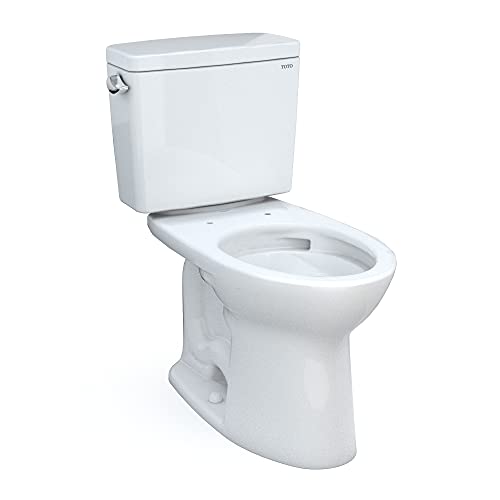
TOTO Drake
Gravity power that ignores supply pressure
A top-tier 1,000 gram MaP score, a 3-inch flush valve, and a fully glazed trapway let the Drake flush hard on stored water alone, so it performs the same whether your house pressure is strong or modest.
Check price on Amazon
Best Clog Resistance
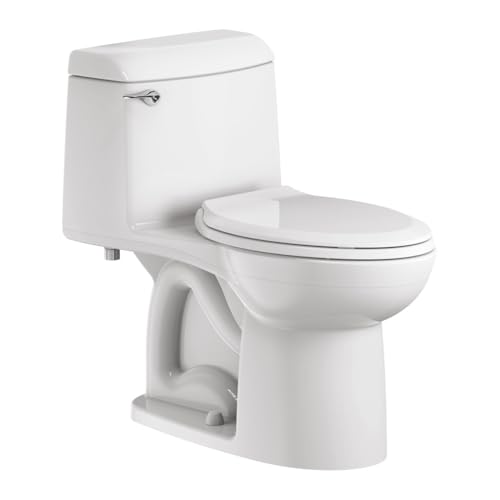
American Standard Champion 4
Oversized valve for forceful gravity flush
An oversized flush valve and a wide trapway dump a lot of stored water fast, which makes the Champion 4 a strong gravity pick when you want clog resistance without relying on supply pressure for force.
Check price on Amazon
Best Value
Kohler Cimarron
Strong Class Five flush at an accessible price
Kohler's Class Five flush engine moves water with real force at 1.28 GPF on gravity alone, and the Cimarron pairs that clearing power with a comfort-height bowl that suits most family bathrooms in any pressure situation.
Check price on Amazon
How the leading low-pressure-friendly toilets compare
If you are choosing a replacement for a low-pressure home, the table below compares strong gravity options on the specs that actually predict performance once the tank is full. The Drake is marked as the overall winner for raw flush power and value together. All are gravity models that flush on stored water, so none of them depend on high supply psi to clear the bowl.
Swiss Madison's St. Tropez and the TOTO Aquia IV are also worth a look if you want a modern dual-flush bowl, but verify the published MaP score on the exact model rather than assuming a brand guarantees it. For a fully ranked list across price ranges, see our roundup of the best flushing toilets.
Does a pressure regulator affect toilet water pressure?
Yes. A home's pressure-reducing valve sets the pressure delivered to every fixture, including the toilet, so a failing or mis-adjusted PRV that drifts low will slow toilet filling throughout the house. PRVs commonly fail toward low pressure as they age. Adjusting the screw to reach 50 to 60 psi, or replacing a worn PRV, often restores normal toilet fill speed everywhere at once.
If your pressure gauge shows a low whole-house reading and the main valve is fully open, the PRV is the most likely cause. Many PRVs have an adjustment screw or bolt: loosening the locknut and turning the screw clockwise raises pressure, and you re-check the gauge as you go, aiming for the mid-50s psi. If turning the screw does nothing or pressure keeps drifting, the diaphragm inside has failed and the valve needs replacing. This is a common, undramatic repair that quietly fixes slow toilets, weak showers, and sluggish faucets all together, which is why measuring whole-house pressure early saves you from chasing each fixture separately.
Editorial Take
Our honest advice is to decide early whether this is a one-toilet problem or a whole-house problem, because the two paths barely overlap. Spend ten minutes with a hose-bib gauge before you touch anything. If the house reads healthy, ignore the PRV entirely and put all your effort into the shutoff valve, the fill valve screen, and the supply line at the one slow toilet. If the house reads low, do the opposite and leave the toilet alone until the PRV or main is sorted. People waste the most time by working the wrong end of the system, and a single gauge reading tells you which end to attack.
Putting it all together
Increasing toilet water pressure is a process of elimination, and the order matters. For a single slow toilet, open the shutoff valve fully, clean the fill valve inlet screen, replace a kinked or corroded supply line with braided stainless, and clear scale from the rim and siphon jets. For weak pressure across the whole house, measure with a gauge, confirm the main is open, and adjust or replace the pressure-reducing valve to reach 45 to 60 psi. And remember that on a gravity toilet, more pressure only fills the tank faster; the flush itself comes from a strong MaP-rated bowl. If the toilet is an old low-MaP design, a modern gravity model from TOTO, Kohler, American Standard, Woodbridge, Swiss Madison, or Gerber is the lasting fix.
Keep reading
Related guides
FAQ
Frequently asked questions
? Why does my toilet tank fill so slowly?
A slow-filling tank almost always means a restriction between the wall and the fill valve. Check the shutoff valve first, because it is often left only partly open after a repair. If that is fully open, disconnect the supply line and rinse the sediment screen inside the fill valve inlet, which is the most common cause. A kinked or corroded supply line is the third thing to check.
? How do I increase water pressure to just one toilet?
Open the shutoff valve fully counterclockwise, clean or replace the fill valve and its inlet screen, and fit a wide-bore 3/8-inch braided stainless supply line in place of any kinked or corroded line. These local fixes let the toilet receive the pressure the house already has. You do not need to change whole-house pressure to fix a single slow toilet.
? What is the normal water pressure for a house?
Most homes run comfortably at 45 to 60 psi, and plumbing code generally allows 40 to 80 psi. Below about 40 psi, toilets fill slowly and showers feel weak. Above 80 psi can damage valves and fill components over time. You can read your pressure in seconds with an inexpensive gauge that threads onto an outdoor hose bib.
? Will higher water pressure make a gravity toilet flush stronger?
No. A standard gravity toilet flushes using gravity acting on the stored tank water, so once the supply is fast enough to refill the tank in a minute or two, more pressure only refills it sooner. It does not add flush force. To make a gravity toilet flush harder, focus on the tank level, the jets, the flapper, and ultimately the bowl's MaP score.
? Does a pressure-assist toilet need higher supply pressure?
Yes. Pressure-assist toilets use the incoming line pressure to compress air in a sealed inner tank, then release it as force. They typically need a minimum of about 20 to 25 psi to charge and flush best with 30 psi or more. If a pressure-assist toilet flushes weakly, low supply pressure is a leading suspect, unlike with gravity toilets.
? How do I clean the fill valve screen?
Turn off the shutoff valve and flush to relieve pressure, then disconnect the supply line from the bottom of the fill valve. Locate the small inlet screen or filter at the base, rinse away the sediment and grit, and clear any debris from the inlet. Reconnect the line and test the refill. If filling speeds back up, the clogged screen was the cause.
? Can a kinked supply line lower toilet pressure?
Yes. A supply line that is kinked behind the toilet, internally collapsed, or clogged with rust restricts flow before water reaches the tank, so the tank fills slowly. Replace any suspect line with a quality 3/8-inch braided stainless steel line routed in a gentle curve with no sharp bend. It is an inexpensive part that restores full flow when the line was the choke point.
? Why is the water pressure low in my whole house?
A failing pressure-reducing valve is the most common whole-house cause, because PRVs tend to drift toward low pressure as they age. A partly closed main shutoff, old corroded galvanized pipe, or a low setting on a well pressure switch can also cause it. Measure with a gauge first, then confirm the main is fully open before adjusting or replacing the PRV.
? What pressure does a toilet need to work?
A gravity toilet works at very low pressure and mainly needs enough flow to refill the tank quickly, which a normal 45 to 60 psi household supply provides easily. Pressure-assist toilets need roughly 20 to 25 psi minimum to charge and prefer 30 psi or more. If whole-house pressure tests under 40 psi, raise it before blaming the toilet.
? How do I measure my home water pressure?
Buy an inexpensive water-pressure gauge that threads onto a hose bib, attach it to an outdoor faucet or the laundry tub, and turn the faucet fully on. Read the static pressure with all other water off, then read it again while a tub fills to see flowing pressure. A static reading of 45 to 60 psi is healthy; below 40 psi explains weak fixtures.
? Can hard water reduce toilet water pressure?
Indirectly, yes. Hard water deposits scale that clogs the fill valve screen and the rim and siphon jets, which restricts flow into the tank and into the bowl. The effect is usually reversible: rinse the screen, soak the rim channel with white vinegar, and ream the jets with a wire. In hard-water homes, a yearly cleaning prevents the slow loss of flow.
? Should I install a booster pump for my toilet?
Almost never for a gravity toilet, and rarely even for the whole house. Most low-toilet-pressure complaints trace to a partly closed valve, a clogged fill valve screen, a bad supply line, or a failed PRV, all of which are cheaper to fix than a pump. Confirm the house pressure is genuinely low at the street with your utility before considering a booster, which is a last resort.
? Why does my toilet fill slowly only sometimes?
Intermittent slow filling usually points to a loose sediment screen that shifts, a fill valve beginning to fail, or a shutoff valve that was bumped partly closed. A drop in city pressure during peak demand hours can also cause it. Clean the fill valve screen, confirm the stop valve is fully open, and note whether the slowness lines up with high-usage times of day.
? Does adjusting the pressure regulator fix slow toilets?
It can, when the toilet is slow because the whole house is low on pressure. Many PRVs have an adjustment screw: loosen the locknut and turn it clockwise to raise pressure, re-checking the gauge until you reach the mid-50s psi. If adjusting it does nothing or pressure keeps drifting, the PRV diaphragm has failed and the valve should be replaced.
? Is low water pressure or low flush power my real problem?
Time the tank refill and watch the flush separately. If the tank refills slowly in a thin stream, that is a water-pressure or supply-restriction problem. If the tank refills quickly but the bowl still rinses weakly or needs a second flush, that is a flush-power problem in the jets, flapper, tank level, or bowl design. They feel similar but the fixes differ.
? Can a new fill valve improve filling speed?
Often yes. A worn fill valve clogged with scale or with a failing internal mechanism refills slowly and noisily. A fresh adjustable column fill valve is an inexpensive universal part that installs in minutes and frequently fills faster and quieter than the unit it replaces. Set the new valve so the tank water sits about an inch below the top of the overflow tube.
? Does WaterSense or low GPF mean weaker pressure?
No. EPA WaterSense certifies toilets that use 1.28 GPF or less while still meeting a minimum flush-performance standard, so efficiency does not mean weak performance. WaterSense governs how much water the toilet uses per flush, not the supply pressure feeding it. Many of the strongest gravity toilets sold today, such as the TOTO Drake and UltraMax II, are WaterSense certified.
? When should I replace the toilet instead of chasing pressure?
Replace it when the house pressure tests healthy, you have opened the shutoff, cleaned the fill valve screen, swapped the supply line, and cleared the jets, yet the toilet still underperforms. That points to an old low-MaP bowl design rather than a supply problem. Choose a gravity model rating 800 grams or higher on MaP with a wide trapway and a WaterSense 1.28 GPF rating.
Sources
- EPA WaterSense, epa.gov/watersense
- MaP (Maximum Performance) flush testing, map-testing.com
- Manufacturer published specifications (TOTO, Kohler, American Standard)
Our Verdict
Increasing toilet water pressure is mostly free. For a single slow toilet, open the shutoff valve fully, rinse the fill valve inlet screen, replace a kinked supply line with braided stainless, and clear the rim jets. For a weak whole house, measure with a gauge and adjust or replace the pressure-reducing valve to reach 45 to 60 psi. Remember that on a gravity toilet, more pressure only fills the tank faster. If the bowl design is the real limit, a high-MaP gravity upgrade like the TOTO Drake at 1,000 grams and 1.28 GPF performs the same at any supply pressure. Confirm the rough-in matches yours and check the current price on Amazon before you order.