
Best French Toilets (2026)
Toilets4.6
Refined, softly curved one-piece and skirted silhouettes with a polished, Parisian-elegant profile, paired with verified MaP flush scores rather than a stylist's…
Read the guideA detailed look at how hotels clean bathrooms between guests, what products and protocols they use, what health inspectors actually check, and what you can apply at home to reach the same level of hygiene.
Research updated June 2026.
Hotels follow a strict multi-zone cleaning sequence starting with the toilet, then sink, then shower or tub. EPA-registered disinfectants with a minimum contact time of 30 to 60 seconds are standard. High-touch surfaces are sanitized separately from general cleaning, and linen replacement follows every checkout.
Hotel bathroom cleanliness is not a matter of opinion. It is governed by a layered system: brand operating standards, local health codes, EPA registration requirements for disinfectants, and in many properties, third-party audits. When a hotel bathroom looks spotless, a documented protocol made it that way. Understanding that protocol helps homeowners apply the same discipline, and helps travelers know what questions to ask.
This guide walks through every layer of hotel bathroom cleaning, from the order of operations to the specific chemistry of professional disinfectants, the surfaces most frequently missed by undertrained staff, and the differences between budget, mid-scale, and luxury property standards. It also covers how modern toilet design, including models from TOTO, Kohler, American Standard, and other major brands, affects how easy it is to clean a toilet to a hotel-grade standard.
Hotel room attendants are trained to clean bathrooms in a specific top-to-bottom, dirty-to-clean order: toilet first, then sink and vanity, then shower or tub, finishing with the floor. This sequence prevents cross-contamination, since the toilet is the highest-risk surface. High-touch points such as flush handles, faucet knobs, and light switches are treated with a dedicated disinfectant product separately from surface wiping.
The sequence matters more than most guests realize. If a housekeeper wipes the mirror first and then cleans the toilet, droplet spray from flushing or scrubbing can re-contaminate a surface already cleaned. Professional hospitality training programs, including those from the American Hotel and Lodging Educational Institute (AHLEI), require a dirty-to-clean workflow as a baseline.
Here is the standard sequence used across major hotel brands:
Color-coded microfiber systems are the single most effective cross-contamination control in hospitality cleaning. Red cloths for toilets, blue for sinks and counters, green for floors. Using a red cloth on a sink is a protocol violation in any AAA Diamond or Marriott-brand property. The same logic applies at home: one designated toilet cloth or sponge, never shared with other bathroom surfaces.
Hotels are required by most brand standards to use EPA List N or EPA-registered disinfectants that specify kill claims against bacteria such as Staphylococcus aureus and E. coli, and viruses including norovirus and rhinovirus. Common professional products include quaternary ammonium compounds (quats), hydrogen peroxide-based formulas, and sodium hypochlorite (bleach) solutions diluted to 500 to 1000 ppm. Contact time, the period a surface must stay wet with the disinfectant, is non-negotiable and ranges from 30 seconds to 10 minutes depending on the pathogen targeted.
The EPA classifies disinfectants under a registration system that specifies exactly which pathogens a product is proven to kill, at what concentration, and with what contact time. Hotels that use a product outside its labeled dilution, or that wipe a surface dry before the contact time is complete, are technically not disinfecting even if the bathroom looks clean.
Three chemistry families dominate hotel bathroom cleaning:
An important distinction: cleaning and disinfecting are two different steps. Cleaning removes visible soil and reduces pathogen counts. Disinfecting kills remaining pathogens on a pre-cleaned surface. Hotels do both, in that order. Products marketed as "2-in-1 clean and disinfect" still require the surface to be visibly clean before the disinfectant contact time begins.
| Disinfectant Type | Common Active Ingredient | Typical Contact Time | Best For | Avoid On |
|---|---|---|---|---|
| Quaternary Ammonium (Quat) | Alkyl dimethyl benzyl ammonium chloride | 30 seconds to 2 minutes | Hard surfaces, fixtures, toilet exteriors | Food-contact surfaces (residue risk) |
| Hydrogen Peroxide | H2O2 (0.5 to 3%) | 1 to 5 minutes | Tile, grout, eco-certified properties | Colored grout (may bleach) |
| Sodium Hypochlorite (Bleach) | NaOCl (500 to 1000 ppm) | 1 to 10 minutes | Outbreak scenarios, bowl interiors | Chrome, marble, colored grout |
| Peracetic Acid Blend | Peracetic acid + H2O2 | 30 seconds to 2 minutes | Broad spectrum, no residue | Bare metal without rinsing |
| Phenolic Disinfectant | Orthophenylphenol | 10 minutes | High-risk areas, outbreak response | Not for routine daily use |
Independent hotel audits and health department reports consistently identify five high-miss surfaces: the underside of the toilet seat rim, the flush handle (which is often wiped but not re-wiped after final flushing), the faucet aerator, the drain cover, and the light switch plate. These surfaces receive direct hand or skin contact multiple times per stay but are easily overlooked in a time-pressured cleaning routine.
Third-party hotel quality auditors, including AAA inspectors, report that the area behind the toilet pedestal, the toilet hinge bolts, and the grout at floor level near the base of the toilet are the most common inspection deficiencies. These surfaces are difficult to see without bending down and are easy to skip when time pressure is high.
A 2014 study published in the journal Applied and Environmental Microbiology swabbed surfaces in hotel rooms and found that remote controls, bed lamp switches, and bathroom faucet handles carried the highest microbial loads. The toilet itself, frequently assumed to be the dirtiest surface, ranked lower than the sink faucet handle in bacterial counts, partly because toilets receive more deliberate cleaning attention.
Surfaces that audits most frequently flag as missed or inadequately disinfected:
The toilet paper holder is one of the most frequently touched surfaces in a bathroom. It is also almost never included in a standard cleaning checklist. Professional housekeeping trainers now recommend treating the toilet paper holder, towel bar ends, and robe hook as a category called "hardware surfaces," with a dedicated disinfectant wipe at every checkout. In a home context, adding these three items to a weekly disinfecting routine takes less than 90 seconds and dramatically reduces the touch-surface microbial load.
Luxury properties such as Ritz-Carlton, Four Seasons, and Marriott Autograph Collection enforce brand-specific cleaning protocols with more steps, longer product contact times, and more frequent quality audits than economy brands. The primary practical differences are time allocated per room (luxury housekeepers typically spend 45 to 60 minutes per checkout room versus 20 to 30 minutes at budget properties), the use of single-use brush heads or mop pads per room, and the frequency of deep cleaning cycles, which at luxury properties occur every 30 to 90 days for grout, tile, and fixture descaling.
Time per room is the most consequential variable. Budget and economy hotels typically allocate 15 to 30 minutes total per room for stayover cleaning and 20 to 35 minutes for checkout cleaning. At that pace, the bathroom receives 5 to 10 minutes. Mid-scale properties extend that to 10 to 15 minutes for the bathroom. Luxury properties and independents with quality programs can budget 20 to 30 minutes for the bathroom alone.
That time difference translates to tangible practices:
Toilets with skirted trapways, concealed bolts, and slow-close seats are faster and more thoroughly cleanable than older designs with exposed trapways and standard hinge bolts. A smooth exterior with no crevices at the base eliminates the soil traps where bacteria accumulate. Wall-hung toilets eliminate floor contact entirely, making floor cleaning faster and more complete. For this reason, many high-end hotels specify skirted or wall-mount toilets in renovation specifications.
The housekeeping industry is acutely aware of toilet design as a cleaning time variable. A toilet with an exposed trapway, exposed floor bolts, and standard two-piece construction has roughly three times the surface complexity of a one-piece skirted design. Every joint, seam, and crevice is a place where soil accumulates and disinfectant may not reach effectively.
Here is how the major design features compare in a cleaning context:
| Design Feature | Cleaning Impact | Examples |
|---|---|---|
| Skirted / concealed trapway | Eliminates major soil trap; one continuous wipe from base to tank | TOTO UltraMax II, Woodbridge T-0001, American Standard Concealed Trapway |
| One-piece design | Removes tank-to-bowl joint, a common soil accumulation zone | TOTO UltraMax II, Swiss Madison Calice, Kohler Cimarron One-Piece |
| Wall-hung | Eliminates floor footprint entirely; floor fully accessible for mopping | TOTO Aquia IV Wall-Hung, Kohler Veil |
| Slow-close quick-release seat | Seat removes in seconds for full hinge-area cleaning; no tools required | TOTO Drake II with SoftClose, Kohler ReadyLatch |
| Cefiontect / glaze coating | Ion-barrier glaze prevents soil adhesion; bowl requires less scrubbing | TOTO models with Cefiontect, American Standard EverClean |
| Standard two-piece exposed trapway | Multiple crevices; most difficult to disinfect completely | Basic builder-grade models |
TOTO's Cefiontect glaze, used across models including the Drake, Drake II, and UltraMax II, creates an ionic barrier on the porcelain surface that reduces the adhesion of waste, bacteria, and mineral deposits. American Standard's EverClean surface uses a similar antimicrobial surface technology. Both reduce the time and chemical force required to return a bowl to a clean state between uses. For hotels purchasing fixtures for renovation, these surface treatments measurably reduce per-room cleaning time across thousands of service cycles per year.
The best flushing toilets also tend to be the easiest to keep clean, because a strong complete flush removes more waste from the bowl interior, leaving less residue for cleaning products to address. MaP (Maximum Performance) flush testing, conducted by an independent lab and reported at map-testing.com, rates toilets on their ability to flush a standard media load. Toilets scoring 1000g on MaP testing, the maximum, include the TOTO Drake II, Kohler Cimarron, and American Standard Champion 4, all of which also feature design elements that simplify exterior cleaning.
For a closer look at how flushing power relates to bowl cleanliness over time, see the guide on deep-cleaning a bathroom and the dedicated article on self-cleaning toilet designs. If you are evaluating which toilet coating holds up best to commercial-frequency cleaning, the bathroom cleaner guide covers product compatibility with different porcelain treatments.
When hotels specify toilets for a renovation, the housekeeping manager's input now routinely outweighs the interior designer's preference. A toilet that looks good but has an exposed two-piece trapway, non-removable seat hinges, and no surface coating adds 90 to 120 seconds to every checkout room clean. Across a 200-room property with 70% occupancy, that is roughly 105 extra housekeeping hours per month. That cost is real and it gets baked into fixture specifications at any professionally managed property.
Health department inspections of lodging facilities vary by jurisdiction but typically cover: presence of potable hot water, functioning ventilation, absence of mold or standing water, evidence of pest activity, condition of grout and caulk (cracking or missing caulk is a bacteria harbor), cleanliness of ice machines and vending equipment, and proper storage of cleaning chemicals. Inspectors do not routinely swab surfaces for bacterial counts but do look for visible soil, scale, and disinfectant storage compliance. Properties with food service are subject to additional inspection layers.
Health inspections for lodging facilities are governed at the state level in the United States, and requirements vary significantly. Some states require annual inspections of all lodging facilities; others inspect only on complaint. The items most consistently cited in inspection reports include:
ATP (adenosine triphosphate) testing is increasingly used by hotel quality assurance programs as a proxy measure of surface cleanliness. An ATP meter measures biological residue on a surface in real time. A reading under 100 RLU (relative light units) is typically the pass threshold for a hotel-grade clean surface. ATP testing is not used by health inspectors in routine inspections but is standard practice in quality programs run by major brands including Hilton, Hyatt, and IHG.
The core hotel protocol translates directly to home bathrooms with modest equipment investment. The principles that make hotel bathrooms reliably clean are not secret: they are a documented sequence, correct chemistry with adequate contact time, and consistent frequency.
Equipment to replicate hotel standards at home:
Frequency recommendations matching hotel standards:
The single most impactful change most homeowners can make is to follow the correct sequence (toilet first, mirror last) and to respect disinfectant contact time. Spraying a surface and immediately wiping it dry does not disinfect. The surface must remain visibly wet for the product's labeled contact time. This one step is where most home cleaning falls short of the standard hotels are required to meet.
See the complete bathroom cleaning schedule guide for a printable checklist adapted from hotel housekeeping protocols.
Practices vary by property tier. Luxury and upscale hotels increasingly use single-use toilet brush heads replaced at every checkout. Mid-scale and economy properties typically use standard brushes that are sanitized in the brush holder with disinfectant solution and replaced on a schedule (every 30 to 90 days depending on the property). If you observe a toilet brush that appears heavily stained or deformed, that is an indicator the property is not on a regular replacement schedule.
Several factors contribute to odor control: adequate exhaust ventilation is the primary one, and brand standards require minimum air changes per hour in hotel bathrooms. Secondary measures include toilet bowl rim deodorizers or enzyme blocks, grout sealing (unsealed grout absorbs urine and produces persistent odor), and the use of bowl cleaners with residual antimicrobial agents that suppress odor-producing bacteria between cleanings.
The triangular fold on hotel toilet paper is a visual signal to the guest that the bathroom has been serviced since the last use. It has no hygiene function but serves as a communication shorthand: a folded point means the room attendant has been in and cleaned. Some travelers use the absence of a fold as a reason to request re-cleaning, though this is not universally practiced or reliable as the sole indicator of cleaning quality.
Properly trained housekeepers clean both sides of the toilet seat and the hinge area using a disinfectant-soaked cloth, not just a dry wipe. The hinge area is the most frequently missed zone because it requires lifting the seat fully and cleaning around and under the plastic hinge caps. Quick-release seat hinges, found on TOTO, Kohler, and Gerber models, allow the seat to be removed entirely for thorough cleaning and are increasingly specified in hotel renovations for this reason.
No. Standard hotel protocols require separate cloths and, in many cases, separate products for toilet surfaces versus sink surfaces. A quat disinfectant may be used on both, but the application cloths must be different to prevent cross-contamination. Using the same cloth on the toilet and then the sink is a protocol violation in any major branded hotel and a primary cause of cross-contamination in under-trained operations.
Most branded hotels schedule a deep clean for each room on a 30 to 90 day rotation. Deep cleaning covers grout scrubbing with a power brush or enzyme cleaner, descaling of fixtures (removing calcium and mineral deposits from shower heads, faucets, and toilet jets), recaulking if needed, exhaust fan cleaning, and any touch-up painting of grout lines. Independent and budget properties often perform deep cleans reactively (after a complaint) rather than on a fixed schedule.
Bathroom ventilation is a primary mold and odor prevention measure. Hotel brand standards specify minimum air exchange rates, and health codes in most states require a functioning exhaust fan or operable window in every bathroom. Without adequate ventilation, moisture from showers and flushing accumulates on surfaces, promotes mold growth in grout, and creates persistent odor that cleaning products alone cannot solve. Inspectors check exhaust fan function in lodging inspections.
This has been a documented issue in multiple independent investigations. A widely circulated 2008 undercover investigation found that in many hotels, bathroom glasses were rinsed but not dishwashed between guests. Most major branded hotels have since moved to single-use wrapped plastic cups or require that reusable glasses be removed to a centralized washing area and returned wrapped. If a glass is unwrapped but sitting on the counter, it may not have been properly sanitized.
Disinfectants used in hotel bathrooms must be EPA-registered under FIFRA (Federal Insecticide, Fungicide, and Rodenticide Act). The EPA registration number on a product label confirms it has been tested and approved for its claimed kill activity. EPA List N is the specific list of disinfectants effective against SARS-CoV-2. Most hotel brands updated their approved product lists to specify List N products during and after 2020, and many have maintained those requirements. A product without an EPA registration number is a cleaner, not a disinfectant.
There is no guarantee visible cleanliness reflects proper disinfection, but several indicators help: the presence of a folded toilet paper point, fresh towels and wrapped soap, no watermarks or soap residue in the sink, and absence of visible soil around the toilet base. A simple additional check: run a white tissue along the toilet base and behind the pedestal. If the tissue shows visible soil, the floor area was not adequately cleaned. ATP test kits are available for consumer purchase for about $30 to $50 per kit if you want a more objective measure.
Not inherently, but hotel renovations over the past decade have moved toward high-performance models from TOTO, Kohler, and American Standard that score well on MaP flush testing. Hotels are motivated by complaint reduction and cleaning efficiency. A TOTO Drake with a 1000g MaP score requires less bowl cleaning than a low-performer because the flush removes more waste. The connection between flush performance and ongoing cleaning burden is one reason major hotel brands now reference MaP scores in fixture specifications.
Contact time is the period a surface must stay wet with disinfectant for the product to achieve its labeled kill claim. This ranges from 30 seconds (for some quat products against bacteria) to 10 minutes (for some phenolics against harder-to-kill organisms). The EPA-registered label on every product specifies contact time per pathogen. A common mistake in both hotel housekeeping and home cleaning is spraying and immediately wiping, which reduces the kill efficacy dramatically or eliminates it entirely.
Pink and orange biofilm in grout is caused by Serratia marcescens, an airborne bacterium that thrives in moist environments with soap residue present. It is not a mold and it is not caused by poor water quality. It is controlled by regular mechanical scrubbing with a grout brush using a hydrogen peroxide or diluted bleach solution, followed by adequate drying time. Hotels with poor ventilation and infrequent deep clean cycles often develop persistent Serratia biofilm that surface cleaning alone does not eliminate.
Yes, measurably so. A wall-hung toilet eliminates the floor contact zone entirely, allowing a mop or cleaning cloth to pass under the toilet in a single stroke. There is no pedestal, no floor bolts, and no gap between the toilet base and the floor where soil accumulates. The trade-off is higher installation cost and the requirement for a reinforced wall carrier. For high-traffic hotel bathrooms, the cleaning time savings over a multi-year service cycle more than offset the installation premium. TOTO's Aquia IV wall-hung is among the most specified models in commercial renovation.
Sanitizing reduces the number of bacteria on a surface to a level considered safe under public health standards (typically a 99.9% reduction). Disinfecting kills a broader spectrum of pathogens at a higher efficacy level (99.999% or more against specific organisms). Disinfecting is the higher standard. Hotel bathroom protocols require disinfecting on all toilet surfaces and high-touch points. Sanitizing may be acceptable for lower-risk surfaces such as mirrors. The distinction matters when evaluating product labels: a sanitizer is not a disinfectant.
Bowl mold (which appears as black or dark rings, typically at the waterline or under the rim) is treated with an extended application of an acid-based or bleach-based bowl cleaner, usually with 5 to 10 minutes of contact time, followed by mechanical scrubbing with a toilet brush. If mold persists after two cleaning cycles, many hotel maintenance protocols call for a work order to inspect the fill valve and water supply for sediment issues, as persistent bowl mold can indicate sediment deposits that harbor bacteria even after cleaning.
High-concentration bleach products and strong acid-based cleaners can degrade chrome plating on flush handles, deteriorate plastic seat hinges, and strip glaze coatings from porcelain if used at full concentration repeatedly. TOTO specifically advises against abrasive cleaners and undiluted bleach on Cefiontect-coated bowls. Professional hotel formulations are calibrated to be effective at cleaning while minimizing fixture damage over years of high-frequency use. For home use, following product dilution instructions and avoiding leaving strong acids or bleach in contact with chrome fixtures beyond the recommended time protects fixture finishes.
Respecting disinfectant contact time. Hotels using professional products have documented protocols that require the product to remain on the surface for a specified period before wiping. Homeowners almost universally spray and wipe immediately, which achieves cleaning but not disinfection. The second most skipped step at home is the toilet base and the floor area within 12 inches of the toilet, which research shows carries the highest floor-level microbial load in any bathroom from aerosolized particles during flushing.
Yes. Major branded hotels provide structured housekeeping training through programs developed by the brand or through the American Hotel and Lodging Educational Institute (AHLEI). Training covers proper chemical handling, dilution ratios, color-coded cloth systems, sequence of surfaces, contact time requirements, and documentation of completed rooms. Many properties use a signed room inspection checklist that the housekeeper completes and a supervisor spot-checks. Independent hotels vary widely in training formality.
Hotel bathroom cleaning standards work because they combine three elements most home routines lack: a documented sequence that prevents cross-contamination, EPA-registered disinfectants applied with adequate contact time, and a consistent inspection cycle that catches missed surfaces before they become habit. Applying the sequence (toilet first, mirror last), using a genuinely registered disinfectant, and replacing your toilet brush on a regular schedule closes most of the gap between hotel-grade hygiene and a typical home bathroom clean. Toilets with skirted designs, quick-release seats, and ionic glaze coatings from brands like TOTO and American Standard make the protocol faster to execute and more thorough in result.
How we rank & our data sources
We do not run physical lab tests. Rankings are built from published, verifiable data and real owner feedback, never paid placement.
Researched by Marcus Bell · Last updated March 25, 2026 · Our review method
Refined, softly curved one-piece and skirted silhouettes with a polished, Parisian-elegant profile, paired with verified MaP flush scores rather than a stylist's…
Read the guide
Clean, low-profile silhouettes with real MaP-verified flush performance and efficient dual-flush water use, sized for a minimalist Nordic bathroom without sacrificing function.
Read the guide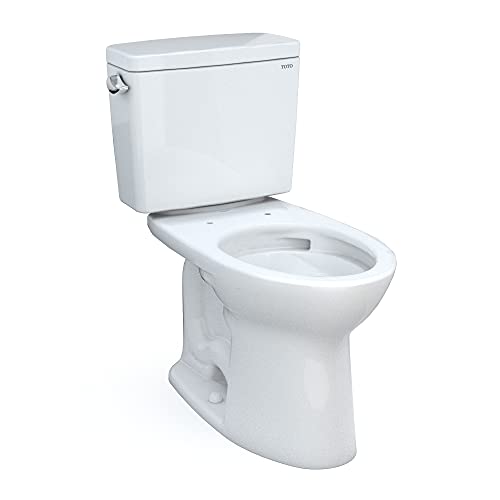
Classic two-piece toilets with tall tanks and elegant, understated proportions, the quiet country-house look that suits a traditional English bathroom without tipping…
Read the guide