
Why Toilet Trapways Are Curved Like an S
Toilets4.6
Learn why toilet trapways curve like an S, how each bend blocks sewer gas, and what the shape means for clogs and…
Read the guideA research-backed cleaning schedule, surface-by-surface breakdown, and expert hygiene tips so your toilet stays sanitary between deep cleans.
Disinfect the bowl and wipe external surfaces weekly. Scrub the bowl with a toilet brush every 2 to 3 days if the toilet sees heavy use. Deep clean the entire toilet, including the tank interior, once a month. Households with children, pets, or illness outbreaks should shorten every interval by half.
A toilet bowl left uncleaned for more than a week accumulates mineral deposits, bacteria, and biofilm that become significantly harder to remove. Research from the University of Arizona found that toilet flush plumes can project bacteria and viral particles up to 6 feet in all directions, contaminating nearby surfaces including toothbrushes and sink faucets. Regular cleaning disrupts biofilm formation before it takes hold, making each subsequent cleaning faster and more effective.
Most households underestimate how quickly bacterial colonies establish themselves on toilet surfaces. The warm, moist environment of a bathroom is ideal for organisms like E. coli, Staphylococcus aureus, and norovirus to persist on hard surfaces for hours to days. A consistent cleaning schedule is less about aesthetics and more about controlling pathogen load in a high-touch area of the home.
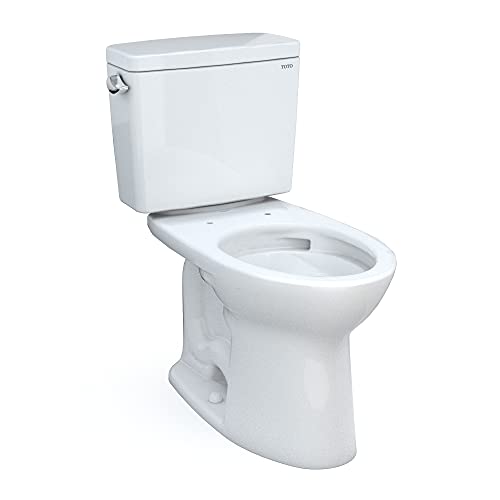
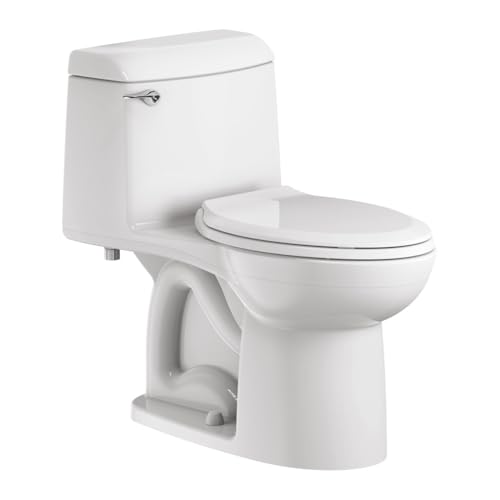
Toilet design also influences how quickly soiling builds up. Toilets with glazed vitreous china bowls, like the TOTO Drake or American Standard Champion 4, resist staining better than older unglazed surfaces. TOTO's proprietary CeFiONtect glaze is engineered to reduce bacteria and residue adhesion, which means a bowl with that coating genuinely requires less scrubbing between full cleans. Even so, no glaze eliminates the need for regular disinfection.
Understanding your toilet's trapway and flush power also plays a role. Toilets that score 800 grams or higher on the MaP flush-test scale -- the independent Maximum Performance testing protocol -- tend to leave less waste residue per flush, reducing the soiling rate of the bowl interior. If your toilet consistently leaves skid marks or requires double flushing, the cleaning interval for the bowl should be shortened regardless of what a general schedule recommends.
Microbiologists generally recommend treating the toilet seat and handle as the highest-priority disinfection targets. These surfaces receive direct skin contact and hand contact respectively, and they dry quickly, which paradoxically makes them safer than the bowl -- but only if wiped with a disinfectant that has at least 30 seconds of dwell time. Quaternary ammonium compounds or hydrogen peroxide formulas are more effective than bleach sprays for quick wipe-downs because they do not require rinsing.
The toilet seat, lid, and exterior should be disinfected weekly under normal household conditions. The bowl interior needs scrubbing with a toilet brush every 3 to 7 days depending on usage, and the tank interior should be inspected and cleaned monthly. The floor around the base and the fill valve area inside the tank deserve attention every 30 to 90 days.
Breaking the toilet into distinct zones makes the cleaning schedule manageable rather than overwhelming. Each zone has a different soiling rate and a different risk profile.
| Surface / Zone | Recommended Frequency | Primary Concern | Best Product Type |
|---|---|---|---|
| Bowl interior | Every 2 to 3 days (heavy use) / Weekly (light use) | Bacteria, mineral scale, staining | Toilet bowl cleaner gel + brush |
| Toilet seat (top and bottom) | Weekly minimum | Skin bacteria, urine splatter | Disinfectant spray or wipes |
| Toilet lid (top and underside) | Weekly | Flush plume aerosol deposit | Disinfectant spray + cloth |
| Handle / flush button | 2 to 3 times per week | Hand-contact pathogen transfer | Disinfectant wipe |
| Exterior tank, base, and sides | Weekly | Dust, splash, condensation mold | All-purpose cleaner + cloth |
| Tank interior | Monthly | Mineral scale, mold, flapper degradation | White vinegar or tank tablet |
| Floor around base | Weekly to bi-weekly | Urine seepage, dust accumulation | Floor cleaner + mop or cloth |
| Toilet brush and holder | Monthly (full disinfect) | Bacterial reservoir | Bleach solution soak |
Notice that the flush handle or button appears twice as often in the schedule as the seat. This might seem counterintuitive, but the handle is touched immediately before and after a flush -- making it one of the highest cross-contamination points in any bathroom. If a household member is ill, the handle should be wiped with a disinfectant wipe after every use for the duration of the illness.
A single person using a toilet an average of 6 to 8 times daily can often clean the bowl weekly without noticeable soiling buildup. A household of four to five people sharing one toilet may need bowl scrubbing every 2 days and seat disinfection multiple times per week. Children under 10, elderly adults, and immunocompromised individuals in the home justify a more frequent schedule for all surfaces.
The math here is straightforward. Each flush event deposits microscopic residue and bacteria on bowl surfaces. Multiply by number of users and frequency of use per day, and the difference between a single occupant and a family of five becomes significant within 48 hours.
Guest bathrooms that see only occasional use have the opposite problem. Infrequent use does not mean infrequent cleaning -- still water in an unused bowl evaporates slowly, concentrating minerals and providing an ideal environment for bacteria. A guest bathroom used less than once per week should still be cleaned on the same monthly schedule, with a brief bowl swish and handle wipe weekly even if the room goes unused.
In households with children who are potty training, or with adults who have reduced mobility, the floor area around the toilet base should be treated as a high-priority surface cleaned at minimum every other day. Urine splatter that dries on grout and tile becomes a persistent odor source and a breeding ground for Proteus mirabilis, a bacterium associated with strong ammonia-like odors. A sealed grout surface and a toilet with a wider base footprint, such as the Kohler Highline, makes floor cleaning around the base considerably easier.
Yes, significantly. Toilets with TOTO's CeFiONtect glaze, American Standard's EverClean surface, or Swiss Madison's GlossShield coating resist biofilm adhesion at a measurable level, extending the interval between bowl scrubs by several days under normal use. Older unglazed porcelain or toilets with micro-scratches from abrasive cleaners accumulate biofilm faster and require more frequent scrubbing.
Glaze technology has become a genuine differentiator in the toilet market. TOTO introduced CeFiONtect in their Drake and UltraMax II lines as an ion-barrier glaze that creates a surface so smooth that waste and residue cannot easily adhere. American Standard's EverClean, found on the Champion 4 and Cadet 3 models, uses an antimicrobial agent built into the glaze itself that inhibits the growth of mold, mildew, and bacteria on the surface. Woodbridge's T-0001 and Swiss Madison toilets incorporate similar hydrophilic glazes that cause water to sheet off the surface rather than bead, carrying residue down with the flush.
The practical implication is that a well-maintained TOTO Drake II or Kohler Cimarron with an EverClean-style surface may only need a bowl scrub every 5 to 7 days in a two-person household. An older toilet with an unglazed or worn surface in the same household may need scrubbing every 2 to 3 days to avoid visible staining or ring formation.
Flush performance also matters. Toilets with high-MaP scores -- the American Standard Champion 4 tested at 1,000 grams, the maximum MaP rating -- remove waste so completely that less residue remains in the bowl after each flush. A toilet that consistently leaves behind streaks creates a cleaning burden that no schedule can fully compensate for. If your toilet is underperforming on flush power, see our guide on how to fix a weak flushing toilet before adjusting your cleaning schedule.
| Toilet Model | Surface Technology | MaP Score | GPF | WaterSense Certified | Cleaning Benefit | Check Price |
|---|---|---|---|---|---|---|
| TOTO Drake II | CeFiONtect glaze | 800g+ | 1.28 | Yes | Minimal residue adhesion | Check price |
| TOTO UltraMax II | CeFiONtect glaze | 800g+ | 1.28 | Yes | One-piece, easy exterior wipe | Check price |
| American Standard Champion 4 | EverClean surface | 1,000g | 1.6 | No (1.6 GPF) | Powerful flush reduces bowl residue | Check price |
| American Standard Cadet 3 | EverClean surface | 800g+ | 1.28 | Yes | Antimicrobial glaze slows biofilm | Check price |
| Kohler Highline | Standard vitreous china | 600 to 700g | 1.28 | Yes | No anti-adhesion advantage | Check price |
| Woodbridge T-0001 | Hydrophilic glaze | Not independently published | 1.28 / 0.8 dual | Yes | Water sheets off surface | Check price |
| Swiss Madison Sublime II | GlossShield coating | Not independently published | 1.1 / 1.6 dual | Yes | Scratch-resistant, less abrasion | Check price |
| Gerber Avalanche Elite | Standard vitreous china | 800g+ | 1.28 | Yes | Strong flush, standard glaze | Check price |
Standard toilet bowl cleaners with hydrochloric acid or citric acid are safe for glazed vitreous china when used as directed and rinsed promptly. Abrasive scrubbing pads and powdered abrasive cleaners scratch the glaze permanently, increasing future soiling rates. Bleach-based drop-in tank tablets are widely used but can degrade rubber flappers and seals over 6 to 12 months, leading to running toilets.
The single biggest mistake homeowners make is using the wrong product on the wrong surface. Pumice stones remove stubborn mineral rings effectively from unglazed surfaces but will visibly scratch modern anti-adhesion glazes on TOTO, Woodbridge, and Swiss Madison toilets. For those surfaces, a mild acid cleaner with a toilet brush is the correct approach.
Bleach-based tank drop-in tablets deserve special mention. They are marketed heavily as a "set it and forget it" cleaning solution, and they do reduce bowl staining. However, the continuous low-level chlorine exposure attacks the rubber components inside the tank -- the flapper, the fill valve seal, and the flush valve seat. The Kohler Cimarron and TOTO Aquia IV both use rubber components that are rated for water contact but not for continuous chemical immersion. Tank tablets can cut the life of those components from 5 to 7 years to 2 to 3 years, leading to a running toilet that wastes thousands of gallons of water annually. The EPA WaterSense program recommends checking for silent leaks -- a toilet that runs 200 gallons per day will add substantially to your water bill without any visible overflow.
White distilled vinegar is the most underrated toilet cleaning tool available. A cup poured into the tank once a month dissolves mineral scale from the flush ports and the inside of the tank without harming rubber components. For the bowl, a 30-minute soak with undiluted white vinegar before scrubbing removes hard water rings that resist commercial cleaners. This approach is EPA-friendly, costs pennies per treatment, and does not interfere with the EPA WaterSense certification criteria that many modern toilets like the TOTO Drake, TOTO Aquia IV dual-flush, and American Standard Cadet 3 carry.
The toilet tank should be cleaned every 1 to 3 months by turning off the water supply, flushing to empty the tank, and scrubbing mineral deposits with a toilet brush dipped in white vinegar or a diluted bleach solution. A dirty tank with mold or scale deposits can contaminate the bowl on every flush and degrade internal components that control water usage.
Most homeowners never open the toilet tank lid. This is a missed opportunity. The tank interior regularly accumulates mineral scale from hard water, pink or black mold from the humid environment, and sediment from municipal water supplies. Each flush cycles this contaminated water through the bowl, partially undermining the cleaning you do on the bowl itself.
The process for cleaning a toilet tank is straightforward and takes less than 20 minutes. Turn off the water supply valve at the wall, flush once to drain the tank, then inspect the interior. Pink residue is typically Serratia marcescens, a bacterial biofilm that thrives in humid conditions. Black spots are usually mold. Both respond to a diluted bleach solution (one cup bleach to one gallon of water) applied with a sponge or toilet brush, left for 10 minutes, then wiped away. Rinse by turning the supply back on, letting the tank refill, and flushing twice.
While the tank lid is off, inspect the flapper. If it is soft and pliable, it is in good shape. If it is hard, cracked, or visibly warped, replace it -- a deteriorating flapper is the leading cause of running toilets. The Kohler Highline, Gerber Avalanche, and TOTO Drake all use standard 2-inch or 3-inch flappers available at any hardware store for under $10. A properly sealing flapper is one of the most direct ways to maintain the EPA WaterSense performance your toilet was certified to achieve.
A weekly clean handles surface disinfection. A monthly deep clean addresses every component that weekly maintenance misses. Here is a complete checklist based on standard hygienic practice:
The area underneath toilet seat hinge mounts is one of the most bacteria-dense locations in the bathroom and is rarely addressed in standard cleaning guides. A study of bathroom hygiene published in Applied Microbiology found that hinge mount crevices harbor microbial counts comparable to the bowl rim itself. Removing the seat monthly and cleaning the hinge area with a disinfectant-dampened cotton swab eliminates this reservoir entirely. Most modern toilet seats from TOTO, Kohler, and American Standard feature a quick-release hinge mechanism precisely to make this cleaning step accessible.
Adjusting your schedule reactively based on observable signals is valid hygiene practice. These are the signs that your current cleaning interval is too long:
If you are seeing waterline rings within 3 to 4 days, it is worth investigating whether the toilet itself is contributing to the problem. See our guide on removing and preventing toilet bowl stains for hard-water-specific solutions, and our overview of toilet glaze technologies compared if you are considering an upgrade.
There is no single universal schedule that works for every home. Below are scenario-based recommendations grounded in standard hygiene guidance.
| Household Type | Bowl Scrub | Seat / Exterior Disinfect | Handle Wipe | Deep Clean |
|---|---|---|---|---|
| Single adult, light use | Weekly | Weekly | 2x per week | Monthly |
| Couple or 2-person household | Every 3 to 4 days | Weekly | 2 to 3x per week | Monthly |
| Family of 4 to 5, one bathroom | Every 2 days | Twice weekly | Daily | Every 2 to 3 weeks |
| Household with young children | Every 2 days | Twice weekly | Daily | Every 2 weeks |
| Immunocompromised household member | Every 1 to 2 days | Daily | After every use during illness | Every 2 weeks |
| Guest / vacation bathroom (low use) | Weekly regardless of use | Weekly | Weekly | Monthly |
| Active illness in household | Daily | After each use | After each use | Full disinfect every 2 to 3 days |
The toilet you are using also shapes these recommendations. A one-piece toilet like the TOTO UltraMax II or Woodbridge T-0001 eliminates the joint between tank and bowl where bacteria and moisture accumulate on two-piece designs. For busy family bathrooms, the reduced number of hard-to-clean crevices on a one-piece toilet is a genuine quality-of-life advantage that shortens the time required for each cleaning session. Our guide on one-piece versus two-piece toilet differences covers this in more depth.
For a toilet in daily use by one or two people, disinfect the seat and exterior once per week and scrub the bowl every 3 to 4 days. Wipe the flush handle at least twice per week. Adjust shorter if staining appears before the next scheduled clean.
For low-use toilets in a one-to-two person household, a thorough weekly clean that covers the bowl interior, seat, lid, handle, and exterior is generally sufficient for hygiene. For toilets used by three or more people, once-weekly bowl scrubbing is not frequent enough -- the bowl should be scrubbed at minimum every 2 to 3 days.
Every 1 to 3 months is standard. Hard water areas with high mineral content may require monthly tank cleaning to prevent scale from clogging the flush holes and degrading rubber components. Use white vinegar rather than bleach to protect the flapper and fill valve seals.
Yes, though the risk depends on contact patterns. The flush plume from an uncovered flush disperses bacteria and viral particles that can land on toothbrushes, towels, and sink faucets. Touching a contaminated handle and then touching your face or food is the most direct transmission route. Closing the lid before flushing reduces aerosol spread by approximately 50 percent according to published microbiological studies.
Apply a thick gel toilet bowl cleaner just inside the rim and allow it to drip down for 5 to 10 minutes. Use an angled toilet brush to scrub all surfaces under the rim, paying attention to the individual flush holes where mineral scale accumulates. For stubborn deposits, white vinegar on a small angled brush or an old toothbrush works well without scratching the glaze.
Gel-based toilet bowl cleaners without abrasive particles are safest for glazed vitreous china. Hydrochloric acid formulas dissolve mineral scale effectively. Citric acid based cleaners are a gentler alternative. Avoid powdered cleansers like Comet or Ajax applied directly to the bowl, as the abrasive particles permanently scratch anti-adhesion glazes found on TOTO CeFiONtect, American Standard EverClean, and Swiss Madison GlossShield surfaces.
Bleach-based drop-in tank tablets clean the bowl passively but shorten the life of rubber flapper and fill valve components by continuous chemical exposure. They are not recommended for toilets with rubber seals under warranty, including most TOTO and Kohler models. Citric acid tank tablets are a safer alternative that does not degrade rubber. The EPA WaterSense program has no specific guidance on tank tablets but stresses maintaining proper flapper function for water efficiency.
Replace the toilet brush every 6 months under normal use, or sooner if the bristles are visibly splayed, discolored, or retaining odor after disinfection. A worn brush does not clean effectively and becomes a bacterial reservoir. Silicone toilet brushes last longer than standard bristle brushes and are less prone to retaining bacteria between cleanings.
Yes. Research consistently shows that flushing with the lid open disperses aerosol particles containing bacteria and viral matter up to 6 feet in all directions. Closing the lid before flushing substantially reduces this spread, protecting toothbrushes, hand towels, and other bathroom surfaces. This is especially important during illness periods in the household.
A brown or tan ring forming at the waterline within 3 to 7 days typically indicates hard water with high calcium or iron content. Iron bacteria produce a reddish-brown film that forms rapidly. A toilet with a scored or scratched bowl glaze from past abrasive cleaners will accumulate this ring faster than an undamaged surface. White vinegar soaks address mineral rings; for iron bacteria, a chlorine-based cleaner is more effective.
Pour one to two cups of white distilled vinegar into the bowl and let it sit for 30 to 60 minutes before scrubbing with a non-abrasive toilet brush. For severe rings, drain the bowl by shutting off the water and flushing, then apply vinegar directly to the ring on the dry surface and leave for 60 minutes before scrubbing. Never use pumice stones on glazed toilets -- save those for unglazed porcelain or bare metal.
OSHA and standard commercial restroom guidelines recommend cleaning public toilets at minimum every 2 hours in high-traffic facilities, with full disinfection of all surfaces including handles, seats, and base at each interval. High-touch surfaces like handles should be disinfected more frequently. This is well beyond what residential schedules require, but useful context for understanding pathogen accumulation rates under heavy use.
Yes, though the combined reaction (foaming) is primarily cosmetic. The cleaning action comes from the acid in the vinegar before it is neutralized by the baking soda. For better results, use vinegar alone with dwell time, or use baking soda alone as a mild abrasive paste on exterior surfaces. The combination is safe for glazed surfaces but no more effective than vinegar used on its own.
The bowl and exterior cleaning schedule for a dual-flush toilet like the TOTO Aquia IV or Woodbridge T-0001 is identical to a single-flush toilet. The flush button mechanism requires the same disinfection frequency as a standard handle. One practical note: the partial flush cycle (typically 0.8 GPF) is less powerful than the full flush and may leave more residue in the bowl, potentially requiring slightly more frequent bowl scrubbing in heavy-use households.
Run a dry finger lightly along the bowl surface after it has dried. A smooth glaze feels almost silky. A scratched or degraded glaze feels slightly rough or gritty. You may also notice that staining returns very quickly after cleaning -- within 24 to 48 hours -- which indicates the glaze is compromised. There is no repair for a scratched glaze on vitreous china; if the damage is severe, replacement of the toilet provides the most effective solution.
EPA-registered disinfectants effective against common bathroom pathogens include quaternary ammonium compounds (found in most disinfectant wipes and sprays), hydrogen peroxide solutions at 3 percent or higher, and sodium hypochlorite (bleach) solutions at 0.5 percent or higher. All require adequate dwell time -- typically 30 seconds to 4 minutes depending on the product -- to achieve full pathogen kill. Spraying and immediately wiping provides minimal disinfection.
During an active gastrointestinal illness or respiratory illness, disinfect the entire toilet -- seat, lid, handle, and exterior -- after every use by the ill person. Scrub the bowl with a disinfectant cleaner daily. Use disposable disinfectant wipes rather than reusable cloths to avoid cross-contamination. Continue this heightened schedule for 48 hours after the ill person's symptoms resolve, as many pathogens remain shed in feces after symptoms end.
No current toilet on the consumer market eliminates the need for manual cleaning entirely. Toilets marketed as "self-cleaning," including some models from TOTO and Kohler, use features like pre-mist bowl coating or electrolyzed water to reduce biofilm adhesion and require less frequent scrubbing. They still require manual disinfection of the seat, handle, and exterior, and periodic tank cleaning. They extend intervals between bowl scrubs but do not replace a cleaning schedule.
Black mold under the rim is typically Aspergillus or Cladosporium species thriving in the perpetually moist, dark environment above the waterline. It is accelerated by hard water deposits that create a rough surface for mold spores to anchor on. Prevention involves regular under-rim cleaning, improving bathroom ventilation, and using a monthly white vinegar flush treatment (pour one cup of vinegar into the tank and flush repeatedly) to reduce scale buildup that hosts the mold.
For most households, a weekly full-surface disinfection plus a bowl scrub every 2 to 4 days covers standard hygiene requirements. Monthly deep cleans -- including tank interior, under-seat hinges, and the floor around the base -- address the areas weekly maintenance misses. Toilets with anti-adhesion glazes like TOTO CeFiONtect and American Standard EverClean genuinely extend the interval between bowl scrubs and make each cleaning session faster. If you are dealing with persistent staining or odor despite regular cleaning, the root cause is usually the toilet's flush performance, the water quality in your area, or a scratched bowl glaze from past abrasive cleaners -- and no cleaning schedule alone will solve those issues. Upgrading to a high-MaP toilet is often the most durable long-term solution.
Learn why toilet trapways curve like an S, how each bend blocks sewer gas, and what the shape means for clogs and…
Read the guideAlmost every US toilet has a left-side handle. Learn the plumbing and mechanical reasons behind the layout and when it actually changes.
Read the guideHome toilets rely on tanks because household water lines lack the pressure that public flushometer systems use to flush straight from the…
Read the guide