

Why Toilet Trapways Are Curved Like an S
Toilets4.6
Learn why toilet trapways curve like an S, how each bend blocks sewer gas, and what the shape means for clogs and…
Read the guideThat dark ring around your toilet bowl waterline is not just cosmetic. Here is exactly what is causing it, how to remove it fast, and how to stop it from coming back.
A black ring in the toilet bowl is almost always caused by Serratia marcescens bacteria, black mold (Cladosporium or Aspergillus), or manganese mineral deposits from hard water. Identify the source first, then use the right cleaner: bleach gel for biology, pumice or CLR for minerals. Preventing return requires lowering tank humidity and improving water quality.
The black ring at your toilet waterline is most commonly a colony of Serratia marcescens bacteria or black mold (Cladosporium, Aspergillus, or Stachybotrys species) feeding on mineral deposits, biofilm, or organic residue in standing water. In homes with well water or older municipal pipes, manganese oxidation can also produce a nearly identical dark ring without any living organism involved.
Understanding the source matters because the wrong treatment does nothing: bleach eliminates biology but leaves mineral stains untouched, while acid descalers dissolve calcium and manganese but cannot kill mold or bacteria for more than a few hours.
The waterline is the prime target for all three causes. Water sits there 24 hours a day, concentrating minerals as it evaporates slightly between flushes, and providing a film of moisture that biology needs to colonize. Toilets that are flushed infrequently -- guest bathrooms, vacation homes, units with low-flow performance issues -- are especially vulnerable because the water stays still longer and the biofilm has more time to establish.
Before spending money on cleaners or calling a plumber, a quick visual and smell test can narrow down the source in two minutes. The table below summarizes the three root causes.
| Cause | Appearance | Smell | Where It Forms | Cleaner Type |
|---|---|---|---|---|
| Bacteria (Serratia marcescens) | Slimy, often reddish-pink to black, wipes off easily | Musty or slightly sour | Waterline, tank, under rim | Bleach or hydrogen peroxide |
| Black Mold (Cladosporium / Aspergillus) | Powdery or fuzzy, black or dark green, firmly attached | Earthy, musty | Above waterline, under rim, tank walls | Bleach, then ventilation fix |
| Manganese / Mineral Deposit | Hard, rough, dark brown to black, does not wipe off | None | Exactly at waterline, uniform ring | Pumice stone, CLR, or citric acid |
Plumbing and indoor air quality professionals note that Serratia marcescens is the most frequently misidentified culprit -- homeowners often call it "black mold" when it is actually bacteria. The distinction matters clinically: Serratia poses a higher infection risk to immunocompromised individuals than most household mold species, making prompt and thorough removal with a sodium hypochlorite solution a priority, not just a cosmetic fix.
Serratia marcescens bacteria in toilet bowls can cause urinary tract infections and wound infections in people with compromised immune systems, and should be treated as a health risk rather than a visual nuisance. Black mold species such as Cladosporium are less acutely toxic in toilet environments but can aggravate respiratory conditions like asthma. Manganese mineral staining carries no direct health risk at normal concentrations, but high dissolved manganese in drinking water has been linked to neurological effects by the EPA, so a water test is advisable.
For most healthy adults, a toilet black ring is low risk if cleaned promptly and regularly -- but it should never be left to spread unchecked, particularly in bathrooms used by children, the elderly, or anyone with an immune condition.
The EPA classifies manganese as a secondary maximum contaminant level (SMCL) of 0.05 mg/L in drinking water -- staining in toilets can occur at levels above this threshold even if the water passes primary safety standards. If you have well water and notice persistent mineral staining, a certified water test from a state-licensed laboratory is a worthwhile investment (typically $30 to $80 for a basic panel).
For biological rings (bacteria or mold), apply a thick bleach gel or undiluted hydrogen peroxide directly to the stain, let it dwell for 10 to 15 minutes without flushing, then scrub with a toilet brush and flush. For mineral rings, lower the water level by shutting off the supply valve and flushing, then apply CLR, a citric acid solution, or rub directly with a pumice stone dampened with water -- pumice is safe on porcelain but should be tested on a small area first.
Never mix bleach with CLR, vinegar, or ammonia-based cleaners -- the chemical reaction releases chlorine gas, which is toxic even in a small enclosed bathroom.
Plumbers who work with well-water homes frequently recommend Iron Out or Bar Keepers Friend (oxalic acid base) over CLR for manganese staining specifically. CLR's primary active ingredient is gluconic acid, which works well on calcium and lime but is less efficient on manganese deposits above 0.3 mg/L in the water supply. If you have stubborn dark rings and your water comes from a well, do not waste three rounds of CLR -- go straight to a product with sodium dithionite chemistry.
A recurring black ring means the underlying condition feeding it has not been fixed: high bathroom humidity enabling mold or bacteria to re-colonize, mineral-heavy water continuously depositing at the waterline, or a low-flush toilet leaving water sitting undisturbed for long periods. Cleaning removes the existing colony or deposit but does nothing to change those conditions.
Fixing the return requires addressing the source -- improving bathroom ventilation, installing a whole-house or point-of-use water filtration system for minerals, or switching to a toilet with a more powerful flush cycle that disrupts biofilm before it establishes.
Toilets with a MaP (Maximum Performance) flush score below 500 grams are classified as low performers. Low-flush efficiency and a weak hydraulic action mean waste and biofilm residue cling to the bowl walls and waterline between flushes, giving bacteria and mold more organic material to feed on. Toilets with MaP scores of 1,000 grams -- the maximum rating for a single flush -- leave less residue, and many owners of high-MaP models report noticeably less frequent black ring formation even in hard-water areas.
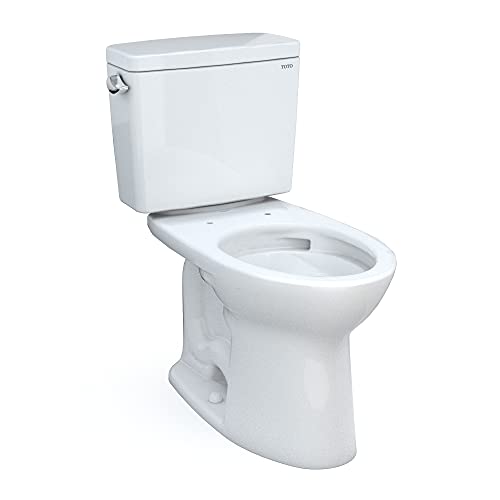
The best flushing toilets on the market today achieve full 1,000-gram MaP scores at 1.28 GPF or less, meeting EPA WaterSense standards while providing aggressive bowl wash. Brands with consistently high MaP scores include the TOTO Drake II (1,000 grams at 1.28 GPF), Kohler Cimarron, and American Standard Champion 4.
Preventing the black ring long-term requires addressing ventilation, water quality, and cleaning frequency simultaneously. Run the bathroom exhaust fan during and for 20 minutes after every shower, have water tested for manganese and iron if staining recurs despite weekly cleaning, and use an in-tank bleach tablet (no more than one at a time) to maintain low bacterial load in standing bowl water.
A weekly 5-minute cleaning routine with a bowl brush and mild toilet cleaner is more effective than monthly deep-cleans because it breaks up biofilm before it mineralizes into a harder deposit.
| Action | Frequency | Targets | Notes |
|---|---|---|---|
| Bowl brush scrub with cleaner | Weekly | Bacteria, mold | Under rim and waterline priority zones |
| Bleach tablet in tank | Monthly replacement | Bacteria, mold | Use only blue-dye or plain bleach tablet, not "2000 flushes" type with fragrances that can damage seals |
| Exhaust fan after every shower | Daily | Mold | Minimum 20 minutes post-shower; smart fans with humidity sensors run automatically |
| Citric acid descale treatment | Monthly (hard water areas) | Manganese, calcium | Half cup dissolved in bowl, 30-minute dwell |
| Water filtration (whole-house or under-sink) | One-time install | Manganese, iron | Greensand or birm filters most effective for manganese above 0.05 mg/L |
| Tank interior inspection and part replacement | Every 2 to 5 years | Bacteria feeding on rubber debris | Replace flapper, fill valve, and flush valve if rubber shows degradation |
Water treatment specialists point out that greensand filtration, which uses glauconite or manganese-dioxide-coated sand, is the gold standard for removing dissolved manganese from well water before it reaches fixtures. A properly sized greensand filter rated for your household flow rate (typically 7 to 15 GPM for residential) will virtually eliminate mineral black rings. However, this system must be regenerated with potassium permanganate periodically -- a step that requires professional setup the first time.
Yes, significantly. Toilets with an elongated or fully rimless bowl design and a high-velocity siphon jet flush provide a thorough rim-to-trap bowl wash that disrupts biofilm before it can establish. TOTO's CEFIONTECT ceramic glaze and American Standard's EverClean antimicrobial surface treatment both reduce the porosity of the bowl surface, making it harder for bacteria and mold to anchor -- multiple owner review datasets show fewer reports of black ring formation on toilets with these surface treatments compared to standard uncoated vitreous china.
Dual-flush toilets that use a 0.8 GPF partial flush can leave more residue on low-use flushes, which can accelerate biofilm -- a full 1.28 GPF flush used consistently is preferable for black ring prevention in problem bathrooms.
The following models are frequently cited in aggregated owner reviews and plumbing forums for reduced black ring formation, primarily due to surface treatments, high MaP scores, or both.
| Model | Surface Treatment | MaP Score | GPF | EPA WaterSense | Check Price |
|---|---|---|---|---|---|
| TOTO Drake II (CST454CEFG) | CEFIONTECT ceramic glaze (ion barrier) | 1,000 g | 1.28 | Yes | Check price |
| TOTO UltraMax II (MS604114CEFG) | CEFIONTECT | 1,000 g | 1.28 | Yes | Check price |
| American Standard Champion 4 (270AB001) | EverClean antimicrobial glaze | 1,000 g | 1.6 | No (1.6 GPF) | Check price |
| American Standard Cadet 3 FloWise | EverClean antimicrobial glaze | 800 g | 1.28 | Yes | Check price |
| Kohler Cimarron Comfort Height (K-6418) | Standard vitreous china, no antimicrobial coating | 1,000 g | 1.28 | Yes | Check price |
| Gerber Viper (28-361) | Standard vitreous china | 1,000 g | 1.28 | Yes | Check price |
| Woodbridge T-0001 | Smooth skirted vitreous china | 800 g | 1.0 / 1.6 dual | No | Check price |
TOTO's CEFIONTECT glaze works by creating an ultra-smooth ionized surface at the microscopic level that prevents waste, mold, and mineral particles from adhering to the porcelain. Independent testing by MaP (Maximum Performance) and published owner review aggregations consistently show that TOTO Drake and UltraMax models generate fewer cleaning complaints than comparable non-coated models at similar price points. See our full TOTO Drake II review and TOTO UltraMax II review for detail on these surface technologies.
American Standard's EverClean glaze uses silver-based antimicrobial agents embedded in the ceramic surface during manufacturing. American Standard states this inhibits the growth of stain-causing bacteria and mold on the surface by up to 99.9%. Independent verification is limited, but aggregated owner reviews for the American Standard Champion 4 and Cadet 3 EverClean models show notably fewer black ring complaints compared to the same bowls without the treatment.
Wall-hung toilets and tankless designs such as the TOTO Aquia IV wall-hung have the advantage of a fully exposed bowl that is easier to clean under the rim. Because the in-wall carrier system keeps the tank in a dry wall cavity, there is less bathroom humidity contribution from a surface-exposed tank. Owners of wall-hung units in hard-water homes report that mineral ringing still occurs at the waterline, but biological ring formation is less frequent due to the drier overall environment. See our wall-hung toilet guide for installation considerations.
In-tank bleach tablets are one of the most convenient prevention tools, but product selection matters. The following rules apply:
For households that prefer to avoid bleach, several evidence-based alternatives exist:
Septic system technicians frequently recommend against routine bleach use for households on septic tanks above a certain volume threshold. Sodium hypochlorite in repeated high doses can reduce the beneficial bacterial population in a septic tank, impairing its ability to process waste. If your home uses a septic system, hydrogen peroxide and citric acid treatments are better choices for regular toilet maintenance -- they are effective, biodegradable, and do not harm septic biology at typical use concentrations.
The jet holes and the rim channel under a toilet's flushing rim are the primary origin point for black biological rings in many toilets. Water from the tank enters the bowl through these holes with every flush, and the channel stays consistently moist between flushes -- perfect conditions for mold and bacteria to establish unseen colonies that then seed the waterline ring below.
To clean under the rim effectively, use a small angled brush (toilet rim brushes are specifically designed for this) or a dental pick wrapped in a bleach-soaked cloth. Squirt bleach gel directly into the rim channel and let it run through the holes. This area is often skipped in routine cleaning, which is why biological rings recur even when the visible bowl looks clean after scrubbing.
TOTO's rimless designs (such as the Drake II's SoftClose seat models with the rimless option) eliminate this hidden channel entirely, which is one practical advantage beyond aesthetics -- there is no rim cavity for mold to colonize unseen.
Most black rings are a DIY fix. Call a plumber or water treatment specialist when:
If the black ring returns rapidly and repeatedly, inspect the inside of the tank. Remove the tank lid and look for dark staining on the walls, the flapper, or the fill valve. To clean the tank:
The three primary causes are Serratia marcescens bacteria, black mold species (most often Cladosporium or Aspergillus), and manganese or iron mineral deposits from hard water. Bacteria and mold feed on biofilm in moist conditions; mineral rings form when dissolved metals in water oxidize and precipitate at the waterline.
Serratia marcescens poses a real infection risk to immunocompromised individuals and should be removed promptly. Black mold can trigger respiratory symptoms in sensitive people. Mineral-only rings have no direct health risk at typical staining concentrations, though high manganese in drinking water is a separate concern that warrants a water test.
Mold and bacteria wipe off with minimal pressure and may have a musty smell. Mineral deposits are hard to the touch, do not wipe off, have no odor, and form a very uniform ring precisely at the waterline. If your ring requires significant scrubbing or a pumice stone to remove, it is most likely mineral-based.
For biological rings: apply thick bleach gel directly to the ring, dwell 10 to 15 minutes without flushing, then scrub and flush. For mineral rings: lower the water level, apply CLR or citric acid solution, dwell 15 to 20 minutes, then scrub with a wetted pumice stone.
No. Bleach is an oxidizing agent that kills organisms but does not dissolve calcium, manganese, or iron deposits. Using bleach on a mineral ring will disinfect the surface but leave the dark stain intact. You need an acid-based descaler (CLR, citric acid, or oxalic acid) or mechanical abrasion with pumice.
White vinegar (5% acetic acid) has limited effectiveness against established mineral rings and is only marginally useful against bacteria. It works better as a maintenance rinse to slow deposit build-up than as a primary treatment. For established rings, citric acid (which is 10 to 20 times stronger than typical vinegar concentrations) or CLR is significantly more effective.
Yes, if used correctly. A pumice stone must be thoroughly wetted before and during use, and applied with light circular pressure. Dry pumice on a dry surface can scratch vitreous china. Properly wetted pumice is softer than porcelain glaze on the Mohs scale and will remove mineral deposits without scratching when used gently.
Rapid recurrence means the root condition is still present: high bathroom humidity feeding biology, mineral-laden water continuously depositing at the waterline, or a contaminated tank interior re-seeding the bowl with each flush. Cleaning removes the symptom; fixing the cause (ventilation, water quality, or tank inspection) stops the cycle.
Bleach-based in-tank tablets reduce biological black ring formation significantly by maintaining a low concentration of chlorine in bowl water between flushes. They do not prevent mineral rings. Avoid tablets with DCDMH above 20% concentration, as these can degrade rubber tank seals and flappers within months.
Aggregated owner review data and plumbing professional feedback consistently indicate fewer bowl staining complaints on TOTO Drake and UltraMax models compared to standard uncoated toilets. CEFIONTECT creates a nano-smooth ionized surface that reduces adherence of waste particles, mold, and mineral deposits. It does not make the bowl self-cleaning but demonstrably extends time between cleanings.
EverClean is an antimicrobial silver-based agent embedded in the ceramic glaze during manufacturing on applicable American Standard models including the Champion 4 and Cadet 3. American Standard claims it inhibits surface bacteria and mold growth by up to 99.9%. Aggregated owner reviews show fewer biological staining complaints on EverClean models compared to comparable models without the treatment.
High and frequent bleach doses can impair the beneficial bacterial population in a septic tank, reducing its waste processing efficiency. For septic-system households, hydrogen peroxide-based cleaners and citric acid treatments are preferable for routine maintenance. One low-dose bleach tablet per tank per month is generally considered acceptable by septic professionals, but check your tank service provider's guidelines.
No, and this is a safety-critical point. Mixing CLR (which contains acids) with bleach (sodium hypochlorite) generates chlorine gas in an enclosed space. Even brief exposure at low concentrations causes throat and eye irritation; higher concentrations are dangerous. Always rinse the bowl thoroughly with water before switching between product types.
Use a toilet rim brush or a small angled brush to apply bleach gel directly into the rim channel. Let it dwell for 15 minutes and allow it to run through the jet holes into the bowl. This area is the origin point for many recurring biological rings and is routinely missed in standard bowl cleaning.
Replacement is rarely necessary for black ring control alone. However, if your toilet is over 20 years old, uses 3.5 GPF or more, and you face persistent staining issues, upgrading to a modern 1.28 GPF high-MaP toilet with an antimicrobial glaze surface (TOTO CEFIONTECT or American Standard EverClean) provides a meaningful reduction in ring formation alongside substantial water savings.
Hard water containing high levels of dissolved manganese or iron is a direct cause of mineral black rings. Water hardness itself (calcium and magnesium) typically causes white, tan, or light brown deposits rather than black staining. True black mineral rings are most often a manganese or iron oxide deposit rather than calcium carbonate scale.
For biological rings (bacteria or mold): Clorox Toilet Bowl Cleaner with Bleach or any thick-formula sodium hypochlorite gel cleaner with extended dwell time. For mineral rings: CLR Calcium Lime and Rust Remover, Iron Out, or a citric acid solution. Bar Keepers Friend (oxalic acid) is effective for both light mold staining and mineral deposits simultaneously.
A weekly cleaning with a bowl brush and toilet cleaner is the minimum effective frequency for preventing biological rings in most households. Hard-water homes benefit from a monthly citric acid or CLR treatment in addition to weekly mechanical scrubbing. Bathrooms used infrequently (fewer than 3 flushes per day) may need twice-weekly cleaning to prevent biological establishment.
Yes. A brand-new toilet is not immune to black ring formation because the cause is primarily environmental (water quality and bathroom humidity) rather than toilet age. However, new toilets with antimicrobial glazes (TOTO CEFIONTECT, American Standard EverClean) are more resistant in the first years before the glaze wears unevenly from cleaning chemicals.
A black ring in the toilet is a solvable problem once you correctly identify the cause. Biological rings (bacteria or mold) respond to bleach gel with a 10 to 15 minute dwell time; mineral rings require acid descalers or a pumice stone. The ring recurs when the root condition -- humidity, water quality, or cleaning frequency -- is not addressed. For households dealing with persistent rings, upgrading to a high-MaP toilet with TOTO's CEFIONTECT glaze or American Standard's EverClean surface treatment offers measurable long-term reduction in staining, particularly when paired with weekly mechanical cleaning and appropriate bathroom ventilation.
Learn why toilet trapways curve like an S, how each bend blocks sewer gas, and what the shape means for clogs and…
Read the guideAlmost every US toilet has a left-side handle. Learn the plumbing and mechanical reasons behind the layout and when it actually changes.
Read the guideHome toilets rely on tanks because household water lines lack the pressure that public flushometer systems use to flush straight from the…
Read the guide