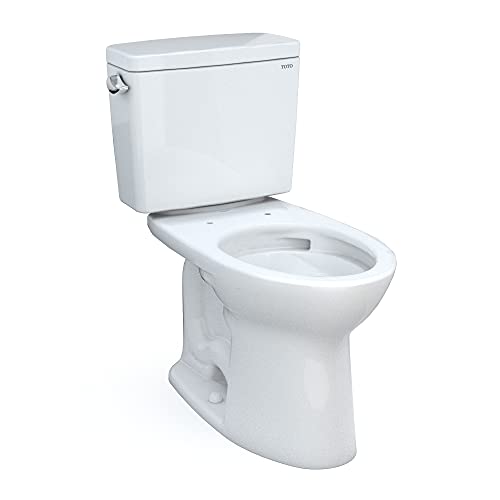
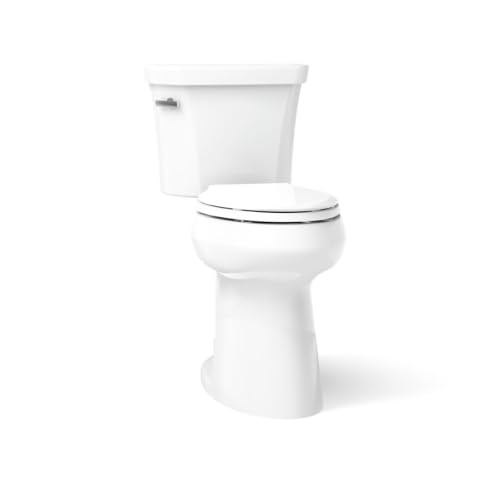
TOTO Drake Two-Piece Toilet vs Kohler Highline Two-Piece Toilet: Which Should You Buy?
Comparisons4.6
We compared the TOTO Drake and Kohler Highline two-piece toilets: both hit MaP 1000 at 1.28 GPF. See flush systems, verified specs…
Read the guideA direct, specification-level comparison of what actually changes when a toilet drains into a septic tank versus a municipal sewer line -- and why the answer matters more for buyers than most guides admit.
Toilets themselves carry no "septic" or "city sewer" designation in their published specs. What differs is the toilet paper you use and how much water per flush you send through the tank. Any EPA WaterSense-certified, low-GPF toilet that achieves a strong MaP score works safely on both systems.
If you have typed "septic safe toilet" into a search bar, you have encountered a marketing term that sounds technical but means almost nothing at the fixture level. Toilet manufacturers -- TOTO, Kohler, American Standard, Gerber, Woodbridge, Swiss Madison -- publish detailed spec sheets listing bowl shape, GPF, MaP score, trapway diameter, and EPA WaterSense status. None of those spec sheets include a "septic compatible" checkbox, because the toilet hardware is not what changes between the two drain systems.
What actually changes is the destination of your wastewater and the biological process that treats it. Understanding that distinction helps you buy the right toilet for your home, avoid wasted money on "septic-labeled" products, and protect the drain system you depend on -- whether it runs under your yard or under the street.
A city sewer moves wastewater to a centralized municipal treatment plant, so volume and solids are processed off-site at industrial scale. A septic system holds wastewater in an underground tank on your property, relies on anaerobic bacteria to break down solids, and releases clarified liquid into a drain field. The toilet itself connects to a drain pipe in both cases; the only functional difference from the toilet's perspective is the downstream biology that receives the flush.
When you flush a city-sewer toilet, the wastewater travels through your house drain, into the municipal main, and eventually to a treatment plant. Volume spikes and sudden solids loads are absorbed by a large-scale infrastructure designed for exactly that. When you flush a septic toilet, those same solids land in a 1,000-to-1,500-gallon tank on your property. Healthy anaerobic bacteria consume the organic waste. Sludge accumulates at the bottom and must be pumped every three to five years. The clarified effluent rises and flows into a leach field.
The toilet hardware sitting above your floor does not know which system it is draining into. A TOTO Drake II produces the same 1.28-gallon flush whether the drain runs to a city main or to a buried fiberglass tank. The MaP score -- a laboratory measurement of grams of soybean paste a toilet flushes cleanly in three attempts -- is identical in both scenarios.
Yes, two specifications indirectly affect septic system health: gallons per flush (GPF) and flush consistency. Lower GPF (1.28 GPF or dual-flush 0.8/1.28 GPF) sends less water per flush into the tank, reducing hydraulic overload that can prematurely push un-clarified solids into the drain field. A high MaP score (600 grams or above, ideally 1,000 grams) ensures solids clear the bowl completely in one flush, which prevents double-flushing and reduces total water volume entering the tank per use.
Here is where the science becomes actionable. Every gallon of water you flush into a septic tank displaces a gallon of effluent into the drain field. If that effluent still carries suspended solids -- because you had to flush twice to clear the bowl -- you risk clogging the drain field bio-mat faster than normal. This is why a toilet with a MaP score of 1,000 grams (the maximum tested) is genuinely better for a septic system than one scoring 350 grams, not because the hardware "knows" it is on a septic system, but because fewer double-flushes mean less hydraulic stress on the tank.
EPA WaterSense certification requires a minimum MaP score of 350 grams and a maximum of 1.28 GPF. That is a reasonable floor for septic use. For high-demand households or small tanks, targeting models that score 800 grams or above at 1.28 GPF or less is better practice.
Septic professionals consistently cite hydraulic overload -- too much water volume entering the tank in a short period -- as a leading cause of premature drain-field failure. A 1.28-GPF toilet used by a family of four delivers roughly 22 gallons per person per day in toilet flushes alone. That is well within the 50-to-100-gallon-per-person-per-day design capacity of most residential tanks. The toilet GPF spec is therefore more protective than any "septic safe" label on the package.
No. "Septic safe" on a toilet package is a marketing phrase, not a regulated certification. The EPA regulates septic-safe claims for toilet paper and chemical additives, but no federal or ASME standard governs the term when applied to toilet fixtures. Consumers should focus instead on verifiable, third-party specifications: EPA WaterSense certification, published MaP scores, and trapway diameter.
The Federal Trade Commission requires that environmental claims be specific and substantiated, but "septic safe" applied to a toilet bowl falls into a gray zone where no specific federal fixture standard defines what it means. In practice, every modern vitreous china gravity-flush toilet that meets ASME A112.19.2 (the standard covering ceramic toilet fixtures) is equally "safe" on a septic system as far as the hardware goes.
Toilet paper is a different matter. The EPA and the NSF do recognize "septic safe" for paper products, requiring that they dissolve quickly to avoid clogging intake baffles. If you are on a septic system, the paper you choose matters far more than which toilet brand you install.
Certifications that matter for any installation -- septic or city sewer -- are EPA WaterSense (efficiency + minimum flush performance), ASME A112.19.2 / CSA B45.1 (fixture safety and dimensions), and MaP published scores (independent flush-power verification). A toilet meeting all three criteria needs no additional marketing claim to be considered a sound choice on either drainage system.
TOTO's Drake II (1.28 GPF, MaP 1,000 grams) and the TOTO Aquia IV (dual-flush 0.8/1.28 GPF, MaP 1,000 grams) are among the highest-scoring models at low GPF ratings, making them well-suited to septic systems by reducing hydraulic load while clearing solids reliably. American Standard's Champion 4 (1.28 GPF, MaP 1,000 grams) and Kohler's Cimarron (1.28 GPF, WaterSense certified) are comparably strong performers for both drain types.
The table below compares the key published specifications for models that are well-reviewed on both system types. MaP scores are sourced from the published MaP testing database at map-testing.com.
| Model | GPF | MaP Score | WaterSense | Trapway (inches) | Bowl Shape | Best For | Check Price |
|---|---|---|---|---|---|---|---|
| TOTO Drake II (CST454CEFG) | 1.28 | 1,000 g | Yes | 2 1/8" | Elongated | Septic + City (top pick) | Check price |
| TOTO Aquia IV (MS446124CEMG) | 0.8 / 1.28 | 1,000 g | Yes | 2 1/8" | Elongated | Septic + City (dual-flush) | Check price |
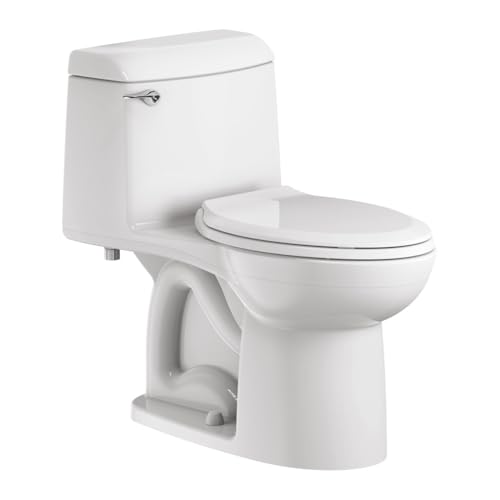
| American Standard Champion 4 | 1.28 | 1,000 g | Yes | 4" flush valve | Elongated / Round | High-solids households | Check price |
| Kohler Cimarron (K-3887) | 1.28 | 1,000 g | Yes | 3 1/2-3/8-inch trapway | Elongated / Round | Balanced price-performance | Check price |
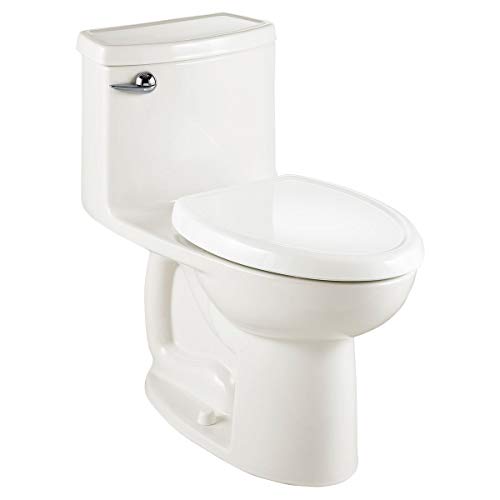
| American Standard Cadet 3 | 1.28 | 800 g | Yes | 3" fully glazed | Elongated / Round | Budget septic or city | Check price |
| Kohler Highline (K-3999) | 1.28 | 1,000 g | Yes | 2 3/8" | Round / Elongated | Compact bathrooms | Check price |
| Gerber Viper (21-302) | 1.28 | 1,000 g | Yes | 2 1/8" | Round | Contractor-grade septic builds | Check price |
| Woodbridge T-0001 | 1.0 / 1.6 | 800 g | No | 2 3/8" | Elongated | City sewer / modern aesthetic | Check price |
| Swiss Madison Sublime (SM-1T112) | 1.1 / 1.6 | 600 g | No | 2 3/8" | Elongated | City sewer preferred | Check price |
| TOTO UltraMax II (MS604114CEFG) | 1.0 | 1,000 g | Yes | 2 1/8" | Elongated | Septic water-conserving priority | Check price |
Notice that the Woodbridge T-0001 and Swiss Madison Sublime, both popular one-piece designs often marketed for modern bathrooms, lack EPA WaterSense certification and publish dual-flush ratings that top out at 1.6 GPF in full-flush mode. That 1.6-GPF full flush is 25 percent more water per flush compared to a 1.28-GPF WaterSense model -- an extra half-gallon entering the septic tank every single flush. In a family household that flushes 30 times per day, that adds 15 gallons of daily hydraulic load compared to a 1.28-GPF alternative. Over a year, that is roughly 5,475 extra gallons displacing effluent into the drain field.
Trapway size affects clog resistance inside the toilet itself, not the septic tank directly. A wider, fully-glazed trapway (2 1/8 inches or larger) reduces the chance of partial blockages that force double-flushing. Since each additional flush adds water volume to the septic tank, a clog-resistant trapway indirectly protects septic system hydraulics. Bowl shape (elongated vs. round) has no measurable effect on septic system performance.
The TOTO Drake and Drake II use a 2 1/8-inch fully-glazed trapway with TOTO's Tornado Flush technology, directing water in a circular pattern that reduces residue buildup and lowers the frequency of double-flushing. American Standard's Champion 4 takes a different engineering path -- a 4-inch flush valve (the tank opening, not the trapway) that releases water faster, achieving 1,000-gram MaP performance at 1.28 GPF.
Both approaches work well on septic systems for the same underlying reason: a single reliable flush uses less cumulative water per waste-removal event than two weaker flushes from a model with a lower MaP score. See the full analysis in our guide to best flushing toilets for a deeper breakdown of how flush mechanics translate to real-world clog rates.
Plumbers who service septic systems regularly report that the most common toilet-related tank problems are not caused by fixture type or brand -- they are caused by flushing non-biodegradable wipes (even those labeled "flushable"), excessive toilet paper, and chemical drain cleaners that kill the anaerobic bacteria the system depends on. Choosing a 1.28-GPF, 1,000-gram-MaP toilet is a meaningful upgrade, but material discipline -- what goes into the bowl -- is equally important for tank longevity.
For new construction, both system types benefit from 1.28-GPF or lower WaterSense-certified models. On septic, prioritizing a high MaP score (800 to 1,000 grams) and a fully-glazed wide trapway is advisable to minimize double-flushing and hydraulic overload. For city sewer on a metered water bill, the same spec benefits you through lower water bills. The toilet specification list for a new build does not need to split by drain type -- the best-performing, most efficient models serve both equally well.
Where new construction decisions do diverge is in fixture count and tank sizing. A septic engineer sizes the tank based on bedroom count and estimated daily water use. If you are installing five toilets in a five-bedroom home, the engineer assumes a certain average GPF per fixture. Specifying 1.0-GPF TOTO UltraMax II units throughout instead of 1.6-GPF fixtures actually allows some engineers to size down on tank capacity, which can reduce installation cost. This is a conversation to have with your licensed septic designer during permitting, not a decision to make at the toilet showroom.
For a comparison of how different flush technologies stack up in practice, our article on pressure assist vs. gravity flush toilets covers why most septic owners favor gravity models (no compressor to maintain, quieter flush, less vibration stress on inlet fittings in older systems).
On city sewer, the constraints loosen somewhat. You are no longer managing a finite on-site biology, so a 1.6-GPF toilet causes no direct system harm -- your water utility simply charges you for the extra usage, and the municipal plant handles the volume. That said, many municipalities now offer rebates for replacing older 3.5-GPF or 1.6-GPF fixtures with 1.28-GPF WaterSense models, and some have mandatory replacement requirements for pre-1994 toilets. The EPA WaterSense program estimates that replacing a pre-1994 toilet with a 1.28-GPF WaterSense model saves approximately 13,000 gallons per household per year.
The practical upshot: the "best toilet for city sewer" spec list is identical to the "best toilet for septic" spec list. The financial motivation differs (rebates versus protecting your drain field), but the product recommendation is the same.
Dual-flush toilets offer a liquid-waste cycle (typically 0.8 GPF) and a solid-waste cycle (typically 1.28 GPF). On a septic system, habitual use of the 0.8-GPF cycle for liquid waste meaningfully reduces daily hydraulic load. The TOTO Aquia IV achieves MaP 1,000 grams on its 1.28-GPF cycle and is WaterSense certified, making it one of the few dual-flush models that does not sacrifice single-flush performance for water savings. For households disciplined about cycle selection, dual-flush is a genuine septic-system advantage.
Cheaper dual-flush imports sometimes fail to achieve adequate MaP scores on their full-flush cycle, meaning solids do not consistently clear the bowl, which then requires multiple full flushes -- eliminating the water savings. Always verify the published MaP score for both cycles before purchasing a dual-flush model for septic use. Our comparison of dual flush vs. single flush toilets walks through the tradeoffs in detail.
If your home was built before 1994 and you are on a septic system, your existing toilet likely uses 3.5 GPF or more. That is nearly three times the water volume of a modern 1.28-GPF model per flush. Replacing it is the single highest-impact change you can make for septic system longevity, reducing daily hydraulic load to the tank by up to 60 percent per fixture. The American Standard Champion 4 and Kohler Cimarron are frequently recommended by plumbers for this upgrade because both are widely available, straightforward to install without modifications, and achieve 1,000-gram MaP scores at 1.28 GPF. For more on replacing older fixtures, see our guide to replacing an old toilet step by step.
No. No major manufacturer -- TOTO, Kohler, American Standard, Gerber, Woodbridge, or Swiss Madison -- produces toilet fixtures with different internal components for septic versus city sewer installations. The vitreous china bowl, the flush valve, the fill valve, and the trapway are identical regardless of the drain destination. Any "septic safe" claim on a toilet package is a marketing phrase, not a specification difference.
1.28 GPF or lower is the widely accepted target for septic-system toilets. EPA WaterSense sets 1.28 GPF as its maximum for certified single-flush models. Dual-flush models with a 0.8-GPF liquid cycle and 1.28-GPF solid cycle provide additional hydraulic savings for disciplined households. Toilets rated 1.6 GPF are not harmful to a properly sized, healthy septic system, but they add unnecessary water volume that strains the drain field over time.
It matters on both systems, but the consequence of a low MaP score is more concrete on septic. A toilet scoring 350 grams may require double-flushing for solid waste, sending 2.56 gallons (two 1.28-GPF flushes) into the septic tank per event instead of 1.28 gallons. Over a year of daily household use, that doubles the hydraulic load at the worst-case moments. A 1,000-gram MaP score confirms the toilet clears standard waste loads in a single flush, keeping hydraulic load predictable and low.
Yes. Wall-hung toilets connect to a carrier frame and drain pipe set into the wall; the waste exits at a standard drain height and travels to whatever system is downstream. The flush performance specs (GPF and MaP) are the same evaluation criteria as for floor-mounted models. TOTO and Duravit offer wall-hung models with 1.28-GPF WaterSense certification that are appropriate for septic installations.
Yes. The TOTO Drake II (CST454CEFG) is one of the most consistently recommended models for septic use based on its published specifications: 1.28 GPF, EPA WaterSense certified, MaP 1,000 grams, and a 2 1/8-inch fully-glazed trapway with Tornado Flush technology. The combination of maximum MaP performance at minimum WaterSense GPF is exactly the spec profile that reduces double-flushing and hydraulic overload on septic systems.
No, a pressure-assist toilet will not damage a healthy septic system. Pressure-assist models use compressed air to drive a more forceful flush, typically achieving high MaP scores at 1.0 to 1.28 GPF. They are slightly noisier and require periodic pressure vessel maintenance, but the wastewater entering the septic tank is the same composition as from a gravity-flush model. Most septic owners prefer gravity-flush models simply for quieter operation and simpler maintenance, not because of any incompatibility.
The Woodbridge T-0001 is a one-piece elongated dual-flush toilet rated 1.0 GPF (liquid) and 1.6 GPF (solid). It is not EPA WaterSense certified and its published MaP score is approximately 800 grams -- solid but not maximum. On a healthy septic system it will function without issue. The 1.6-GPF full-flush cycle is the main consideration: for a large household on a smaller septic tank, a 1.28-GPF maximum WaterSense model is a more conservative choice.
Single-ply or rapid-dissolving toilet paper that carries "septic safe" or "rapid dissolving" labeling reduces the risk of clogging the intake baffle and accumulating undissolved paper in the tank. Brands marketed specifically as RV or marine toilet paper dissolve fastest. Standard double-ply papers break down within the holding time of a healthy tank for most households, but avoiding ultra-thick or quilted papers is advisable for older or smaller tanks. This is a paper choice, not a toilet hardware choice.
Yes. The Federal Trade Commission has taken action against wipe manufacturers for misleading "flushable" claims. Independent testing consistently shows that most wipes labeled "flushable" do not disintegrate within the expected hold time of a residential septic tank. They accumulate in the tank, clog outlet baffles, and can push intact solids into the drain field. No toilet -- regardless of brand or MaP score -- can compensate for wipes entering a septic tank.
EPA WaterSense certification requires a maximum of 1.28 GPF and a minimum MaP score of 350 grams. It is the baseline efficiency and performance threshold that indirectly benefits septic systems by limiting water volume per flush. It does not test or certify septic system compatibility specifically. A WaterSense-certified toilet is a necessary but not sufficient specification for the best septic performance -- pairing it with the highest available MaP score is the more complete selection criterion.
A lower-GPF toilet reduces hydraulic overload but does not reduce the solid waste entering the tank. Solid sludge accumulation rate depends on household size and usage habits, not GPF. The National Onsite Wastewater Recycling Association (NOWRA) recommends pumping every three to five years for a typical residential tank. Installing a 1.28-GPF toilet may extend the interval slightly in hydraulically stressed systems, but the standard pumping schedule remains the most protective approach.
Occasional use of standard toilet bowl cleaners with bleach in typical residential quantities does not kill sufficient anaerobic bacteria to harm a functioning septic system, according to most septic service providers. The tank volume dilutes cleaning-product concentrations quickly. Continuous heavy use of concentrated bleach or chemical drain openers (lye-based products) is a different matter -- these can disrupt tank biology. Enzyme-based and septic-specific cleaning products are a conservative alternative.
American Standard's Champion 4 (1.28 GPF, MaP 1,000 grams, WaterSense certified) is a widely recommended model for both septic and city sewer installations. Its 4-inch flush valve delivers fast, high-volume tank emptying that clears the bowl in a single flush. The Cadet 3 (1.28 GPF, MaP 800 grams, 3-inch fully-glazed trapway) is a solid budget alternative. Both are available in elongated and round configurations.
The Kohler Highline (K-3999 in its 1.28-GPF configuration) achieves a MaP score of 1,000 grams with EPA WaterSense certification. It is a gravity-flush two-piece toilet available in both round and elongated bowls. Its published specs match the ideal profile for septic use: maximum MaP at minimum WaterSense GPF. It is also one of the more widely available models at hardware retail, making parts and replacement components easy to source.
600 grams is a reasonable working minimum for a household of two or three people with a properly sized, healthy septic tank. 800 grams is a better target for households of four or more. 1,000 grams (the MaP maximum tested value) is the most conservative and widely recommended target for septic use, as it virtually eliminates double-flushing under normal household conditions. The MaP database at map-testing.com lists published scores for hundreds of certified models.
The TOTO Aquia IV is a dual-flush two-piece toilet rated 0.8 GPF (liquid) and 1.28 GPF (solid), WaterSense certified, with a MaP score of 1,000 grams on its full-flush cycle. It represents the most water-conservative option among high-MaP performers, making it especially well-suited to small or aging septic tanks where reducing daily gallons entering the system is a priority. The 0.8-GPF liquid cycle saves an additional 0.48 gallons over a 1.28-GPF single-flush model per liquid-waste event.
Brand matters indirectly through published specifications. All three brands offer models that achieve 1.28 GPF and MaP 1,000 grams with WaterSense certification -- the ideal septic spec profile. Differences in trapway design (TOTO Tornado Flush versus Champion 4's large flush valve versus Kohler's AquaPiston canister) affect how they achieve that performance, but not the downstream impact on a septic tank. Choose the brand whose flush mechanism, warranty, and service availability match your situation. TOTO carries a one-year warranty; Kohler carries one year on mechanical parts; American Standard carries one year on flushing components.
In-wall concealed cistern systems (used with wall-hung or floor-mounted toilets that have remote tank carriers) are safe for septic systems when the toilet flush volume is 1.28 GPF or lower. The cistern stores water in a wall cavity instead of a traditional tank on the toilet; the wastewater delivery to the septic system is identical. TOTO and Geberit both manufacture in-wall carrier systems compatible with WaterSense-rated flush plates. The drain-field impact is no different from a conventional floor-mounted two-piece toilet at the same GPF rating.
Infrequent use creates a different septic challenge: the anaerobic bacteria can die off between visits if the tank does not receive regular organic material. The toilet hardware itself is less critical here than maintaining the biology -- some owners add bacterial starter packs after long absences. From a fixture standpoint, the same 1.28-GPF, high-MaP criteria apply. A gravity-flush model (Kohler Highline, American Standard Cadet 3, Gerber Viper) is preferred over pressure-assist for seasonal homes because pressure vessels can lose charge during long unoccupied periods and seals can dry out in unheated spaces.
A soft-close seat has no effect on flush performance or wastewater composition. A bidet seat that includes a wash function adds a small amount of water -- typically 0.1 to 0.3 gallons per use -- from the seat's internal heater reservoir, which drains into the toilet bowl and is flushed with the next cycle. This marginal water addition is not a septic concern. What matters more is whether the bidet seat's wash-water nozzle is kept clean to avoid contaminating the flush water with biofilm.
Toilets carry no meaningful "septic" versus "city sewer" hardware difference. The specification that matters most on a septic system is the combination of low GPF (1.28 or lower, WaterSense certified) and high MaP score (800 to 1,000 grams), which minimizes both water volume entering the tank and the likelihood of double-flushing. The TOTO Drake II, TOTO Aquia IV, American Standard Champion 4, and Kohler Cimarron all hit this spec target and represent sound choices on any residential drainage system. Skip any product whose primary selling point is a "septic safe" label on the box -- verify the MaP score and GPF rating instead, and those numbers will tell you everything that label cannot.
We compared the TOTO Drake and Kohler Highline two-piece toilets: both hit MaP 1000 at 1.28 GPF. See flush systems, verified specs…
Read the guideHome / Comparisons / TOTO Drake vs TOTO Drake II TOTO Drake Two-Piece Toilet vs TOTO Drake II Two-Piece Toilet: Which Should…
Read the guideA data-driven look at resale impact, long-term availability, and which color choice makes more sense for your bathroom and your budget.
Read the guide