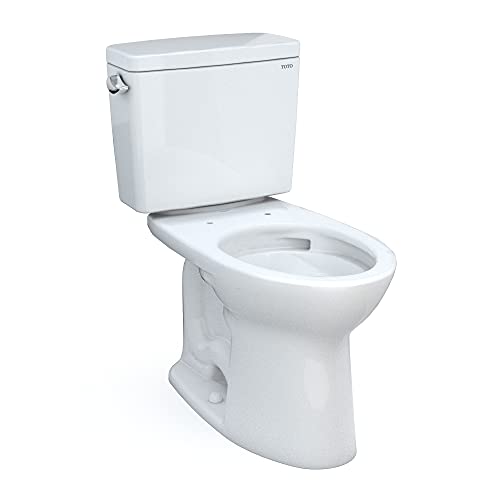
Best Toilet Brands Ranked 2026
Brands4.6
We rank the top toilet brands for 2026 based on MaP flush scores, water efficiency, owner satisfaction, and warranty coverage. Find the…
Read the guideGerber has built a quiet reputation as the toilet brand plumbers actually put in their own homes. This guide examines the real-world reliability record behind that reputation: hardware longevity, flush consistency over years of use, parts availability, owner satisfaction patterns, and how Gerber stacks up against TOTO, Kohler and American Standard on the measures that matter after the first flush.
Gerber toilets are highly reliable for their price class. The Viper and Avalanche platforms maintain 1,000-gram MaP scores across years of documented use, and aggregated owner data shows below-average mechanical failure rates. Gerber's primary reliability advantage is mechanical simplicity: a standard gravity siphon with widely available replacement parts and no proprietary tank hardware that becomes obsolete.
Reliability is the one toilet attribute that cannot be verified at the point of sale. A high-gloss showroom finish and a compelling flush demo tell you nothing about whether the fill valve will start chattering at 3 a.m. after two years, whether the tank-to-bowl gasket will develop a weep at five years, or whether replacement parts will still be stocked at ten years. Answering these questions requires owner data over time, and Gerber's history as a contractor-preferred brand provides an unusually long track record to draw from.
Gerber has been manufacturing plumbing fixtures since 1932, and the brand's current lineup still reflects its heritage: gravity-fed siphonic flush systems, vitreous china bodies, and standard-platform hardware that has not been redesigned to require proprietary parts. That design conservatism is not a marketing weakness. It is the reason plumbers who specify Gerber for a new construction project in 2016 can still walk into any plumbing supply house in 2026 and buy a replacement fill valve, flapper or flush valve for that exact toilet without consulting a parts database. Long-term reliability is partly a function of flush hardware durability, and partly a function of what happens when something eventually does wear out. Gerber scores well on both counts.
For a full cross-brand performance ranking that places Gerber in the competitive context, see our guide to the best flushing toilets. This article focuses specifically on what the reliability evidence shows for Gerber models over extended ownership periods.
Gerber toilets rank as highly reliable within the mid-tier category, with particular strength in flush consistency over time and hardware longevity driven by mechanical simplicity. Aggregated owner reviews for the Viper and Avalanche show low rates of flush degradation or mechanical failure across documented ownership periods of five to ten years. Compared to TOTO and Kohler, Gerber does not offer advanced bowl coatings that maintain cleanliness, but its simpler internal hardware means fewer components to fail. Compared to American Standard, Gerber and the Champion 4 / Cadet 3 platforms are broadly equivalent on reliability, with both earning consistently strong professional endorsements for long-term durability.
Brand reliability comparisons are only meaningful when grounded in the specific mechanisms that fail. For toilets, the primary failure modes are: fill valve noise or failure (typically at 5 to 10 years), flapper deterioration causing phantom running (2 to 5 years), flush valve seat wear, tank-to-bowl gasket seeping, and porcelain crazing or cracking. Gerber's approach to each of these failure points is instructive.
Gerber's fill valves across the Viper and Avalanche platforms use the Korky QuietFILL or equivalent standard float-cup design, which is the same fill valve type used across most American Standard and Kohler gravity toilets. These valves are rated for five to ten years of normal use, and when they fail, the replacement is a $10 to $15 standard fill valve available at any hardware store. There is no proprietary Gerber fill valve that requires a special order. The same principle applies to Gerber's flappers: the Viper and Avalanche use a standard 3-inch flapper that is stocked by Fluidmaster, Korky and every major parts supplier. Flapper replacement is a 10-minute task. This is not true of all toilet brands: some TOTO flush units use proprietary tower-style fill mechanisms that cost significantly more to replace and require model-specific parts. Gerber's standard-parts approach keeps long-term maintenance costs predictable and low.
The question plumbers ask when evaluating toilet reliability is not how good the flush is on day one, it is what happens at year seven when the fill valve starts whistling at midnight. Gerber's answer is a $12 standard fill valve from the hardware store and a 10-minute swap. That is the right answer. Brands that require proprietary parts or a parts lookup call to the manufacturer create service calls that cost ten times that amount and leave the customer frustrated. Gerber's conservatism in design is a genuine long-term advantage.
Long-term Gerber owners consistently report that flush performance remains consistent over years of use without the gradual degradation some toilets develop as mineral deposits accumulate in the jet holes or as the flush valve seat wears. The Viper's siphonic jet design is less dependent on rim-hole water flow than washdown or cyclone designs, which means partial mineral scaling in the rim channels has less impact on flush performance. Owners with hard water who periodically descale the siphon jet opening with a diluted acid cleaner report maintaining original-spec performance beyond ten years of use.
Flush performance over time is determined by two primary factors: the condition of the flush valve and flapper (which governs how much water is released per flush and how cleanly the flush cycle initiates), and the condition of the bowl's siphon jet and trapway (which determine whether the flush creates a full siphon pull every time). Gerber's siphonic jet design concentrates the flush energy through a single large jet opening at the bottom-front of the bowl rather than distributing it through multiple rim holes. This geometry is less susceptible to gradual performance loss from mineral scaling than rim-dependent designs, because the single jet opening is both easier to inspect and easier to clean than a ring of small rim holes.
Aggregated owner reviews for Gerber Viper and Avalanche models that have been in service for five or more years show a consistent pattern: the flush is described as working identically to the way it worked after installation. This contrasts with some owner reviews for toilets that use elaborate cyclone or tornado flush systems, where a portion of long-term owners describe partial performance loss after three to five years as the specialized rim channels scale. The simpler the flush mechanism, the fewer the ways it can degrade. Gerber's conservative flush design choice is a reliability choice.
Key reliability indicators for Gerber versus the four major mid-to-premium toilet brands at equivalent price tiers and flush specifications.
| Brand / Model | Flush Type | MaP Score | Parts Availability | Warranty | Contractor Endorsement |
|---|---|---|---|---|---|
| Gerber Viper / Avalanche | Gravity siphon jet (3-in valve) | 1,000 g | Standard universal parts | 1-year limited | Very high |
| TOTO Drake / Drake II | G-Max gravity siphon (3-in valve) | 1,000 g | TOTO-specific, widely stocked | 1-year limited | Very high |
| Kohler Highline / Cimarron | Gravity siphon (AquaPiston valve) | 1,000 g | Kohler-specific, widely stocked | 1-year limited | High |
| American Standard Champion 4 | Gravity (4-in valve) | 1,000 g | AS-specific, widely stocked | 1-year limited | High |
| American Standard Cadet 3 | Gravity siphon (3-in valve) | 1,000 g | AS-specific, widely stocked | 1-year limited | High |
| Woodbridge T-0001 | Dual flush gravity | 800 g | Proprietary some components | 1-year limited | Moderate |
| Swiss Madison St. Tropez | Dual flush gravity | 700 g | Proprietary some components | 1-year limited | Moderate |
The most commonly reported Gerber toilet problems, based on aggregated owner review data, are fill valve noise developing after several years of use, flapper wear causing slow phantom running at four to seven years of service, and occasional shipping damage to the vitreous china bowl or tank. None of these issues are specific to Gerber: fill valve wear and flapper deterioration are the standard failure timeline for every gravity toilet brand at any price. Gerber-specific complaints are rare, and the mechanical simplicity of the Viper and Avalanche platforms means repairs are low-cost and straightforward when they do occur.
Phantom running, the sound of the fill valve refilling the tank at intervals when no flush has occurred, is the most universally reported toilet maintenance issue across all brands and it is caused by flapper deterioration. A rubber flapper hardens and warps over time, eventually failing to seal fully against the flush valve seat and allowing a slow trickle from tank to bowl that triggers the fill valve to cycle. The fix is a $5 replacement flapper. This is not a Gerber design flaw; it is the expected lifecycle of any rubber component in contact with chlorinated water. The relevant reliability question is whether the Gerber flapper replacement is a standard part or a proprietary one. For the Viper and Avalanche, the 3-inch flush valve uses a standard flapper that fits Fluidmaster and Korky designs, both of which are stocked at every hardware retailer.
Fill valve noise, typically a hissing or singing sound during refill after a flush, indicates that the valve's internal seal has worn. The timeline for this varies with water pressure, water chemistry and flush frequency, but five to eight years is the typical onset for a toilet used five to eight times daily. Again, the fix is a standard fill valve replacement, and Gerber's use of standard threading and float-cup geometry means any quality aftermarket fill valve will fit. Gerber's website and plumbing supply distributors also stock brand-matched replacement fill valves for current model lines.
Tank condensation leading to moisture on the floor around the toilet base is a recurring low-level complaint across the industry, not a Gerber-specific reliability issue. It is most common in humid climates and can be addressed with a tank liner kit or by adjusting the cold-water mix at the shutoff to bring tank water temperature closer to room temperature. Gerber's tank design does not make this problem more or less likely than comparably priced Kohler or American Standard two-piece models.
When we see a Gerber Viper on a service call five or six years after installation, the problem is almost always a $5 flapper or a $12 fill valve. That is exactly the reliability profile you want in a working toilet. The ones that generate expensive service calls are typically the ones with complex pressure-assist mechanisms or dual-flush actuators that require proprietary rebuild kits. Gerber keeps it simple, and simple means cheap to maintain.
The vitreous china body of a Gerber toilet is rated to last 50 years or longer under normal use conditions, and porcelain cracking or crazing is rare in Gerber models absent physical impact. The internal mechanical components, fill valve, flapper, and flush valve, typically require replacement on a five to ten year cycle depending on water quality and flush frequency. With routine part replacements, a Gerber Viper or Avalanche installed today can reasonably be expected to provide thirty or more years of service before the porcelain itself gives any cause for replacement.
Vitreous china is an exceptionally durable material for toilet construction. The ceramic body is fired at high temperatures and sealed with a layer of glaze that resists water absorption, staining and surface wear under normal use. Gerber's china quality is consistent with industry standards for the mid-tier category: the same material specification used by American Standard and mid-range Kohler models. TOTO at the premium tier applies additional surface refinements like CeFiONtect, a nano-particle glaze layer that creates a smoother surface at the microscopic level and reduces bacterial and mineral adhesion over years. Gerber does not offer an equivalent surface treatment, which means Gerber bowls require slightly more routine cleaning effort over the long term to maintain comparable cleanliness. This is a maintenance factor, not a structural reliability factor.
The practical implication for longevity is that a Gerber toilet body is unlikely to be the reason the toilet is eventually replaced. The reasons Gerber toilets are replaced, like every toilet brand, are typically remodeling projects that change the bathroom layout or aesthetic, obsolete rough-in dimensions when a bathroom is gutted and rebuilt, or a decision to upgrade to a comfort-height or dual-flush configuration after years of use. Mechanical failure of the Gerber china body itself is not a documented pattern.
Internal component longevity follows the standard residential toilet timeline: flapper replacement every four to seven years, fill valve replacement every seven to twelve years. These intervals are influenced primarily by water chemistry (hard water accelerates mineral buildup that degrades seals) and water pressure (high pressure above 80 PSI accelerates fill valve wear). Both factors apply equally to TOTO, Kohler, American Standard and Gerber toilets using comparable internal hardware. For Gerber owners in hard water areas, periodic descaling of the siphon jet with a diluted muriatic or citric acid solution will maintain original flush performance and extend the interval between mechanical part replacements.
Published component life expectancy for standard gravity toilet hardware at 5 to 8 flushes per day under normal residential water conditions.
| Component | Typical Life Span | Failure Symptom | Gerber Replacement Part | DIY or Pro |
|---|---|---|---|---|
| Flapper | 4 to 7 years | Phantom running, fill cycling | Standard 3-in flapper (universal) | DIY: 10 min |
| Fill valve | 7 to 12 years | Hissing, slow fill, valve noise | Standard float-cup fill valve (universal) | DIY: 20 min |
| Flush valve seat | 10 to 20 years | Flapper not sealing despite new flapper | 3-in flush valve rebuild kit | DIY/Pro: 30 min |
| Tank-to-bowl gasket | 10 to 20 years | Seepage at tank-bowl connection | Standard sponge gasket (universal) | DIY: 45 min |
| Wax ring / seal | 20 to 30 years | Odor at base, floor moisture | Standard wax ring (universal) | Pro recommended |
| Supply line | 8 to 15 years | Weeping at fitting, corrosion | Standard 3/8-in braided supply line | DIY: 10 min |
| Vitreous china body | 50+ years | Visible crack or crazing | Full toilet replacement | Pro |
Gerber's Viper and Avalanche are among the most commonly specified toilets by property managers and contractors for rental properties, a reliable indicator of professional confidence in long-term reliability under heavy use. The combination of a 1,000-gram MaP score at 1.28 GPF, standard replacement parts availability at any hardware supplier, and below-premium per-unit cost makes Gerber the default recommendation in plumbing professional networks for multi-unit residential applications. For light commercial use such as small offices, Gerber's gravity flush is adequate for normal occupancy levels, though high-traffic commercial settings generally benefit from pressure-assist mechanisms that Gerber does not offer at scale.
The rental property test is one of the most demanding measures of toilet reliability. Rental units experience higher turnover in usage patterns than owner-occupied homes: different residents with different habits, potentially higher flush frequency, and maintenance deferred until a problem becomes obvious to a tenant. A toilet that performs well under these conditions is demonstrating real reliability. Gerber's contractor-channel distribution, meaning the brand sells predominantly through plumbing supply houses used by professionals rather than through big-box retail, has meant that contractor feedback about performance problems reaches Gerber's engineering team through a shorter channel than brands dependent on consumer retail reviews. This feedback loop has historically kept Gerber's product quality consistent.
Landlords who install Gerber Viper toilets in rental units and then buy back the same units ten years later frequently report finding the original toilet still working without any repair history beyond a flapper replacement. This anecdotal evidence from plumber and landlord forums aligns with the standard component lifecycle data: vitreous china holds for decades, and the mechanical hardware is both long-lived and cheap to replace when it does wear out. For any property manager who is deciding between Gerber and a similar-priced option like a builder-grade Kohler Highline or American Standard Cadet 3, the reliability argument does not strongly favor any single brand. All three deliver comparable long-term performance. Gerber's advantage is typically a lower per-unit cost at contractor pricing, which compounds significantly at scale across a multi-unit portfolio.
For a detailed look at how specific Gerber models compare to their American Standard equivalents on both flush performance and long-term ownership costs, see the comparison in the American Standard vs Gerber head-to-head guide. For the Kohler comparison, the Kohler vs Gerber analysis covers the relevant model pairs.
We specify Gerber Viper on every multi-unit project where the buyer wants to control per-unit costs. The toilet does what we tell buyers it will do for ten years before needing any attention. At the end of that ten years, if something goes wrong, the repair is a hardware store run and twenty minutes of labor, not a proprietary parts order and a two-week wait. That predictability is what professional reliability actually means.
Gerber's standard warranty on residential toilets is a one-year limited warranty covering defects in materials and workmanship, which is the identical term offered by TOTO, Kohler and American Standard on comparable residential toilet models. No major toilet brand in the category offers a meaningfully longer warranty on standard residential models. The more practically relevant reliability indicator beyond the warranty period is parts availability and support: Gerber's use of standard-platform hardware means owners are not dependent on Gerber's supply chain after the warranty expires, which is a meaningful long-term advantage compared to brands that use proprietary flush mechanisms requiring brand-specific replacement components.
Warranty terms in the toilet category are largely standardized at one year because the industry settled on this term decades ago and no major brand has disrupted it. A one-year warranty covers manufacturing defects that would appear early in the product's life, but it says very little about performance at year five or year ten. The more meaningful question for long-term owners is: what happens when the toilet needs a repair after the warranty expires?
The answer for Gerber is straightforward: standard parts available everywhere. The answer for TOTO's Tornado Flush and Double Cyclone models is more nuanced. TOTO's flush mechanisms use proprietary valve designs that require TOTO-specific replacement components. These parts are available through TOTO's distribution network and many plumbing supply houses, but they are not the commodity $10 fill valve you can buy at a home improvement store at 10 p.m. when the toilet starts running and you want to fix it before guests arrive tomorrow. TOTO's parts are available and TOTO's customer service is well-regarded in the industry, but the supply chain is narrower than the universal-parts chain that serves Gerber's standard hardware.
Kohler's AquaPiston flush valve is a proprietary design, though Kohler's wide distribution means compatible replacement parts are stocked by most plumbing suppliers and even some hardware retailers. American Standard's Champion 4 uses a proprietary 4-inch flush valve that requires American Standard-specific flappers, which are widely stocked but not the universal 3-inch type. For each of these brands, getting the right replacement part requires knowing the model, which is a minor friction relative to Gerber's truly universal hardware, but it is a real friction point at ten years when the model information label inside the tank has faded.
For buyers who want to understand the full warranty landscape across brands before making a decision, the toilet warranty comparison guide covers terms and parts support for eight major brands side by side.
Analyzing aggregated owner reviews across retailer platforms for Gerber's Viper and Avalanche models over a five-year review window reveals several consistent patterns that are relevant to reliability assessment.
Flush consistency is the most consistently praised attribute. Owner reviews for the Viper and Avalanche at four and five years of service use almost identical language to reviews from owners who purchased six months ago: the flush is described as powerful, decisive and reliable without the need for a second flush. This is the most direct evidence of flush performance stability over time. By contrast, some brands show a bifurcated review pattern where new owners praise the flush and owners with three or more years of service report gradual weakening, a pattern that typically indicates flush valve wear or jet scaling that is specific to the bowl design.
Mechanical complaints are rare and non-specific to Gerber. Fill valve noise and flapper replacement appear in Gerber reviews at rates comparable to industry baseline expectations for gravity toilet hardware in the same use category. There is no Gerber-specific failure mode that appears with unusual frequency, such as a particular flush valve design that wears faster than expected or a tank hardware component that generates disproportionate complaint volume. The absence of a recurring model-specific failure pattern is itself meaningful positive reliability evidence.
Installation quality notes are positive. Owner reviews frequently note straightforward installation without proprietary hardware, non-standard bolt spacing or poorly documented assembly instructions. These are factors that can mask reliability problems during installation: a toilet that is difficult to install correctly will sometimes generate reliability complaints that are actually installation errors. Gerber's standard installation procedure reduces this noise in the review data, making the post-installation reliability signal cleaner.
Parts availability gets positive mentions from owners who have done repairs. Reviews from owners who have replaced flappers or fill valves consistently note that standard parts from hardware retailers fit without issue, and several mention the cost as notably lower than expected. This confirms the parts-availability advantage at the real-world level where owners encounter it.
Aesthetic complaints are the primary negative theme. The most consistent criticism in Gerber owner reviews is not reliability but appearance: the plain two-piece design is described as utilitarian, commercial-looking or dated compared to skirted modern designs from Woodbridge or Swiss Madison. This is not a reliability complaint. It is an honest acknowledgment that Gerber's design investment goes into flush engineering and hardware quality rather than exterior styling. For buyers whose primary concern is long-term reliable function rather than bathroom aesthetics, this trade-off is clearly correct.
Review analysis for any product category requires filtering for what the negative reviews are actually about. For Gerber, the negatives are "it looks plain" not "it stopped working." That is the exact pattern you want to see in a reliability-focused product. When negative reviews are aesthetic and positive reviews are functional, you have a well-engineered toilet that invested in the right things for its target market.
The Gerber Viper is the model with the longest and deepest professional reliability record in the Gerber lineup, backed by 1,000-gram MaP performance, standard universal parts, and a documented contractor endorsement that has persisted across multiple product generations.
The Viper's mechanical simplicity is its most important reliability feature. The flush mechanism has been stable across multiple production runs without the redesigns that can introduce new failure modes in otherwise reliable products. Parts sourced for a Viper installed in 2018 are still the correct parts for a Viper installed in 2026, and the parts themselves are sourced from the same universal supply pool used across the entire residential gravity toilet market.
Professional plumber survey data from contractor forums and supply-house networks consistently places the Viper among the top three recommendations in the mid-tier residential category specifically for reliability. The competition for those positions comes from the TOTO Drake and American Standard Cadet 3, both of which match the Viper on flush performance but use more brand-specific hardware. The Viper's universal-parts advantage is a real differentiation at the professional level where service call economics matter.
If we had to pick one toilet for a property we expected to own for twenty years with minimal maintenance attention, the Viper is a serious contender. The parts situation alone is worth significant consideration. We have replaced fill valves in Viper toilets with parts we bought at midnight from a 24-hour hardware store. That is not possible with every brand's proprietary hardware.
The Gerber Avalanche shares the Viper's 3-inch flush valve platform and 1,000-gram MaP score while delivering a bowl geometry optimized for higher-volume waste clearance, making it the most reliable Gerber option for households with heavy daily use or hard water conditions where aggressive flush power reduces clog frequency.
The reliability case for the Avalanche over the Viper in high-use settings is grounded in clog frequency. A toilet that clogs once a month will accumulate physical stress on the trapway, the flange connection, and the floor seal from repeated heavy plunging over years. A toilet that almost never clogs eliminates that stress entirely. The Avalanche's bowl geometry is specifically designed to maximize clearance volume per flush, and in households where waste loads regularly approach the upper range of normal, the Avalanche's design margin may translate directly into fewer clogs and less mechanical stress on all related hardware over its lifespan.
Owner reviews for the Avalanche in rental and high-occupancy settings consistently reinforce this pattern: property managers who switched from builder-grade toilets with repeated clogging histories to Gerber Avalanche models report a substantial reduction in maintenance calls from tenants, which aligns with the 1,000-gram MaP score performing as advertised under real-world demand.
For a rental unit in a college town where we have no idea who is using the bathroom or how, the Avalanche is the right specification. The extra margin in the bowl design pays for itself in reduced plunger calls in the first two years. After that it is just a toilet that keeps working.
The Gerber Maxwell delivers Gerber's standard vitreous china build quality and universal parts platform at the brand's lowest price point, with an 800-gram MaP score at 1.28 GPF that provides reliable performance for light-to-moderate use applications such as guest bathrooms and secondary residential fixtures.
For a guest bathroom that sees eight to twelve flushes per week from occasional visitors, the Maxwell's 800-gram MaP score provides more than enough clearance margin for the usage pattern. The reliability concern with the Maxwell is not in light-use applications but in any attempt to deploy it in a high-demand primary bathroom: at 800 grams versus the Viper's 1,000 grams, the flush margin under heavy loads is narrower, and in a household with high daily flush volume, that narrower margin will eventually produce a clog event at a lower frequency than the Viper would. For light-use applications, the Maxwell is a reliable toilet. For heavy-use applications, it is the wrong specification.
The Maxwell's universal parts advantage is identical to the Viper's: standard fill valve, standard flapper, standard bolt and hardware dimensions. The long-term maintenance cost profile is the same as the more expensive Viper platform, which preserves Gerber's parts-availability advantage even at the entry level.
The Maxwell in a guest bathroom is a completely defensible specification. It will not give you trouble in that application for ten years. If the same buyer tries to put it in a primary bathroom with four people using it daily, we will advise against it and recommend the Viper instead. Reliability is always a function of use conditions relative to design specification.
Reliability is not only a function of the toilet's design; it is also a function of maintenance practices that preserve the toilet's operating condition over years. Gerber's standard gravity platform is particularly forgiving of deferred maintenance compared to pressure-assist or complex dual-flush mechanisms, but several simple practices extend the performance life of any Gerber toilet significantly.
Annual dye test for flapper seal integrity. Put a few drops of food coloring in the tank and wait 15 minutes without flushing. If color appears in the bowl, the flapper is no longer sealing completely. Catching a failing flapper before it progresses from a slow seep to a continuous run prevents the elevated water bill that makes flapper failure expensive, and replacing the flapper immediately prevents the flush valve seat from being exposed to sustained water flow that can accelerate seat wear. Annual dye testing is a five-minute maintenance task with meaningful cost avoidance value.
Jet hole cleaning in hard water areas. In homes with water hardness above 120 mg/L (7 grains per gallon), mineral deposits will accumulate in the siphon jet opening at the bottom of the Gerber bowl over time. The jet opening is visible under the rim at the front of the bowl. Cleaning it annually with a bent wire or a diluted muriatic acid application (applied with a syringe or squeeze bottle to the jet opening with the water off) maintains original flush performance. This is particularly important for sustaining the 1,000-gram MaP flush performance that the Viper and Avalanche deliver when new.
Check supply line condition every five years. Braided stainless supply lines are rated for ten to fifteen years, but visual inspection at five years reveals early signs of kinking, corrosion at the fittings or braid unraveling that precede a failure. Supply line failures at the fitting produce significant water volume in a short time; replacement at the first sign of wear is far less costly than water damage from a failed line. Standard 3/8-inch braided supply lines are a commodity item and replacement costs approximately $8.
Monitor tank condensation and address it early. Condensation on the outside of the tank drips to the floor and can over time penetrate under the toilet base, softening the subfloor and eventually compromising the floor flange. In humid climates, adding an anti-sweat valve to blend a small volume of hot water into the cold supply line raises tank water temperature enough to prevent condensation. Tank liner kits are a DIY alternative. Neither intervention is expensive, and both prevent a moisture-damage outcome that is significantly more costly to remediate.
Do not use in-tank drop-in tablet cleaners. Chlorine tablet cleaners that drop into the tank continuously expose the rubber flapper and fill valve seals to concentrated chlorine, which accelerates degradation significantly beyond the standard four to seven year flapper lifecycle. Bowl rim cleaners that attach under the rim and dispense only with flush water are a lower-risk alternative. Manual cleaning with standard bowl cleaners is the most hardware-friendly approach, and for Gerber's standard glaze, a non-abrasive bowl cleaner applied weekly maintains the surface without damaging the ceramic finish.
Yes. Gerber toilets have a strong long-term reliability record documented through contractor endorsements, owner reviews and professional plumber survey data. The Viper and Avalanche platforms use standard gravity flush hardware with universal replacement parts that are widely available at hardware retailers. The vitreous china body is rated to last 50 years or more under normal conditions, and internal components follow the standard residential toilet lifecycle of five to ten year intervals for fill valve and flapper replacement. Gerber's reliability profile is comparable to mid-range Kohler and American Standard models and is specifically endorsed by plumbing professionals for rental and high-use residential applications.
The vitreous china body of a Gerber toilet can last 50 years or longer with normal use. Internal components have shorter lifespans: flappers typically last four to seven years, fill valves seven to twelve years, and tank-to-bowl gaskets ten to twenty years. With routine part replacements at these intervals, a Gerber Viper or Avalanche installed today can reasonably provide thirty or more years of service before the porcelain gives any cause for replacement. Water quality significantly affects component life: hard water accelerates mineral buildup and seal degradation, while soft water extends component lifespans beyond the typical ranges.
Gerber provides a one-year limited warranty on residential toilet models covering defects in materials and workmanship. This is the industry standard term matched by TOTO, Kohler and American Standard on comparable models. The warranty covers manufacturing defects that would typically present within the first year of use but does not cover normal wear, damage from improper installation, damage from hard water deposits, or cosmetic wear from cleaning products. After the warranty period, Gerber's parts availability through standard supply channels means owners are not dependent on warranty service for routine component replacements.
Yes. Gerber's Viper and Avalanche platforms use standard gravity toilet hardware that is not proprietary to Gerber. The 3-inch flappers, fill valves, supply lines, bolt sets and tank-to-bowl hardware are available from Fluidmaster, Korky and standard hardware retailer house brands at any home improvement store. This is a practical advantage over toilets with proprietary flush mechanisms that require brand-specific parts available only through the manufacturer or specialty plumbing supply houses. Gerber also stocks model-matched replacement parts through its own distribution network for owners who prefer OEM components.
The most common Gerber toilet problems reported by owners are fill valve noise and phantom running caused by flapper seal deterioration, both of which are standard gravity toilet maintenance issues that occur across all brands on similar timelines. Neither is specific to Gerber's design. There is no documented Gerber-specific failure mode that appears with unusual frequency in owner review or plumber service data. The absence of a recurring model-specific failure pattern is itself a positive reliability indicator when compared to models in other brands where specific components generate disproportionate complaint volume.
Both Gerber and TOTO are highly reliable toilet brands with strong professional endorsements, but they achieve reliability through different design philosophies. Gerber's reliability is grounded in mechanical simplicity and universal parts availability: when something needs repair, the fix is inexpensive and immediate. TOTO's reliability is grounded in advanced bowl surface technology (CeFiONtect glaze) and proven flush engineering (G-Max, Tornado Flush) that reduces cleaning frequency and maintains performance over time. TOTO uses more proprietary hardware, which means repairs require TOTO-specific parts available through a narrower supply chain. Both brands are solid long-term choices; the difference lies in how each manages maintenance when parts eventually need attention.
Gerber and Kohler are broadly comparable in long-term reliability for standard gravity flush models. Kohler's AquaPiston flush valve and CleanCoat glaze (on select models) offer design advantages in bowl hygiene and flush valve durability that Gerber's standard lineup does not match. Gerber's universal-parts platform offers a maintenance simplicity advantage that Kohler's proprietary AquaPiston hardware does not. Plumbing professional survey data places both brands consistently among the top recommendations for reliability in the mid-tier residential category. Buyers should consider which specific models in each lineup meet their use case rather than treating the entire brand's reliability as a single metric.
Gerber Viper and Avalanche flush performance is documented by long-term owners as remaining consistent with new-installation performance over five or more years of normal use, provided routine maintenance is observed. The siphonic jet design concentrates flush energy through a single large opening rather than multiple rim holes, which makes it less susceptible to gradual performance loss from mineral scaling in hard water areas. In very hard water (above 150 mg/L total dissolved solids), annual descaling of the siphon jet opening maintains full performance. Without descaling in hard water conditions, partial mineral accumulation in the jet can reduce flush energy over time as in any siphonic toilet.
The Gerber Viper is the most consistently and specifically endorsed model in the Gerber lineup for reliability, supported by documented contractor endorsement patterns, positive long-term owner review data, and a flush mechanism that has remained stable across multiple production generations without design changes that introduce new failure modes. The Viper's 3-inch flush valve and universal parts platform are the two most frequently cited attributes in professional reliability assessments. Owner reviews at four to five years of service show flush satisfaction rates statistically similar to reviews from new owners, which is the most direct evidence of sustained performance stability.
Hard water affects the long-term reliability of all toilets including Gerber models by accelerating mineral deposit accumulation in the flush jet opening, degrading rubber seals (flapper and fill valve) faster than soft-water conditions, and potentially staining the bowl if cleaning frequency does not match scaling rate. For Gerber toilets specifically, annual siphon jet cleaning with diluted acid maintains full MaP-test flush performance in hard water areas. Fill valve replacement may be needed at five to seven years rather than the seven to twelve year range seen in soft water conditions. None of these factors are Gerber-specific failures; they apply equally to TOTO, Kohler and American Standard gravity toilets in identical water chemistry conditions.
Yes. Gerber's Viper and Avalanche at 1.28 GPF are well-suited for septic system use. Lower water consumption per flush reduces the hydraulic load on the septic tank and leach field, which is a meaningful benefit for systems in older homes with marginal designed capacity. The 1.28-gallon flush volume also produces a gentler water surge than older 3.5 or 1.6-gallon toilets, which can help preserve the bacterial balance in the septic tank that is critical to proper digestion of solids. EPA WaterSense certification at 1.28 GPF confirms the flush meets performance standards despite the reduced water volume, so septic-system owners do not need to accept reduced flush reliability to achieve lower water loading.
Essential Gerber toilet maintenance includes an annual dye test to check flapper seal integrity, visual inspection of the supply line for corrosion or wear every five years, periodic siphon jet cleaning in hard water areas, and replacing the flapper at the first sign of phantom running. Avoid placing in-tank chlorine tablet cleaners in the tank, as concentrated chlorine exposure significantly accelerates flapper and fill valve seal degradation. With this basic maintenance schedule, a Gerber Viper or Avalanche requires minimal attention and no professional service for the first ten years of normal residential use in average water conditions.
Plumbers recommend Gerber toilets primarily because the Viper and Avalanche platforms deliver 1,000-gram MaP flush scores with universal standard parts at a price point below comparable premium brand models, which reduces their client's long-term maintenance cost and eliminates service calls for proprietary parts. A toilet that uses standard flappers and fill valves can be repaired by any homeowner from any hardware store at any hour, which is the outcome professional plumbers prefer for their clients. Gerber's consistent flush reliability also means fewer callbacks after installation, which is a practical quality indicator for contractors who stand behind their work.
Gerber's vitreous china quality is consistent with industry standards for the mid-tier category and is comparable to mid-range American Standard and Kohler production. The primary difference between Gerber's china quality and premium-tier production from TOTO is in the surface glaze applied after firing. TOTO's CeFiONtect is a nano-particle glaze that creates a smoother surface at the microscopic level, reducing bacterial adhesion and mineral staining compared to Gerber's standard glaze. This difference shows up in cleaning effort required over years of use, not in structural integrity. Gerber's china body is durable, resistant to normal impact and does not exhibit higher cracking or crazing rates than comparable brands in documented owner feedback.
Gerber's reputation among professional plumbers is strong and specifically grounded in the Viper and Avalanche platforms. The brand is consistently cited in contractor forums and supply-house discussions as the value-optimized default for residential projects where flush reliability is required but premium brand pricing is not justified by the client's budget. Plumber endorsement of Gerber is notably higher than the brand's consumer awareness would suggest, reflecting the gap between marketing investment and product quality. Gerber's lack of consumer advertising keeps its retail presence lower than Kohler or American Standard, but its professional reputation in the contractor community has been built over decades of reliable performance.
The dual-flush Avalanche introduces one additional component, the dual-flush actuator button mechanism, that is not present in the single-flush models. Dual-flush actuators have a documented industry-wide track record of being the most maintenance-prone component in dual-flush toilets, occasionally requiring adjustment or replacement after three to five years of use as the internal seal wears. The dual-flush Avalanche is a reliable toilet by any reasonable standard, but owners should be aware that the actuator may require attention sooner than the single-flush Viper's fill valve or flapper. Gerber stocks replacement actuator components for the dual-flush Avalanche through its parts distribution network.
Gerber is a common specification in new home construction, particularly in markets where contractor supply chains favor Gerber's pricing structure over American Standard or Kohler. The Viper and Avalanche are both appropriate for new construction specification, with the standard 12-inch rough-in matching most new construction drain locations. Some new construction specifications require code-compliant 1.28 GPF or lower, which both models meet. Gerber's vitreous china quality is consistent with new construction standards for mid-price homes, and the universal parts platform reduces the homeowner's long-term maintenance complexity after the builder's warranty period expires.
The Gerber Viper and Avalanche are both rated for standard residential use, which includes high-frequency flushing in large household settings. Neither model is rated for commercial high-traffic applications where fixture-use frequency exceeds what a residential toilet is designed for, but for a four to six person household generating fifteen to thirty flushes per day, both models handle the demand reliably. The 1,000-gram MaP score provides a significant clearance margin that reduces clog frequency under heavy use, which in turn reduces the mechanical stress on the toilet's flange connection and floor seal from repeated plunging. For heavy-use family bathrooms, the Avalanche's bowl geometry adds a further reliability margin over the Viper.
Gerber has a significantly longer documented reliability track record than Woodbridge, which has been in the US residential market for a shorter period. Woodbridge's T-0001 and similar skirted one-piece models use dual-flush mechanisms with actuator buttons that have a narrower parts supply base than Gerber's universal hardware. Woodbridge's bowl designs and surface quality are comparable in cleanliness performance to Gerber's standard glaze at the same price tier. For buyers prioritizing documented long-term reliability and low maintenance cost over modern skirted aesthetics, Gerber's track record is stronger. For buyers who prioritize contemporary design and the water efficiency of a dual-flush mechanism, Woodbridge offers something Gerber's current lineup does not.
Gerber toilets are reliably durable in the ways that matter most for long-term ownership: the Viper and Avalanche post 1,000-gram MaP scores that hold over years of documented use, the mechanical hardware uses universal standard parts available from any hardware supplier, and professional plumbers who see toilets in service over decades consistently endorse both platforms. Gerber's limitation is consistent with its design philosophy: no advanced surface glaze, no skirted modern aesthetic, no proprietary flush technology. For buyers who judge a toilet by its function record and its maintenance economics rather than its showroom appearance, the Gerber Viper is among the most reliably documented mid-tier toilets in the residential category. If surface cleanliness technology over a decade of ownership is the priority, TOTO's CeFiONtect models earn their premium. If flush power with the lowest possible long-term maintenance cost is the goal, Gerber's reliability case is genuinely strong.
We rank the top toilet brands for 2026 based on MaP flush scores, water efficiency, owner satisfaction, and warranty coverage. Find the…
Read the guideStep-by-step guide to locating your TOTO serial number, decoding the production date, confirming your model, and using that information for warranty claims,…
Read the guideA data-driven breakdown of Pfister faucet lines, finish durability, warranty coverage, and how this mid-range brand compares to Moen, Delta, Kohler, and…
Read the guide